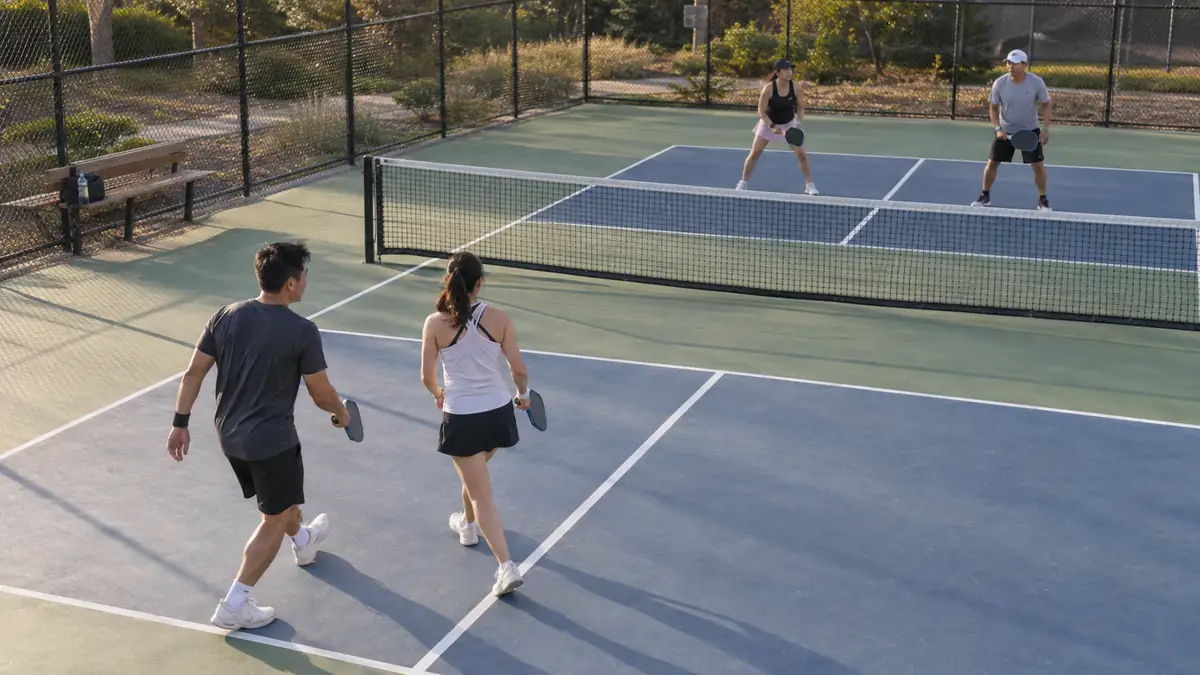
Watch a doubles match and you will see a pair line up on the same side before the serve, then switch right after the ball is struck. That is stacking. The better the pair, the more naturally they use it, but beginners often cannot see why. This article covers what stacking is for, the basic steps, and when to use it.
In This Article
- Understand what stacking is for
- Learn the steps for stacking on serve and on return
- Learn when to use half stacking instead
- Find out the common mistakes and what to watch for when you start
What stacking is: switching to keep the positions you want
Stacking is a tactic where a pair temporarily moves to the same side before the serve or return, then shifts to the positions they actually want as soon as play starts. The rules fix the positions of only the server and the receiver; their partners may stand anywhere on the court. Stacking uses that freedom to keep the side you want no matter how the score changes. For doubles as a whole, seeThe Complete Guide to Pickleball Doubles.
Why pairs stack
The aim changes with the makeup of the pair. There are two broad patterns.
| Pair makeup | Aim of stacking | Effect |
|---|---|---|
| Left-handed plus right-handed | Put both forehands in the middle | Creates a pair that is strong on balls down the middle |
| Two players with the same dominant hand | Keep the stronger side or player fixed | Keeps roles and positions intact as the score changes |
With two right-handers, or any pair sharing a dominant hand, one backhand ends up in the middle however you line up. In that case the aim is not both forehands in the middle but keeping the stronger player or side in the same spot so the weaker backhand is harder to target. Only a left-hander and right-hander pair can put both forehands in the middle, which makes them especially strong down the middle.
Steps for stacking on serve
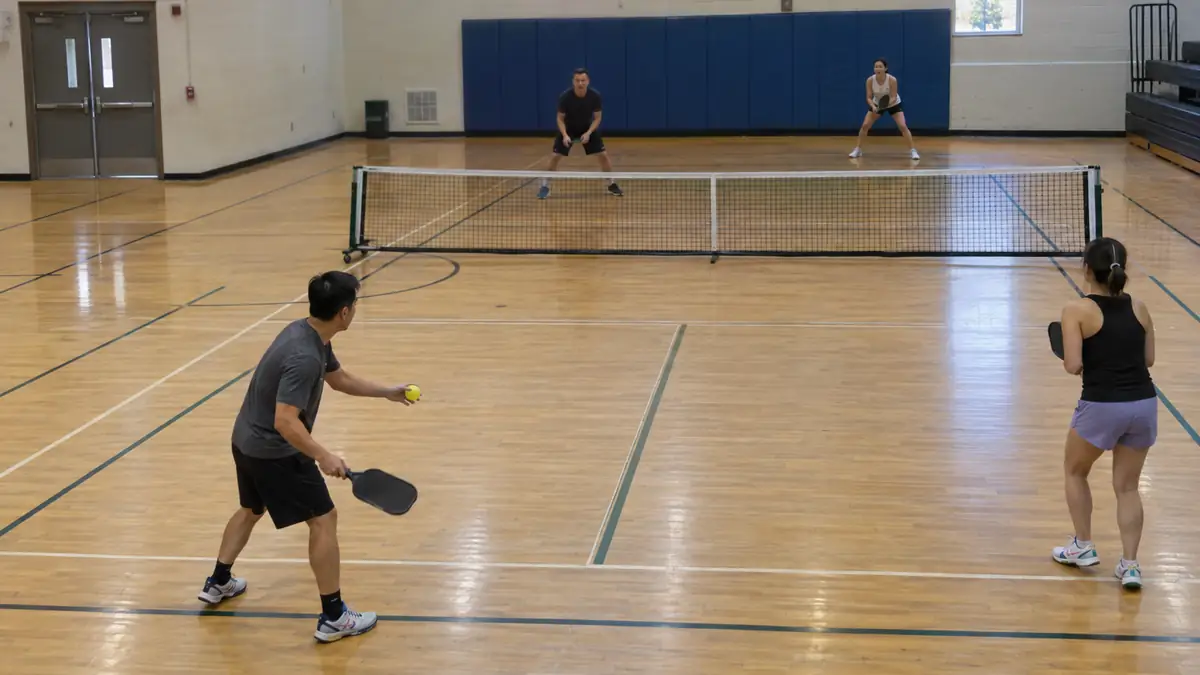
On the serving side, you set your positions after calling the score. The basic flow is as follows.
- The server serves from the correct side (right or left) for the score
- The partner moves in advance to the side they want to be on after the serve
- Once the serve is struck, the server moves to the open side and takes their position
For example, at 0-0-2 with a right-hander and a left-hander who want both forehands in the middle, the server hits from the right side and the partner sets up at the net on the left in advance. The point is to keep the serve position rules while building the formation through the partner's placement and the server's movement after the ball is struck. If your serve is inconsistent, the whole movement falls apart, so it helps to work onPractice methods to stabilize your serveat the same time.
Steps for stacking on return
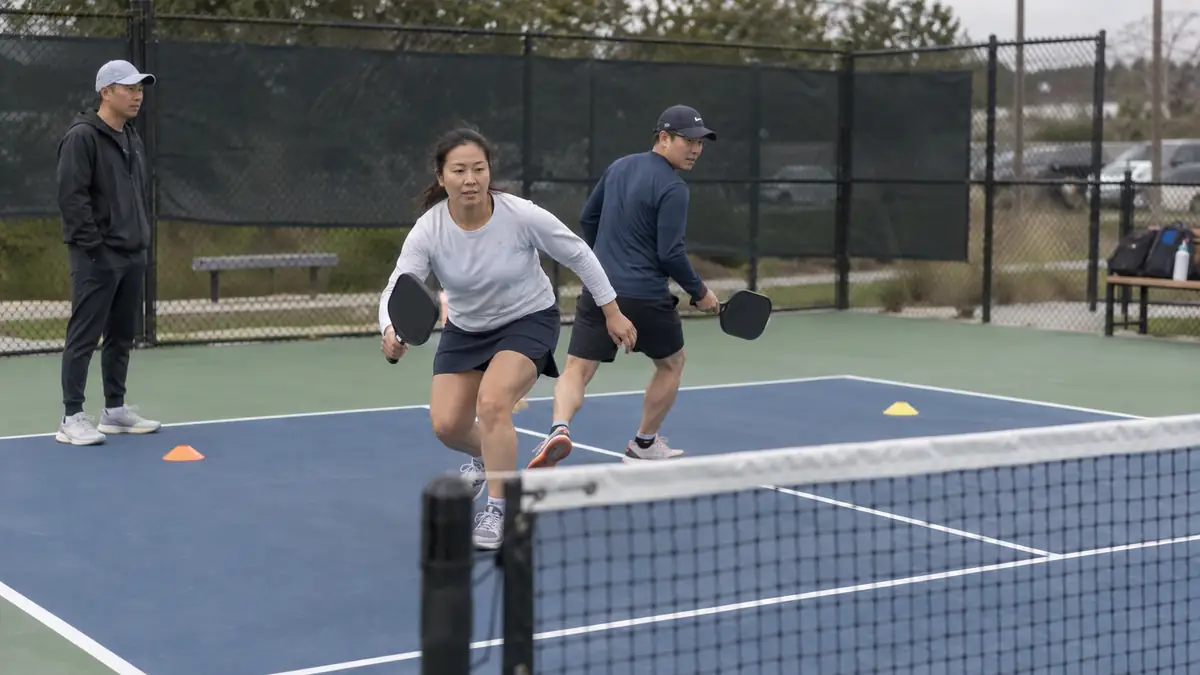
Stacking works on the returning side too. The player who moves is mainly the one who hit the return.
- The receiver takes the return in the correct box for the score
- The partner sets up in advance at the net on the side they want
- After hitting, the returner loops around to the open side and moves up to the net
The returning side is where switches go wrong most often. Have the partner take a position at the net in advance instead of standing flat-footed at the back, and it meshes with the returner's loop around.
Half stacking and when to use it
If switching fully every point is too much, start with half stacking, where you switch on one side only. For example, stay as you are when your score is even and switch only when it is odd. Because you can limit it to the moments you want your forehands in the middle, you get the benefit without the workload. Start with the situations that produce the most chances, then widen the range once you are comfortable.
Common mistakes and what to watch for
Stacking is useful, but when it breaks down it costs points directly. Watch for the following.
- Wrong position: Getting the correct side for the server or receiver wrong is a fault.Calling the scoreevery single time is essential
- Hitting your partner: If the serve hits your partner standing up front, it is a fault for your own team. The partner should set up clear of the serve's path
- Not talking: Switches live on signals agreed in advance. Share who moves where every time
- The gap while you move: There is a brief opening right after a switch. Get back into position quickly
Summary
Stacking is a tactic for keeping your formation, whether that means putting both forehands in the middle or fixing your stronger side. Many players bring it in from the intermediate level, around 3.5, once the basics of doubles and calling the score are solid, and starting with half stacking and disciplined communication makes it easy to pick up. For the footwork underneath it all,How to improve footworkwill help.
FAQ
Q1: Does stacking break the rules?
A1: No. Only the server and the receiver have fixed positions; their partners may stand anywhere. As long as you keep the correct serve position, it is legal.
Q2: Do you have to stack on every point?
A2: No. Use it only when you want to keep a particular formation. If you want to keep the workload down, start with half stacking, where you switch only on odd-numbered scores.
Q3: Does stacking stop working once the opponent reads it?
A3: The formation still does its job even when it is read, because the advantage of having forehands in the middle remains. You can be caught in the opening right after a switch, though, so getting back into position quickly matters.
Q4: Is it suited to a left-hander and right-hander pair?
A4: Especially so. You can line up both forehands in the middle, which makes the pair strong on balls down the middle. It is the combination that gets the most out of stacking.
Q5: Should I learn it on the serving side or the returning side first?
A5: Start with the serving side. The server's position is the starting point, which makes the movement easier to organize. Extend it to the returning side once you are comfortable.
Related Articles Worth Reading
- The complete guide to pickleball doubles: partner strategy and teamwork
- Pickleball Poaching Tactics: Techniques to Score More in Doubles
- The Complete Guide to the Third Shot Drop in Pickleball
- How to Improve Your Footwork in Pickleball
- How to Keep Score in Pickleball | The Meaning of 0-0-2, Too
Related Articles