You can hit a pickleball paddle just by gripping it and swinging. But paying a little attention to how you hold it changes both your control and the way power reaches the ball. This article covers the three main grips, the one beginners should learn first, and how to pick a grip size that fits your hand.
In This Article
- Learn the differences between the three main grips
- Find out which grip beginners should learn first
- Get a guide to how firmly you should hold the paddle
- Learn how to choose a grip size that fits you
Why your grip shapes how fast you improve
The grip is the foundation that decides which way the paddle face points. If your grip is inconsistent, the face angle wavers even on the same swing, and the ball floats or catches. Once one grip is second nature, you can handle both forehand and backhand quickly without switching, and it becomes easier to set the face in tight exchanges at the net. It feeds directly into dink accuracy, sodink mastery guideis worth keeping in mind alongside this.
The three basic grips
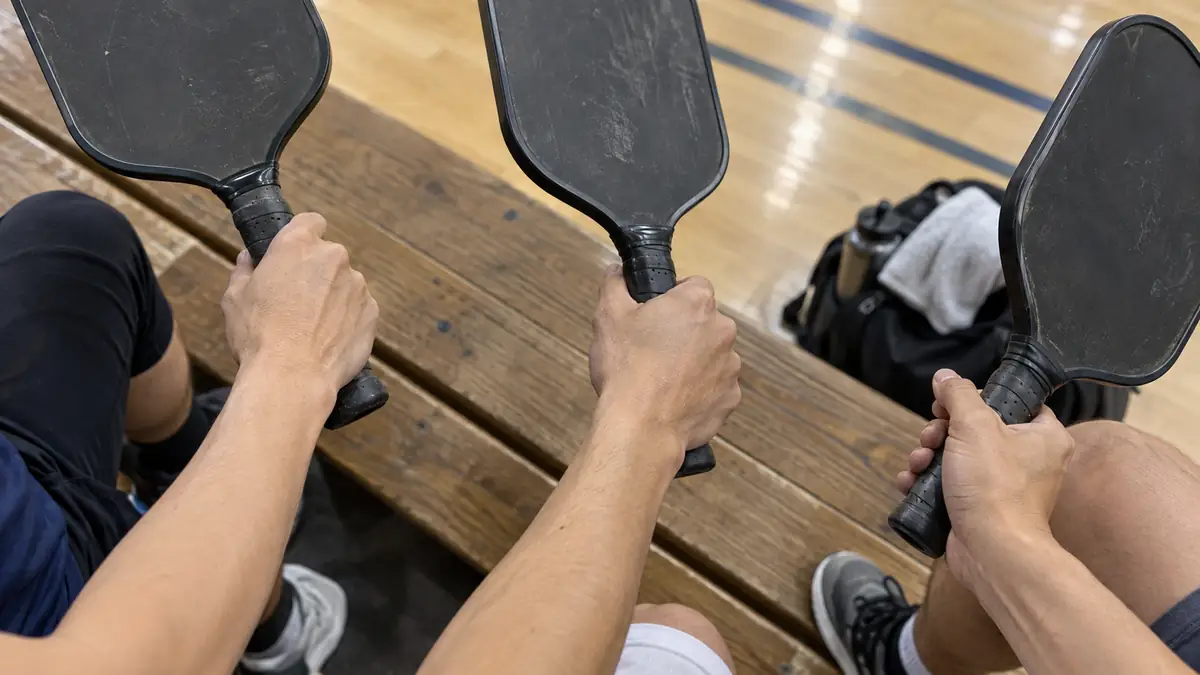
Three grips are mainly used in pickleball.
| Grip | Features | Who It's Suited To |
|---|---|---|
| Continental | Handles forehand and backhand with the same grip; highly versatile | Almost every player (the standard) |
| Eastern | Power transfers well on the forehand, making drives easier | Players who want a stronger forehand attack |
| Western | Makes heavy topspin easy, but the backhand is hard to handle | Advanced players who use a lot of spin |
The Eastern grip shifts one bevel to the right from Continental and suits pushing through on the forehand and hitting overheads. The Western grip makes spin even easier but is hard to handle on the backhand, suiting advanced players who use heavy topspin on high contact points. Take Continental as your base and switch only when a situation calls for it, and you will not get confused.
Beginners should start with the Continental grip
If you are unsure, learning the Continental grip first is the fastest route. It covers both forehand and backhand without switching grips, which fits a sport like pickleball where quick reactions matter.
How to form the Continental grip
- Stand the paddle face perpendicular to the floor and take hold of the handle from the side, as if picking up a hammer
- Set the base knuckle of your index finger on the bevel slightly toward the top of the handle, the one your hand naturally lands on when you hold a hammer
- Keep your fingertips relaxed and wrap them lightly around the handle
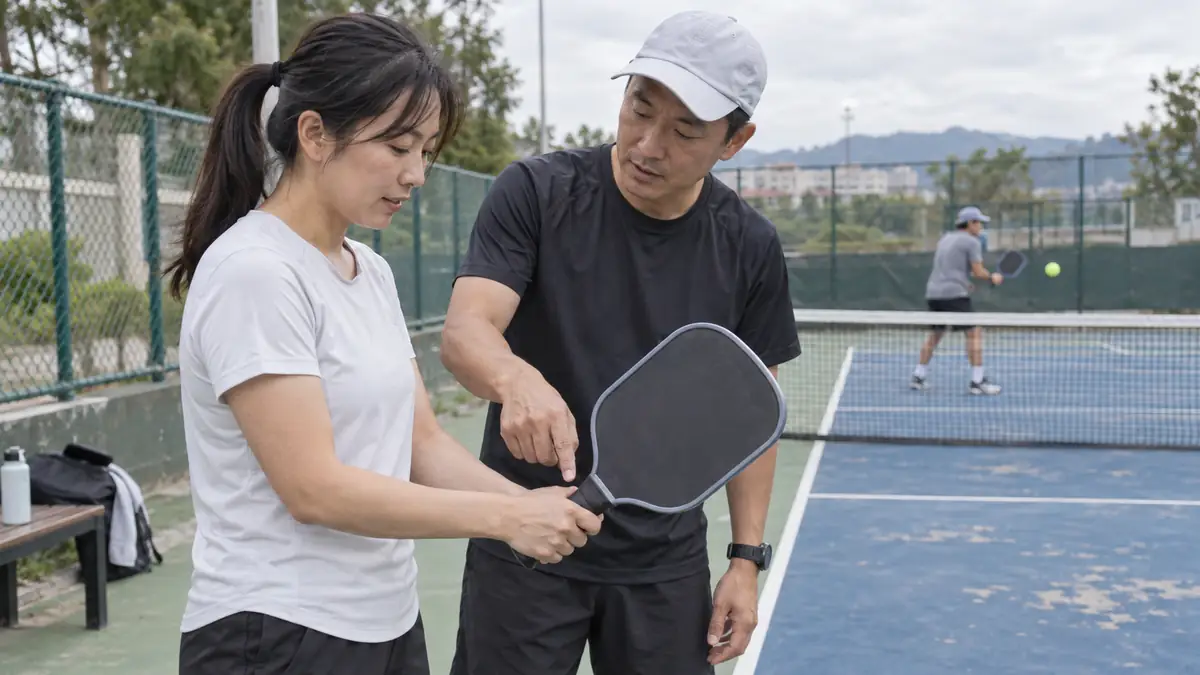
Once this grip feels natural, setting the face for volleys and dinks gets easier. Pickleball paddle handles are shorter than a tennis racket's, which makes a two-handed backhand awkward and is another reason to settle on Continental, a grip you can manage with one hand. In hands battles, where fast volleys come one after another at the net, there is no time to switch grips, so one grip that covers everything is a big advantage. For play at the net, seeThe Complete Guide to the Third Shot Dropis also worth a look.
Grip pressure should be loose, not tight
Squeezing too hard locks your wrist and kills the fine adjustments of the face. A light grip, around 4 or 5 on a scale of 10, is the guide. Grip firmly only at the moment of contact and stay loose while you wait, and you will handle both fast balls and soft touch more easily. Tension also leads to errors anda loss of composure, so start by staying relaxed.
How to choose a grip size that fits you
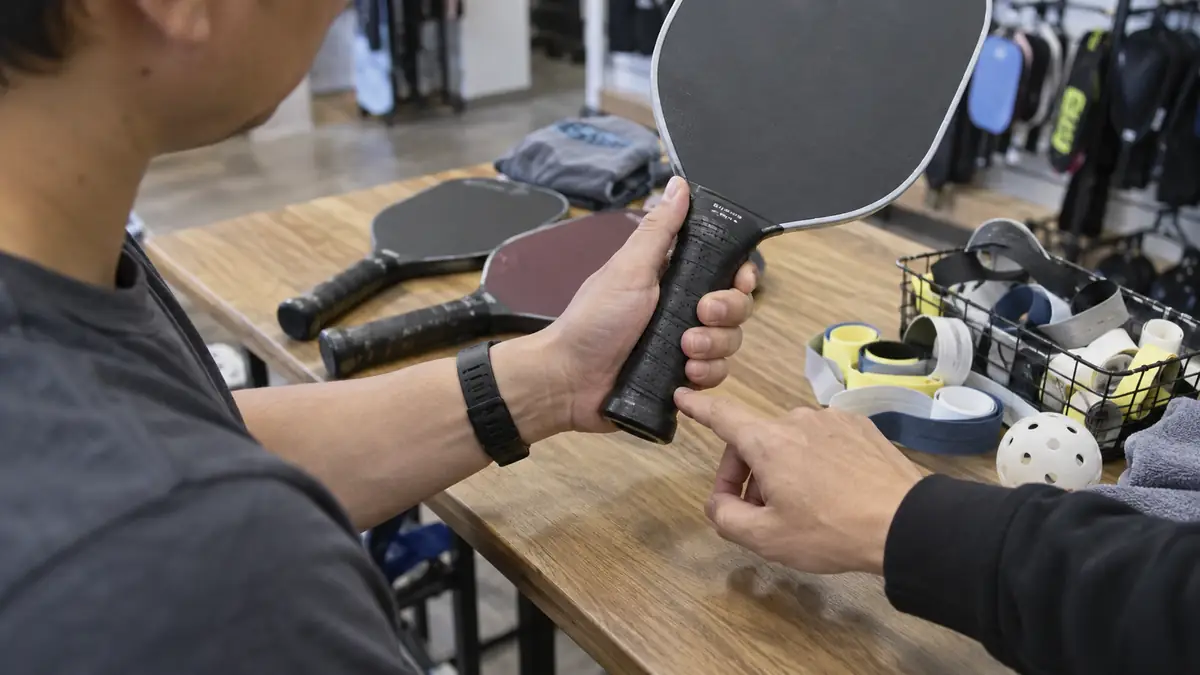
Grip thickness matters too. Too thick and switching grips or working the wrist gets awkward; too thin and you end up squeezing. Many pickleball players prefer a slightly thinner grip so the wrist stays free. As a rule of thumb, when you hold the paddle there should be about an index finger's width of room between your fingertips and your palm. Thickness can be fine-tuned with grip tape, and for details seeHow to replace grip tape.
Summary
The grip is the foundation that sets your face angle, and learning Continental, which covers both forehand and backhand, is the fastest route to improving. Hold it without tension, and start slightly thin on size and adjust from there so your wrist stays free. For how to think about choosing a paddle overall, seethe complete paddle-choosing guide.
FAQ
Q1: Which grip should a beginner learn first?
A1: The Continental grip. It covers both forehand and backhand without switching grips, which suits pickleball, where quick reactions matter.
Q2: Should I use different grips for forehand and backhand?
A2: While you are a beginner, sticking to Continental for both is the way to go. It saves the time of switching and makes it easier to set the face in fast exchanges. Try the Eastern grip once you are ready to add more attack.
Q3: Does gripping harder make the ball go farther?
A3: Squeezing too hard works against you. Your wrist locks up and you lose the fine adjustments of the face. Stay loose while you wait and squeeze only at the moment of contact.
Q4: Is a thicker or a thinner grip better?
A4: Many pickleball players prefer a slightly thinner grip so the wrist stays free. As a guide, aim for a thickness that leaves about an index finger's width between your fingertips and your palm.
Q5: Can I adjust grip thickness later?
A5: Yes. Wrapping grip tape over the existing grip lets you fine-tune the thickness. To go thinner, you can also replace the original grip with a thinner one.
Related Articles Worth Reading
- How to Replace Pickleball Grip Tape | Choosing the Material and the Wrap
- The Complete Guide to Choosing a Pickleball Paddle | Material, Weight and Grip
- Pickleball dink mastery guide | Basic technique and tactical points
- The Complete Guide to the Third Shot Drop in Pickleball
- Recommended Pickleball Paddles | A Thorough Comparison of How to Choose, From Beginner to Advanced
Related Articles