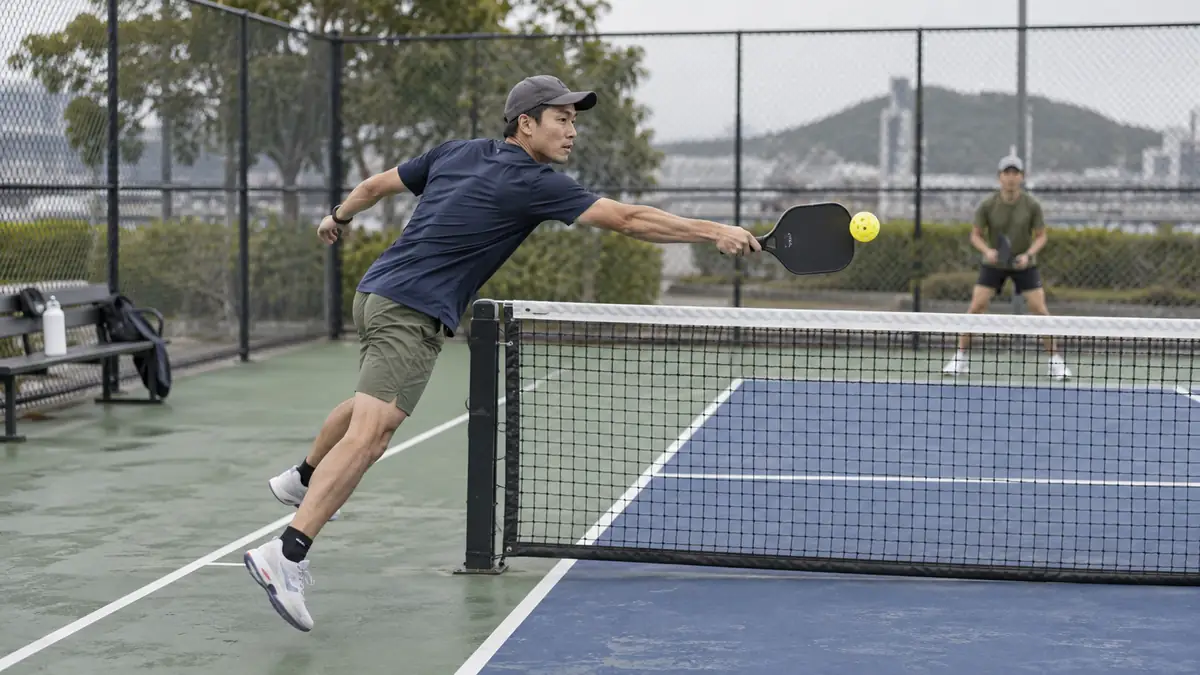
A sudden run to the side of the net out of a dink exchange, finished at a sharp angle — that flashy shot you see in advanced matches is the Erne. The name is said to come from Erne Perry, a player who became known for using the move often in doubles. It looks tricky, but once you understand how it came about, you can see where to go for it. This article sets out how the Erne works, why it is legal and how to practise it.
In This Article
- Learn what kind of shot the Erne is
- Understand the reasoning behind its power
- Learn the conditions that keep it from being a fault (and how the kitchen figures in)
- See when to go for it and how to build up the practice
What an Erne is: finishing at the net from outside the kitchen
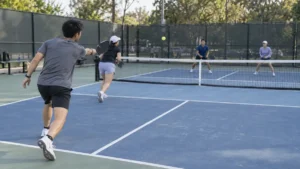
The Erne is an attacking shot where you move your body outside the non-volley zone (the kitchen) in front of the net and volley away an opponent's dink from right beside the net. Volleying is banned inside the kitchen, but from outside it you can take the ball out of the air. The point is to use that and finish from a position the opponent believes you cannot reach yet. For the basics of the kitchen, seethe complete guide to the kitchen rule.
Why the Erne is so strong
The strength comes from angle and time. Hitting from close to the side of the net lets you put a sharp angle into their court, which makes the return hard. And taking the ball further forward and earlier than usual takes away their reaction time. Land it and the momentum swings your way in one stroke; miss it and you still plant the worry that it could come from there again.
The conditions that keep an Erne legal
Understanding the rule matters most with the Erne. Volleying (hitting before the bounce) is banned only inside the kitchen, so it is legal as long as these conditions are met.
| Condition | Details |
|---|---|
| Where your feet are | At the moment of the volley, no foot touching the kitchen floor or its line (passing through the air over the kitchen is fine; only where a planted foot is counts) |
| Watch the momentum | Touching the kitchen or its line as your momentum carries you through is a fault, even after the ball has gone back |
| No contact with the net | No touching the net or the posts, and no going into the opponent's court (a follow-through over the net is allowed) |
Volleying with any part of you touching the kitchen or its line is a fault, and being carried in by your own momentum counts the same. For how the non-volley zone works in detail, seeWhat the non-volley zone isexplains it in detail.
Two ways into an Erne
There are two main ways to get your body outside the kitchen. Pick by the situation.
- Going around: from the sideline side, go around the corner of the kitchen, stand outside it and then hit. It gives you safe footing
- Jumping across: jump over the corner of the kitchen and land outside it to volley. Fast, but harder
Passing through the air over the kitchen is not a fault as long as you land outside it. The jumping version does demand more control on landing, though, because being carried in by your momentum after you land is a fault. Beginners who start with the going-around version keep the risk of stepping on the line down.
When to go for it, and the speed-up
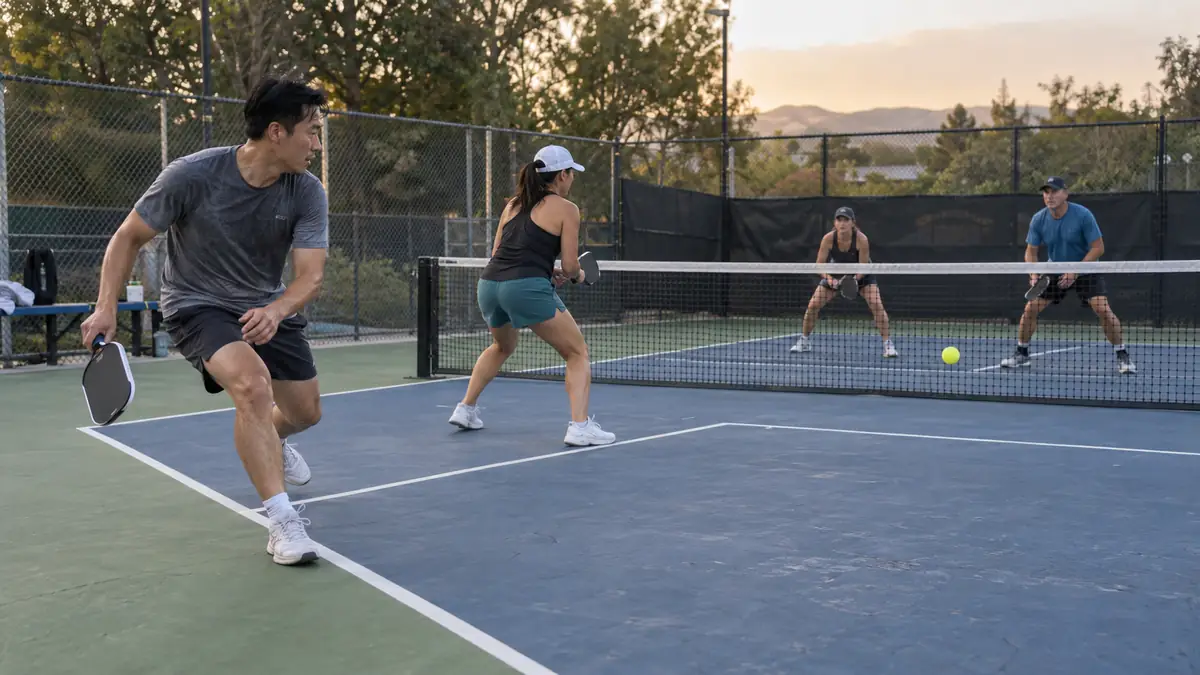
The Erne is worth going for when the opponent keeps sending soft dinks crosscourt. Read the direction and you can get there first and wait beside the net. It also works as a speed-up, taking control of a dink battle with a fast ball, and keeps the opponent from narrowing down what to expect. For the exchange that leads into it, picking updink mastery guidealongside this works well.
Practice and cautions
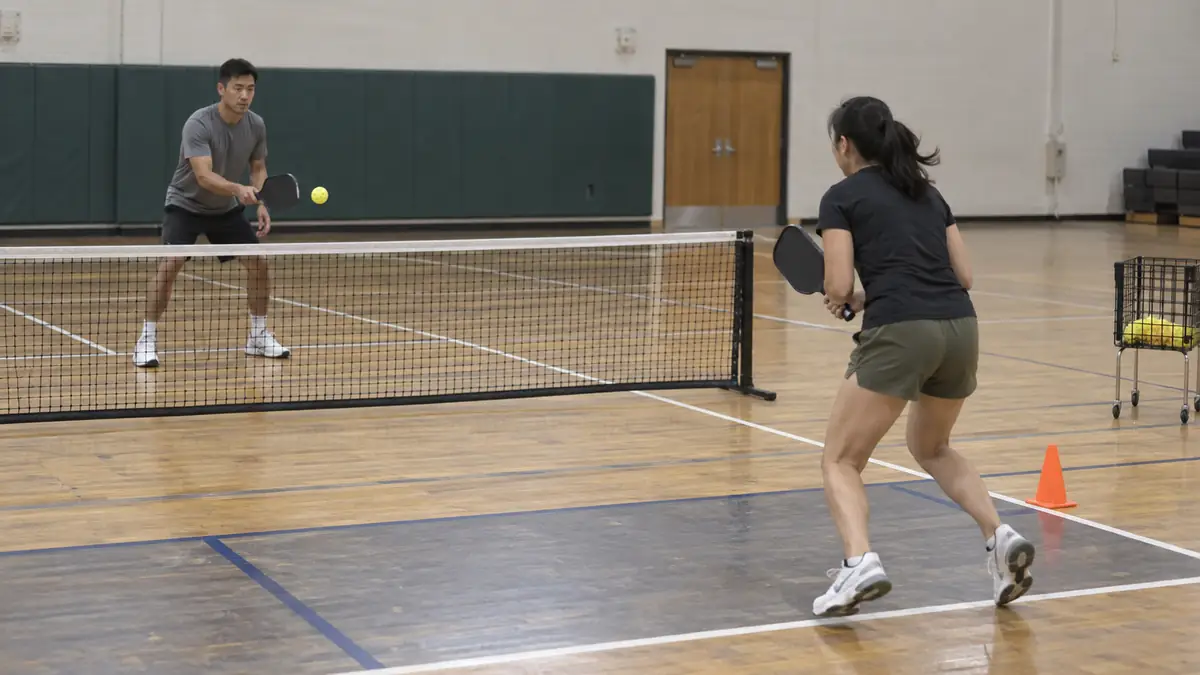
The Erne is a high-risk shot. It looks great when it lands, and it opens a big hole in your court when it misses. Work it in without forcing it, in this order.
- First, drill the footwork of getting your feet outside the kitchen, without hitting a ball
- Then practise reading where the opponent's dinks are going, and narrow down when to go
- Learn to use it to keep them honest by showing it, rather than only going for the kill
Use it too often and they will read it and counter. Treat it as an advanced weapon that works because it is saved for the right moment. For what it takes to move up from intermediate, seeBreaking through the intermediate ceilingis also worth a look.
Summary
The Erne is an advanced shot where you move outside the kitchen and finish sharply from beside the net. Two things keep it legal: your feet outside the kitchen, and no contact with the line or the net. Start with the going-around version and the footwork, read the opponent's dinks and use it at the right moment. For the exchange at the net as a whole, seePoaching tacticsis worth reading alongside this.
FAQ
Q1: Isn't the Erne a fault?
A1: No, it is not a fault. Volleys are prohibited only inside the kitchen. As long as both feet are outside the kitchen at the moment of the volley and you do not touch the line or the net, it is legal.
Q2: Can beginners use the Erne?
A2: Learn the basics of the kitchen and positioning first. It is a difficult shot, and missing it leaves your court wide open, so try it little by little once you can read where the ball is going.
Q3: How is the Erne different from a poach?
A3: A poach is a move to take a ball in your partner's area, while the Erne is a shot where you take your body outside the kitchen and finish from beside the net. The target position and the movement are different.
Q4: When should I go for one?
A4: The chance comes when your opponent keeps sending loose dinks crosscourt. If you can read the direction, you can get there first and your success rate goes up.
Q5: What is the most common fault when hitting an Erne?
A5: Stepping on the kitchen line, or volleying as your momentum carries you into the kitchen. Jumping across makes it easy to touch on the landing or through momentum, so until you get used to it, go around the outside and keep your footing solid.
Related Articles Worth Reading
- What is the non-volley zone? Pickleball rules and points for using it
- The complete guide to the kitchen rule: how to avoid faults
- Pickleball dink mastery guide | Basic technique and tactical points
- Pickleball Poaching Tactics: Techniques to Score More in Doubles
- Breaking Through the Intermediate Plateau in Pickleball | 5 Habits Holding You Back and How to Fix Them
Related Articles