When you first started pickleball, have you ever heard the score announced during a match and thought, "There are three numbers, but what do they mean?"
「0-0-2ってどっちが何点なの?」「サーブ権って何のこと?」——こうした疑問は、多くの初心者が最初につまずきやすいポイントです。最初は誰でも混乱します。それが普通。
This article answers all of those questions. By the time you finish reading, watching matches and playing yourself should both become a lot more fun.
In This Article
- What three numbers like "0-0-2" mean
- Why the game starts from "2"
- The deep relationship between serving rights and scoring
- The win condition (points and rules)
- Comparison with tennis and badminton
Read pickleball scores with "three numbers"
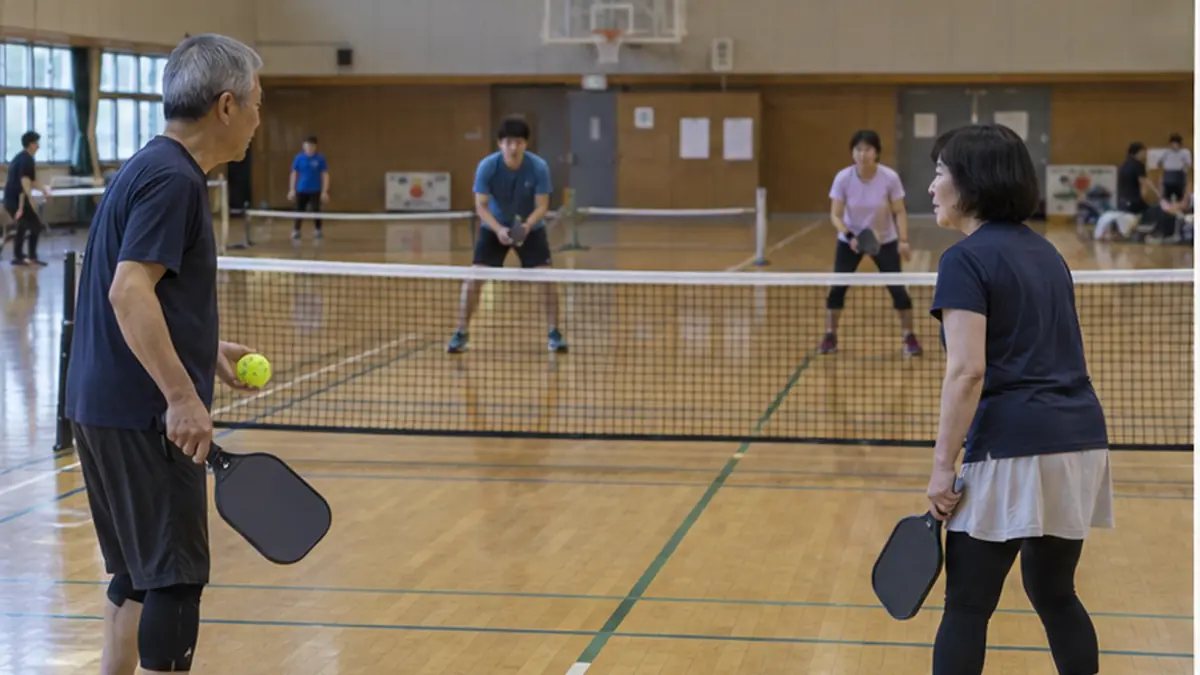
Pickleball scoring has a major feature that tennis and badminton don't. That isthe three-number score notation..
During a match you'll hear a call like this.
「3-1-2!」
At a glance it doesn't make sense, does it? But once you know the rules, you'll be able to read it right away.
What the three numbers mean
| Number position | Meaning | Example (for 3-1-2) |
|---|---|---|
| First | Serving side (your team) score | 3 points |
| Second | Receiving side (opposing team) score | 1 point |
| Third | Server number (1 or 2) | The second server |
The rule is that the player about to serve calls out this score aloud before serving. Since you start from your own team's score, the key is to always be aware of which team is currently serving. That alone completely changes how you see the score.
Why the game starts from "2"
The score at the start of a match is「0-0-2」. It's strange that it starts from "2," isn't it?
There's a solid reason for this. In doubles, each team has two servers, but there's a special rule that in the very first service game only one player is allowed to serve. Since that one player is treated as the "second server," the score starts from "0-0-2."A device to keep the team serving first from becoming too one-sidedly advantaged,it's an important rule that keeps the game balanced.
Understanding the relationship between serving rights and scoring
This is the single most important point in pickleball scoring.
標準のサイドアウト制では、得点できるのはサーブ側だけです。
これを「サイドアウトスコアリング」といいます。ただし、USA Pickleballの2026年ルールでは、大会主催者が条件に応じて暫定ラリースコアリングを選べる規定もあります。普段のプレーでは標準ルールを覚え、大会に出るときは要項の採点方式を確認するのが確実です。
What happens when you lose serving rights?
In doubles, serving rights shift according to the following flow.
- The first server loses the rally → switch to the second server
- The second server also loses the rally → serving rights pass to the opposing team (side-out)
- The opposing team starts serving from their first server
Because of this system, protecting your serving rights has a big influence on the flow of the match. That tension, close to the hold-and-break of tennis, genuinely exists in pickleball too.
The relationship between server number and court position
The server number is a choice between "1" and "2." It's linked to your standing position on the court.
| Your team's score | Court standing position |
|---|---|
| Even (0, 2, 4…) | Serve from the right side |
| Odd (1, 3, 5…) | Serve from the left side |
If you get lost thinking, "Wait, where do I stand now?", just check whether your team'sscore is even or odd.That's all it takes. Just knowing this makes your movement on the court much smoother.
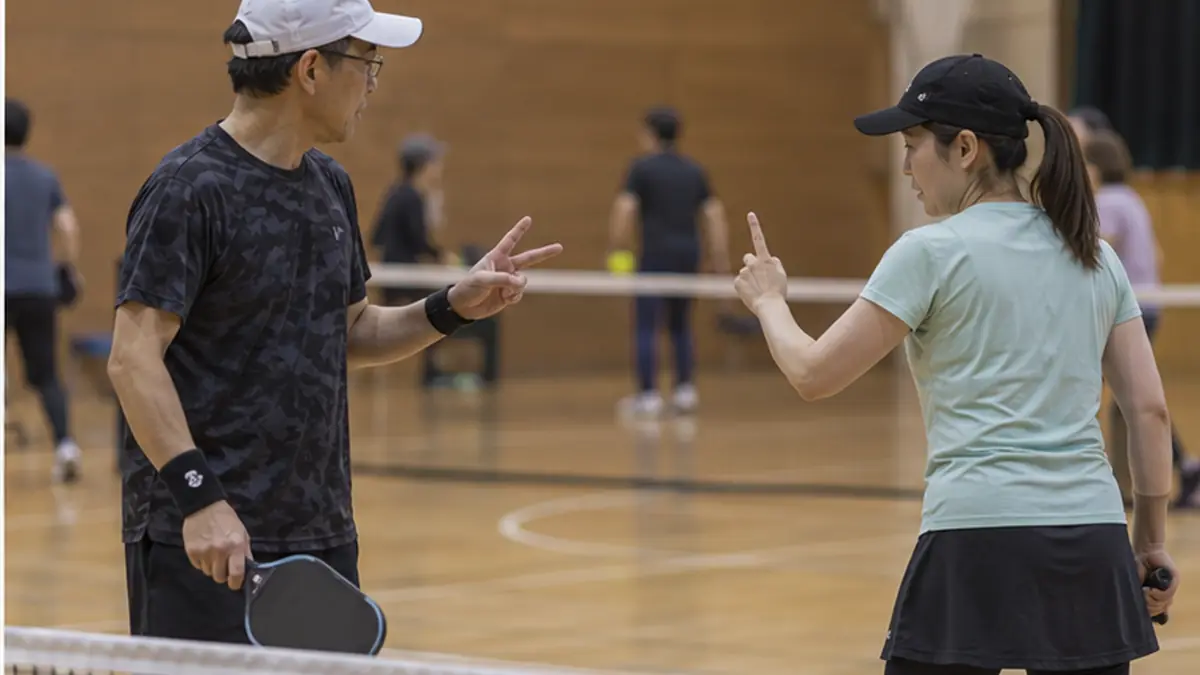
Win condition | How many points do you need to win?
The basic format is to 11 points (a 2-point margin required)
A typical pickleball match ends one gameat 11 points,the first to reach them. However, if it becomes 10-10, the game continues until there's a 2-point margin.
| Match format | Win condition | Notes |
|---|---|---|
| General matches and recreation | First to 11, 2-point margin | 2-point-margin rule applies from 10-10 |
| Tournaments (general) | First to 11 or 15 | Varies by tournament rules |
| Pro and official top-tier tournaments | First to 15 or 21 | The 2-point-margin rule is the same |
If you're joining a match for the first time, remembering "first to 11, win by a 2-point margin" is enough. You'll naturally pick up the finer rules as you play.
The battle when the score reaches 10-10
10-10は「テン・オール」と読まれることが多く、ここからは完全な実力勝負です。どちらが先に2点連取できるか——精神的なプレッシャーも増すこの局面、観戦していても一番盛り上がります。2点差がつくまで続くため、終盤の得点推移が見どころです。
How the scoring differs from tennis and badminton
Many people with pickleball experience have a background in tennis or badminton. However, the scoring system is quite different. Knowing the points of confusion in advance reduces the mix-ups.
| Comparison item | Pickleball | Tennis | Badminton |
|---|---|---|---|
| Which side can score | 標準はサーブ側のみ(大会でラリー制の場合あり) | a rally-point system | a rally-point system |
| Points per game | 11 points (2-point margin) | First to 6 games | 21 points (2-point margin) |
| How to read the score | Three numbers | 15/30/40 | Two numbers |
| Serving rights | Side-out system | Alternate each game | Taken by the rally winner |
| Who calls it out | The server themselves | The chair umpire | The chair umpire |
テニス経験者がよく戸惑うのが、標準のサイドアウト制ではサーブ側しか得点できない点です。慣れるまでは「今サーブしているのはどっち?」を常に意識してみてください。
バドミントンに慣れた人は「レシーブで返して勝ってもノーカウントなの?」と感じるはずです。標準のサイドアウト制では、ラリーに勝つとサーブ権を奪えます。もどかしくもあり、戦略的でもある——そこが面白いんです。
Let's try calling out the score in an actual match
Practicing specific score calls
Let's practice by imagining actual match situations.
Situation 1: Your team has 5 points, the opponent has 3, and you are server number 1
→ Call out:「5-3-1」
Situation 2: Serving rights pass to the opponent, the opponent has 7 points, your team has 5, and it's opponent server number 2
→ The opponent's call:「7-5-2」(read from the opposing team's perspective)
最初は混乱して当然です。最初はスコア表を見ながらでも構いません。数試合こなすうちに、数字と立ち位置の関係がつかみやすくなります。
What to do when you get the score wrong
Even advanced players sometimes misread the score. When that happens, the basic approach is to call "score check," and after both teams agree, return to the correct score. A culture of confirming with each other properly is also part of pickleball's sportsmanship.
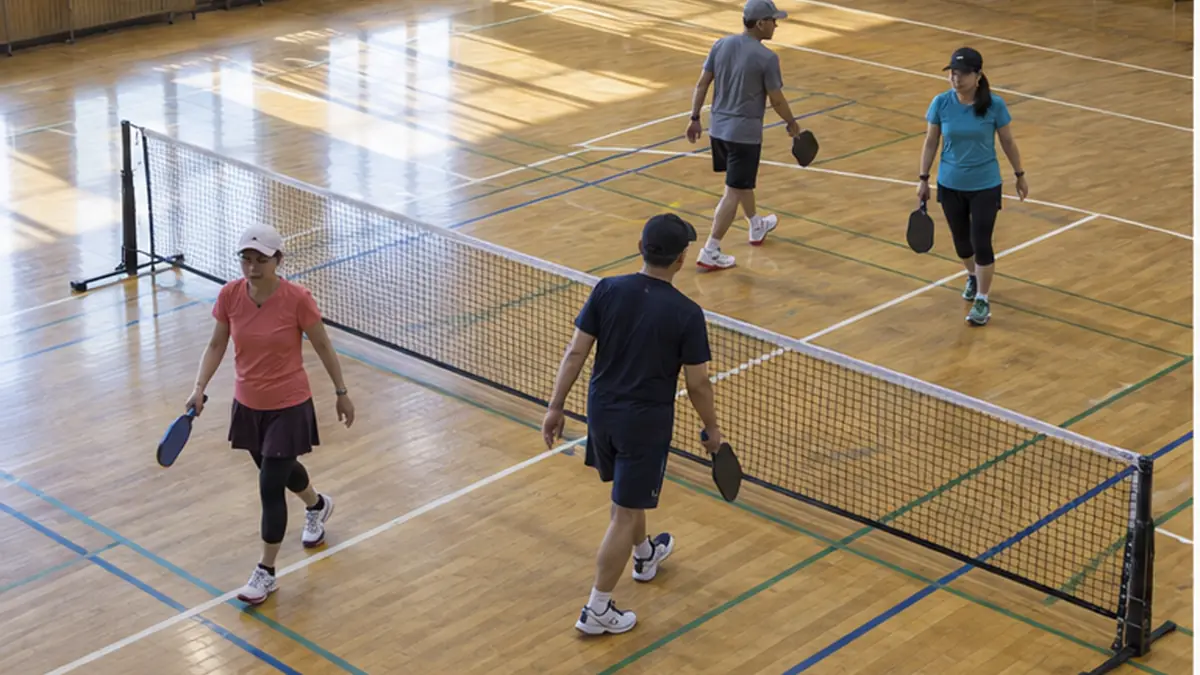
Summary | Reading the score makes matches even more fun
Let's organize pickleball's scoring system here.
- What the three numbers mean: your team's score – opponent's score – server number
- The match starts at "0-0-2": a special rule to prevent an advantage for the team serving first
- 標準のサイドアウト制ではサーブ側のみ得点:大会でラリー制を採る場合は要項を確認
- First to 11, win by a 2-point margin(15 or 21 depending on the tournament)
At first the rules may feel complicated. But as you actually stand on the court and play a few matches, the score naturally enters your head and body. Just start by casually picking up a paddle. As for the score, you can learn it as you play. There's no need to overthink it.
FAQ
Q1: Why is the pickleball score three numbers?
A1: In a doubles (2-on-2) match, you need to make clear which player is serving. The third number, the "server number (1 or 2)," plays that role. For singles, two numbers (e.g., 5-3) are fine.
Q2: Why does the game start from "0-0-2"?
A2: There's a special rule that in only the first service game just one player can serve. Since that one player is treated as the "second server," the start is "0-0-2." It's a device to keep the team serving first from becoming one-sidedly advantaged.
Q3: Can the receiving side never score?
A3: 標準のサイドアウト制では、得点できるのはサーブ側だけです。レシーブ側がラリーに勝つとサーブ権を得ます。2026年ルールでは大会主催者がラリー制を選べる場合もあるため、参加時は大会要項を確認してください。
Q4: How many points does it take to end a match?
A4: A typical game is first to 11 points. However, a 2-point margin is always required, and if it becomes 10-10, the game continues until there's a 2-point margin. Depending on the tournament, rules of first to 15 or 21 are sometimes used.
Q5: Who calls out the score?
A5: The player about to serve calls it out themselves, just before the serve. The rule is to say it aloud in the order "your team's score – opponent's score – server number." Be careful, because not calling it out can result in a fault.
Q6: Is reading the score different in singles?
A6: In singles you call out two numbers (e.g., 5-3). Since there's only one server, no server number is needed. Court standing position changes with whether the score is even or odd, and the same rule applies as in doubles.
Related Articles Worth Reading
- Pickleball Glossary | 50 Essential Terms Worth Knowing
- The Criteria for In and Out in Pickleball | How to Do Line Judging Right
- The Rules and Play Guide for Getting Started With Pickleball
- A Must-Read for Beginners! What Makes Pickleball So Appealing
- What Is the Pickleball Two-Bounce Rule? The Basics and Common Misunderstandings
確認した公式ルール
Reference Links
Related Articles