MENU
  • top
  • About Us
  • Basics
  • Paddles
  • Practice
  • Brands
  • VietnamA category covering the pickleball scene in Vietnam. It looks at how the sport is spreading locally, the reasons behind its popularity, venue and brand information, and its growth potential going forward.
  • Trends
  • CourtsA category that brings together information on pickleball courts. It covers court sizes and regulation dimensions, how to set up a court, and venue information at home and abroad—practical knowledge to help you get your playing environment in order.
  • OverseasA category introducing the pickleball scene overseas. It offers an easy-to-follow overview of how the sport is spreading, market trends and country-by-country characteristics across regions such as the United States, Asia and Europe.
  • All Venues
  • All Tournaments
  • All Events
  • All Player Directory
  • All Brands
  • All PaddlesA pickleball paddle directory. Reviews of popular models by spec and price.
  • Contact Form
  • Privacy Policy
  • Venue Listing Guide
  • Tournament & Event Listing Guide
  • Advertising Guide
ピックルタイムス
The Pickleball Specialist Guide
  • Find a Court
  • Vietnam
  • India
  • Articles
  • Tournaments
  • Directory
    • Player Directory
    • Paddle Directory
    • Brands
  • Search
  • Request a Listing
    • Venue listing (free)
    • Tournament/event listing (free)
    • Advertising
  • Find a Court
  • Vietnam
  • India
  • Articles
  • Tournaments
  • Directory
  • Search
  • Request a Listing
ピックルタイムス
  • Find a Court
  • Vietnam
  • India
  • Articles
  • Tournaments
  • Directory
    • Player Directory
    • Paddle Directory
    • Brands
  • Search
  • Request a Listing
    • Venue listing (free)
    • Tournament/event listing (free)
    • Advertising
  1. Home
  2. Basics
  3. Complete guide to stacking in pickleball | Positioning that plays to your dominant hand

Complete guide to stacking in pickleball | Positioning that plays to your dominant hand

2026 9/26
Basics
August 28, 20262026年9月26日
Links on this page may include advertisements.

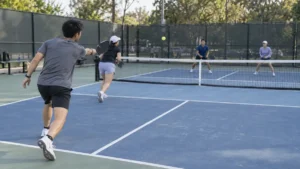
Watch a doubles match and you will see a pair line up on the same side before the serve, then switch right after the ball is struck. That is stacking. The better the pair, the more naturally they use it, but beginners often cannot see why. This article covers what stacking is for, the basic steps, and when to use it.
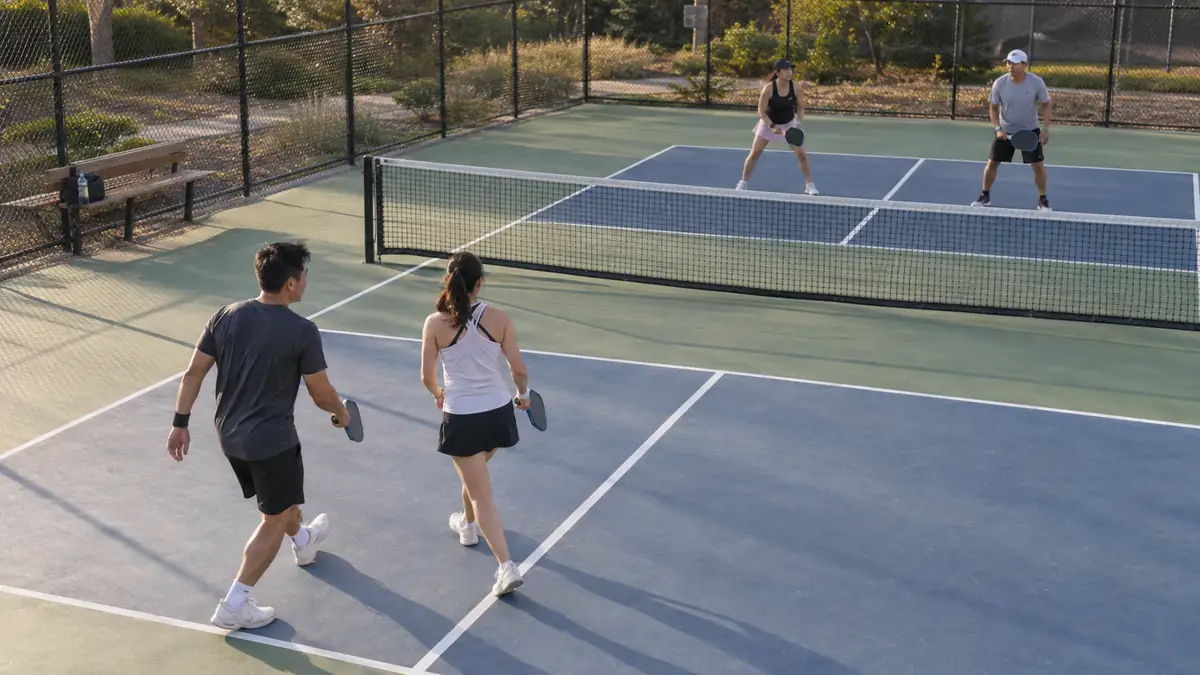
屋外コートでスタッキングの配置へ移動するダブルス選手
TOC

In This Article

  • Understand what stacking is for
  • Learn the steps for stacking on serve and on return
  • Learn when to use half stacking instead
  • Find out the common mistakes and what to watch for when you start

What stacking is: switching to keep the positions you want

Stacking is a tactic where a pair temporarily moves to the same side before the serve or return, then shifts to the positions they actually want as soon as play starts. The rules fix the positions of only the server and the receiver; their partners may stand anywhere on the court. Stacking uses that freedom to keep the side you want no matter how the score changes. For doubles as a whole, seeThe Complete Guide to Pickleball Doubles.

Why pairs stack

The aim changes with the makeup of the pair. There are two broad patterns.

Pair makeup Aim of stacking Effect
Left-handed plus right-handed Put both forehands in the middle Creates a pair that is strong on balls down the middle
Two players with the same dominant hand Keep the stronger side or player fixed Keeps roles and positions intact as the score changes

With two right-handers, or any pair sharing a dominant hand, one backhand ends up in the middle however you line up. In that case the aim is not both forehands in the middle but keeping the stronger player or side in the same spot so the weaker backhand is harder to target. Only a left-hander and right-hander pair can put both forehands in the middle, which makes them especially strong down the middle.

Steps for stacking on serve
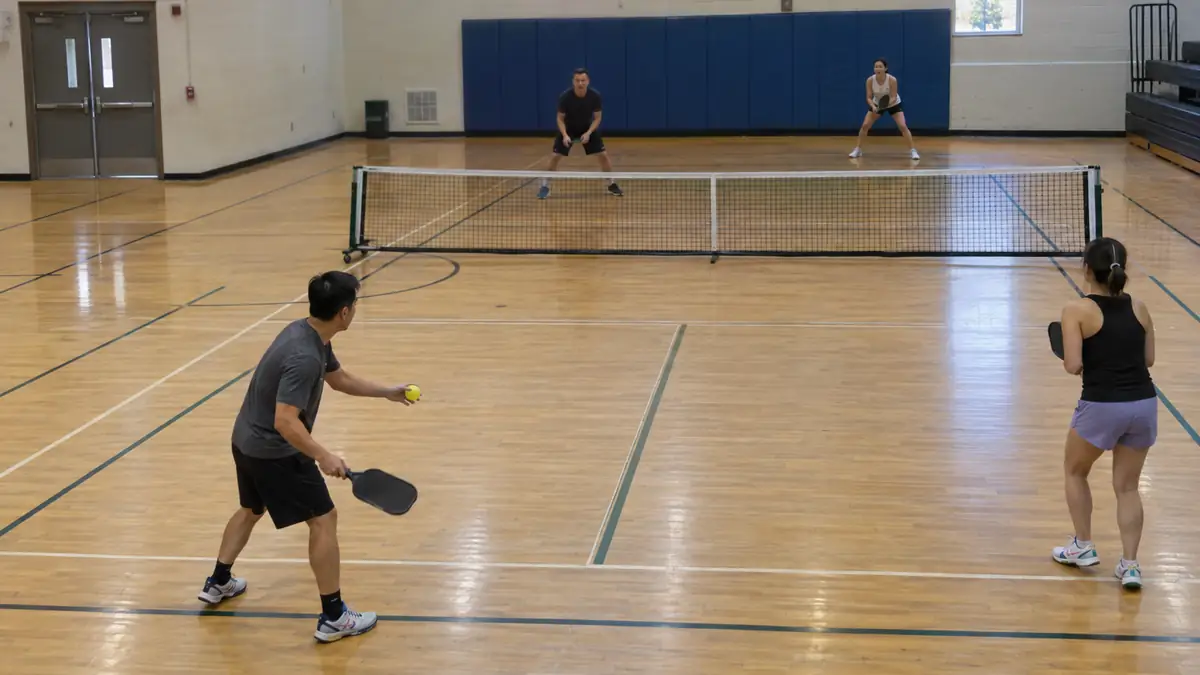
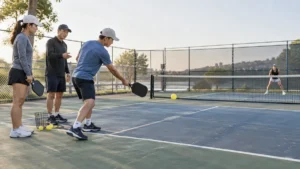
サーブ側で同じ半面からスタッキングを始めるペア

On the serving side, you set your positions after calling the score. The basic flow is as follows.

  • The server serves from the correct side (right or left) for the score
  • The partner moves in advance to the side they want to be on after the serve
  • Once the serve is struck, the server moves to the open side and takes their position

For example, at 0-0-2 with a right-hander and a left-hander who want both forehands in the middle, the server hits from the right side and the partner sets up at the net on the left in advance. The point is to keep the serve position rules while building the formation through the partner's placement and the server's movement after the ball is struck. If your serve is inconsistent, the whole movement falls apart, so it helps to work onPractice methods to stabilize your serveat the same time.

Steps for stacking on return
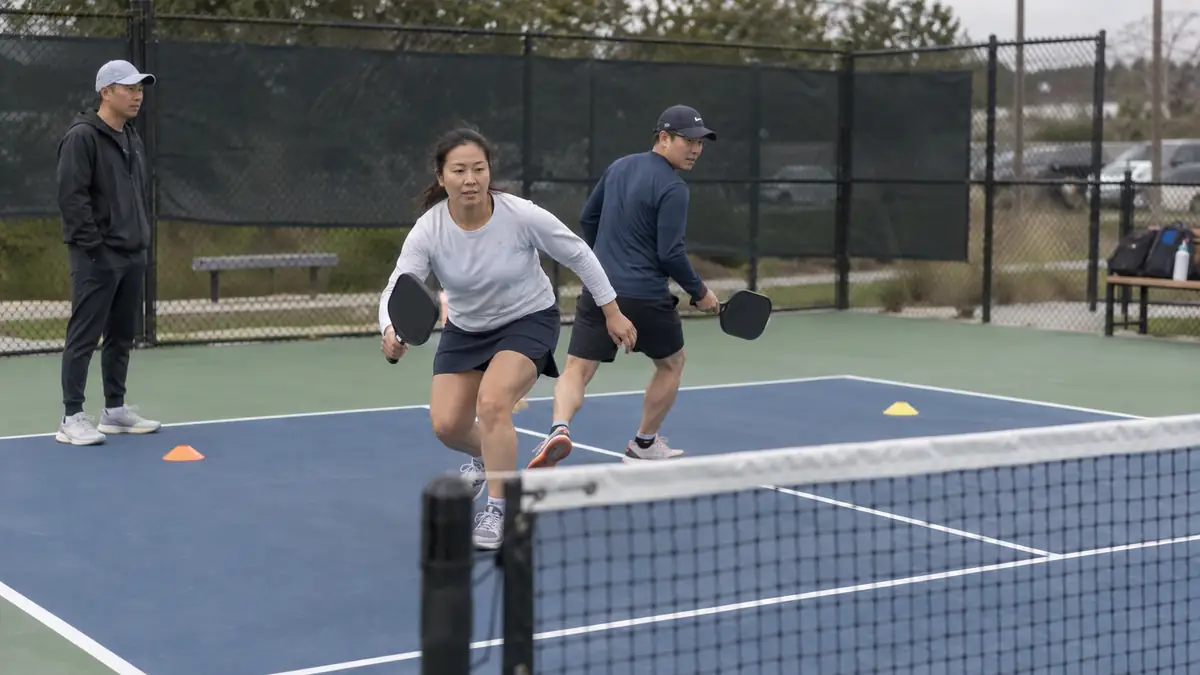
コーンを使ってリターン後のスタッキング移動を練習するペア

Stacking works on the returning side too. The player who moves is mainly the one who hit the return.

  • The receiver takes the return in the correct box for the score
  • The partner sets up in advance at the net on the side they want
  • After hitting, the returner loops around to the open side and moves up to the net

The returning side is where switches go wrong most often. Have the partner take a position at the net in advance instead of standing flat-footed at the back, and it meshes with the returner's loop around.

Half stacking and when to use it

If switching fully every point is too much, start with half stacking, where you switch on one side only. For example, stay as you are when your score is even and switch only when it is odd. Because you can limit it to the moments you want your forehands in the middle, you get the benefit without the workload. Start with the situations that produce the most chances, then widen the range once you are comfortable.

Common mistakes and what to watch for

Stacking is useful, but when it breaks down it costs points directly. Watch for the following.

  • Wrong position: Getting the correct side for the server or receiver wrong is a fault.Calling the scoreevery single time is essential
  • Hitting your partner: If the serve hits your partner standing up front, it is a fault for your own team. The partner should set up clear of the serve's path
  • Not talking: Switches live on signals agreed in advance. Share who moves where every time
  • The gap while you move: There is a brief opening right after a switch. Get back into position quickly

Summary

Stacking is a tactic for keeping your formation, whether that means putting both forehands in the middle or fixing your stronger side. Many players bring it in from the intermediate level, around 3.5, once the basics of doubles and calling the score are solid, and starting with half stacking and disciplined communication makes it easy to pick up. For the footwork underneath it all,How to improve footworkwill help.

FAQ

Q1: Does stacking break the rules?

A1: No. Only the server and the receiver have fixed positions; their partners may stand anywhere. As long as you keep the correct serve position, it is legal.

Q2: Do you have to stack on every point?

A2: No. Use it only when you want to keep a particular formation. If you want to keep the workload down, start with half stacking, where you switch only on odd-numbered scores.

Q3: Does stacking stop working once the opponent reads it?

A3: The formation still does its job even when it is read, because the advantage of having forehands in the middle remains. You can be caught in the opening right after a switch, though, so getting back into position quickly matters.

Q4: Is it suited to a left-hander and right-hander pair?

A4: Especially so. You can line up both forehands in the middle, which makes the pair strong on balls down the middle. It is the combination that gets the most out of stacking.

Q5: Should I learn it on the serving side or the returning side first?

A5: Start with the serving side. The server's position is the starting point, which makes the movement easier to organize. Extend it to the returning side once you are comfortable.

Related Articles Worth Reading

  • The complete guide to pickleball doubles: partner strategy and teamwork
  • Pickleball Poaching Tactics: Techniques to Score More in Doubles
  • The Complete Guide to the Third Shot Drop in Pickleball
  • How to Improve Your Footwork in Pickleball
  • How to Keep Score in Pickleball | The Meaning of 0-0-2, Too
広告この広告枠は募集中ですこの枠にバナーを掲載できます。コートや用具を探している読者に届きます。Advertising Guide

Related Articles

CourtsWhere Can You Play Pickleball in Saitama? Courts and Club Listings2026.08.28›BasicsHow to Find a Pickleball Class: Picking a School and Making the Most of a Trial2026.08.28›BasicsProtective Eyewear for Pickleball: How to Choose Glasses That Guard Your Eyes2026.08.28›BasicsHow Long Does a Pickleball Paddle Last? Knowing When to Replace It2026.08.28›BasicsHow to Practice Pickleball Alone: Wall Drills and Tips2026.08.28›BasicsWhat an Erne is in pickleball | How to set it up and how to practise it2026.08.28›
Basics
Strategy
Let's share this post !
  • Copied the URL !
  • Copied the URL !
  • Pickleball's 2026 rule changes in full | Rally scoring explained
  • How to grip a pickleball paddle | Three basic grips and how to choose

Author of this article

小島 怜's avatar Rei Kojima

I'm a pickleball enthusiast in my third year living in Vietnam. In high school I was on the badminton team, spending every day chasing the shuttle. Now, amid the buzz of Ho Chi Minh City, I'm fully immersed in the speedy volleys my badminton background enables and the strategic mind games unique to pickleball. I'll casually share the real playing scene in Vietnam—local court info and improvement tips that only a former badminton player would know!

Related Articles

  • 埼玉の公共体育館でネットを準備するピックルボール参加者
    Where can you play pickleball in Saitama? Courts and club information
    August 28, 2026
  • 体験レッスンへ到着し教室の様子を確認するピックルボール初心者
    How to find a pickleball class | Choosing a school and making the most of a trial session
    August 28, 2026
  • 屋内コートで保護アイウェアを装着してプレーの準備をする女性
    Protective eyewear for pickleball: how to choose and protect your eyes
    August 28, 2026
  • 体育館で使い込んだパドルと新しいパドルを見比べる選手
    How long does a pickleball paddle last? How to spot the time to replace it
    August 28, 2026
  • 体育館の壁を使って一人でピックルボールを練習する選手
    How to practise pickleball alone: wall drills and workarounds
    August 28, 2026
  • キッチン外からネット際のボールを打つアーンショットの選手
    What is an Erne in pickleball? Where to aim and how to practise it
    August 28, 2026
  • 深いリターンを返してキッチンラインへ進むダブルス選手
    Pickleball return tactics: hit deep and move up to the kitchen
    August 28, 2026
  • コーチと選手が屋外コートでサーブの種類を確認する練習風景
    Types of pickleball serve | Spin and when to use each
    August 28, 2026
広告この広告枠は募集中ですこの枠にバナーを掲載できます。コートや用具を探している読者に届きます。Advertising Guide

Latest Articles

  • Indian paddles start at 809 rupees. Only two of eight brands hold USA approval
  • Where can you play pickleball in Saitama? Courts and club information
  • How to find a pickleball class | Choosing a school and making the most of a trial session
  • Protective eyewear for pickleball: how to choose and protect your eyes
  • How long does a pickleball paddle last? How to spot the time to replace it

Categories

  • Gear Reviews
  • Courts
  • Columns
  • Trends
  • News
  • How-To
  • Paddles
  • Brands
  • Vietnam
  • Health & Fitness
  • Basics
  • Tournaments
  • Technique & Improvement
  • Overseas
  • Practice
Popular articles
  • 横浜の多面コートでプレーするピックルボール参加者
    The Complete Guide to Pickleball Facilities in Kanagawa | A List of Places to Play in the Prefecture
  • 複数ブランドを想定したパドルを比較する売り場
    Comparing the Major Pickleball Paddle Makers | Brand Features and How to Choose
  • 東京の街並みを望む屋上ピックルボールコート
    Where Can You Play Pickleball in Tokyo? A Look at Courts in the City
  • 富士山を遠望する静岡の屋外コートでプレーする参加者
    Where Can You Play Pickleball in Shizuoka? A Look at Courts and Sports Facilities in the Prefecture
  • 規定ラインが引かれたピックルボールコート全体
    A complete guide to pickleball court size | Regulation dimensions and setup tips
ピックルタイムス

A Japanese-language pickleball media outlet, bringing you firsthand information from our two bases in Japan and Vietnam.

Find Pickleball

  • Find a Court
  • Tournament Info
  • Event Info

About Pickleball

  • Paddle Info
  • Brand Info
  • Player Info
  • Columns
  • Latest News

About Our Service

  • Pickleball in Vietnam
  • About Us
  • Venue Listing Guide
  • Tournament & Event Listing Guide
  • Advertising Guide
  • Contact Us
  • Privacy Policy
  • top
  • About Us
  • Basics
  • Paddles
  • Practice
  • Brands
  • Vietnam
  • Trends
  • Courts
  • Overseas
  • All Venues
  • All Tournaments
  • All Events
  • All Player Directory
  • All Brands
  • All Paddles
  • Contact Form
  • Privacy Policy
  • Venue Listing Guide
  • Tournament & Event Listing Guide
  • Advertising Guide

© 2026 PICKLE TIMES | Operated by our Ho Chi Minh City-based editorial team

  • Menu
  • Home
  • Courts
  • Vietnam
  • Articles
  • Search
TOC
Popular Searches Ho Chi Minh City Indoor Paddles Hanoi
Pickle Times
Find a Court Vietnam Pickle India Pickleball Articles Tournaments & Events

Directory

Player Directory Paddle Directory Brands
Find a Court ⚲
Home Courts Vietnam Articles Search
English
日本語