Pickleball has simple rules, and it's a sport you can enjoy rallies in from the very day you pick up a paddle. That said, it has a few unique rules not found in tennis or table tennis, such as "serve from below" and "no volleys in the kitchen." This article organizes and explains, in the order of serve, scoring, and fouls, theRulesthings beginners should grasp first. For an overview of the sport as a whole,The complete introductory guide to pickleballtoo.
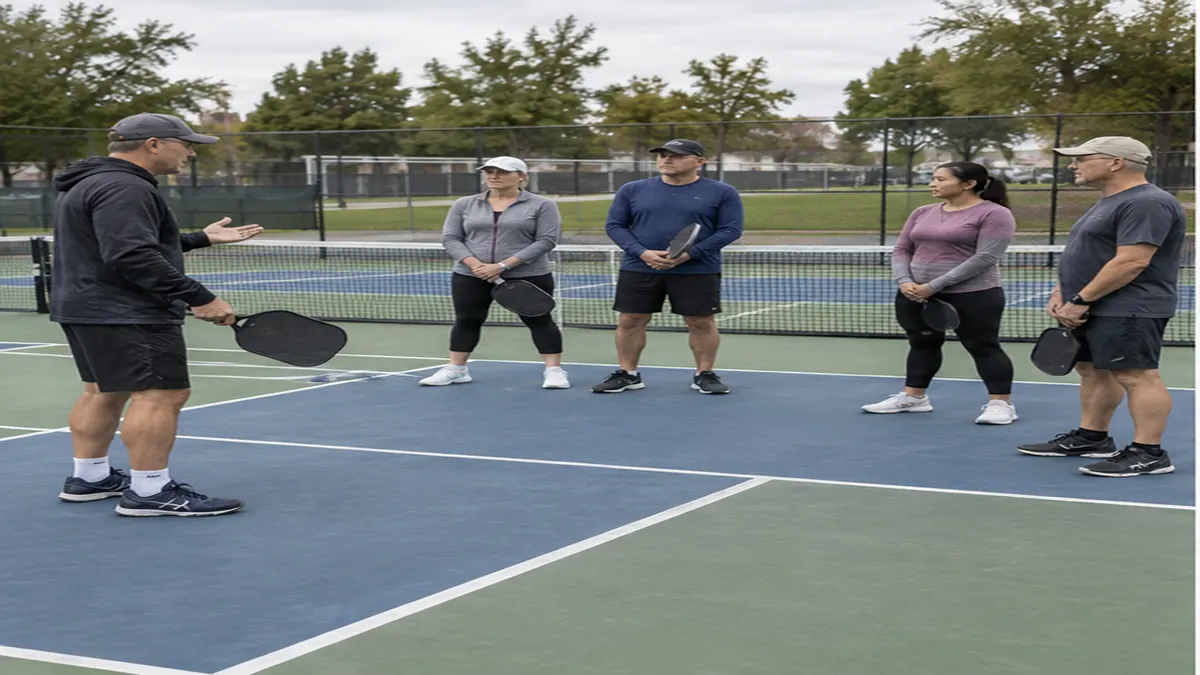
The basic rules of pickleball
The 3 rules to learn first
The rules to learn first are just these three. Know these and a match works. First, grasp them roughly in the table.
| The 3 rules to learn | In a word | Details |
|---|---|---|
| ① Underhand serve | The serve must always be from below, caught at a position lower than the waist, and hit diagonally. The paddle head is kept below the wrist | Serve rules |
| ② Two-bounce rule | The serve and its return, two balls total, must each bounce once. From the third ball, no-bounce (volley) is allowed | Two-bounce explanation |
| ③ Non-volley zone (kitchen) | Within 7 feet (about 2.13m) on both sides of the net, no-bounce volleys are prohibited. Stepping on the line is also a foul | Kitchen rule |
Thanks to the two-bounce rule of ②, the serving side can't suddenly rush the net and put it away, so rallies continue. The finer handling of the kitchen can be supplemented bynon-volley zone explanationthis as well.
Even if it looks hard, what you actually keep is just these three. What beginners especially stumble on is ②, "the first two balls must bounce." If you're mindful of just this, you can prevent most fouls.
Court and equipment
The court is 20 feet wide (about 6.1m) by 44 feet long (about 13.4m), the same size as a badminton doubles court. The net is about 86cm at the center and about 91cm at the ends. The equipment you use is just a board-like "paddle" and a plastic ball with holes. For details on the dimensions,the complete guide to court size.
| Item | Specification |
|---|---|
| Courts | 6.1m × 13.4m (same as badminton) |
| Net height | About 86cm at center / about 91cm at the ends |
| Kitchen | About 2.13m on both sides of the net |
| Scoring | First to 11, 2-point margin (with deuce) |
How scoring and serving work
The serve procedure
The game starts with the serve. The procedure is the following three steps.
Catch the ball at a position lower than the waist and, with the paddle head below the wrist, scoop it up from below.
From behind the baseline on the right side if your score is even, the left side if odd, drive it into the opponent's diagonal service area (beyond the kitchen line).
The served ball must be bounced once on the receiver's side of the court before being returned.
Note that the "drop serve," where you let the ball drop naturally from your hand or paddle and hit it after it bounces, is also officially recognized, and it isn't subject to the contact-height limit (as long as you drop it by gravity without adding your own toss or spin). Beginners who are anxious about a contact point higher than the waist can also start with the drop serve.
In doubles, the serving team's first player keeps serving until they make a mistake, and once they do, they switch to their partner (the second player). When both make a mistake, serving rights pass to the opposing team (side-out). However, only the very first serve right after the game starts has a special rule where it passes to the opponent the moment the first player makes a mistake.
How to count points and the score
Points are scored only bythe team with serving rights(side-out scoring). Even if the receiving side wins the rally, no point is scored; serving rights simply move. That's exactly why, if you take back serving rights, you can aim for a comeback through consecutive points.
In doubles, before the serve you call three numbers: "your score – opponent's score – server number (1 or 2)" (e.g., 0-0-2). First to 11 with a 2-point margin is the basic, and at 10-10 it becomes deuce and continues until there's a 2-point margin. For details on how to count,How to count points | The meaning of 0-0-2.
Does "0-0-2" feel hard, like a spell? Since only at the start of the game you count from the second server, remember that the last number becomes "2" and you'll be fine.
Fouls (faults) and line calls
Main faults
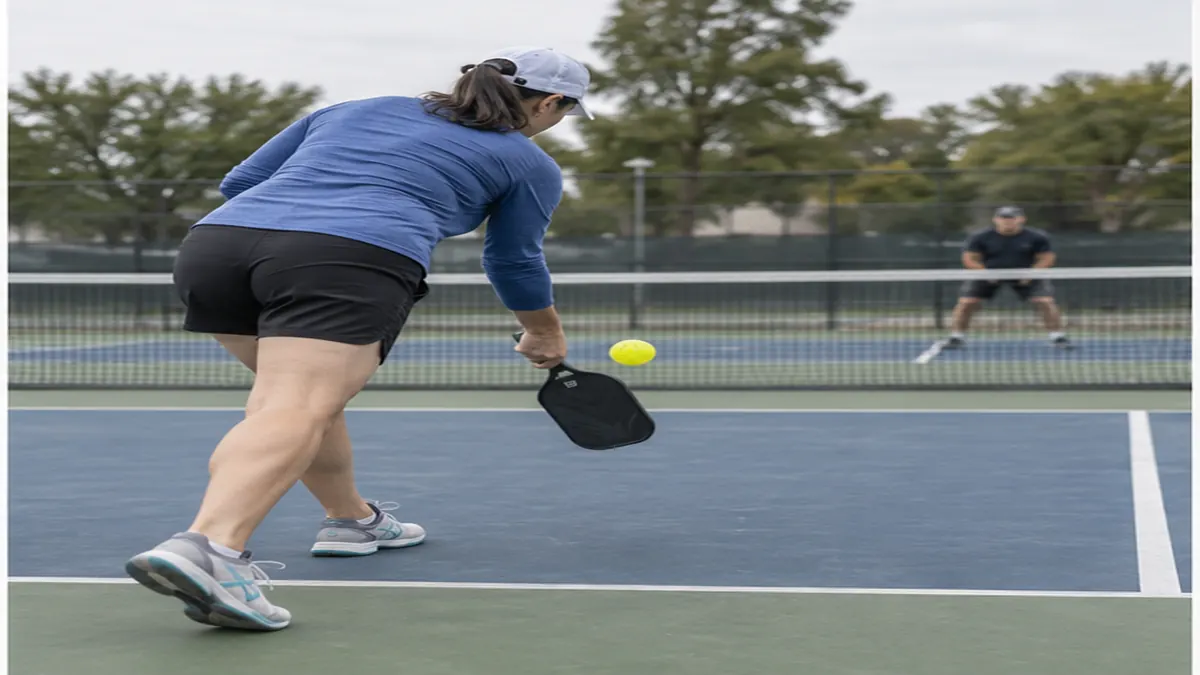
A fault is a rule violation that ends the rally. It leads to a point for the opponent or a shift of serving rights. Representative examples beginners tend to stumble on are as follows.
- The serve doesn't land in the opponent's diagonal service area, or doesn't clear the net
- The struck ball catches the net or goes outside the court lines (out)
- A volley inside the kitchen, or stepping into the kitchen with momentum after a volley
- A two-bounce-rule violation (volleying without a bounce in the first rally)
The fouls that tend to trip you up can be checked case by casethe explainer on fault ruleshere. If you keep the three basic rules (serve, two-bounce, non-volley), you can prevent big mistakes almost entirely.
Faults and penalties worth remembering
Let's concretely organize the faults beginners tend to overlook and their consequences. In each case, for the serving side it leads to loss of serving rights, and for the receiving side to a point for the opponent.
- Service foot fault: stepping on the baseline at the moment of the serve, or a foot going outside the court's extended lines. It's an immediate fault, applied without warning.
- Illegal serve: hitting at a position higher than the waist, or hitting with the paddle head above the wrist. If it doesn't meet the conditions of an underhand serve, it's a fault.
- Non-volley zone violation: losing balance after a volley and having the paddle, hat, or a part of the body drop into the kitchen. Even for a great shot, if you then touch the kitchen it's invalid.
- Interference (distraction): distracting acts such as shouting at the moment your opponent hits. It becomes a fault as an act contrary to sportsmanship (loss of serving rights for the serving side).
Self-judging and line calls
Pickleball is basically self-judged with no referee. The call is made bythe team on whose side the ball landed,and if you can't be sure it's out, calling it "in" is both manners and the rule. In a normal rally, if the ball touches the line even slightly it's in (however, the serve is an exception: a serve that touches the kitchen line = the non-volley-zone line is out). For how to judge in and out,The correct way to make line callsexplains it in detail.
When in doubt on a call, "in." Calling honestly even when it's to your disadvantage is the fair-play spirit of pickleball.
The difference between singles and doubles
Pickleball has 1-on-1 singles and 2-on-2 doubles. The basic rules are shared, but how you enjoy it and the strategy change.
- Doubles: the most common format. Rallies continue easily, and since a pair can cover for each other, the physical burden is also spread out. For beginners, starting with doubles first is recommended.
- Singles: since you defend the whole court alone, the volume of movement is high and individual skill is tested.
Commanding the net is the key to the outcome, andThe third-shot droptechniques like this and the dink come into play. You can dig into the basic tactics in the complete guide and each specialized article.
In official matches, formats vary by tournament, such as a single-game match to 11 points, best of two games (a three-game match), or a 15-point match. In recreational club matches, equipment regulations are sometimes lenient, but official matches have regulations on the paddle's surface material and bounce (such as USA Pickleball approval). The basic rules themselves are shared in any setting, so as long as you first grasp what's in this article you can be at ease.
Once you've learned the rules, play one game first
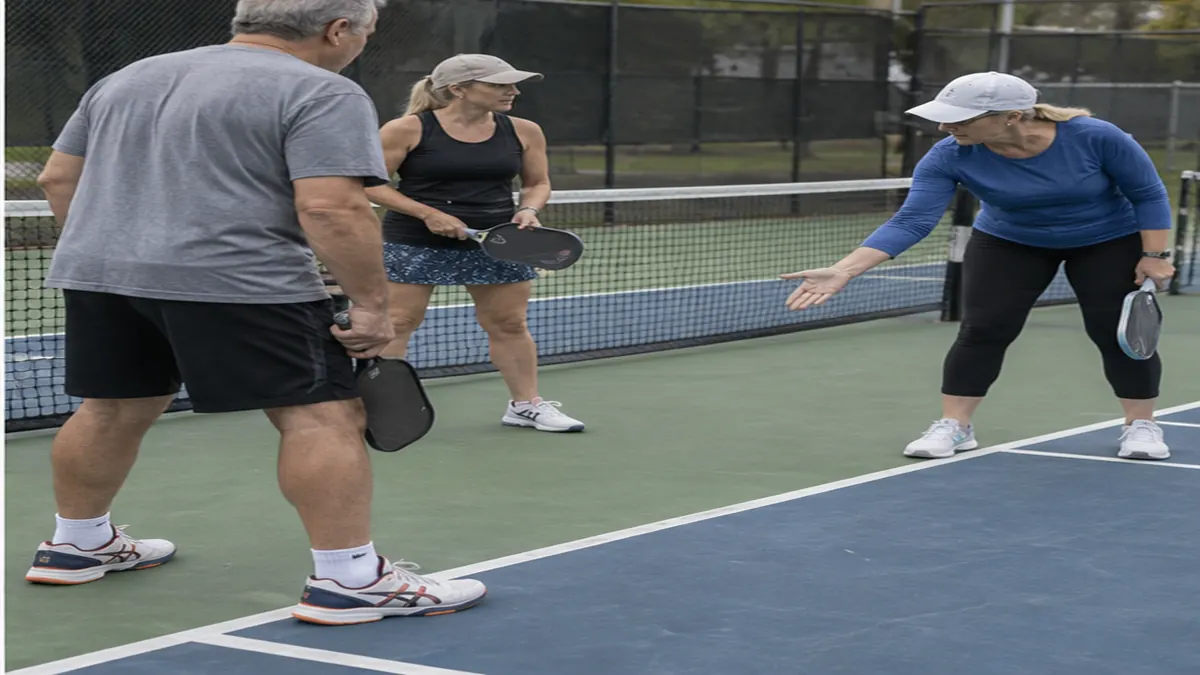
The rules are "serve from below," "the first two balls bounce," "no volleys in the kitchen," and "only the serving side scores" — learn these four points and you can run a match. Finer faults and how to count the score are things you pick up while actually playing. Playing one game at a nearby court or trial session advances your understanding of the rules all at once. For how to find courts,a summary of court information nationwide.
Frequently asked questions about pickleball rules
- If the receiving side wins the rally, does it become a point?
-
No, it doesn't become a point. Pickleball has a rule that only "the team with serving rights (the server)" can score. If the receiving side wins, no point is scored, and either serving rights move (side-out), or in doubles serving rights pass to the partner.
- Am I absolutely not allowed inside the "kitchen (non-volley zone)"?
-
You're allowed in. However, only "after the ball has bounced." What's prohibited is standing inside the kitchen (or stepping on the line) and "volleying (hitting without a bounce)." Entering to handle a bounced ball is not a rule violation. After hitting, the standard is to promptly return outside the area.
- Can I use tennis shoes or running shoes?
-
Running shoes aren't recommended. Since pickleball has a lot of sudden sideways movement (side steps), thick-soled running shoes made for going forward carry a risk of turning your ankle. Using "court shoes" that are strong on sideways movement,Tennis shoesor, for indoors,Badminton shoessuch as these, is the safest.
- Can I hit the serve hard from above like in tennis?
-
No, it's prohibited. A pickleball serve must always be hitunderhand(at a position lower than the waist), scooping it up from below with the paddle head below the wrist.
- In the doubles score "0-0-2," what is the last number?
-
The last number represents the "server number (1 or 2)." In doubles, when serving rights come around, the first person to hit is "server 1," and if they make a mistake, the partner who takes over is "server 2." Since you call it in the order "your score – opponent's score – server number," three numbers are needed.
Related Articles Worth Reading
- A Must-Read for Beginners! What Makes Pickleball So Appealing
- The complete guide to pickleball kitchen rules
- Pickleball serve rules | The basics of the underhand serve
- How to Keep Score in Pickleball | The Meaning of 0-0-2, Too
- What Is the Pickleball Two-Bounce Rule? The Basics and Common Misunderstandings
Related Articles