Right after you started pickleball, did you ever get told "that's a fault!" mid-rally and just stare blankly?
"The two-bounce rule"—many players are thrown by hearing the name for the first time. But once you understand it, the heart of pickleball strategy comes into view. This article explains, from a court player's perspective, everything from what the rule means to fault examples and common misunderstandings.
In this article:
– The precise meaning of the two-bounce rule (double-bounce rule)
– Why this rule exists
– The specific situations that count as a fault
– The differences from tennis and badminton
– Common misunderstandings in matches and the correct interpretation
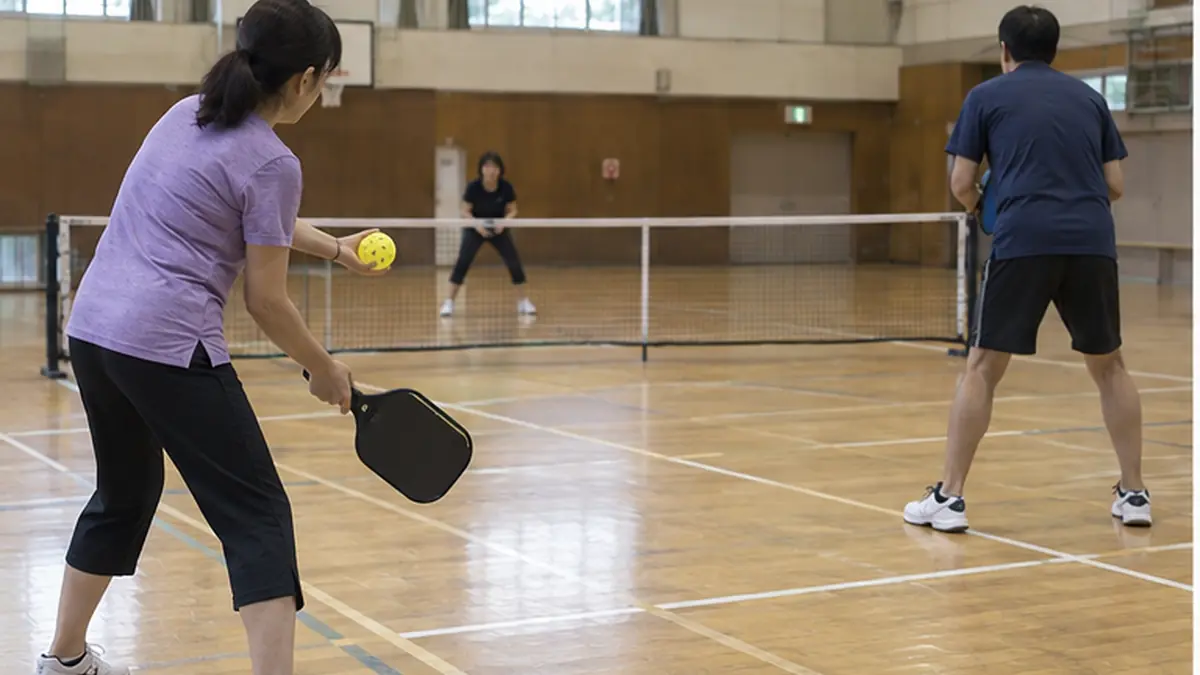
What Is the Two-Bounce Rule (Double-Bounce Rule)?
Its formal name is the "double-bounce rule," and in English it's also called the “Two-Bounce Rule.”
In a nutshell, the rule is this.
After the serve, the first shot must always be played after one bounce. This applies to both the serving and receiving teams.
Let's look at it a little more concretely.
What Happens After the Serve
- The server hits the serve
- The receiving side must,always after one bounce,hit it back
- The returned ball—the serving side too,always after one bounce,hit it back
- From the 4th shot on, no bounce (a volley) is also OK
"The first 2 shots must always wait for the bounce"—that's the essence of the rule. The key point is that both teams must wait for the bounce on just that first shot.
What "Two-Bounce" Means
When people hear "two-bounce," they tend to misread it as "bounce it twice."
In reality it means "two bounces are required (the return after the serve, and the return after that)." Remembering it as "wait for two bounces, then the rally opens up" makes it much easier to grasp.
Why This Rule Exists: A Reason Unique to Pickleball
"Why is such a restriction necessary?"—a natural question. In fact, this rule has a deeper reason unique to pickleball.
A Device to Prevent Server Advantage
In tennis and badminton, the serving side tends to have a big advantage. The stronger the serve, the harder it is for the receiver to respond.
Pickleball had the same problem. If you could volley right after the serve, the server could sprint to the net and rattle off "smashes" one after another. That would be too brutal for beginners and older players.
That's how the two-bounce rule came about. By waiting for the bounce on the first two shots after the serve, both teams get time to fairly set their positions. It's thanks to this rule that a wide range of people from their 30s to their 60s can enjoy the game regardless of differences in fitness.
The Combination With the Kitchen (Non-Volley Zone)
The two-bounce rule works even better when combined with the "kitchen (non-volley zone)."
Since volleys are banned within 7 feet (about 213 cm) of the net, a strategy emerges of waiting for the bounce on the two shots after the serve while getting your position set just in front of the kitchen. It's precisely this combination of rules that gives pickleball its distinctive strategic depth.
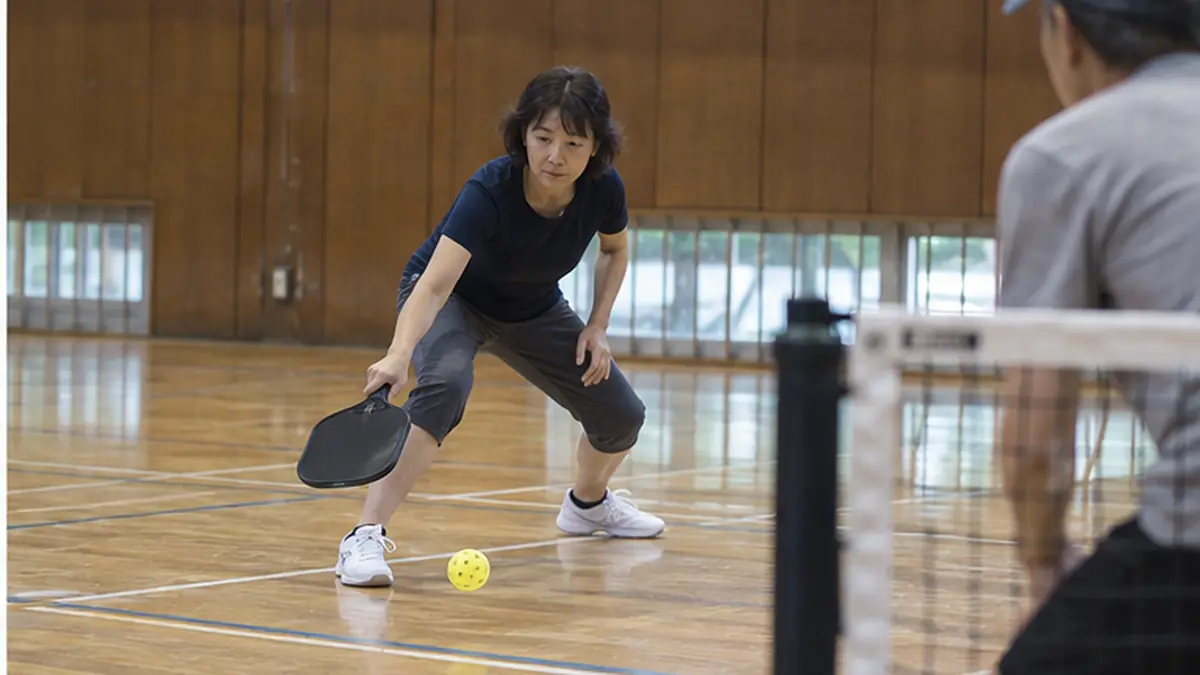
Specific Cases That Count as a Fault
Let's get practical. We'll look concretely at what situations count as a fault in a match.
Case 1: Volleying the Return Right After the Serve
This is the pattern where the serving team hits the receiver's return before it bounces.
When a strong return comes, you panic and respond with a volley—a common scene. The impulse is understandable, but this is a fault.
The correct move: Wait for it to bounce, and hit it back after the bounce
Case 2: The Receiver Volleys the Serve Back
This is the pattern where the receiving side hits it back before it bounces.
It often happens when you're standing close to the net and hit it on impulse. It's an especially common error among people who've played other racket sports.
The correct move: Always let the serve bounce once, then hit it back
Case 3: Mixing Up How the "3rd Shot" and the "4th Shot" Are Handled
We often get the question, "Does the 3rd shot have to bounce, too?"
The two-bounce rule applies only to the "2nd shot (the return)" and the "3rd shot (the serving side's first shot)." From the 4th shot on, you can volley freely.
| Shot | Who Hits It | Bounce Required? |
|---|---|---|
| 1st shot (serve) | Server | — (the serve has its own rule) |
| 2nd shot (return) | Receiver | Required |
| 3rd shot | Serving side | Required |
| 4th shot on | Either | Not required (volley OK) |
Keep this table in mind and you'll cut down sharply on moments where you're unsure how to call something mid-match.
Comparing With Tennis, Badminton and Table Tennis Deepens Your Understanding
Many people who take an interest in pickleball have played other racket sports. To answer the question "What's different from tennis?", we've put together a comparison.
| Sport | Rule After the Serve | Volley Restrictions |
|---|---|---|
| Pickleball | The first 2 shots must bounce (two-bounce rule) | Not allowed inside the kitchen |
| Tennis | OK without a bounce | No restrictions |
| Table Tennis | Bounce required (on the table) | Volleys prohibited |
| Badminton | No bounce (shuttle) | Volleys OK |
Seen this way, it stands out just how unique pickleball's rules are. The "two-bounce rule" that no other sport has is one of the reasons pickleball is so strategic and fun.
For those with a tennis background, the instinct to volley is ingrained, so at first it may feel strange. But it's thanks to this constraint that rallies last longer and matches get exciting—that, too, is part of pickleball's appeal.
Common Misunderstandings in Matches and the Correct Interpretation
We've rounded up the misunderstandings we often hear from people who've played plenty of matches. Just knowing them in advance lets you ease into a match smoothly.
Misunderstanding 1: "Does the Serve Have to Bounce, Too?"
No. The serve itself is outside the two-bounce rule. The serve has its own separate rule that it must be hit "underhand," but it doesn't need to bounce.
Misunderstanding 2: "Is Bouncing Twice on the Opponent's Court OK?"
This is also wrong. There's a separate rule that "if the ball bounces twice on the opponent's court, it's out." The "two bounces" of the two-bounce rule means "both sides wait for a bounce" after the serve—an entirely different concept.
Misunderstanding 3: "Are the Double-Bounce and Two-Bounce Different Rules?"
They're two names for the same rule. Officially the name "Two-Bounce Rule" is used most often, but it's also called the "double-bounce rule." Both mean the same thing, so there's no need to mix them up.
It's a rule that scrambles your head for the first few matches, but once you learn it with your body while actually playing, you'll gradually be able to judge it naturally.
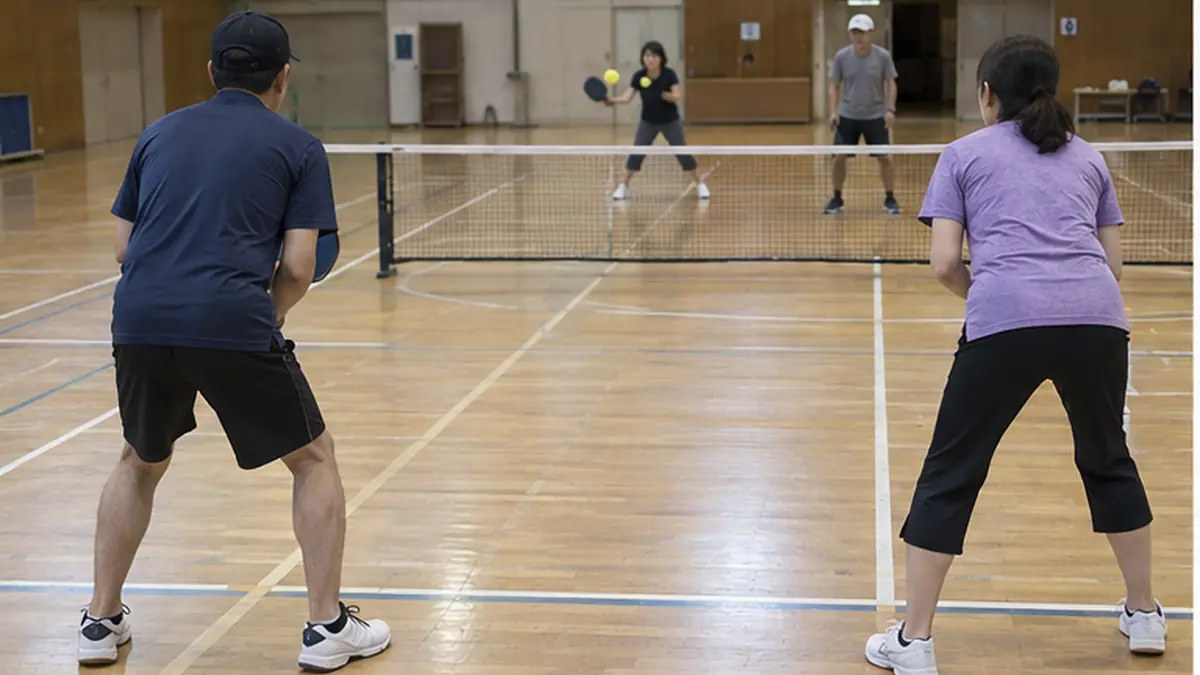
Summary
To sum up what we've covered, there are three key points to the two-bounce rule.
- On the two shots after the serve, always wait for the bounce before hitting
- It applies to both the serving and receiving sides
- From the 4th shot on, volleys are OK
Thanks to this rule, pickleball is a sport you can enjoy regardless of age or fitness. Those with a tennis background may find some moments where things "feel off," but that's pickleball's character and its appeal.
First, get the two-bounce rule into your head, then head out to the court. Learning it with your body is the fastest way there.
FAQ
Q1: Is the two-bounce rule only for doubles?
A1: No, the same rule applies in singles. Whether singles or doubles, the first 2 shots after the serve must always be hit after a bounce.
Q2: What happens to the two-bounce rule if the serve catches the net?
A2: If the ball clips the net but still lands correctly in the service court, it stays in play as a legal serve (the let, or replay, was abolished in the 2021 rule change). It is a fault only if the ball fails to land in the court. The two-bounce rule applies only when the serve is legally in.
Q3: What happens if you hit the 3rd shot without waiting for the bounce?
A3: It's a point for the other team. During a match it's called by a referee or by self-officiating. Especially as a beginner, it's good to consciously keep in mind that "the 3rd shot waits for the bounce, too."
Q4: What if the ball bounces twice on my own court?
A4: That's a separate rule—a point for the other team. Unlike the two-bounce rule, it's a fault of "letting the ball bounce twice during the rally." Be careful not to mix them up.
Q5: How long has the two-bounce rule existed?
A5: It's one of the rules that has existed since pickleball was devised in 1965. It was designed so people of all ages could enjoy the game fairly, and it's still adopted as an official rule of USA Pickleball today.
Related Articles Worth Reading
- Pickleball Glossary | 50 Essential Terms Worth Knowing
- The Criteria for In and Out in Pickleball | How to Do Line Judging Right
- The Rules and Play Guide for Getting Started With Pickleball
- A Must-Read for Beginners! What Makes Pickleball So Appealing
- How to Keep Score in Pickleball | The Meaning of 0-0-2, Too
Reference Links
Related Articles