What is the non-volley zone? Learn the basics of the kitchen
For those who have just started pickleball, the most important area is the non-volley zone.
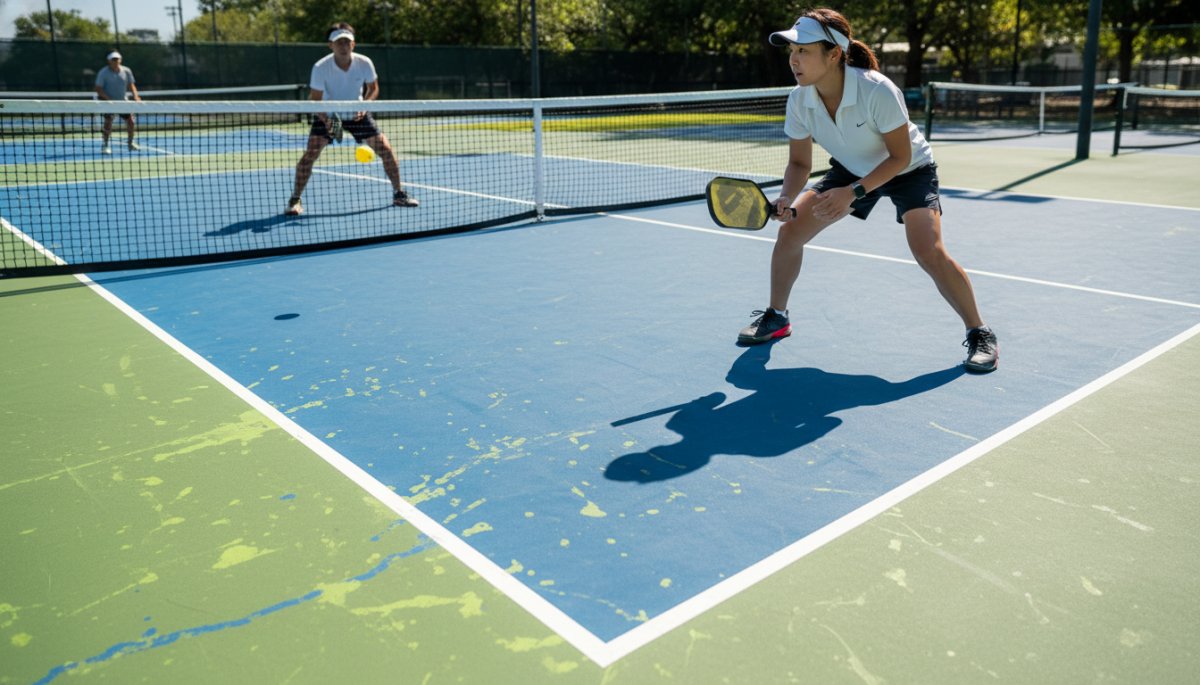
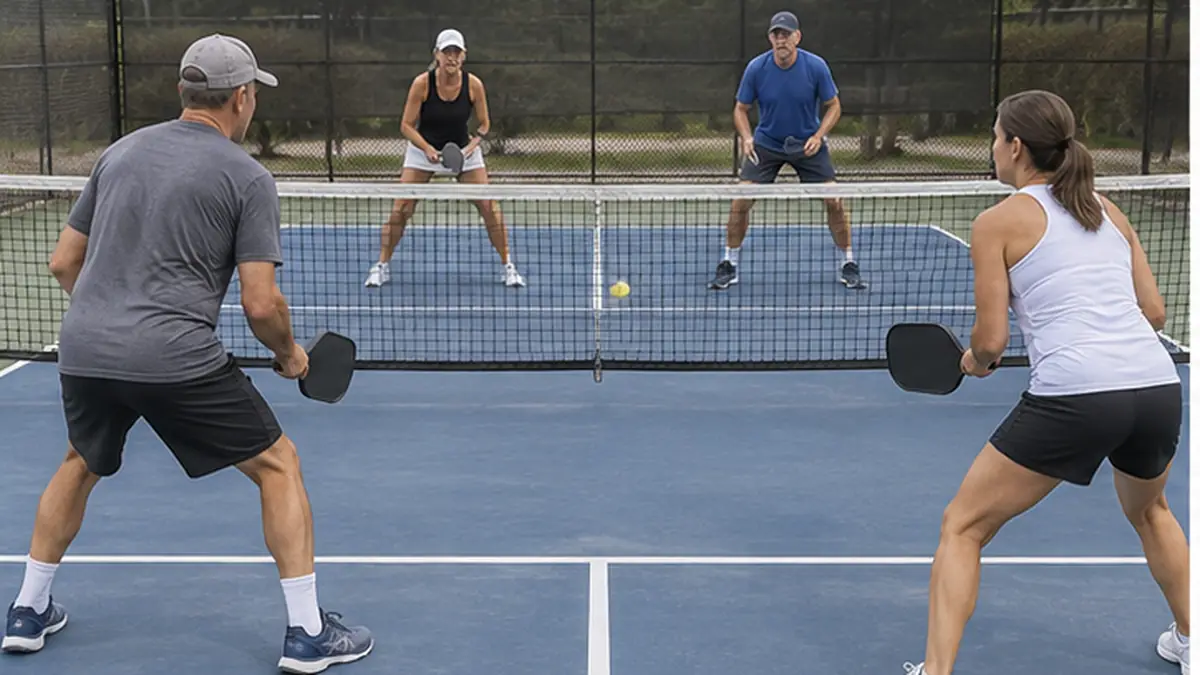
This area is also called the kitchen and refers to a special zone set at a position 2.13 m from the net. It is on both sides of the court and is marked by a line parallel to the net. Its biggest feature is that a volley (hitting the ball without a bounce) is prohibited within this zone. However, after the ball has bounced once, you are allowed to enter the zone and hit it. Because of this rule, delicate touch and positioning become important, not just power.
Why does this rule exist? The answer is clear: to prevent tall players from winning one-sidedly by hammering smashes at the net. Thanks to this rule, pickleball is a sport anyone can enjoy regardless of age or fitness. In fact, it is not rare for players in their 80s to shine at tournaments. For the court dimensions, seethe complete guide to court size.
| Item | Details |
|---|---|
| Also known as | Kitchen |
| Position and size | Within 2.13 m of the net (both sides of the court) |
| Prohibited | Volleying within the zone (hitting without a bounce) |
| Allowed | After the ball has bounced once, you can enter and hit it |
| Purpose | To prevent one-sided hard hits at the net and let anyone enjoy the game |
Fully understand the cases that become faults in the non-volley zone
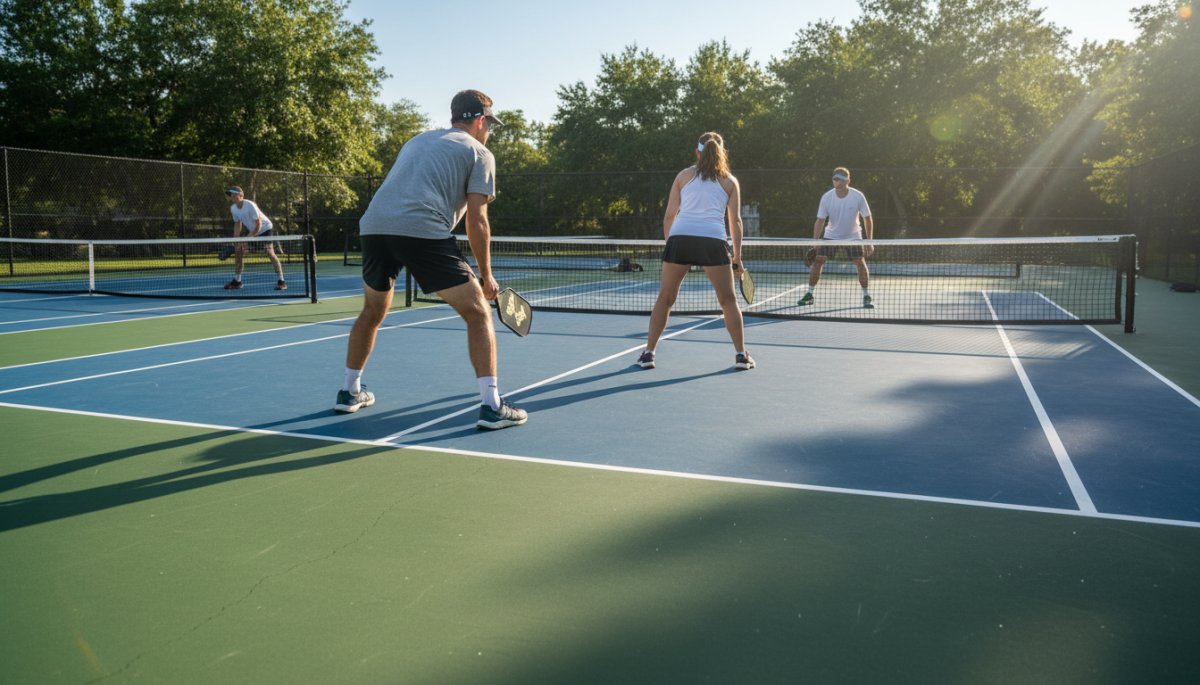
The non-volley zone rule looks simple at a glance, but in actual play a variety of situations arise. We have organized the cases that become faults.
| Situation | Call |
|---|---|
| Volleying within the zone | Fault |
| Stepping on the line or touching the zone while volleying | Fault |
| Something you are wearing or your paddle touches the zone | Fault |
| Entering or touching the zone from momentum after a volley | Fault |
| Hitting within the zone after a bounce | OK (legal) |
A fault the moment you step on the line
When you enter the non-volley zone to volley, it is a fault.
What you especially want to watch is that stepping on the line is also a violation. Having something you are wearing (clothing, a hat, etc.) or holding (a paddle, etc.) touch inside the zone including the line is also counted as a violation. Not just your feet but all of your body and gear must be outside the zone when you volley.
The action after hitting also needs care
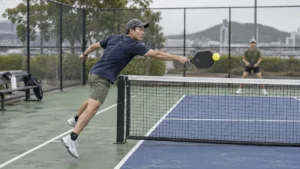
If after a volley the momentum carries you over so that you step on the line, or enter or touch the zone, that too is a fault.
Because it is regarded as one continuous motion, you need to be attentive not only to the moment you hit but to the flow afterward. Even if the opponent's ball is out, it becomes a fault the moment you enter the zone after a volley. This point tends to be overlooked, so take care.
You can hit if it bounces
Entering the non-volley zone itself is not a fault.
Even within the zone, you can hit if you let the ball bounce. But because a volley is easier to put away than waiting for the bounce, standing right at the edge of the line and, while keeping the rally going, waiting for the opponent's ball to float up and finishing with a volley is the thrill of this sport. For the whole picture of faults, seethe explainer on fault rulesplease also have a look.
Tactical use: whoever controls the non-volley zone controls the game
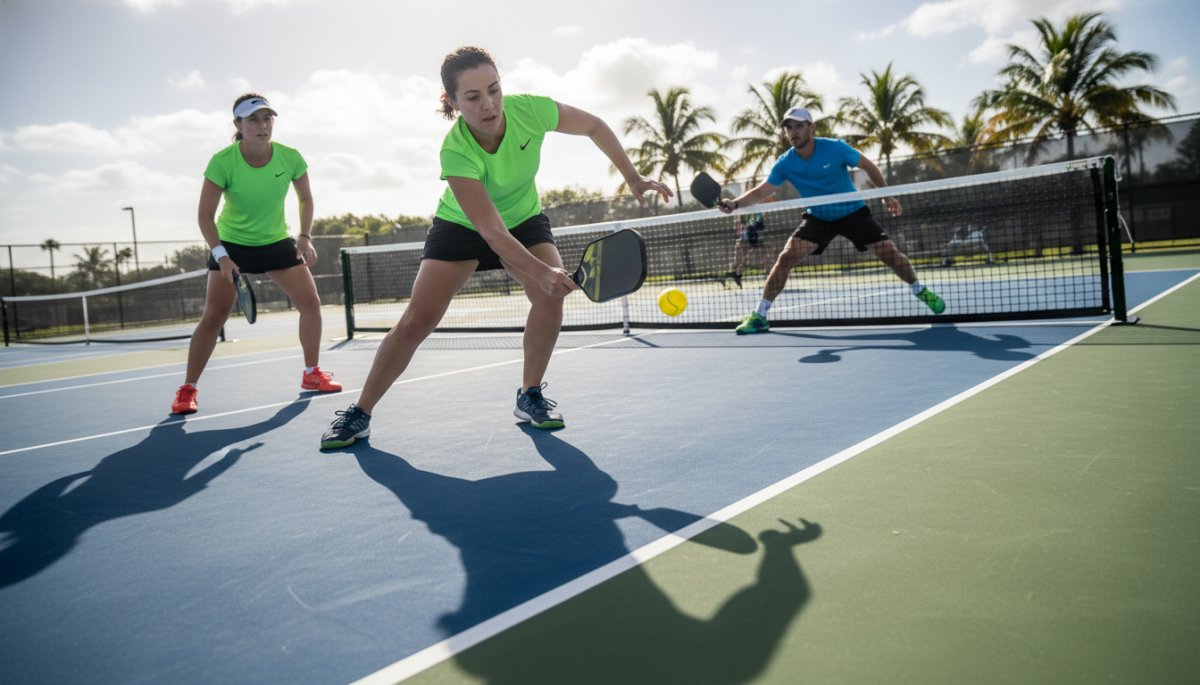
Once you understand the rules, next is tactical use. How you use this area decides the outcome.
Ideal positioning
The ideal position is right behind the kitchen line.
From here you can react quickly to the opponent's shots and usedinkand volleys effectively. In doubles, the basic formation is for the two to stand side by side and cover the court evenly. As long as your feet are outside the zone, there is no problem reaching in to volley a ball inside the zone. This subtle difference in positioning is one element that separates advanced players from beginners.
The importance of the third shot
Top players call the third shot one of the most important shots in pickleball.
The third shot is the third stroke the serving side hits after the serve. At this timing, the serving side is near the baseline and the returning side near the non-volley line. Because of the trait that the closer to the net, the higher the point-winning rate, the returning side is at an advantage. What breaks through this disadvantage is the third-shot drop. By dropping a low, soft ball over the net rather than hitting hard, you can prevent the opponent's attack while closing in forward. For details, seethe explainer on the third-shot drop.
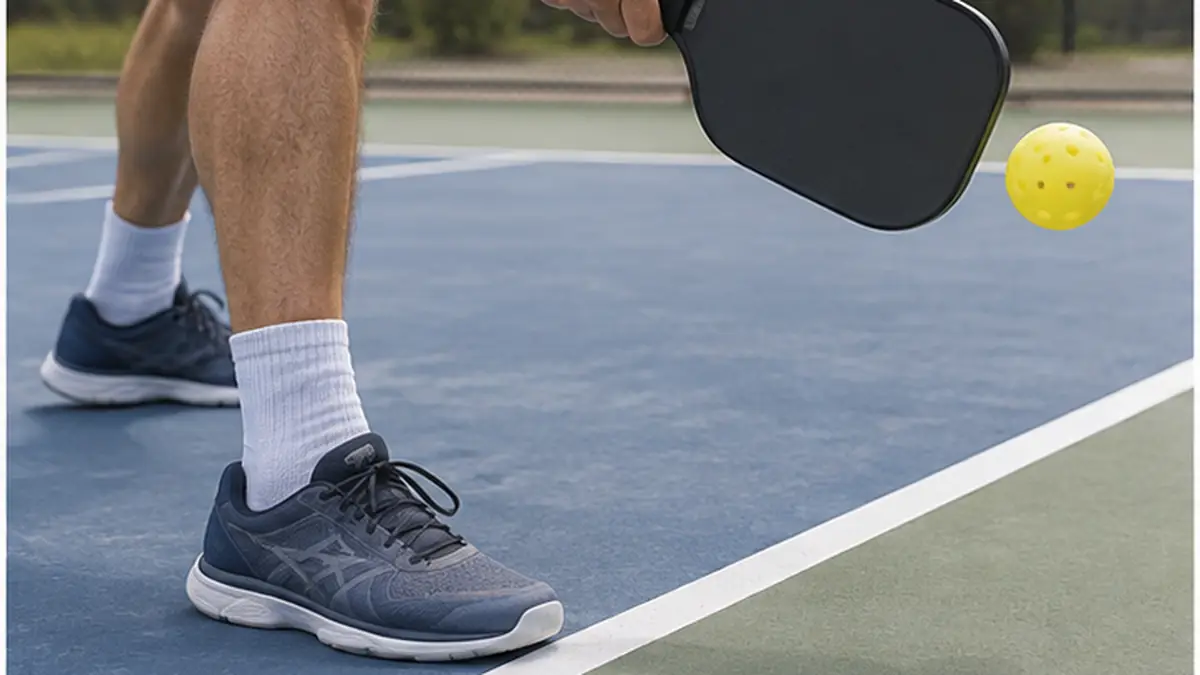
The relationship between the dink shot and the non-volley zone
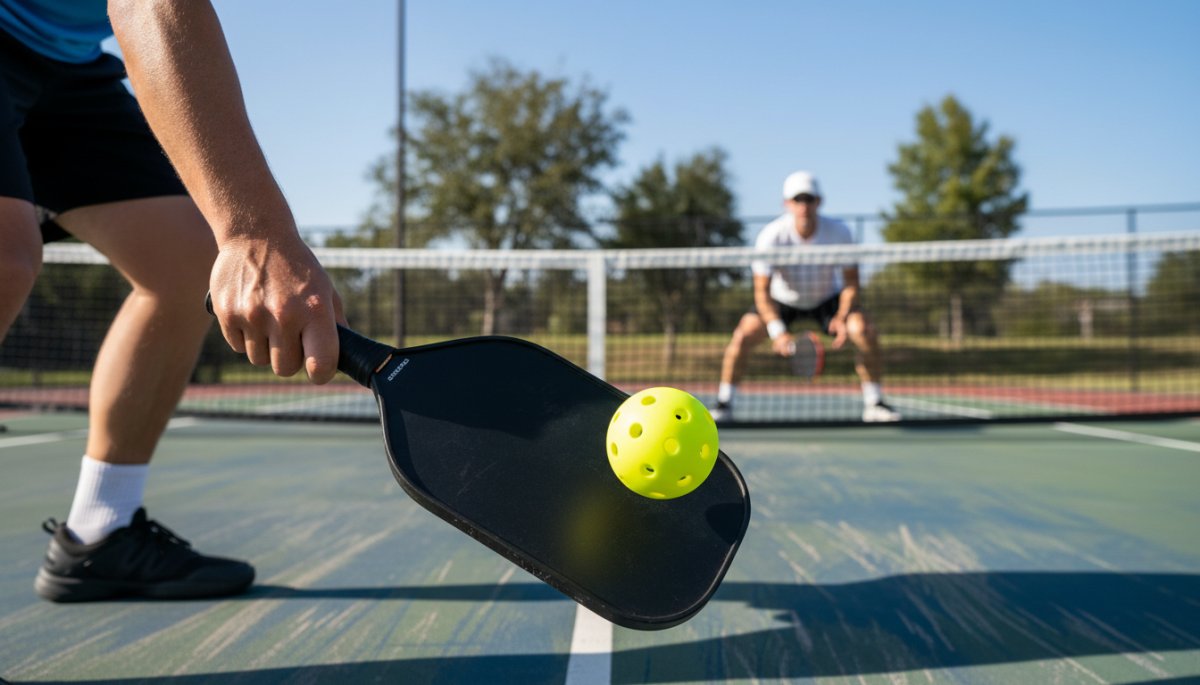
Not to be left out in discussing the non-volley zone is the dink. It is a shot hit low and soft over the non-volley zone, pinning the opponent to the kitchen line and preventing aggressive volleys.
The basic technique of the dink
The dink is one of the most important shots in pickleball strategy.
In matches between advanced players, a dink rally can continue dozens of times. Keep hitting a low, soft ball, wait for the opponent to float the ball up, and finish with a volley at that moment; this is the basic flow of a dink battle. The aim is to keep the opponent right behind the non-volley zone and not let them volley aggressively.
Positioning in a dink battle
In a dink battle, the basic play is to stand right at the edge of the non-volley line.
From this position, you can react quickly to the opponent's dink and either return with a dink yourself or finish with a volley the moment the ball floats up. In doubles, the sense of distance with your partner also matters. When the two stand side by side and adjust their positions to each other's movement while covering the court evenly, a solid defense that gives the opponent no opening is completed. For how to hit a dink itself, seedink mastery guideexplains it in detail.
The basic flow of offense and defense using the non-volley zone
Let us connect the rules and tactics so far along the flow of an actual rally. Offense and defense centered on the non-volley zone generally proceed in the following steps.
| Step | What to Do |
|---|---|
| 1. Serve and return | Following the two-bounce rule, return the first two strokes on one bounce |
| 2. Third shot | The serving side drops it low and creates a foothold to close in forward |
| 3. Advance to the kitchen line | Both sides close in to right behind the non-volley line |
| 4. Dink battle | Exchange low, soft dinks and wait for the opponent's mistake or a floating ball |
| 5. Finish with a volley | The moment the opponent's ball floats up, finish with a volley from outside the line |
The point is how advantageously you handle the standoff in which everyone gathers at the edge of the kitchen line in steps 3 and 4. Because hitting hard in a rush floats the ball up and invites a counter, the standard play is to patiently keep dinking and wait for the moment the opponent breaks down. Conversely, if you float it up yourself, step back and go on the defensive. This very back-and-forth is the fun unique to pickleball, which has the non-volley zone. As you get used to it, you come to see that the reading of position and distance, where to close in and when to move forward, ties directly to scoring.
The non-volley zone traps beginners tend to fall into
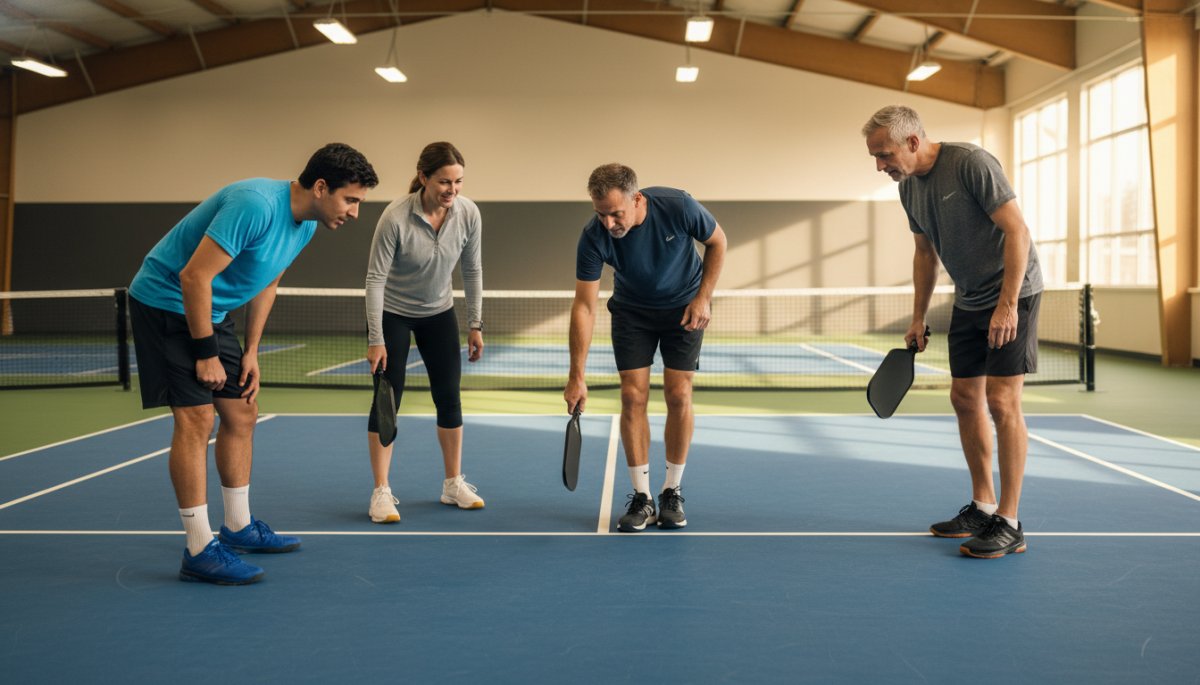
The non-volley zone rule is the part beginners most easily get confused about. Knowing the common mistakes lets you improve smoothly.
The trap those with tennis experience fall into
For those with tennis experience, the two-bounce rule and the non-volley zone rule are hard to get used to.
In tennis you can rush forward with serve-and-volley and put away a volley, but in pickleball this is prohibited to keep rallies going. You need to suppress the urge to rush forward right after the serve and volley, and first wait for two bounces. Until this habit is ingrained, conscious practice is essential. For the differences from tennis, seethe article comparing it with tennis.
Care about how you step on the line
Stepping on the non-volley line is also a fault.
Always be conscious of your footing, checking whether you are stepping on the line when you volley. Especially, cases of losing balance and stepping on the line after a forceful volley are often seen. In practice, it is recommended to secure a safety margin by standing a little away from the line and gradually get used to positioning right at the edge.
Do not forget you can hit after a bounce
Even within the non-volley zone, you can hit if you let it bounce.
Not a few beginners forget this point and mistakenly believe that you must not enter the zone at all. If the opponent's drop shot falls within the zone, entering and hitting it back after the bounce is completely legal. Rather, in this situation you should actively enter the zone and hit. Coming to distinguish situations where you can enter from those where you cannot greatly widens your range of play.

Remembering you must not enter the kitchen actually increases mistakes. Correctly, it is only you must not hit without a bounce in the kitchen. A bounced ball can be entered and hit. Just grasping this one point sharply reduces beginners' faults. After that, making a habit of taking a step back after hitting also prevents faults from excess momentum.
FAQ
What is the non-volley zone (kitchen)?
It is a pickleball-specific area set within 2.13 m of the net. It is on both sides of the court, and within it a volley (hitting the ball without a bounce) is prohibited. It is a rule to prevent one-sided hard hits at the net and to let anyone enjoy the game regardless of age or fitness.
Are you not allowed to enter the non-volley zone?
Entering itself is not a fault. What is prohibited is a volley within the zone. After the ball has bounced once, you can enter the zone and hit it. It is accurate to remember it not as you must not enter but as you must not hit without a bounce.
When does it become a fault?
Volleying within the zone, stepping on the line or touching the zone while volleying, something you are wearing or your paddle touching the zone, and entering the zone from momentum after a volley are all faults. Even if the opponent's ball is out, it becomes a fault the moment you enter the zone after a volley.
What are the tips for using the non-volley zone well?
The basic play is to stand right behind the kitchen line, pin the opponent with dinks (low, soft shots), and finish with a volley from outside the line the moment the ball floats up. Because hitting hard in a rush floats the ball up and invites a counter, the standard play is to patiently keep dinking and wait for the opponent to break down.
Summary: Make the non-volley zone your ally
The non-volley zone is the most important rule that differentiates pickleball from other racket sports.
By understanding this area's rules accurately and using them tactically, your play greatly improves. Standing right behind the kitchen line, toying with the opponent using dinks, and finishing with a volley when a chance comes; mastering this basic flow is the shortcut to improvement.
Beginners should first start with not stepping on the line and being conscious of the difference between a volley and a hit after a bounce. As you gain experience, this area's tactical depth comes into view. It is precisely because there is the non-volley zone rule that technique and strategy, not just power, decide the outcome. Make it your ally and enjoy play a rank higher.
Related Articles Worth Reading
- What are the pickleball foul rules that beginners tend to stumble on?
- The complete guide to pickleball's kitchen rule: how to avoid faults
- Mastering the pickleball dink: basic technique and tactical points
- Pickleball Line Judging | The Criteria for In and Out Explained
- What's the difference between pickleball and tennis? Comparing rules, gear, and difficulty
Related Articles