Ben Johns, long the world's top-ranked men's doubles player, lost a mixed doubles game taking only one point. It happened at the Major League Pickleball (MLP) San Diego event in July. A player who dominates in individual competition sinks like a different person in team play, and that contrast is instructive for Japanese operators designing corporate or regional team competitions.
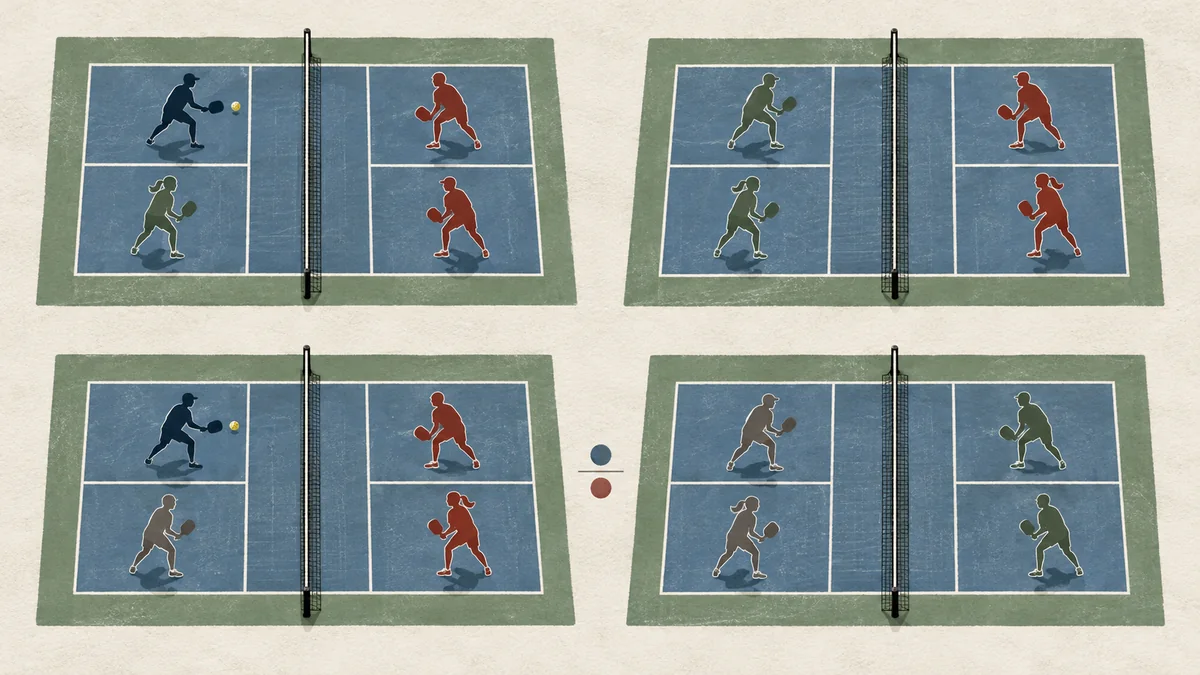
The fact that the champion took only one point
Johns plays for the Los Angeles Mad Drops. In mixed doubles in San Diego, he partnered Jade Kawamoto and lost 1-11 to JW Johnson and Brooke Buckner of the eventual champions, Dallas Flash. In another match, against Atlanta, the same Johns/Kawamoto pairing was blown away 2-11. The top-ranked player in the individual game taking one or two points in a match is hard to believe from the numbers alone.
The Mad Drops as a team also struggled, finishing fifth after beating California in the fifth-place match. Dallas Flash, by contrast, swept all four pool matches and beat Columbus in the final to take the title. It was a weekend that combined the champion's personal rout with his team's slide.
Why individual strength counts for less in MLP team play
An MLP match is contested over four lines, men's doubles, women's doubles and two mixed doubles, and if it ends 2-2 it is decided by the DreamBreaker, a rotating singles tiebreaker. That is where the decisive difference from individual competition lies.
First, Johns takes the court in men's doubles, mixed doubles and the DreamBreaker that comes around at 2-2, while the women's doubles line proceeds entirely separately from his skill. There is a limit to what one ace can cover. Second, mixed doubles turns heavily on how well a pair fits together. However high the individual skill, if the timing and targeting with a partner do not match, the opposing side attacks the woman's side and the gap opens at once. The 1-11 and 2-11 here are scores that individual rankings alone cannot explain. Form on the day and the opponent's polish are mixed in, but at the very least it shows that being the world's best does not carry over into team play.
Team matches are decided not by whether you hold the single strongest piece but by whether all four lines are free of holes. The format asks how you combine four or five players with a high average rather than how you carry one star.
The champion's weekend in data
| Opponent | Event | Johns' pairing | Score |
|---|---|---|---|
| Dallas Flash | Mixed doubles | Johns / Kawamoto | 1-11 |
| Atlanta | Mixed doubles | Johns / Kawamoto | 2-11 |
A game in MLP is first to 11. Taking one or two points in that game does not mean losing narrowly to an evenly matched opponent; it means being pushed aside one-sidedly because nothing meshed. It is hard to imagine the same score against the same opponent in individual play.
Upsets that end unbeaten runs are normal in team play
In team formats, results that overturn individual rankings happen again and again. In MLP itself, an unbeaten women's powerhouse took its first loss to a lower-placed team (The upset that stopped unbeaten New Jersey's women, as Shock hand ALW a first loss). A format that stacks up results line by line is built so that one star cannot carry the whole thing. That is exactly why companies put capital into buying a league's billing (Amway bought the MLP title, so why put its name on the sport's home stage). Beyond the story of individuals, the continuous drama of teams rising and falling is what makes team play work as a show.
What this tells those designing team competition in Japan
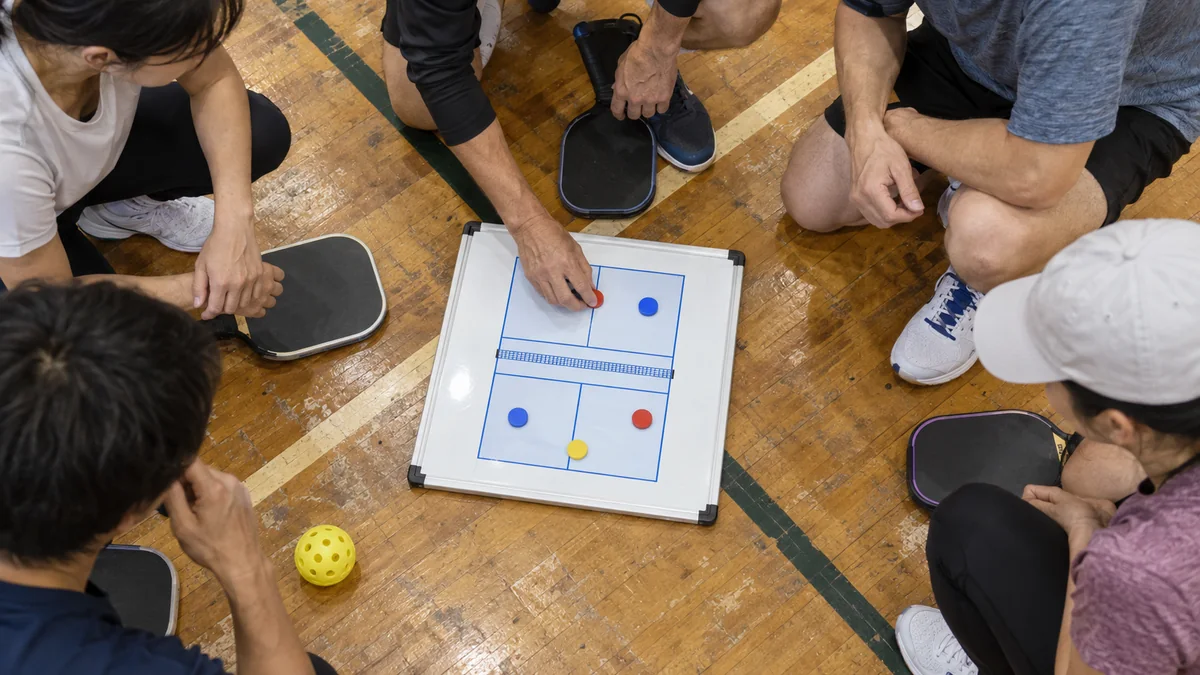
The structure that showed up in MLP will reproduce itself in team leagues built in Japan. Companies are already fielding teams (The day six companies own teams, and how Sansan's PX LEAGUE changed the way to take part), and Johns' rout hands concrete lessons to those designing and entering such leagues.
First, securing one ace will not win team matches. Raising the level of every line, mixed and women's doubles included, gives a better expected win rate. Second, pairings are better designed on the assumption that they will be swapped to suit the opponent rather than fixed, because results move on how pairs mesh rather than on the sum of individual skill. The same applies to company events and amateur leagues: rotating pairs while testing chemistry draws more involvement from everyone and makes the results more interesting than gathering one strong player.
Ripples through both the business and the grassroots
An upset that sinks the champion is welcome for the viewer. More matches with unreadable outcomes make it easier for broadcasters and sponsors to come on board, and the league's commercial value rises. For operators building team competition in Japan, a design in which the strongest do not simply keep winning is a tailwind that brings in a wider range of companies and amateurs. The devices that make strength look evenly matched, such as drafts, trades and rules on line-up composition, double as the engine that grows both crowds and participants.
Tournament overview
| Tournaments | Major League Pickleball (MLP) San Diego, Event 7 |
|---|---|
| Venues | Barnes Center (San Diego, California, USA) |
| Ben Johns' team | Los Angeles Mad Drops (finished 5th) |
| Winner | Dallas Flash (4-0 in pool play, beat Columbus in the final) |
| Match format | Men's doubles, women's doubles, two mixed doubles, plus the DreamBreaker (rotating singles tiebreaker) |
Summary
Ben Johns' 1-11 and 2-11 reflect less a slump in one player than a structure in which the team format does not convert individual strength straight into results. If you are building a team league or a corporate competition in Japan, drop the reliance on an ace and put the work into every line, mixed doubles above all, and into pairing chemistry. Start by trying several mixed pairings among your own members and recording the win rates, and the outline of a team that can win team matches starts to appear.