この記事の要点
- Pickleball is gaining popularity as a sport anyone can enjoy, but the strain on the knees cannot be overlooked.
- とくに50歳以上のプレイヤーでは、怪我のリスクが高まる傾向があります。
- とはいえ、適切な靴、ウォームアップ、無理のないプレーは膝への負担を減らす助けになりますが、怪我を完全に防ぐものではありません。

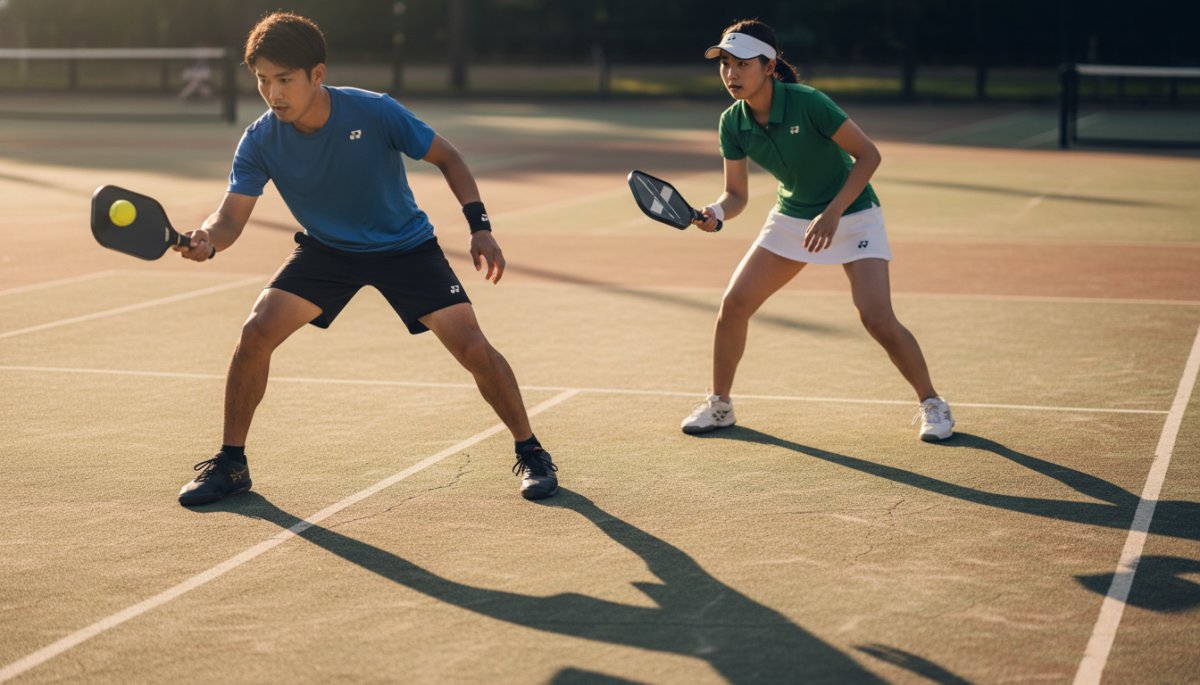
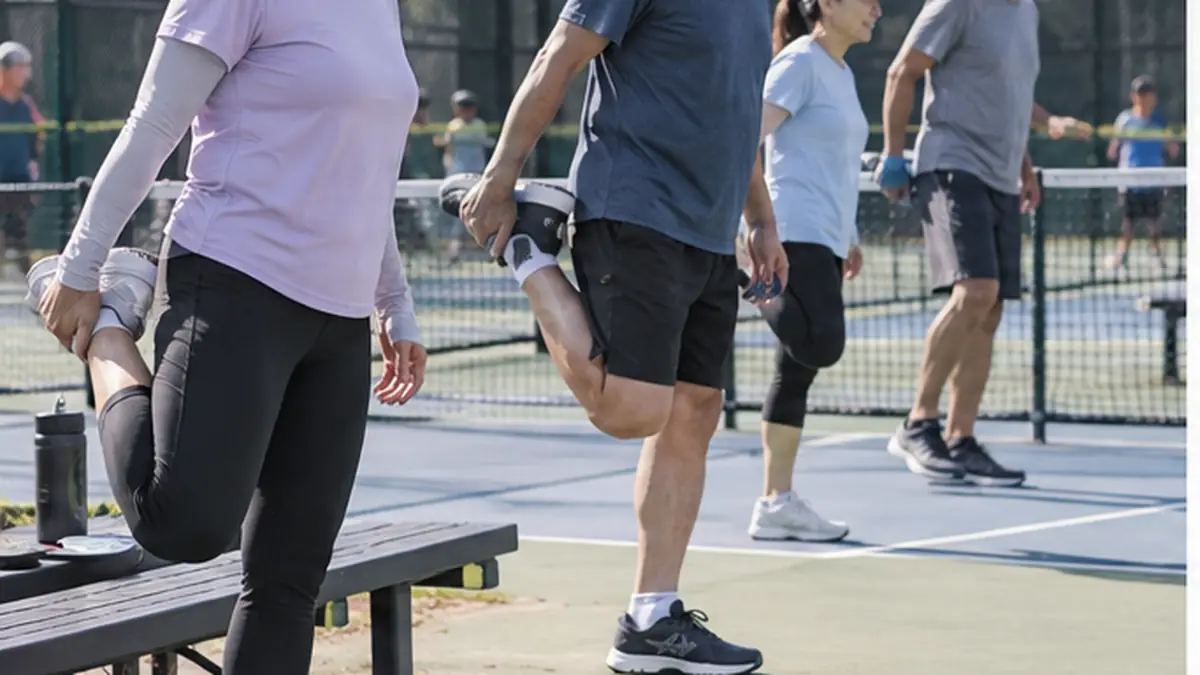
The importance of protecting your knees in pickleball
Pickleball is gaining popularity as a sport anyone can enjoy, but the strain on the knees cannot be overlooked.
Especially among players aged 50 and over, injury risk tends to rise. In U.S. statistics, about 90% of pickleball-related injuries occur in those aged 50 and over, and among them knee injuries are considered a serious problem. This is because this sport, with its many sudden changes of direction and stopping motions, puts a large load on the knee joint.
とはいえ、適切な靴、ウォームアップ、無理のないプレーは膝への負担を減らす助けになりますが、怪我を完全に防ぐものではありません。この記事では、膝を痛める原因から、正しいフットワーク、シューズ選び、ウォーミングアップ、筋力トレーニング、膝に優しいプレースタイルまで、今日から実践できる方法を整理します。なお、すでに痛みや違和感がある場合は無理をせず、整形外科などの医療機関で相談してください。
| Five pillars for protecting the knees | Point |
|---|---|
| Footwork | A low base stance, small steps, landing on the toes |
| Shoes | Cushioning, lateral support, grip |
| Warm-up | Dynamic and static stretching before and after play |
| Strength training | Train the thighs, glutes, and core to support the knees |
| Play style | Avoid forced movements, reduce intense motion with dinks |
Causes of increased strain on the knees
Sudden movements and changes of direction
In pickleball, you need to change direction many times in a short span.
Because the court is relatively small, quick reactions are demanded, and the knee joint can momentarily take several times your body weight in force. Especially the fine footwork in the kitchen area (non-volley zone) is a main factor increasing strain on the knees.
Improper form and footwork
If correct form is not ingrained, extra strain falls on the knees.
Moving with the knees turned inward, or playing with the toes and knees not aligned, produces an unnatural twist in the knee joint. Also, a habit of landing heel-first transmits the impact directly to the knees.
Lack of strength and reduced flexibility
If the thigh muscles (quadriceps and hamstrings) are weak, they cannot support the knee joint enough.
Since strength naturally declines with age, players aged 50 and over need particular care. When flexibility is lacking, the joint's range of motion is limited, and forced movements become a strain on the knees.
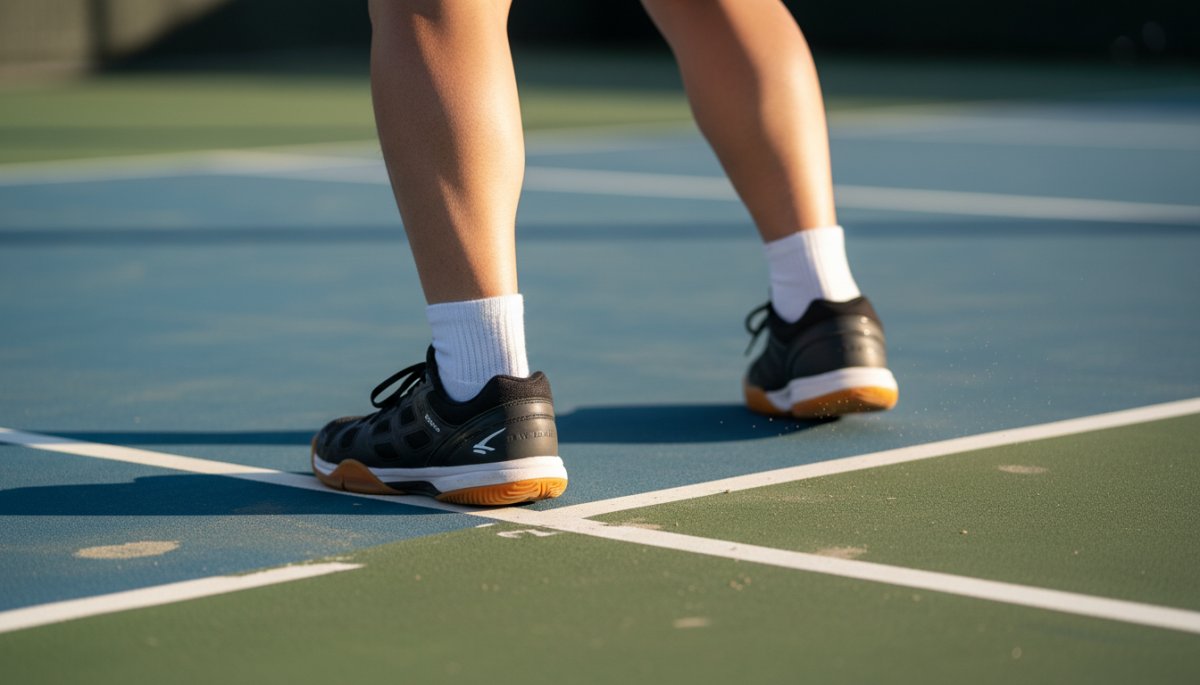
Protect your knees with correct footwork
Mastering the base stance
The first step to protecting your knees is to master the correct base stance.
Always be conscious of a ready position with the knees slightly bent and the hips lowered a little. Open your feet to about shoulder width and distribute your weight evenly on both feet. Point the knees in the same direction as the toes and take care they do not turn inward. Starting your movement from this stance keeps the impact on the knees to a minimum.
Small step work
Aim for small steps rather than big bounding movements.
By always staying lightly in motion without dragging your feet, you can respond to sudden changes of direction more easily. Moving in an arc rather than in a straight line toward the ball spreads out the strain on the knees.
Absorbing impact on landing
When landing, be conscious of coming in from the toes and absorbing the impact with the whole sole.
Landing heel-first transmits the impact directly to the knees. Using the knees softly and absorbing the impact like a cushion greatly reduces the strain on the joints. Because backward movement especially tends to throw off your balance, careful footwork is important.
Proper shoe choice saves your knees
Cushioning and support
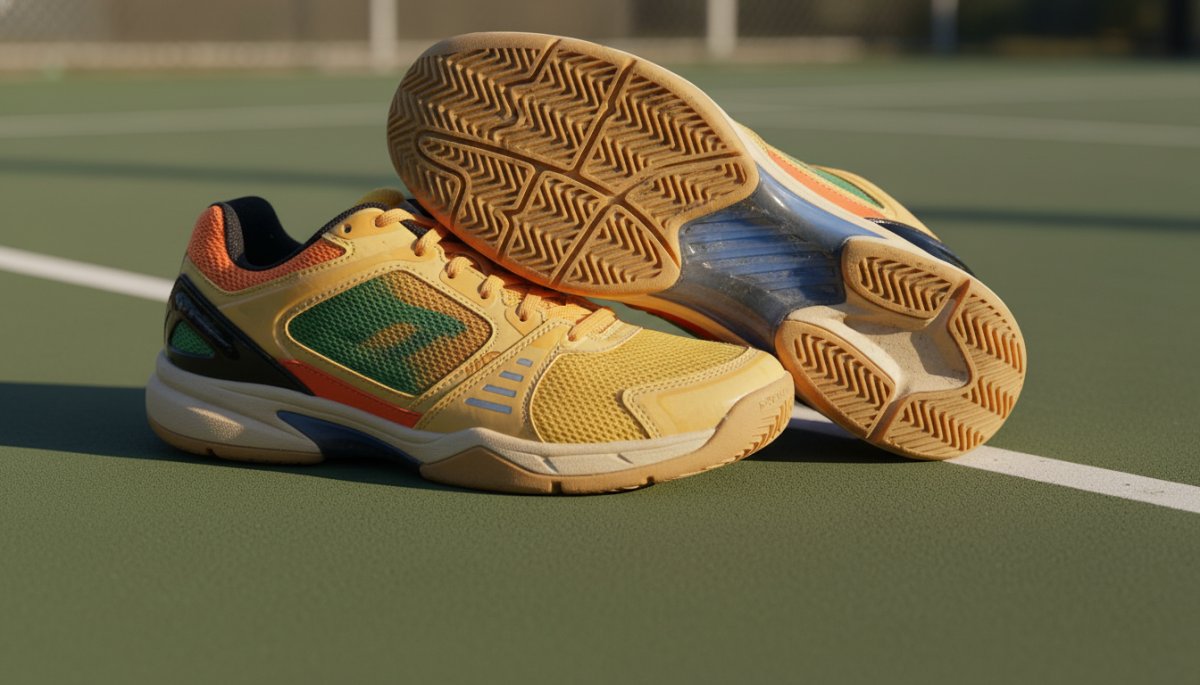
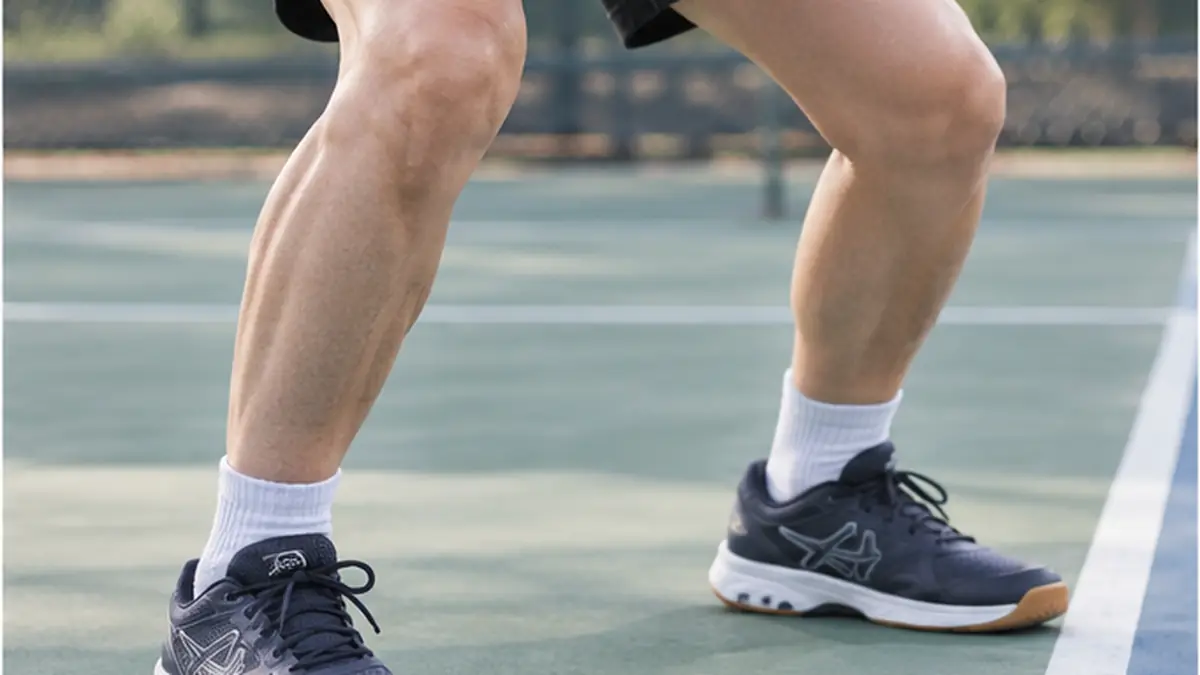
Choosing pickleball-specific or court-sport shoes ties directly to protecting your knees.
Enough cushioning absorbs the impact on landing and lightens the strain on the knees. Focus on the midsole material and choose ones using EVA foam or polymer materials. Ankle support that firmly holds up lateral movement is also essential.
Grip and stability
If the sole's grip is lacking, you slip more easily and extra strain falls on the knees.
Choose an outsole of non-marking rubber that grips the court surface firmly. When the sole wears down, replacing it with new shoes early is also important. For a detailed way to choose shoes, seethe guide to choosing shoesis also helpful.
Checking the fit
If the size does not fit, the foot moves inside the shoe and becomes unstable.
When trying them on, actually test lateral movement and stopping motions. The ideal size has a little room at the toes and firmly holds the heel.
The importance of warm-up and stretching
Dynamic stretching before play
Starting to play suddenly with cold muscles and joints raises injury risk.
Do a warm-up of about 5 to 10 minutes before play. Raise your body temperature and promote blood flow with light jogging, stepping in place, and knee bends. Widen the joints' range of motion with dynamic stretches such as circling the knees widely and repeating a squat motion.
Areas to stretch with focus
Stretch the quadriceps at the front of the thigh, the hamstrings at the back of the thigh, and the calves with focus.
If these muscles are supple, strain on the knee joint is spread out. Not forgetting to loosen the muscles around the hips makes the whole lower body move smoothly. For concrete steps, seea pre- and post-play stretching routine.
Cool-down after play
The cool-down after play matters just as much.
Stretch the muscles slowly with static stretching so less fatigue remains. If the area around the knees has stiffened, loosen it carefully. If you have knee discomfort after play, cooling it for about 15 to 20 minutes can ease the tightness. When pain persists, do not settle it by your own judgment; consult a medical institution.
Source Pickle One, A Must-Read for Pickleball Enthusiasts 50 and Over! Concrete Ways to Prevent InjuryCreated from
Support your knees with strength training
Strengthening the quadriceps
The most important muscle supporting the knees is the quadriceps at the front of the thigh.
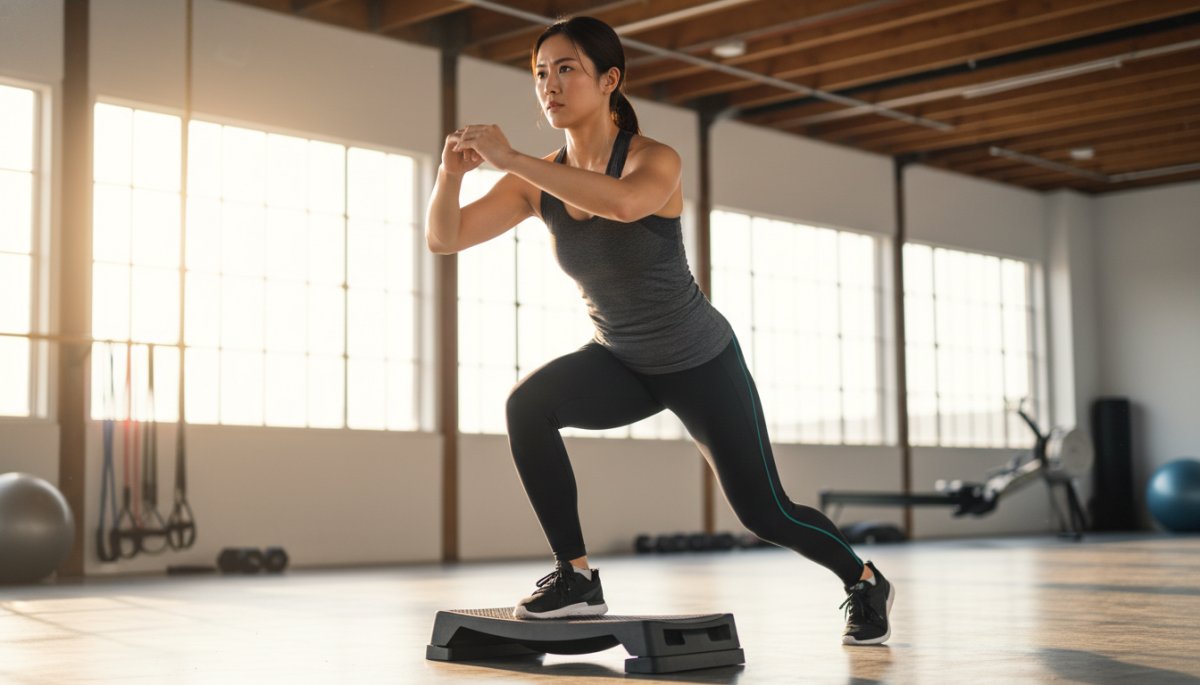
Train them with squats and leg extensions. In squats, take care the knees do not go past the toes, and perform them with the image of drawing your hips back. Keeping up about three sets of 10 to 15 reps two or three times a week gradually builds strength.
Hamstrings and balance
The hamstrings at the back of the thigh also contribute greatly to knee stability.
You can train them with leg curls and deadlifts. Practice using one-leg stands and a balance board is also effective, working the small muscles around the knee and raising joint stability.
The effect of core training
If the core is weak, you more easily lose balance during play, and extra strain falls on the knees.
Bringing in planks, side planks, bird dogs, and the like raises whole-body stability and, as a result, lightens the strain on the knees too. For fitness building overall, seethe guide to exercise intensityis also worth a look.
Devising a knee-friendly playing style
The judgment to avoid forced movements
There is no need to try to reach every ball at full effort.
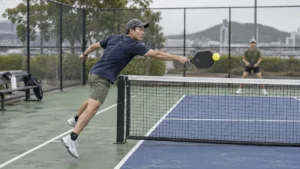
Trying to hit from a forced posture puts excessive strain on the knees and raises injury risk. Cleanly giving up on balls you cannot reach and preparing for the next one is also important. In doubles, clarifying your defensive range in coordination with your partner cuts forced movements.
Optimizing positioning
Proper positioning keeps your travel distance to a minimum.
Hold your base position near the kitchen line, predict the opponent's shot, and start moving early. Positioning yourself toward the center of the court makes it easier to respond either left or right.
Dinks and control shots
Rather than relying only on hard hits,dinkusing many (soft shots) and control shots cuts intense movement.
Pickleball is a strategic sport where placement and control are emphasized over power. Playing smartly while thinking about the strain on your knees is the secret to enjoying it for a long time.
Hydration, rest, and dealing with pain
Pickleball involves more movement than it looks, and dehydration stiffens the muscles and raises injury risk.
Take in enough fluids before play and drink water frequently during breaks too. In hot seasons, also replenish electrolytes with a sports drink. When fatigue builds up, form breaks down and strain on the knees increases, so taking moderate rest and not overdoing it is the key to enjoying it for a long time.
If you feel discomfort or pain in your knee, stop playing right away and rest. Enduring the pain and continuing worsens the symptoms and can lengthen recovery. If there is swelling, strong pain, or lingering discomfort, see a medical institution such as an orthopedic clinic early. Early response is the best way to protect your knees.
Care not only the knees but the connected parts too
The strain on the knees is swayed not only by the knees themselves but also by the state of the hips and ankles above and below. Tending to the surrounding parts spreads out the strain on the knees.
Keep the hips and ankles flexible
When the hips are stiff, the burden of movement that should be absorbed there tends to concentrate on the knees.
Making a habit of exercises that circle the hip area widely and stretches for the glutes and back of the thigh makes the whole lower body move smoothly and protects the knees. It is the same for the ankles: when stiff, they cannot release the impact of landing and it transmits to the knees. Stretch the Achilles tendon and calves and circle the ankles well before starting play. It is important to be conscious of tending to the knees, hips, and ankles as one connected chain.
Caring for the calves and soles
The calves are an important cushion that absorbs the impact of landing.
When they stiffen from fatigue, impact absorption drops and strain on the knees increases. Gently loosening the calves after play and rolling the soles with something like a tennis ball to loosen them lightens the next day's tightness. When the arch of the sole is maintained, landing stability also rises.
Making use of supports and taping
If you are worried, aiding the joint with a knee support or taping is one method.
A knee support moderately supports the joint, raises stability, and also guards against cold. Choose one that does not hinder movement and fits the shape of your own knee. For those with a past knee injury, or on days of long play, wearing one gives a sense of security. Taping supports the joint's movement, but the wrapping requires knowledge, so if you are unsure it is recommended to consult a specialist or start with a simple support. It is only an aid, and it is important not to rely entirely on a support but to combine it with form and strength building.
Basic responses when pain appears
No matter how careful you are, pain or discomfort can appear. Know the basic responses for such times.
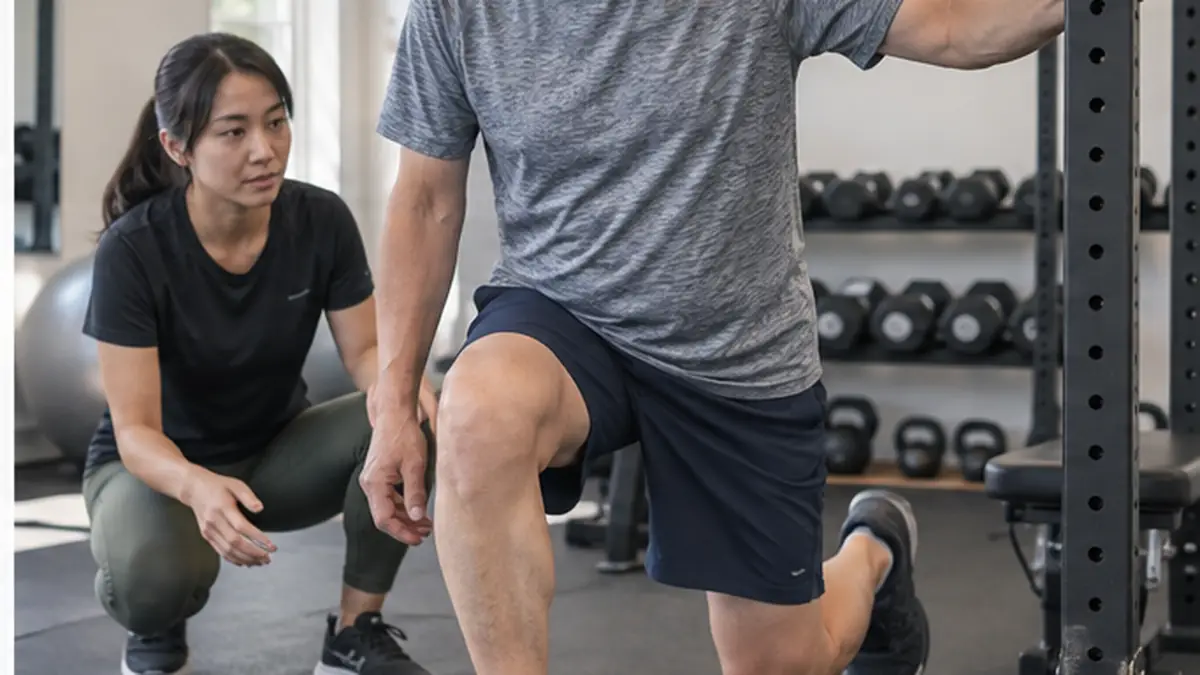
If you feel pain in your knee during play, do not push it and stop right away. If there is swelling or heat, rest, cool it, and keeping the affected area higher than the heart makes inflammation less likely to spread. This is a first-aid response, not something to settle by your own judgment. When there are symptoms such as persistent pain, swelling that does not subside, or difficulty bending and straightening, see a medical institution such as an orthopedic clinic early. Especially if there is a feeling of buckling or a sharp pain, do not move it forcibly and seek a specialist's diagnosis. Responding correctly and early is the number-one shortcut to enjoying pickleball for a long time.

Common knee troubles are planting after a hit and reaching too hard for a ball. The courage to give up on balls you cannot reach works on both improvement and injury prevention. Especially for those aged 50 and over, it is recommended not to compromise on the warm-up before play and the timing of replacing your shoes. If pain appears, do not endure it; consult a specialist early.
FAQ
Is pickleball bad for the knees?
急な方向転換や停止動作が多いため膝に負担はかかりますが、準備と負荷調整でリスクを下げることはできますが、痛みや腫れがあるときはプレーを続けないでください。正しいフットワーク、横移動に対応したシューズ、ウォーミングアップ、筋力トレーニング、無理をしないプレースタイルを心がければ、膝を守りながら長く楽しめます。
What kind of shoes should I choose to protect my knees?
Choose court shoes with cushioning that support lateral movement. Indoors, a non-marking sole is suitable, and outdoors an outsole with high wear resistance. Avoid running shoes, which are weak on lateral movement, and replacing them early once the sole's grip drops is also important.
What should I do if my knee hurts during play?
Stop playing right away and rest. When there is swelling or heat, resting, cooling it, and keeping the affected area high is the first-aid response. This is not something to settle by your own judgment; when pain or swelling persists or bending and straightening are difficult, see a medical institution such as an orthopedic clinic early.
Can even those aged 50 and over play safely?
Yes. Because the court is small with little movement, the strain is relatively light, but since strength and flexibility decline with age, warm-up and strength building are especially important. Not chasing forced balls, and bringing in the use of supports and care of connected parts, lets you enjoy it with more peace of mind.
Summary: Protect your knees and enjoy pickleball for a long time
To lighten the strain on your knees in pickleball, correct footwork, proper shoe choice, warm-up, strength training, and a smart playing style work together to deliver results.
Bringing these into your daily play greatly cuts injury risk and lets you enjoy it safely for a long time. Especially players aged 50 and over should understand the changes in their bodies and play within a strain-free range. When pain or discomfort appears, do not endure it; rest early and consult a medical institution. Protect your knees and savor the fun of pickleball to the fullest.
確認した一次情報
- American Academy of Orthopaedic Surgeons・5 Pickleball Injury Prevention Tips
- CDC・Adult Activity: An Overview
Related Articles Worth Reading
- A Stretching Routine Before and After Pickleball | Care to Enjoy It Injury-Free for Years
- Elbow Injuries Common in Pickleball | Preventing Tennis Elbow and Self-Care Methods
- How to choose pickleball shoes without failing even as a first-timer | Tips for comfortable play
- Does pickleball require stamina? Explaining the exercise intensity and physical abilities needed
- Pickleball and Mental Health | Why It Works for Stress Relief and Preventing Depression
Related Articles