この記事の要点
- ピックルボールはテニスとバドミントン、卓球の要素を混ぜ合わせたスポーツで、プレー面積はテニスコートのおよそ3分の1ほどしかありません。
- 1ゲーム自体は15〜25分ほどですが、入れ替わりで何試合も続けると1回のプレーが90分前後に及ぶことも珍しくなく、足裏とふくらはぎ、足首には繰り返し負荷がかかります。
- 手元にある運動靴で始めたくなりますが、ランニングシューズだけは避けたい選択です。

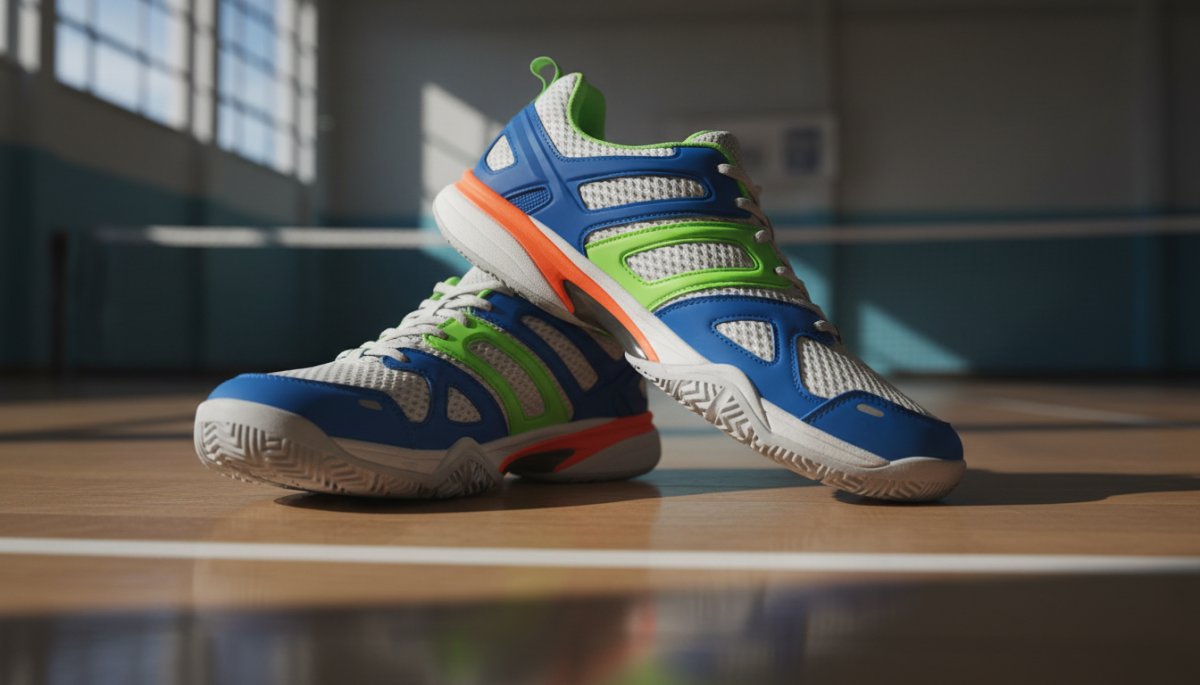
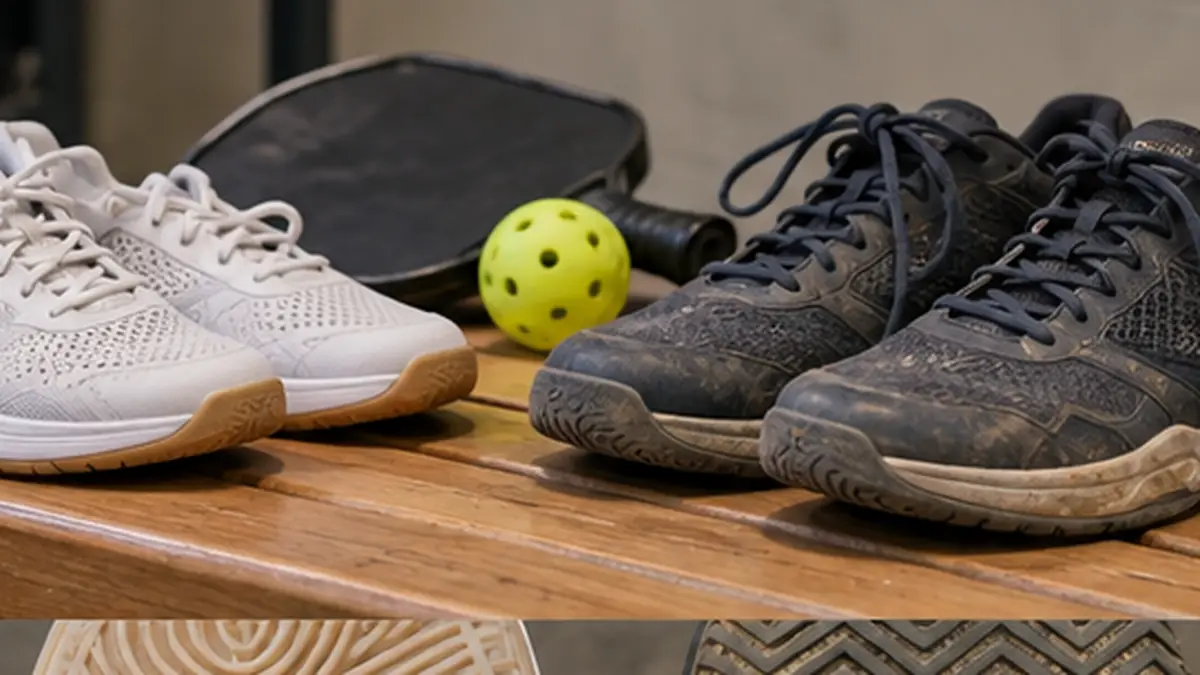
The first things to grasp when choosing pickleball shoes
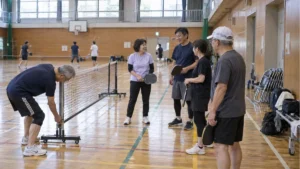
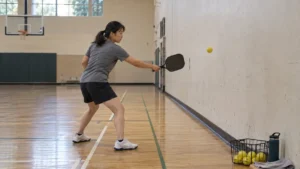
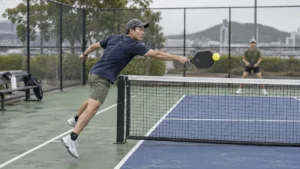
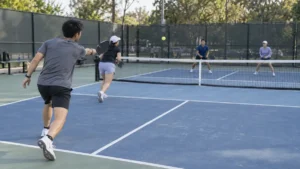
Pickleball is a sport that mixes elements of tennis, badminton, and table tennis, and the playing area is only about a third the size of a tennis court. Within that narrow area, sideways steps, sudden stops, and lunges with weight transfer continue nonstop. This abundance of "stop and change direction" movements is exactly why shoe choice matters for both performance and injury prevention.
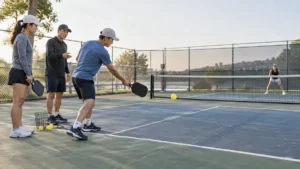
A single game itself takes about 15–25 minutes, but when you play several matches back to back it's not unusual for one session to run around 90 minutes, placing repeated load on the soles of your feet, calves, and ankles. Choosing shoes lacking in cushioning, grip, or lateral support not only slows your movement in the later stages but also leads to ankle twists and knee pain. Reading up first onform and preventive measures to avoid hurting your kneeswill make the requirements you want in a shoe even clearer.
Why you shouldn't substitute running shoes
It's tempting to start with the athletic shoes you have on hand, but running shoes are the one choice to avoid. Running shoes are designed for running straight forward, with thick soles and high heels, and lack a structure to suppress sideways sway. In the lateral direction changes of a sport like pickleball, your foot slides outward inside the shoe and the risk of a sprain shoots up.
What you need is a court shoe with "lateral stability" and a "low center of gravity." Tennis, badminton, and basketball shoes, or pickleball-dedicated models, fit this.
The idea that the ideal is "in between" tennis and badminton
Pickleball's movement sits right in between tennis, where you run around a wide court, and badminton, where you bounce around in fine steps indoors. Deciding "which way to lean" starting from your playing environment — a durability-oriented tennis type for hard outdoor surfaces, a nimble badminton type for gym floors — is the first step to not going wrong.
Shoes change for indoor courts versus outdoor courts
Even for the same pickleball, the floor material and friction differ greatly between a gym indoor court and an outdoor hard court. Since the properties required of the sole point in opposite directions, decide "where you play" first, then choose shoes.
For gyms (indoor), a non-marking sole is essential
On wooden-floor or linoleum gyms, a non-marking sole that doesn't leave black scuff marks on the floor is a requirement. Many facilities prohibit the use of non-non-marking shoes, so if you play indoors it's the top-priority check item. For indoor use, badminton shoes and basketball shoes pair well, being lightweight with strong bite (grip) on the floor.
For outdoor hard courts, choose a wear-resistant outsole
Asphalt, concrete, and outdoor hard courts have rough surfaces, and soles wear away quickly. Outdoors, tennis shoes using wear-resistant rubber or all-court models are suitable. Using a soft indoor sole outdoors wears it bald in a few sessions and drops the grip all at once, so avoid repurposing it. A model with toe reinforcement also prevents trouble with the fabric tearing on lunges.
| Playing environment | In a word | Details |
|---|---|---|
| Gym (indoor) | Non-marking + lightweight | Badminton/basketball types. A sole that doesn't damage the floor and grips well |
| Outdoor hard court | Wear-resistant + toe reinforcement | Tennis/all-court types. Resistant to wear and withstands lunges |
| Want to use for both | Pickleball-dedicated | Non-marking and durable at once. Covers indoor and outdoor with one pair |
5 checkpoints for choosing shoes
Once you've decided the environment, next look at the shoe's own performance. What matters in pickleball is "stop, support, protect" performance more than how fast you run. After grasping the overall picture of the five items in the quick-reference table below, we'll dig into the top three where the difference is greatest.
| Check item | In a word | Point to look at |
|---|---|---|
| Lateral support | Your foot doesn't waver on direction changes | Reinforcement on the outer upper, stiffness of the heel counter |
| Cushioning | Your feet don't tire even over long periods | Midsole material (EVA, gel type) and thickness |
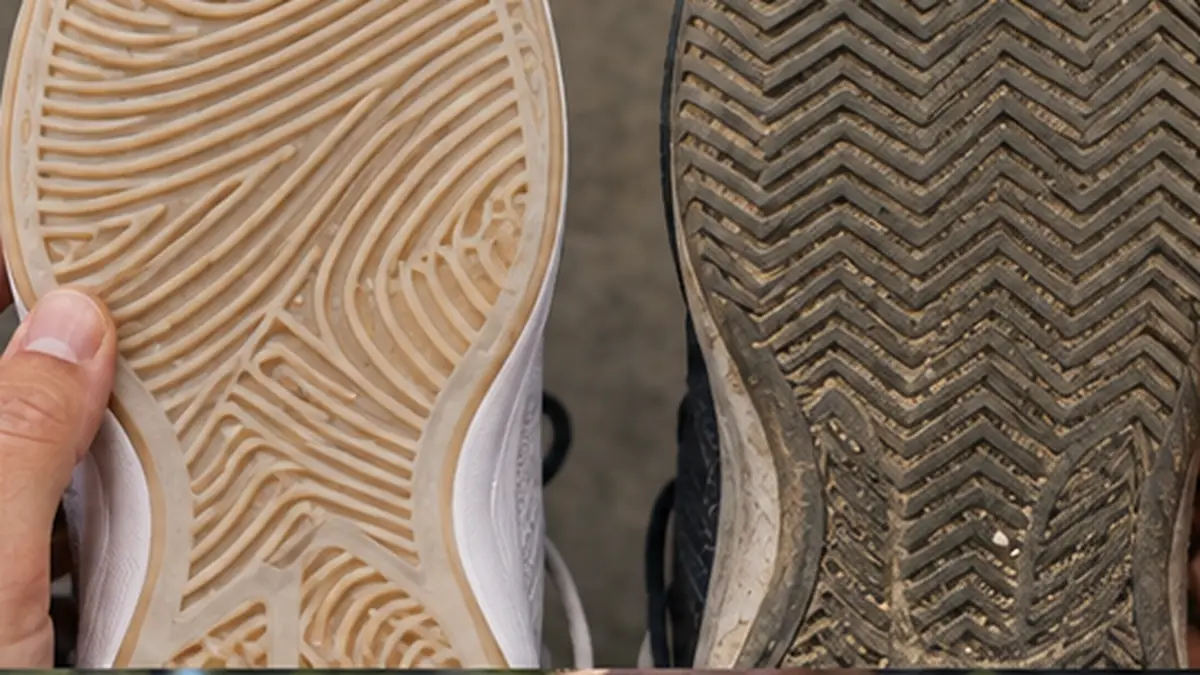
| Grip | You can stop at your target spot | Outsole pattern (herringbone, etc.) |
| Lightness | Fine single steps become faster | Weight of one shoe. Indoor lightweight types about 250g, outdoor stability types heavier |
| Breathability | You stay unstuffy and keep your focus | Mesh area of the upper |
① Lateral support
The most important performance in pickleball is lateral support, which suppresses sideways sway. At the moment of a direction change, your foot tries to escape outward inside the shoe. Check whether the outer upper has resin or overlay reinforcement, and whether the heel counter that wraps the heel is firmly stiff. A shoe that's weak here causes ankle twists and blisters.
② Balance of cushioning and court feel
To protect your feet in a long match you need cushioning, but thicker isn't necessarily better. If the midsole is too soft, the feel of the ground grows distant and you can't hold your footing on fine steps. A medium stiffness that has EVA foam or gel-type shock absorption while retaining ground feel suits pickleball, which has many stopping motions.
③ Grip (outsole pattern)
Whether you can stop dead at your target spot is decided by the outsole grooves. Models with a herringbone (fishbone) pattern that handles multidirectional movement, or a pivot point that draws a circle, are strong at sudden stops and rotation. When brand new, the grip can be too strong and catch, so at first break them in while avoiding forced direction changes.
Consider size and fitting in terms of the Japanese foot shape
Even a high-performance shoe won't show its ability if the size doesn't fit. Overseas brands often use a slim (narrow) last, which can feel tight for Japanese people, whose feet tend to be wider. Getting this wrong leads directly to blisters, chafing, and nail trouble.
How to match the width and fit
Check not only the length but also the width, which expresses foot girth (2E, 3E, etc.). Domestic brands like ASICS, Mizuno, and Yonex have many wide-model options, an advantage that makes them easy to fit even for people with high insteps and wide feet. When choosing an overseas model, prioritize going up a half size or a model with a wide designation.
| Foot concern | How to match | Brand tendencies that suit |
|---|---|---|
| Wide / high instep | Choose 2E–3E, a wide model | Domestic brands like ASICS, Mizuno, Yonex |
| Narrow / heel lifts | First address it with a heel lock and a narrow last (don't casually go down a size) | Overseas tennis-type models |
| Sliding forward over long play | About 1cm of room at the toe + a heel lock | Models with a stiff heel counter |
Timing for trying on and tips for checking
Feet swell in the evening, so trying shoes on from afternoon to evening lets you check a state close to actual play. Bring the socks you'll wear when playing, and check by walking whether there's about 1cm of room at the toe and whether the heel lifts. Lightly shifting your weight sideways in the store and choosing a shoe where your foot doesn't slip outward reduces failures.
How to choose by type (repurposing vs. dedicated)
"Should I buy dedicated shoes, or are my existing court shoes enough?" is a point many beginners agonize over. To put the conclusion first, it's realistic to judge by indoor/outdoor and frequency.
When repurposing tennis shoes
If you're mainly on outdoor hard courts, repurposing all-court tennis shoes is plenty practical. They have high wear resistance and stability and are also strong on lunges. However, tennis shoes tend to have somewhat stiff, heavy soles, and note that models that aren't non-marking can't be used in gyms. The difference in movement from tennis isan article comparing the differences between pickleball and tenniswhere we organize it in detail.
When repurposing badminton/basketball types
If you're mainly indoors, badminton shoes pair well on both nimbleness and being non-marking. They suit quick movement forward, back, left, and right, and there's a lineup of reasonably priced models. If you further prioritize ankle protection, mid-cut basketball shoes are also an option. Just be aware that the sole wears quickly on hard outdoor surfaces.

Editor's Note
When in doubt, deciding your first pair by "where you mainly play" is the shortcut. If you're indoors a lot, a lightweight badminton type; if outdoors a lot, an all-court type. Once you start playing twice a week or more, switching to a dedicated model raises the comfort a notch.
The difference between pickleball-dedicated shoes and court shoes
Lately each maker has been putting out pickleball-dedicated models. Understanding the difference between dedicated and general court shoes makes it easier to judge a replacement.
3 elements that dedicated models optimize
Dedicated shoes enhance the durability of the outsole forefoot, lateral support, and the combination of non-marking and wear resistance to match the abundance of stopping motions. It's a design whose benefits are greater the more you want to handle indoor and outdoor with one pair, or the more times a week you play.
Cases where general court shoes are enough
If it's recreation a few times a month and your playing environment is fixed to either indoor or outdoor, repurposing a well-matched court shoe is no problem. Keep in mind that dedicated models are a means to broaden your options, not a must. For the priority order of your equipment overall,the equipment to get first and how to choose it.
How to choose by price range and the major brands
Shoe prices range roughly from around 10,000 yen to over 20,000 yen. The overall makeup of initial costs isthe beginner's cost guidesummarized here, but as for shoes, "not forcing yourself to buy a high-end model from the start" is the smart way to proceed.
Entry to mid (around 10,000 yen)
If you've just started, a mid-range around 10,000 yen is plenty. It has basic cushioning, grip, and lateral support, and there's nothing wasteful about it as a first pair before your play style settles. Prioritize fit above all and choose one that suits your foot shape.
High-end (around 20,000 yen)
Once you reach a stage of playing multiple times a week or eyeing tournaments, a higher-tier model around 20,000 yen is a candidate. With lightweight materials, high-function midsoles, and reinforced forefoot durability, comfort and stability last even over long periods. Since more expensive isn't necessarily better, always confirm the fit by trying them on.
| Price range | Who It's Suited To | Axis for choosing |
|---|---|---|
| Up to the low 10,000-yen range | A first pair for someone who's just started | Prioritize fit and compatibility with your foot shape above all |
| The high 10,000-yen range to 20,000 yen | A continuing player who plays 1–2 times a week | A sole suited to your environment (indoor/outdoor) and durability |
| Around 20,000 yen and up | High frequency / tournament-minded | Both lightness and support |
The character of each major brand and how to choose between them
Every brand has its strong areas. Knowing the origin (whether the maker came from tennis, badminton, or running) lets you read the shoe's character and speeds up choosing between them.
Domestic brands are strong on foot-shape compatibility
ASICS has a deep lineup of wide models, a strength that makes them easy to fit even for high-instep, wide feet. Mizuno has a solid reputation for stability and durability, with a design where your footing doesn't break down in play with lots of lunges. Yonex has the lightness cultivated in badminton and its Power Cushion cushioning technology, a brand where it's easy to find a pair that pairs well with quick indoor movement. With many lasts easy to fit to Japanese feet, they're worth putting on your candidate list, all the more if you don't want to fail with your first dedicated shoes.
Overseas brands are chosen for dedicated design and durability
K-Swiss rolled out a pickleball-dedicated line applying tennis-shoe technology early on, with a build tilted toward lateral support and forefoot durability. New Balance supports long play with its cushioning and comfortable wear, and its rich width options (choices of foot width) also suit Japanese feet. Skechers combines comfort and a reasonable price, popular as a first pair for the recreational crowd. Since overseas models often have slim lasts, always confirm the width by trying them on.
Peripheral items that make a difference
Not just the shoe itself, but the insole and socks that go between it and your foot also affect the wearing feel. Even the same shoe changes in stability with these two.
Boost your arch and stability with insoles
If the stock insole feels thin, swapping it for a store-bought insole with arch support can suppress the collapse of your arch and forward sliding. It's an item whose effect is easier to feel the more you have flat-ish feet or your soles hurt in the later stages. Choosing a model with a removable insole makes customization like this easier.
Choose socks by thickness and fit
Socks that are too thin invite chafing, and socks that are too thick invite the foot swaying inside. Sports socks of medium thickness with knitting that supports the heel and arch suit pickleball's stopping motions. When trying shoes on, always wear your playing socks to check. For other small items like grip tape and bags,how to choose grip tape.
How to choose by level and play style
Even on the same budget, the optimal answer changes with your level and how you move. It's easier to choose by relating it to your own type.
Beginners / heavier people
If your footwork isn't yet refined, or you're heavier with a large landing impact, prioritize protecting your body with a model that has thicker cushioning and lateral support. If you're uneasy about your ankles, choosing a model with a stiff heel counter and a hold that works around the ankle is reassuring.
Players who move around a lot / close in forward
For an aggressive style that quickly closes in to the net, a lightweight model that retains ground feel is suitable. Raise the precision of your sudden stops with a strong-grip outsole. If your usage environment is skewed, like 70% indoor and 30% outdoor, it's realistic to prioritize a sole optimal for the more frequent floor and treat the other as a repurpose.
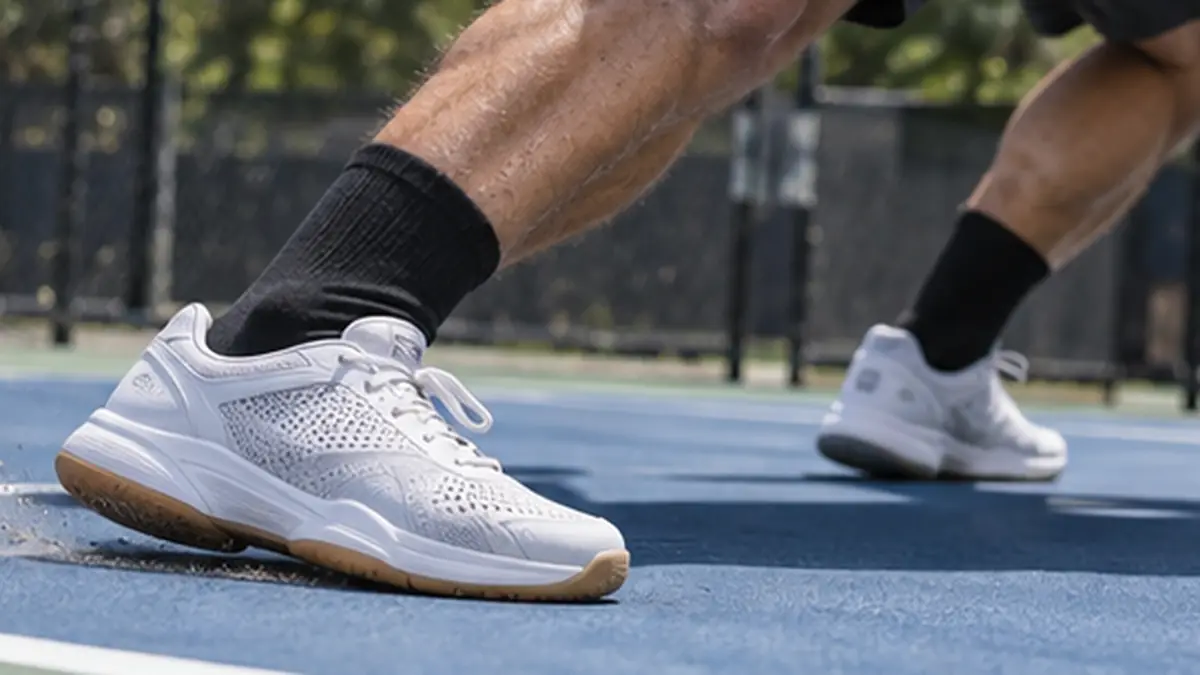
How to wear and maintain shoes to prevent injury
Even the same shoe changes in stability and lifespan depending on how you wear and care for it. The heel-lock lacing method in particular is not well known despite having a big effect as a countermeasure against sideways sway.
Once you put them on, tap your heel on the ground to align it and bring your foot toward the back of the shoe. If you push it forward, your toes will hit.
Keep the toe side loose and tighten progressively from the instep to the ankle. The trick is not to compress the instep too much.
Using the topmost left and right holes, fix the heel with a heel lock (runner's loop) where you make loops with the laces and thread them through; this reduces sideways sway.
Draw out the hold with correct wearing
Even a high-performance shoe, worn loosely, lets your foot move inside and the support won't work. Making it a habit to re-tighten before every session changes your footing in the later stages. If it's a model with a removable insole, swapping to one with arch support is also effective.
Keep grip by removing dirt from the sole
When sand or dust clogs the outsole, the grip you had turns into slipping. A little effort — wiping the sole with a tightly wrung cloth before playing indoors, or stepping on a dedicated grip-boosting mat — keeps your stopping performance. Bringing shoes used outdoors straight into a gym is dangerous because the sand makes the floor slippery, so either separate your indoor and outdoor shoes or wipe them thoroughly. For drying, the basic is in the shade; avoid direct sunlight and dryers, which damage the sole material.
Guide to lifespan and replacement
When the outsole grooves disappear and the grip drops, or when the midsole is crushed and you feel stiffness on landing, that's the signal to replace. With play 1–2 times a week, half a year to a year is one guide. Even if they look clean, cushioning degrades from the inside, so if you get difficulty stopping or a strange feeling in your knees, consider replacing them.
Common mistakes in choosing shoes
Finally, let's preemptively snuff out the mistakes beginners tend to make.
| Common mistake | What happens | How to avoid it |
|---|---|---|
| Substituting running shoes | Easy to sprain from sideways sway | Choose a court/dedicated model |
| Using indoor shoes outdoors | The sole wears away quickly | Use soles suited to the environment separately |
| Design over fit, width doesn't match | Blisters, chafing, forward sliding | Confirm fit with width and by trying on |
| Buying a high-end model right away | Regret when it doesn't suit your foot shape | Try a mid-range for your first pair |
Summary: Comfort with one pair suited to your environment and foot shape
Choosing pickleball shoes stays on track when you think along the two axes of "where you play" and "your own foot shape." Indoors, a non-marking lightweight model; outdoors, a wear-resistant all-court model. On top of that, check for lateral support, medium cushioning, and grip that lets you stop, and choose a size with the right width by trying them on.
A mid-range around 10,000 yen is plenty for your first pair. Once you play more frequently, move to a dedicated model. If you're mindful all the way to correct wearing, frequent re-tightening, and timing replacement by lifespan, you can stand on the court without worry about your footing.How to choose the ballandHow to choose a paddleGet this in order too and enjoy comfortable pickleball.
FAQ
Can I use running shoes for pickleball?
It's safer to avoid them because they lack lateral support. On direction changes your foot slides outward and the risk of a sprain rises. Choose court shoes for tennis, badminton, or basketball, or pickleball-dedicated ones.
Can I substitute tennis shoes?
If you're mainly on outdoor hard courts, you can substitute all-court tennis shoes, because they have high durability and stability. However, using them in a gym requires a non-marking spec, and be aware that tennis shoes are heavier and stiffer.
Do I need to separate indoor and outdoor shoes?
Ideally, yes. A soft indoor sole wears away quickly outdoors, and shoes used outdoors make gym floors slippery with sand, which is dangerous. If you want one pair for both, a dedicated model that's non-marking and also has wear resistance is suitable.
What's the guide for shoe lifespan and replacement?
With play 1–2 times a week, half a year to a year is the guide. When the outsole grooves disappear and the grip drops, or the midsole sags and you get difficulty stopping or a strange feeling in your knees, that's the sign to replace.
Are dedicated shoes absolutely necessary?
They're not a must. If you play a few times a month and your environment is fixed to indoor or outdoor, repurposing a well-matched court shoe is enough. The comfort of a dedicated model comes into its own at the stage where you play many times a week or want to handle indoor and outdoor with one pair.
確認した一次情報
- American Academy of Orthopaedic Surgeons・5 Pickleball Injury Prevention Tips
- USA Pickleball 2026 Official Rulebook
Related Articles Worth Reading
- A Beginner's Guide to Pickleball | The First Gear to Get and How to Choose It
- How much does pickleball cost for beginners? A complete guide to initial and ongoing costs
- To avoid hurting your knees in pickleball | Injury prevention and form explained
- How to Choose a Pickleball | A Thorough Indoor vs. Outdoor Comparison
- The Complete Guide to Choosing a Pickleball Paddle | Material, Weight and Grip
Reference Links
Related Articles