Elbow injuries common in pickleball
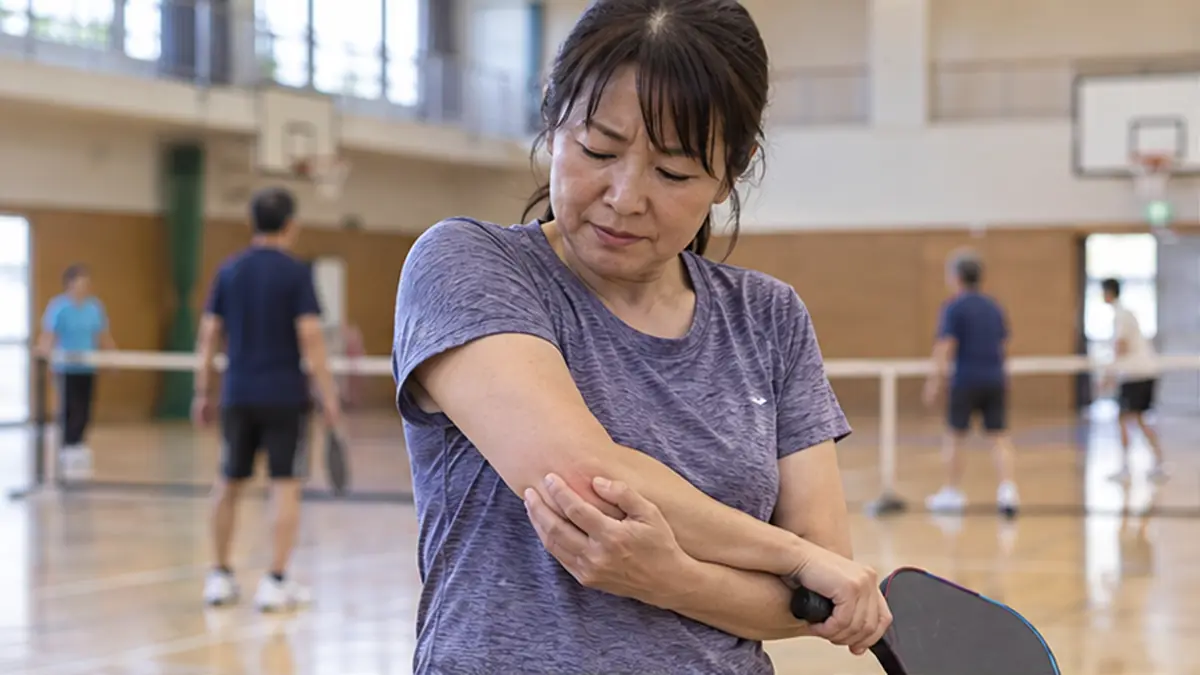
Pickleball is a sport that places little strain on the body, but elbow injuries from repetitive motion are relatively often reported. In particular, lateral epicondylitis, called "tennis elbow," is a representative injury that frequently occurs in pickleball players too.
Tennis elbow is a condition where inflammation occurs in the bone on the outer side of the elbow (the lateral epicondyle of the humerus), where the forearm muscles attach. It develops when excessive strain is placed on the forearm extensor muscles through the repetition of hitting the ball with the paddle.
Symptoms of tennis elbow
The early symptom is discomfort on the outer side of the elbow when gripping the paddle or lifting objects. Left unaddressed, the pain increases, and you begin to feel pain in daily-life motions like turning a doorknob or holding a cup.
During pickleball, pain tends to appear especially on backhand shots and strong volleys. It's characterized by the pain intensifying with the motion of dorsiflexing the wrist (bending it toward the back of the hand).
Causes and risk factors
Form problems
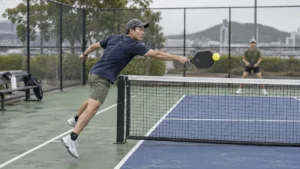
Hitting in a way that relies on the wrist or forearm increases the strain on the elbow. In particular, a backhand that overuses the wrist and a form that hits with only the arm are dangerous. It's often seen in players who can't swing using the whole body.
Paddle vibration
Paddles with a hard feel (such as Nomex core) have large vibration, and that shock is easily transmitted to the elbow. In particular, the vibration on off-center hits places greater strain on the elbow.
Overplaying
The risk rises when play frequency suddenly increases or when you keep playing for long hours day after day. Muscle recovery can't keep up, and accumulated fatigue triggers inflammation.
Prevention methods
Correct form
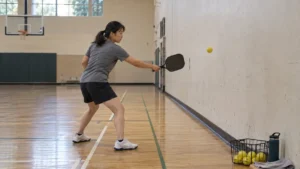
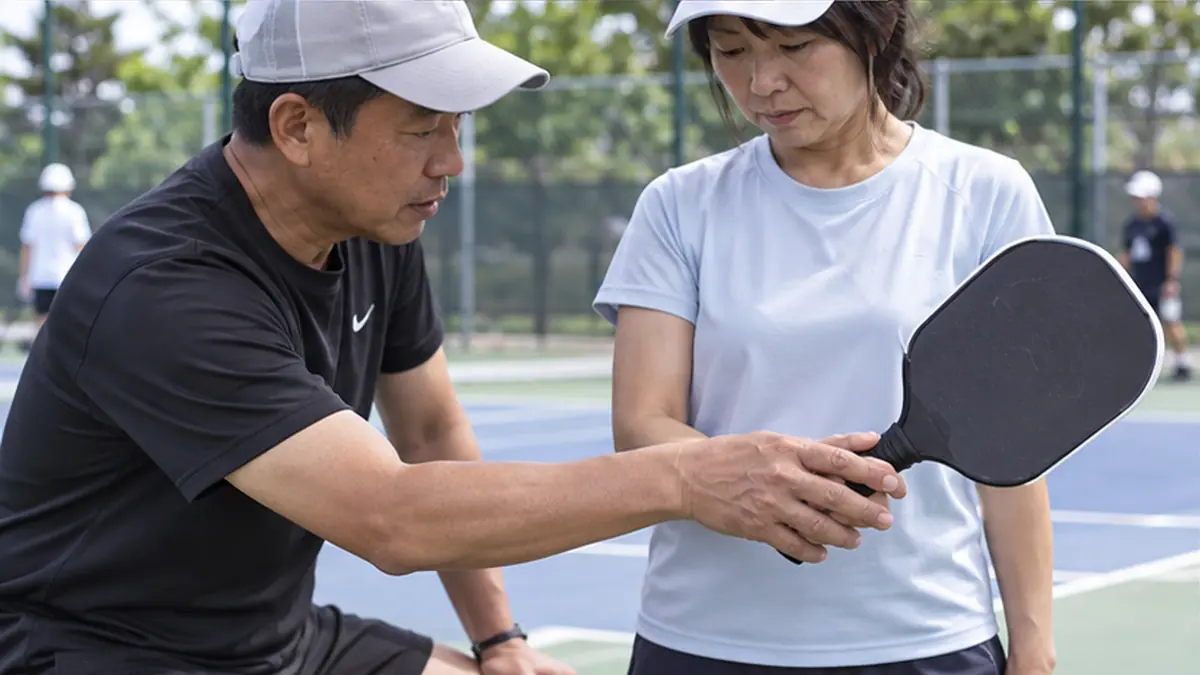
Master a form that hits the ball with body rotation and weight transfer, not the wrist. You can greatly reduce the strain on the forearm muscles. In particular, for the backhand, bringing the elbow forward and hitting in front of the body can reduce the shock to the elbow.
Stretching
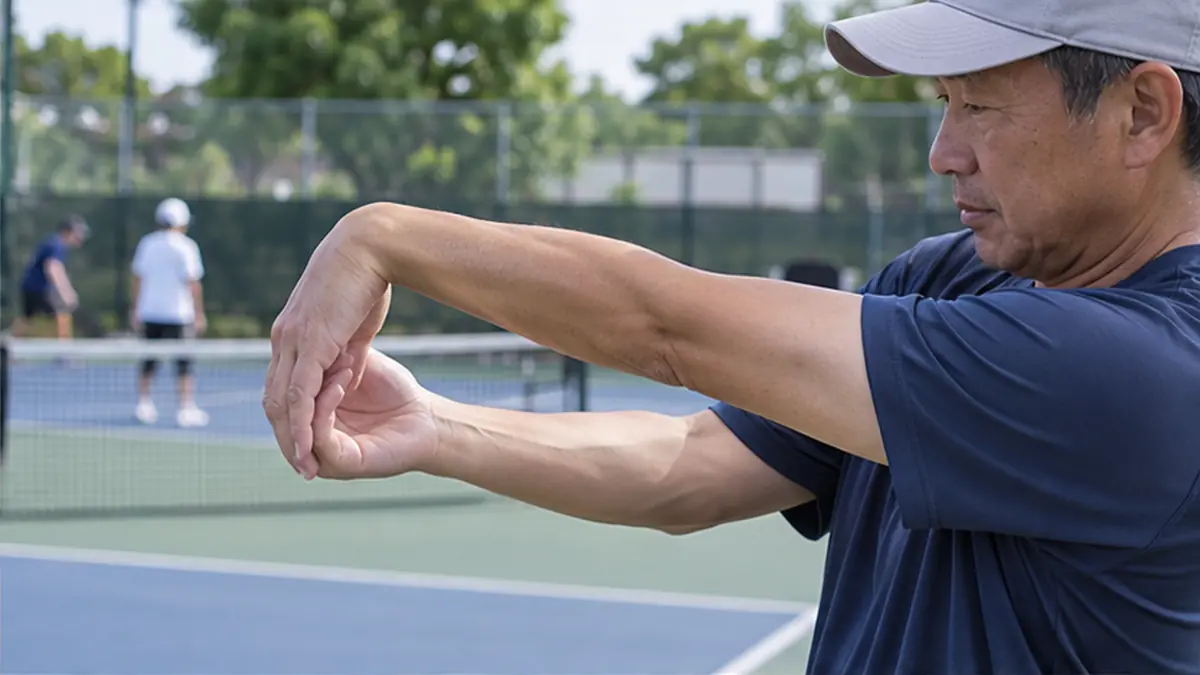
Do forearm stretches before and after playing. The "forearm extensor stretch"—extending the arm forward, facing the back of the hand down, and pulling the fingers with the other hand—is effective. Do 3 sets of holding for 15–30 seconds.
Choosing a paddle
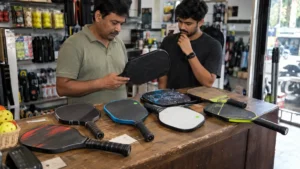
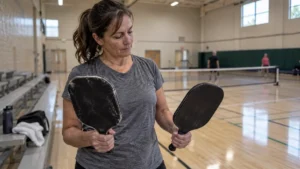
Those with elbow concerns should choose a paddle with high vibration absorption. Polymer-core paddles have little vibration, and paddles equipped with vibration-reduction technology like ProKennex's Kinetic System are also effective. Lightweight paddles are another option to reduce strain on the arm.
Self-care methods
Icing
After playing, ice the outer side of the elbow for 15–20 minutes. It curbs inflammation and promotes recovery. Don't apply ice directly to the skin—wrap it in a towel to use.
Elbow band
Wearing an elbow band (counterforce brace) a little below the elbow (on the forearm side) can disperse the load on the muscle attachment point. Wearing it during play can be expected to reduce pain.
Rest
If pain appears, don't force yourself to keep playing—take a rest. For mild inflammation, it often improves with 1 to 2 weeks of rest. If the pain persists, be sure to see an orthopedic doctor.
Related Articles Worth Reading
- Pickleball and Mental Health | Why It Works for Stress Relief and Preventing Depression
- A Stretching Routine Before and After Pickleball | Care to Enjoy It Injury-Free for Years
- Pickleball Is Especially Great for Seniors | The Benefits and Cautions of Starting in Your 60s and 70s
- How Many Calories Does Pickleball Burn? Comparing One Hour of Exercise Intensity With Data
- To avoid hurting your knees in pickleball | Injury prevention and form explained
Reference Links
Related Articles