Check the basic rules of the serve
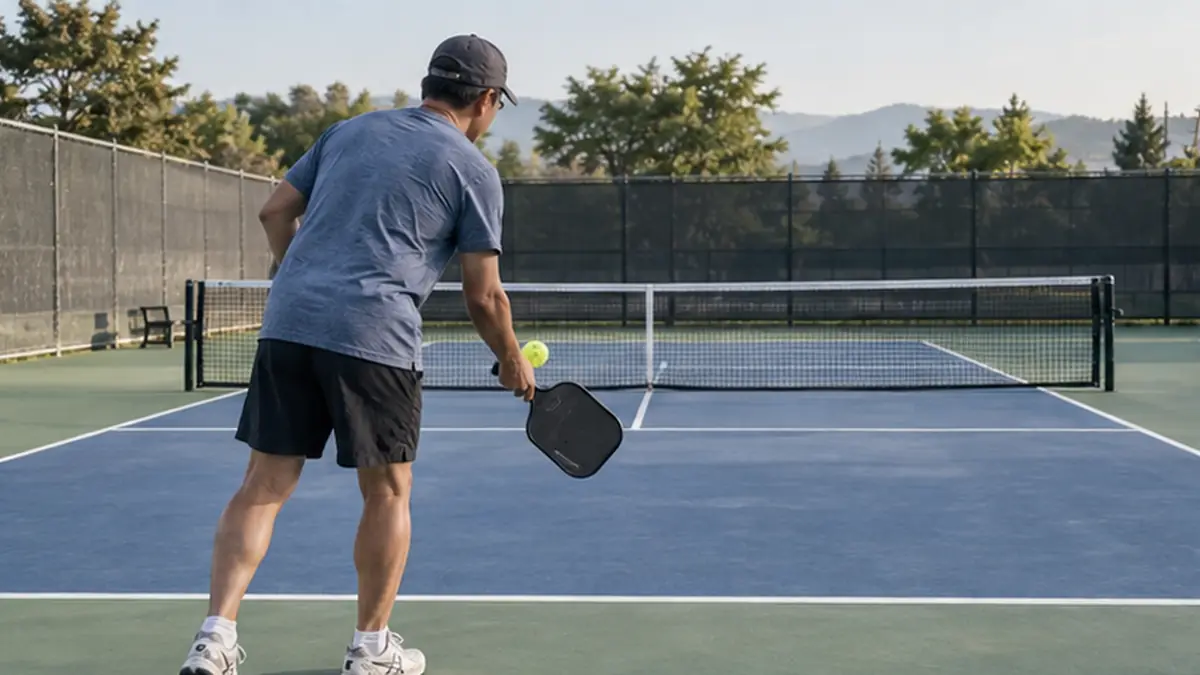
Before getting into practice, let's cover the basic rules for the pickleball serve. The serve must be hit underhand (a low-to-high swing). At the moment the paddle contacts the ball, the paddle head must be below the wrist.
The serve must land in the diagonal court and must not land in the non-volley zone (kitchen). You hit from behind the baseline, and there's also a foot-fault rule that your feet must not step on the line.
The main reasons a serve doesn't go in
The toss isn't consistent
The most common cause of serve mistakes is an inconsistent toss. If the height and position vary when you toss the ball up, you end up hitting at a different timing each time, and it won't be consistent. The basic approach is to toss low and drop it slightly in front of your body.
Too much tension
Putting too much power into your serve can send the ball flying too far and out, or throw off your control. Unlike in tennis, a pickleball serve isn't about going for an ace. First and foremost, the priority is to get it in reliably.
Inconsistent contact point
If your contact point (the position where you hit the ball) differs each time, your distance and direction won't be consistent. The ideal contact point is in front of your body, around waist height.
Basic form for a consistent serve
Stance
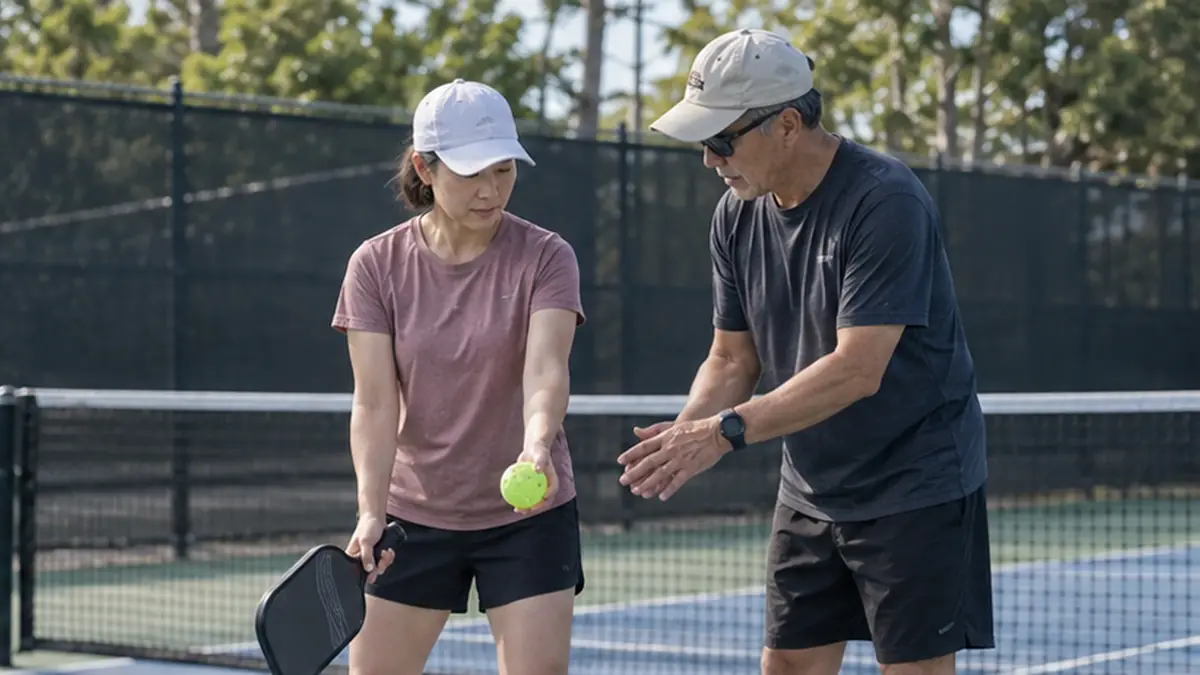
Open your feet about shoulder-width and set up at a diagonal 45 degrees to the direction you want to hit. Put your weight on your back foot and shift it to your front foot as you swing.
Grip
The Continental grip (holding it like a handshake) is the basic grip. Don't grip too tightly; hold the paddle lightly. As a guide, grip strength should be about 3–4 on a 10-point scale.
Swing
Draw the paddle back and swing it like a pendulum from low to forward. Fixing your wrist and swinging with your whole arm produces a stable swing. Let your follow-through carry naturally toward the direction you want to hit.
Using the drop serve
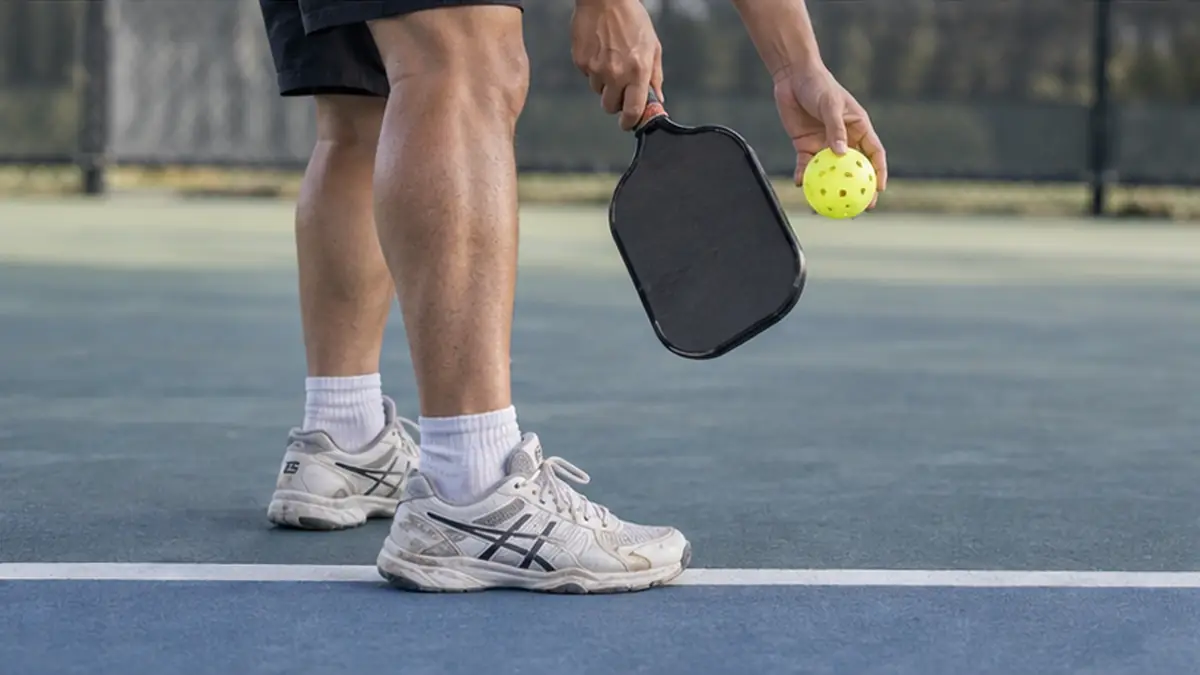
The drop serve, which became an official rule in 2021, is recommended for those seeking consistency. It's a method where you let the ball drop naturally from your hand and hit it after it bounces, which completely eliminates the instability of the toss.
The advantage of the drop serve is that the contact point tends to stay consistent. The bounce height is nearly the same every time, making it easier to match your timing. Beginners and those who feel unsure about their serve should start with the drop serve first.
Repetitive training routines
Target practice
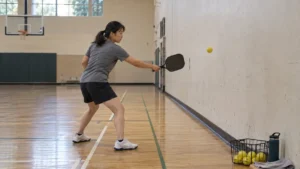
Place a target (a cone or towel) diagonally across the court and serve toward it. Start by aiming at a large area, and shrink the target as you get used to it. Getting 7 or more out of 10 in is a pass.
Routine practice
This is practice serving with the same routine as in a match. Make the sequence of calling the score, setting up, steadying your breathing, and serving the same every time. Through this repetition, your body will move naturally even when you're nervous in a match.
Pressure practice
Serve 10 balls in a row, and if you miss even one, restart. This builds the mental strength to keep landing serves under pressure. Once you can do this, your serve will hold steady even in the crucial moments of a match.
Summary
Consistency in the serve comes down to three keys: "relax," "keep the toss consistent," and "repeat the same routine." A serve that reliably goes in is worth many times more in a match than a flashy one. Set aside 10 minutes to focus only on serving in each practice session and polish your consistency.
Related Articles Worth Reading
- Mastering the pickleball smash | How to hit the put-away and practice drills
- The Complete Guide to Effective Pickleball Practice Methods | Tips to Improve, From Beginner to Advanced
- Making the Most of Online Pickleball Lessons You Can Improve With at Home
- Pickleball Serve Rules | The Basics of the Underhand Serve and Faults Explained
- Mental Toughness in Pickleball | Handling Pressure in Matches and Recovering From Mistakes
Reference Links
Related Articles