The basics of the smash
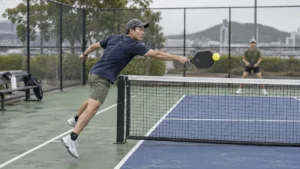
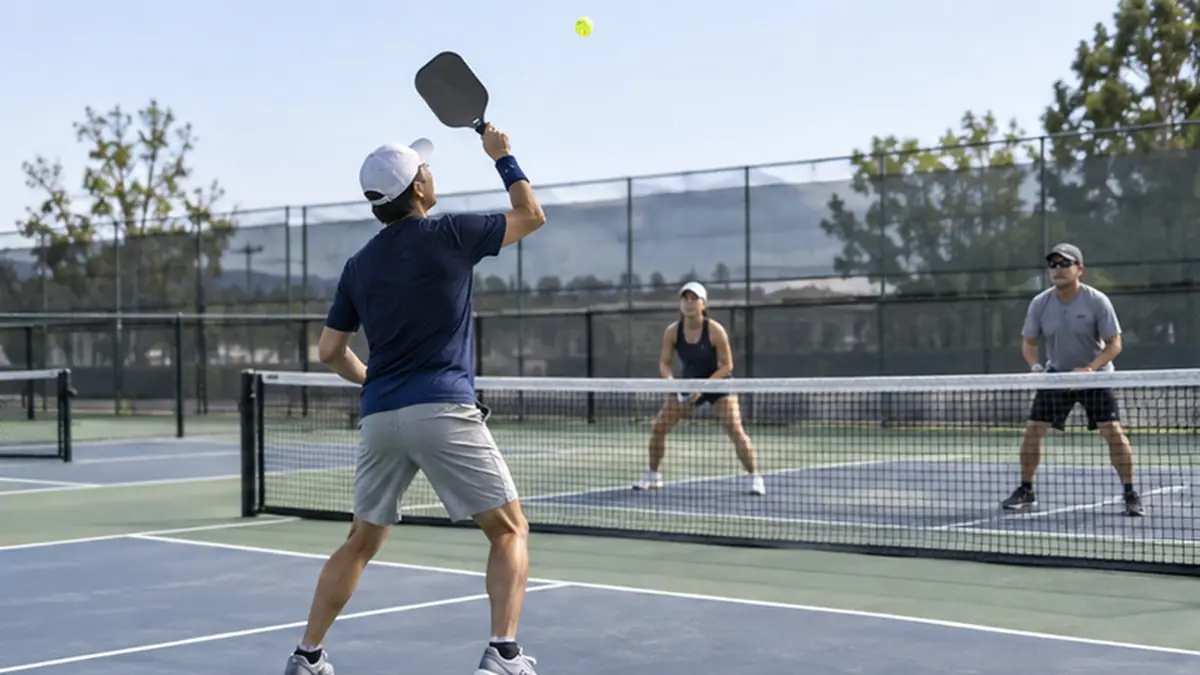
The smash (overhead shot) is a put-away where you hit down hard on a ball that has gone up overhead. You use it against your opponent's lobs and high-bouncing balls; it's an aggressive shot that seizes the point.
The pickleball smash doesn't have as much power as in tennis, but hit with the right timing and course, it's a shot that can definitely score. However, since a forced smash directly leads to mistakes, judgment is also tested.
Correct form
Setup and positioning
When a lob goes up, first move quickly to the ball's landing spot. The point is to get slightly behind, not directly under the ball. Catching the ball slightly in front of your body makes it easier to get a downward angle.
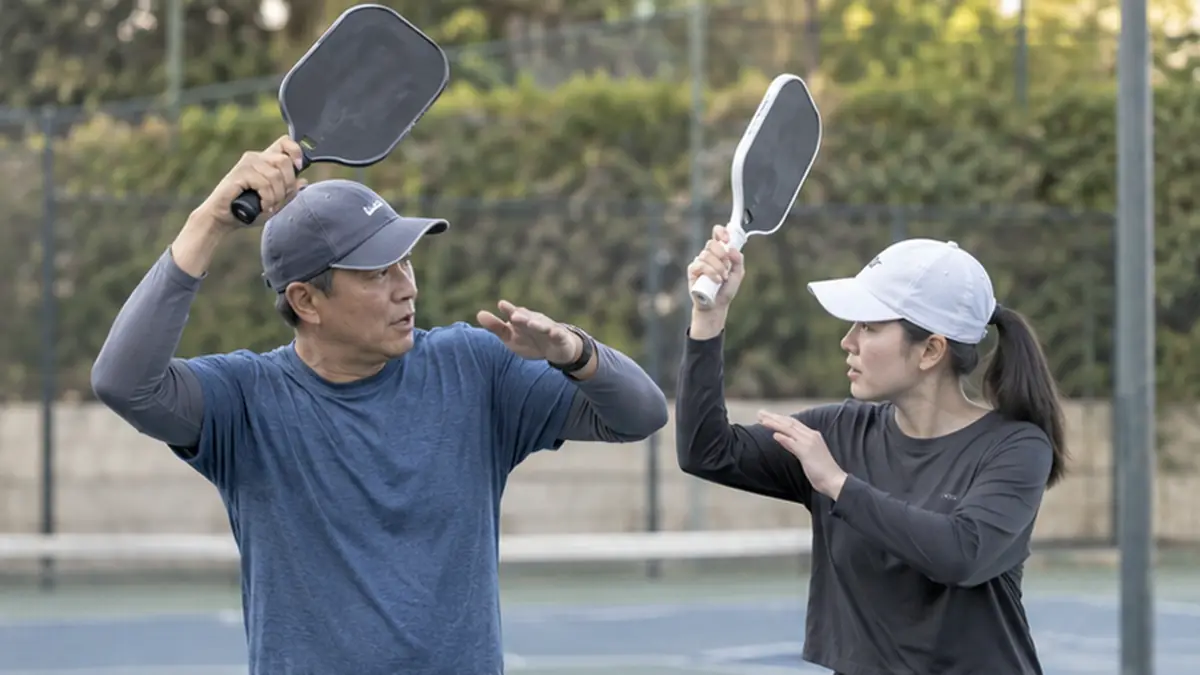
Do a side turn (face your body sideways) and set the paddle overhead. Point at the ball with your non-dominant hand to gauge the timing of the landing spot.
Swing
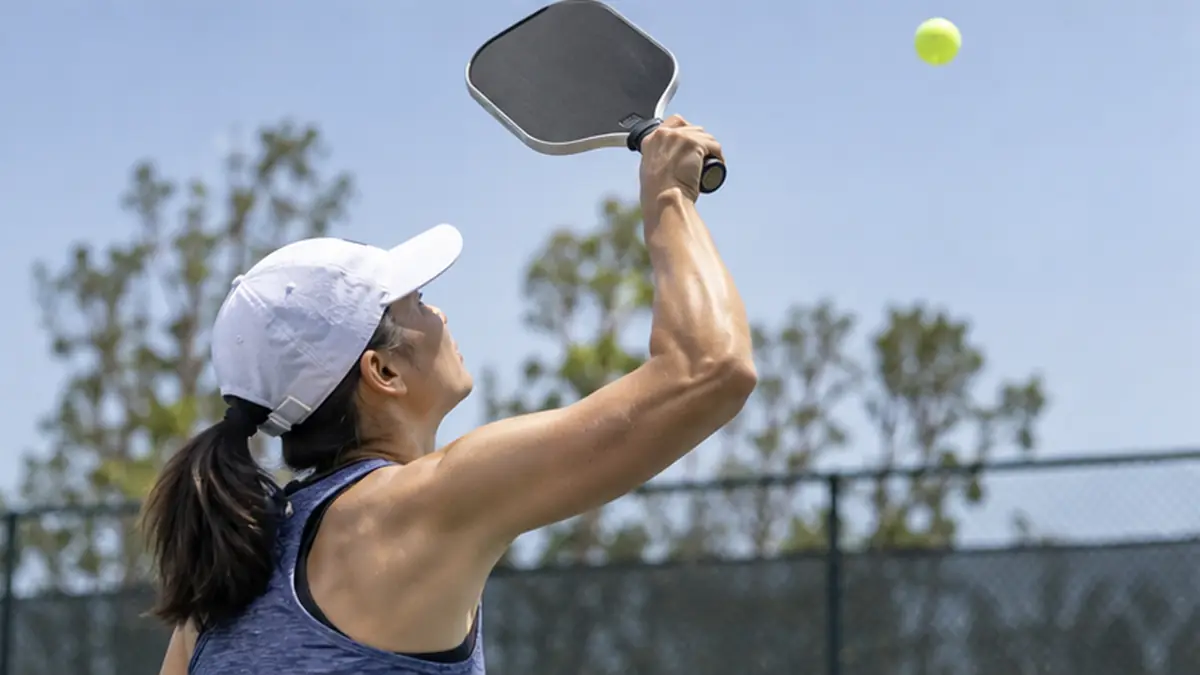
The swing is a downward smashing motion from above. However, rather than swinging down with all your might, it's important to reliably catch the top of the ball with a compact swing. Enter the ball from the paddle edge and hit with the striking face coming over the top.
The ideal contact point is in front of the body, slightly ahead of the head. If the contact point is behind, the ball flies upward and gives your opponent a chance.
Follow-through
After the swing, follow through naturally in the direction you swing the paddle down. Stopping the swing partway not only reduces power but also throws off control.
Tips for a smash that lands
Aim for a course
Trying to put it away with power alone is a mistake beginners often make. By aiming at your opponent's feet, backhand side, or open space, it becomes a smash that lands without hitting that hard.
Bounce it or hit it direct
The smash has two patterns: direct (no bounce) and letting it bounce once. Against a deep lob, smashing after letting it bounce once is sometimes safer. Rather than forcing a direct hit and making a mistake, choose the method by which you can reliably put it away.
The judgment not to smash
You don't need to smash against every lob. For a high, deep lob, rather than forcing a smash, dropping back to the baseline and returning with a drive is safer. The criterion for judging whether to smash is "can you catch the ball in front of your contact point?"
Practice drills
Feed practice
This is basic practice where your partner sends up lobs and you repeatedly smash. Start from a slow lob at first, and once you get used to it, have them vary the height and angle. Aim to get 8 or more out of 10 balls into the court.
Course-placement practice
This is practice where you set up three targets on the court (left, right, and center) and place your smash to the designated course against a lob. Prioritize the accuracy of the course over power.
Rally-format practice
In a form close to real play, repeat the flow where your opponent sends up a lob fromdinkand you smash against it. It becomes comprehensive practice including positioning after the smash (returning to the net).
Position after the smash
After hitting a smash, keep in mind to immediately return to the position in front of the net. If the smash doesn't land and you stay near the baseline, you'll continue the rally from a disadvantageous position. Make it a habit to head to the kitchen line immediately after hitting a smash.
Related Articles Worth Reading
- Practice methods to stabilize your pickleball serve | Tips for getting it in and repetition training
- The Complete Guide to Effective Pickleball Practice Methods | Tips to Improve, From Beginner to Advanced
- Making the Most of Online Pickleball Lessons You Can Improve With at Home
- Mental Toughness in Pickleball | Handling Pressure in Matches and Recovering From Mistakes
- Mastering the Pickleball Lob | When to Use It, How to Hit It, and How to Defend
Reference Links
Related Articles