この記事の要点
- When you've just started pickleball, everyone hits the same wall.
- "The ball catches on the net," "I tense up and hit it out," "my opponent picks me apart" — have you had experiences like these?
- 実は、ピックルボールの上達には「力より技術」「量より質」が何より大切なんです。

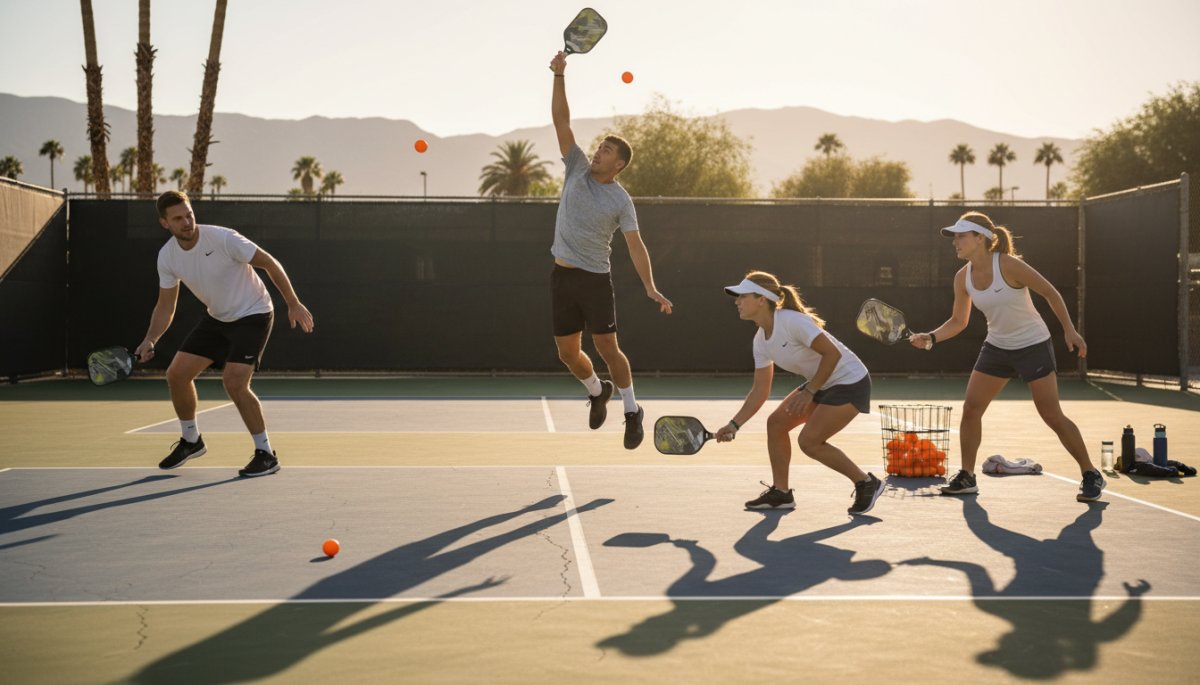
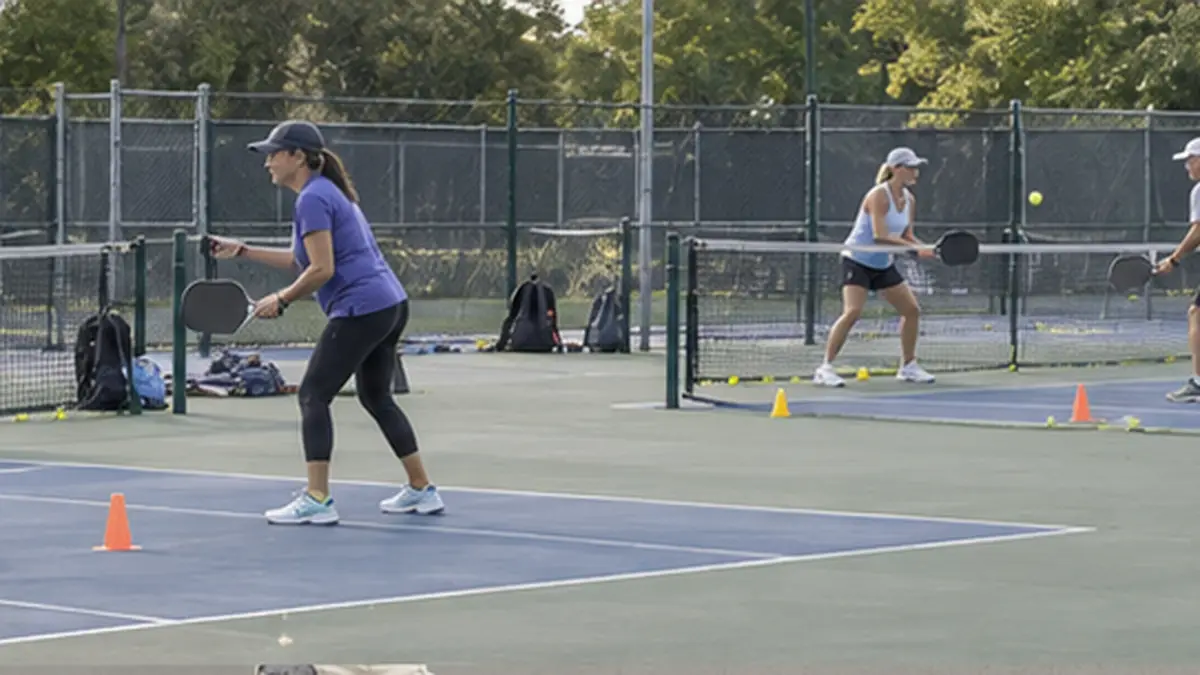
What you need in order to improve at pickleball
When you've just started pickleball, everyone hits the same wall.
"The ball catches on the net," "I tense up and hit it out," "my opponent picks me apart" — have you had experiences like these?
The truth is, improving at pickleball is above all about "technique over power" and "quality over quantity." This sport combines elements of tennis, badminton, and table tennis, and technique and strategy, more than power, decide the outcome. The appeal of pickleball is that even beginners, once they grasp the knack, can grow surprisingly quickly.
In this article, from mastering the basic strokes todinkpracticing the dink, improving serve precision, and strengthening footwork, we'll practically introduce level-specific practice routines and tips for improvement. With concrete practice methods you can adopt starting today, your play will change dramatically.
Let's master the basic strokes
For improving at pickleball, mastering the basic strokes is essential first. It's easy to think you'll win if you hit hard, but in fact the control to reliably hit your target spot is overwhelmingly more of a point-winner.
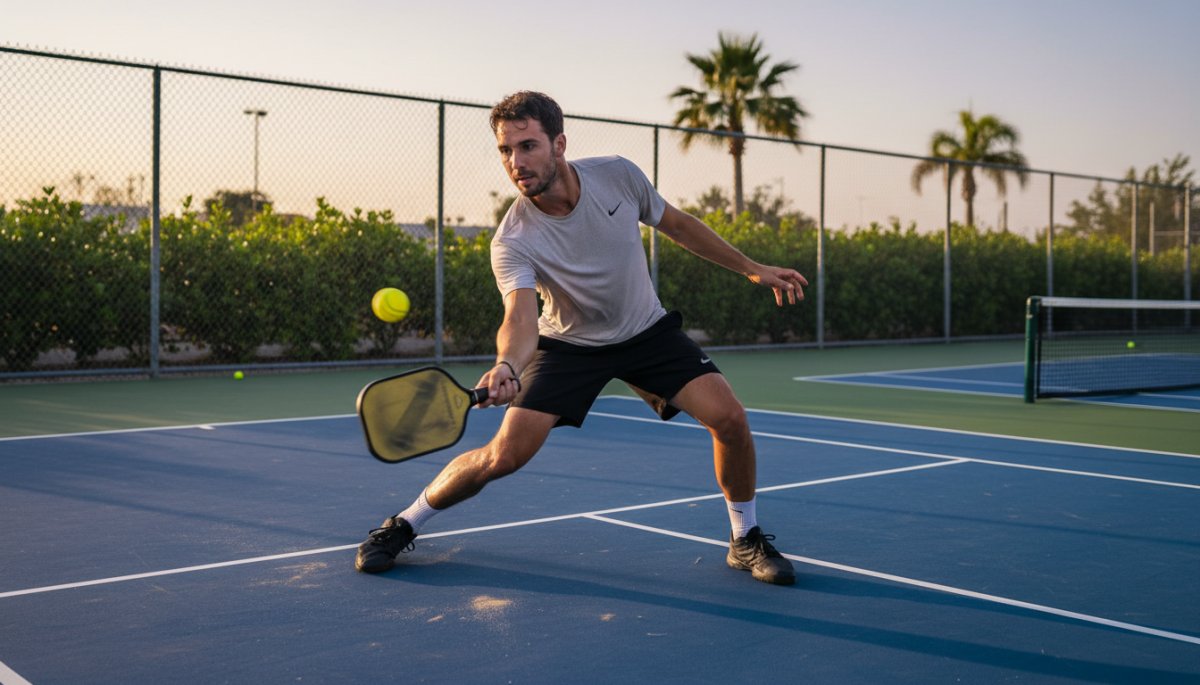
Basics of the forehand and backhand
The forehand is a shot hit on the same side as the hand holding the paddle.
The way to set up is simple. Hold the paddle near your navel, bend your elbow slightly, and wait in a relaxed position. Many people hold the paddle too far out in front, but waiting loosely in front of your stomach lets you react quickly wherever the ball comes. When hitting, shift your weight to your front foot and hit with a stable paddle face.
The backhand is a shot hit on the opposite side from the hand holding the paddle. When in doubt, the golden rule is to choose the backhand. Trying to force a forehand raises the chance the ball floats up and gets smacked. Whether two-handed or one-handed, hitting with the image of blocking in front of your body keeps things stable.
Repetitive training with wall drills
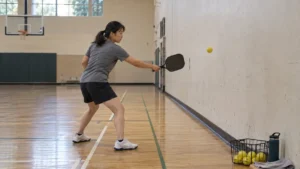
An effective practice you can do at home or alone is wall drills.
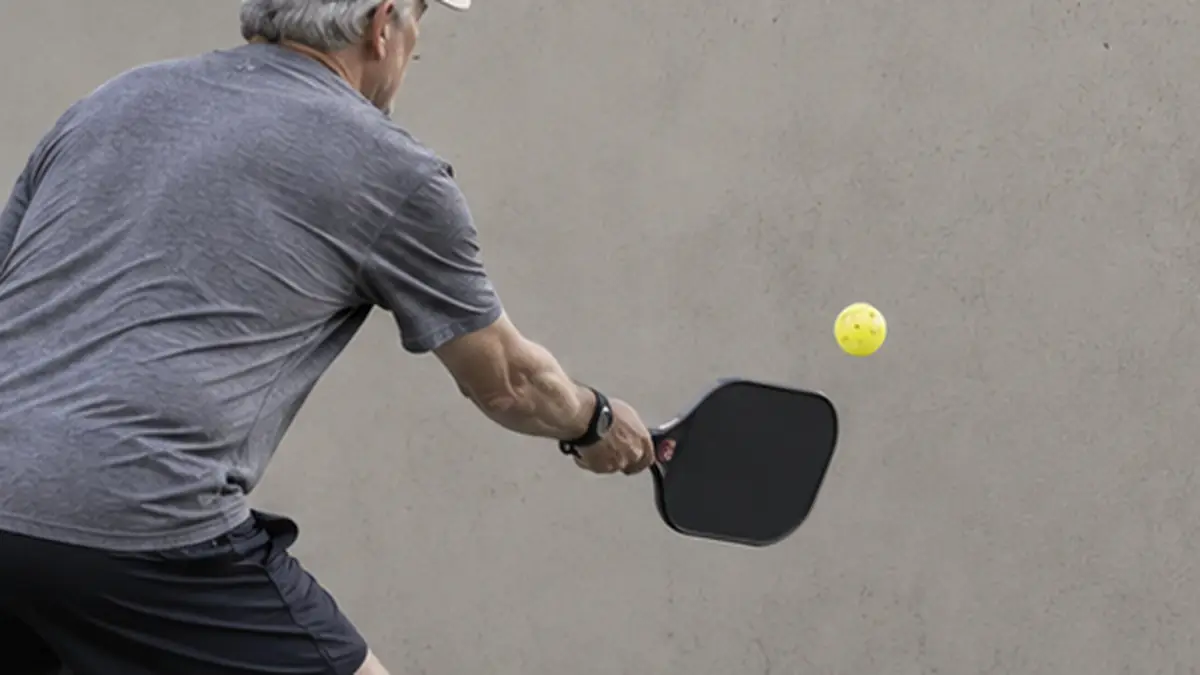
By continuously hitting the ball against the wall, you naturally build a feel for how to use the paddle face and for timing. Filming your form on a phone stand to check it reveals your quirks. Sticking up a target to strengthen your "aiming awareness" is also recommended. More than a strong shot, being conscious of a course that's hard to return is the key to improvement.
ラケットハンドリング練習も効果的。パドルを持って左右交互に振る動作を繰り返すことで、細かい動きや手首の柔軟性がアップします。短時間でもフォームを崩さず行い、疲労や痛みがある日は休んでください。
Dominate matches with the dink shot
The dink shot is the most fundamental of fundamentals for taking control of the flow of a match in pickleball. By dropping the ball softly just above the net, you put pressure on your opponent, forcing them to hit from a low angle.
The basic technique of the dink
Hold the paddle lightly. Relax and picture touching the ball as if wrapping it with the paddle face. Bending your knees slightly and staying low lets you send the ball naturally to skim just over the net. Keep the swing minimal. Not giving the ball power is the key to success.
Face a friend or partner and lightly rally the ball from near the net. What matters is practicing dropping it just barely over the net. Once you get used to it, try speeding up the tempo a little.
Cross-court dink drill
Stand at the kitchen line in front of the net and rally dinks in the cross-court direction with your partner.
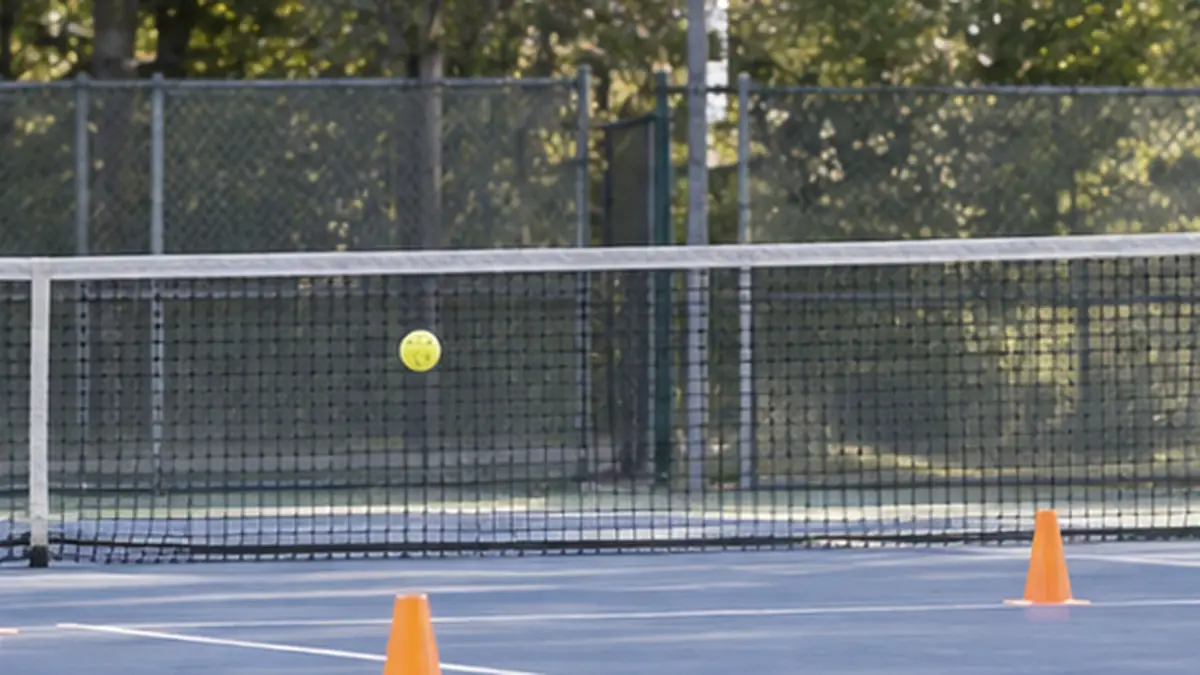
The goal is to keep the rally going for 50 in a row. If you miss, start over from the first. Keeping up this practice noticeably raises your consistency during games. As a variation, place cones or targets near your opponent's kitchen line and add practice dropping the ball on your target spot.
The point is to use the dink not just for defense but as preparation for an attack that unsettles your opponent. Aim at the outside or inside of your opponent's feet to restrict their movement. The moment your opponent makes a mistake or returns a high ball, switch to attack without hesitation.
Take the initiative with serve and return
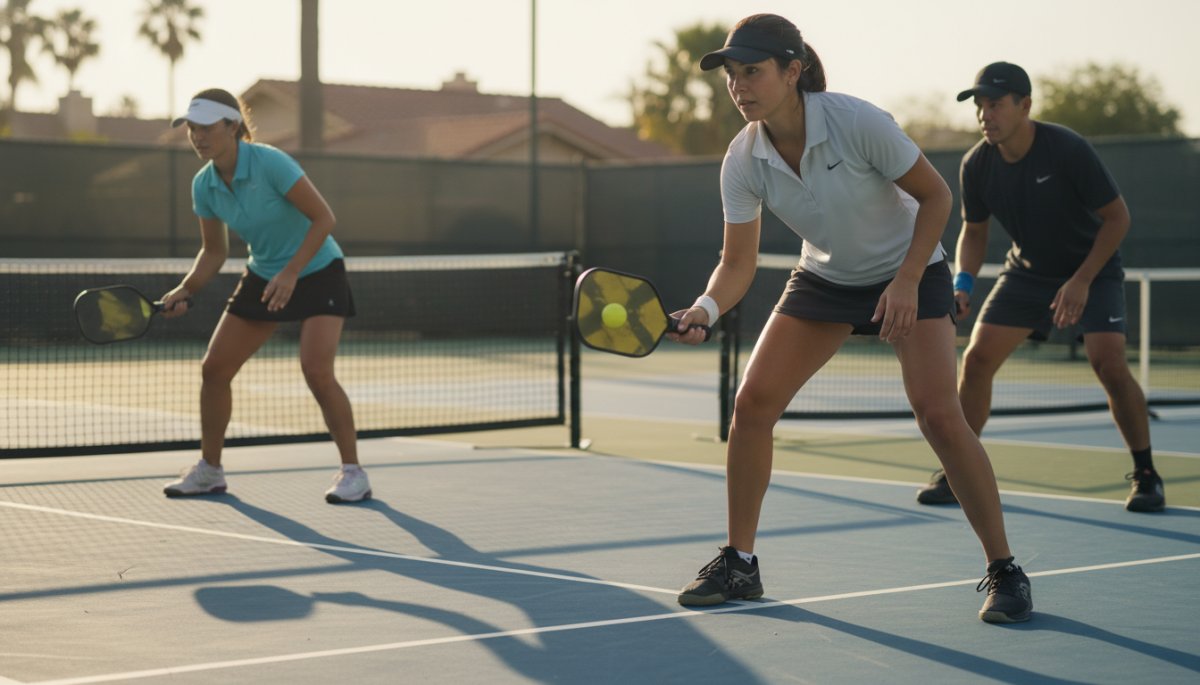
The serve and return are supremely important skills that create the start of every point in pickleball.
By practicing this opener thoroughly, you can steer the flow of the match strongly in your favor.
How to hit a consistent serve
The serve is the start of the match and an important first move to seize the initiative. Open your stance to shoulder width, stay relaxed and balanced. The rule is to catch the ball below your waist with an underhand swing (or a drop serve where you drop it to the ground and hit). Swing your hand slowly and large.
Set a target deep in your opponent's court and serve aiming there. Aiming deep pushes your opponent back. Aiming for a course is the point. Hitting to your opponent's backhand side often produces a weak return. In serve practice, prioritize "control over power." Making targets divided into left, right, and center of the court and repeatedly practicing hitting them increases your consistency.
Create the launch point of your attack with the return
The return isn't passive; it's the first step of the attack.
サーブを受けたら、リターンも相手コートの深い位置に返します。ターゲットは中央でもサイドでもOKですが、相手の動きを制限できる場所を選ぶと効果的。リターン後は状況を見ながらノンボレーゾーンライン付近へ移動します。相手の返球を見ずに走り込まず、転倒や接触を避けてください。
Conversely, if you stop there, you'll fumble in the transition and have more frustrating moments of "I almost got there!" The point is not to stop moving after your return.
The third shotControl the match with the third shot
The third shot is one of the most important shots in pickleball. The world's top players say it in unison. The quality of this shot, used on the third stroke after the serve, has a big influence on the outcome of the match.
The importance of the third shot drop
The third shot drop is a technique for suppressing your opponent's attack and taking an advantageous position for yourself. Master this and you'll be able to seize the initiative in the game.
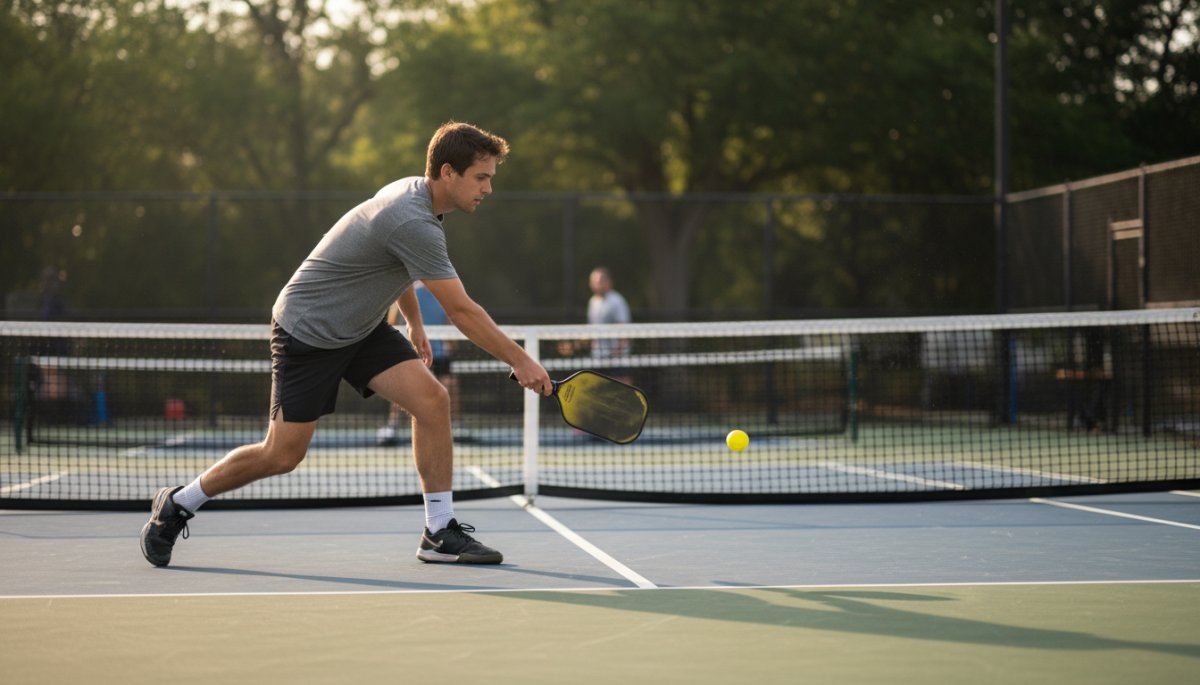
Practice split between the kitchen line and the baseline. One person stands at the kitchen line, the other at the baseline. The person on the baseline side practices soft shots that drop the ball into the kitchen. Repeat drop shots with an emphasis on control. Trying it from various directions, such as cross-court and straight, lets you practice with real match play in mind.
By dropping the ball inside the kitchen, you prevent your opponent's hard hits. Focus on a soft touch and prioritize control of the ball.
Imagining the third stroke after the serve, bend your knees and set up low near the baseline. Removing tension is the first step.
Without swinging through, carry the ball from below and hit it on an arcing trajectory. What you aim for is inside your opponent's kitchen.
If the ball doesn't float and drops at your opponent's feet, don't rush — advance to the kitchen line and raise your position.

Editor's Note
While your drops float and get smacked, don't force yourself to aim for the kitchen; setting your target as "over the net and short of your opponent's kitchen line" raises your success rate. Counting how many times you returned it low makes your improvement visible and keeps you going.
Using the third shot drive appropriately
When you hear "drive," you feel like putting it away in one shot, don't you?
But in fact, the purpose of the third shot drive isn't to go for a winner; it's to pass it just over the net and force your opponent back. There you buy time and calmly hit a drop on the next fifth shot. That's how you gradually build your own shape.
After the serve, set up at the baseline, watch the bounce carefully, and drive it in. Aiming at your opponent's backhand side, exploiting your opponent's weakness, makes your attack land smoothly. Don't over-tension. Taking a large follow-through makes it easier to control.
Master footwork and positioning
It's no exaggeration to say pickleball is "positioning = win rate." No matter how good a shot you can hit, if your positioning is poor you'll lose the point.
Move beautifully with the shuffle step
When catching up to the ball, moving "from the inside foot" is the basic. Scrambling with only the outside foot lets your body drift and becomes a source of mistakes. At first your feet may fumble and it might look like dancing, but with repeated practice it becomes a natural movement.
The split step is also key. Lightly jumping and landing at the moment your opponent hits lets you move quickly in either direction. Doing it as a set with 5–10 minutes of return practice a day means you stop giving your opponent openings.
Standing position at the kitchen line
The ideal position is near the "kitchen line," that is, just behind the non-volley zone. From this position you can react quickly to your opponent's shots and use dinks and volleys effectively.
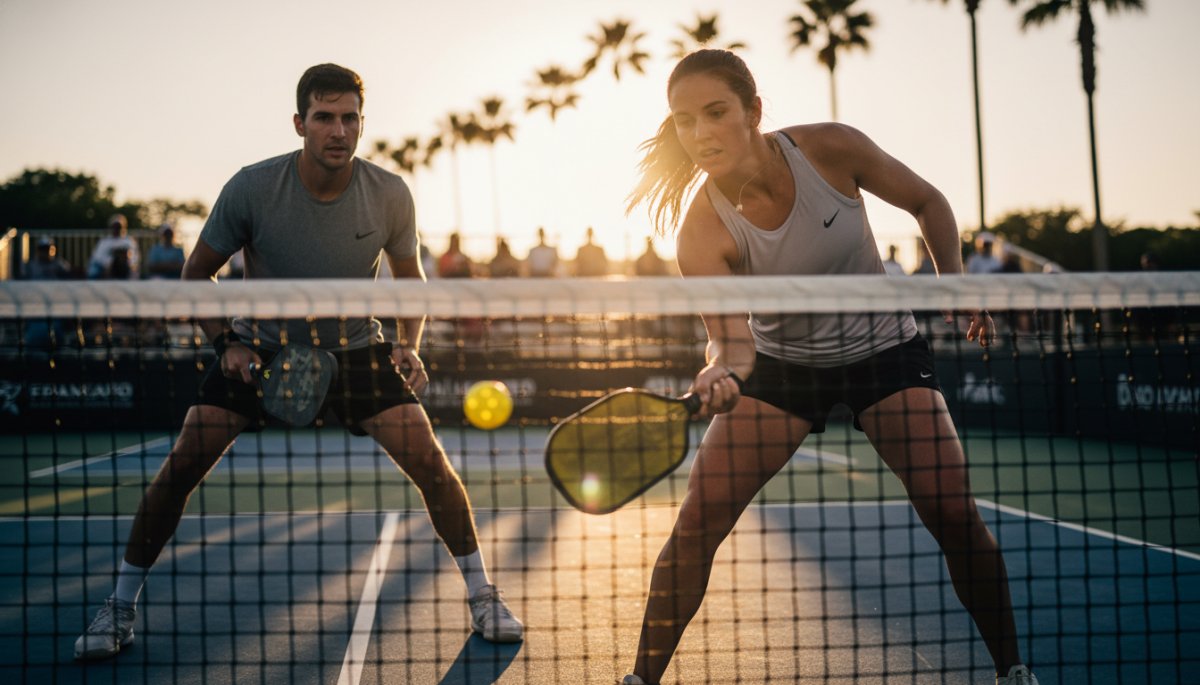
In doubles, the basic is to line up side by side with your partner rather than front and back. Try not to create space to your left and right. After you hit, immediately closing in to the kitchen line lets you apply pressure. It's also important to talk in advance about the "zone the two of you defend."
In doubles, after hitting a big dink cross-court, dash to the center right after. That's because there's a high chance your opponent will aim for the middle. Your partner covers the side, so filling the middle is your job.
Applied techniques you can use in real matches
Once you've mastered the basics, next take on the applied techniques that make the difference in real matches.
Command the net with the volley
The volley is a shot hit before the ball bounces near the net. If it lands, it gives your opponent no room to counter. Hold the paddle in front of your chest and keep it aimed toward the direction the ball is coming from so you can react instantly.
When you take a fast ball at the net, I understand the urge to smash it down. But the success rate is low. The trick is the image of "pushing forward." Just opening the paddle a touch and carrying it horizontally lets you hit a volley that stabs deep into your opponent's court. When this lands, it feels great.
Aim at your opponent's feet. Hitting to a low position makes it hard for your opponent to hit hard on their next shot. Having your partner hit you fast balls and practicing returning them reflexively is effective.
Judging the timing of your attack
For a ball that comes at chest height or above, don't reset — attack while saying "thank you."
Letting this go to waste is a shame. When a high ball comes, aiming at your opponent's dominant-hand side is effective. Many people are weak against the motion of tucking in their arm, and aiming there triggers what's called the "chicken wing." When this lands, it feels amazing.
It's precisely in a pinch that you stay calm. Open the paddle face a little and hit a reset shot with the feeling of lifting it from the shoulder. Punching it hard just feeds your opponent. Hitting it to drop softly buys time and lets you recover your posture.
Level-specific practice routines
Choosing a practice routine that matches your level lets you improve efficiently. First, use the quick-reference table below to grasp where you should focus right now.
| Level | Focus theme | Recommended drills |
|---|---|---|
| Beginner | Repetition of basic form | Wall drills 5–10 min / serve 10 min / dink 15 min |
| Intermediate | Precision and variation | Target serve / deep return drill |
| Advanced | Judgment with real match play in mind | 2-on-1 positioning / pressure points |
Practice routine for beginners
For beginners, repeating the basics is what matters first. Wall drills 5–10 minutes a day, serve practice 10 minutes, dink practice 15 minutes. Just keeping up these three will have you improving remarkably a month later.
Incorporating mini-games is also recommended. In a dink battle, you rally only inside the kitchen, and if you float the ball you lose. In a rally challenge, you win if you keep it going 10 times. Approaching it like a game naturally speeds up your reactions and steadies your form.
Practice routine for intermediates
Intermediates should raise their precision and variation. In a target serve drill, place cones on the left, right, and center of the service box and serve aiming at them. Incorporate topspin and slice too, increasing your serve variety.
The deep return drill is also effective. Have your partner serve and practice returning it near your opponent's baseline. Aim to return 10 in a row deep.
Practice routine for advanced players
Advanced players take on high-level practice with real match play in mind.
In the 2-on-1 positioning drill, one person defends the court while two hit shots freely. The defending side reacts to the ball while reading the opponents' movements. You refine the skill of covering the court with efficient movement and preparing for the opponents' shots.
Pressure-point play is also important. Start the game from a tight situation like "9-9" and train the ability to judge calmly and reduce mistakes even in tense moments. Before a match, take deep breaths and picture yourself putting shots away well; this eases tension and lets you face the match with confidence.
Tips for building the practice habit and growing
No matter the practice, if you don't keep it up it won't stick. The faster people improve, the more they practice frequently, even if briefly, with a set purpose. Finally, let's lay out the points for making practice a habit and growing.
"Short and frequent" is the shortcut to improvement
Rather than two hours once a week, 15 minutes a day four times a week keeps your feel from fading and helps it stick. Wall drills and racket handling can be done at home, so you can keep from losing your skills even on days you can't get a court. Narrowing each session to one theme, like "today only dinks" or "today only serve courses," keeps practice from becoming aimless.
Make your quirks visible with video and logs
Filming your form on your phone and reviewing it later reveals quirks you can't notice on your own, like tension or the size of your swing. Recording how many drills you succeed at in a row makes your improvement visible in numbers and keeps your motivation going. If you feel the limits of self-study,making use of online lessonsto bring in objective feedback is also effective.
Reconsider whether your equipment fits
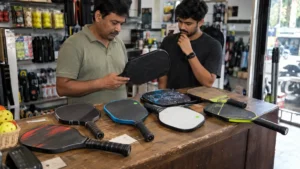
When you practice but still can't be consistent, the cause can lie in the paddle's weight or grip. A paddle that's too heavy causes late swings, and a grip that doesn't fit creates unnecessary tension. When you hit a plateau, reconsideringHow to choose a paddlethese makes it easier for your practice to pay off.
Summary: You'll reliably improve with continuous practice
For improving at pickleball, mastering the basic strokes, practicing the dink, improving serve and return precision, and strengthening footwork are all essential.
練習の変化には個人差があります。回数だけを増やさず、狙った場所に打てた割合やミスの種類を記録し、痛みや疲労がある日は休んでください。ディンク、深いリターン、ポジショニングを一度に詰め込まず、一つずつ練習すると振り返りやすくなります。
Beginners start from repeating the basics, intermediates move to precision and variation, and advanced players to high-level practice with real match play in mind. Choosing a practice routine that matches your level and keeping it up while having fun is the secret to improvement.
Adopt a new practice starting today, and aim to become a player one rank higher. The appeal of pickleball is that anyone can enjoy it regardless of age or fitness. May continuous practice make your pickleball life even more fulfilling.
FAQ
What's the number one tip for getting good at pickleball?
It's "technique over power, quality over quantity." Prioritize the control to reliably carry it to your target spot over hitting hard, and you'll grow by practicing frequently, even briefly, narrowed to one theme.
What should beginners practice first?
Start from repeating the basic strokes and wall drills, serve, and dink. Keeping up wall drills 5–10 minutes, serve 10 minutes, and dink 15 minutes every day will make you remarkably more consistent in a month.
Why is the third shot drop important?
Because it's the shot on the third stroke after the serve that suppresses your opponent's hard hits and buys you time to close in forward. Without swinging through, "place" it in an arc and drop it softly into your opponent's kitchen.
Is there practice I can do alone?
Yes. Wall drills, racket handling, and checking your form by filming on your phone are possible alone. You can keep it up without losing your skills even on days you can't get a court.
My dinks float and get smacked.
Relax, bend your knees to set up low, and keep your swing minimal. At first, set your target short of your opponent's kitchen line and practice while counting how many times you returned it low; it'll become more consistent.
確認した一次情報
Related Articles Worth Reading
- Mastering the pickleball smash | How to hit the put-away and practice drills
- Practice methods to stabilize your pickleball serve | Tips for getting it in and repetition training
- Making the Most of Online Pickleball Lessons You Can Improve With at Home
- Mental Toughness in Pickleball | Handling Pressure in Matches and Recovering From Mistakes
- Mastering the Pickleball Lob | When to Use It, How to Hit It, and How to Defend
Reference Links
Related Articles