"I keep getting called for faults on my serve," "Underhand — how exactly am I supposed to hit it?" Many people surely hit walls like these when they started pickleball.
The serve is the starting point of the rally. Just making this consistent completely changes the flow of the match. This article explains everything, at a level you can actually use on the court, from how to hit the underhand serve to the types of faults and how to prevent them.
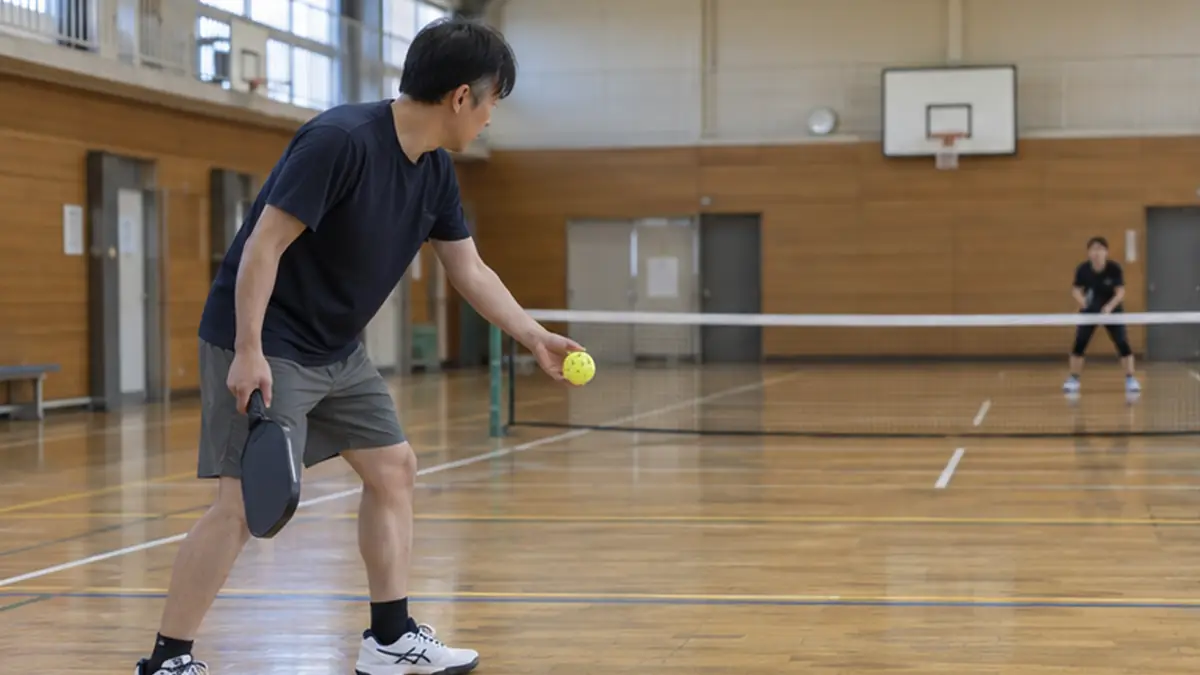
In This Article
- The 3 basic conditions needed for a pickleball serve
- The correct way to hit the underhand serve (step by step)
- The types of faults and how to prevent them
- A serve comparison with other sports
- 3 practice tips you can use right away
What is the pickleball serve? First understand the basic rules
The pickleball serve has unique rules different from tennis and badminton. The biggest feature is thatunderhand (hitting from below) is required.That's the point.
You can't use a serve smashed down from above like in tennis. This is what makes the pickleball serve "seemingly easy but deep."
The 3 conditions for a valid serve
Under the official rules of USAPA (the USA Pickleball Association), a valid serve has the following three conditions.
| Condition | Details |
|---|---|
| underhand | Swing with the paddle head at a position lower than the wrist |
| Ball position | Catch it below the navel at the moment of impact |
| Serve direction | Land it in the diagonal service box |
Only when all three of these are met is it a "correct serve." Missing even one makes it a fault.
You only get one serve chance
The big difference from tennis is that your serve chance isonly one.Tennis has a first serve and second serve, but pickleball doesn't.
You may brace yourself thinking "I have to get it in on one try," but since the rule is to hit carefully underhand, the success rate is higher than you'd think.
The correct way to hit the underhand serve
Let's break down how to hit it, step by step. Just having this flow in your head before hitting greatly reduces the number of faults.
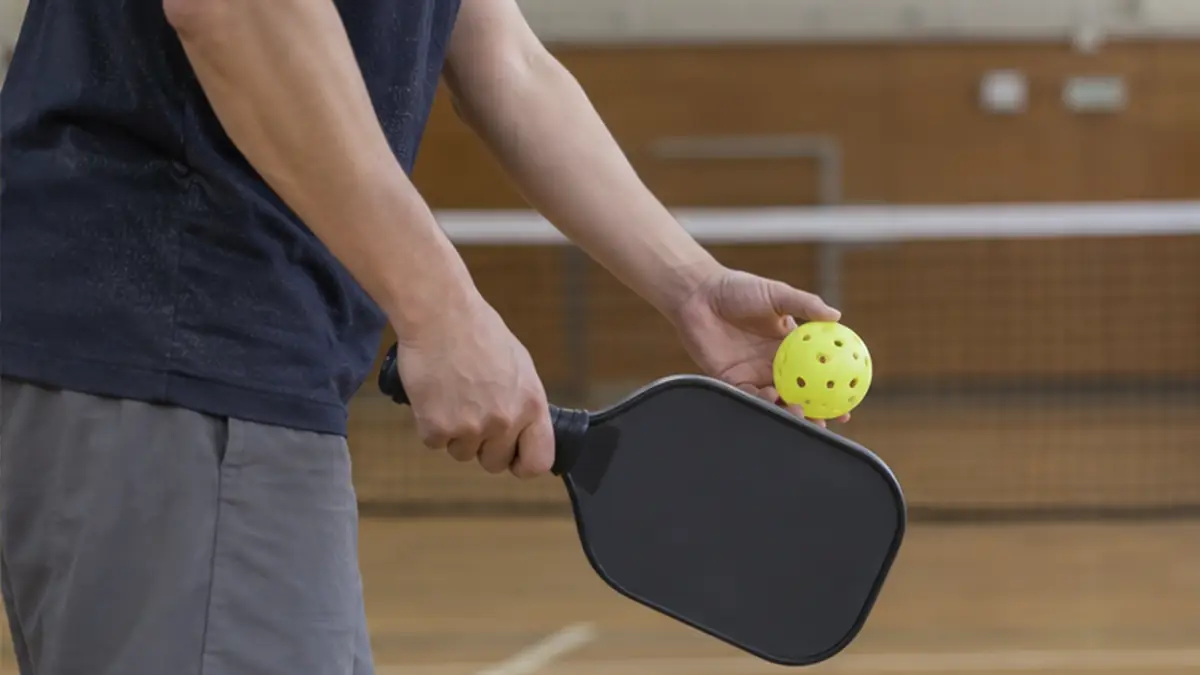
Step 1: How to set up
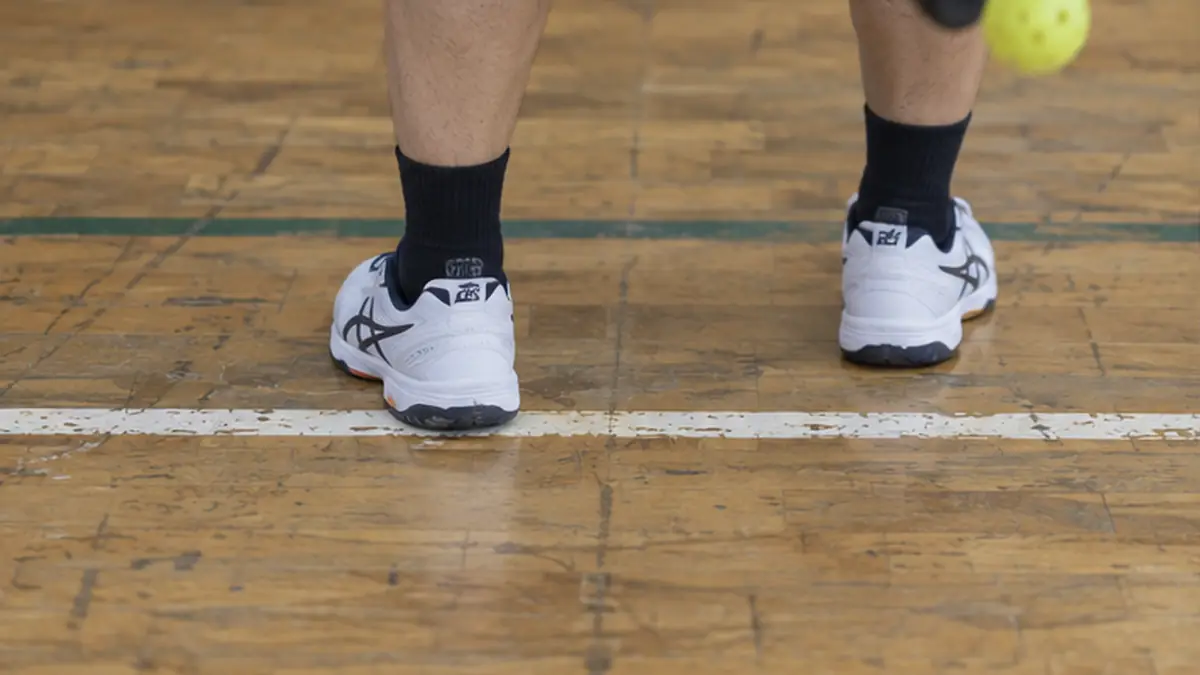
Stand behind the baseline. Neither foot may be inside the court. Being on the line is also a no-go.
Face your body toward the direction you're hitting — the diagonal service box.
Step 2: Releasing the ball
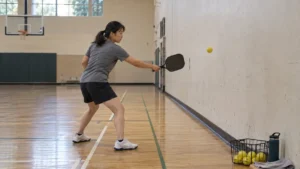
It's a choice of two: toss the ball, or hit it right after dropping it from your hand.
What's important is thatat the moment of impact the ball is below your navel.A toss that's too high becomes a fault, so calmly catch it at a low position.
Step 3: Key points of the hit
| Point | What to Do |
|---|---|
| Wrist position | Keep your wrist always above the paddle head |
| Swing direction | Swing from low to high, drawing an arc |
| Impact | Catch the ball at a position below the navel |
| Follow-through | Swing through naturally even after hitting |
While you're not used to it, hitting slowly is no problem. Ingraining a "form that doesn't violate the rules" into your body takes precedence over speed.
The types of serve faults and how to prevent them
This is where beginners stumble most. There are many faults you commit without knowing, so firmly get them into your head.
A list of common faults
| Type of fault | Details | How to prevent it |
|---|---|---|
| Overhead serve | Swinging the paddle down from above the shoulder | Always swing from low to high |
| High contact | Impacting the ball above the navel | Be conscious of the ball's height before hitting |
| Foot fault | Your foot steps on the line during the serve | Stand 10cm or more away from the line |
| Wrong court | It doesn't land in the diagonal service box | Visually confirm the diagonal before hitting |
| Early release | You dropped the ball unintentionally | Properly hold the ball in your hand, then hit |
Foot faults are especially easy to overlook
What we want you to watch out for is the foot fault. Cases where, so focused on the serve, your foot ends up on the line are very common for beginners.
Making it a habit to check your feet just once before serving greatly reduces mistakes.
There's also the option of the drop serve
Also remember the "drop serve," officially adopted in 2022. It's a method where you drop the ball to the ground and hit it where it bounces, and the constraints on form become somewhat looser.
For beginners not yet used to the underhand form, starting with the drop serve first is a valid choice.
How to land it in the service box — where should I hit?
Just "vaguely hitting it diagonally" isn't enough. Since your standing position changes with the score, organize it so you don't get lost during a match.
Your standing position changes with the score
- When the score iseven(0, 2, 4…): serve from the right side
- When the score isOdd(1, 3, 5…): serve from the left side
- You always hit to the diagonal service box
You need to land it beyond the kitchen
A rule unique to pickleball is the "kitchen (non-volley zone)." It's a zone set near the center of the court spanning the full width by about 2.1m, and if the serve lands here it's a fault.
In other words, it's not that "hitting it lightly is safe"; you need a sense of distance that clears the kitchen and reaches the back of the service box.
A serve comparison with other sports — you'll understand pickleball's characteristics
Comparing with tennis and badminton makes the positioning of the pickleball serve clearer.
| Item | Pickleball | Tennis | Badminton |
|---|---|---|---|
| Type of serve | Underhand only | Free (mainly overhand) | Underhand only |
| Number of chances | 1 | 2 (first and second) | 1 |
| Difficulty | Low | High | Moderate |
| Zone restriction | Must clear the kitchen | Within the box in front of the net | Within the short service line |
Tennis players may feel the pressure of "only being able to serve once." However, since you hit underhand there's high consistency, and once you get used to it, mistakes are fewer than you'd think.
3 practice tips for acquiring a consistent serve
Once you understand the rules, next is just making it consistent in practice. Here are three tips you can try right away.
Tip 1: Place a target and aim for the back of the service box
Place a towel in the back half of the service box and practice aiming there. The sense of distance to clear the kitchen and land it deep gets ingrained into your body.
Tip 2: Film your form on your phone and check it
Film your form on your phone to confirm whether the impact position is above your navel and whether the paddle head has dropped. Discrepancies in form you don't notice yourself become clear at a glance.
Tip 3: 100 consecutive serves practice
Practicing 100 consecutive serves before a match naturally sets your form. Rather than speed, be conscious ofrepeating a form that doesn't violate the rules.Be conscious of that.
Summary
Organizing the pickleball serve rules, it comes to the following.
- Hitting underhandis an absolute condition
- Impact is below the navel, and the paddle head is at a position lower than the wrist
- You only get one serve chance
- Land it in the diagonal service box (beyond the kitchen)
- Watch out especially for foot faults and high contact
At first it looks like there's a lot to remember. But once you actually stand on the court, you'll come to understand with your body the simplicity of "just hitting underhand into the diagonal."
First, solidify your basic form and keep hitting while being conscious only of avoiding faults. As you do, a consistent serve will naturally become yours.
FAQ
Q1: How hard should I hit the serve?
A1: While you're a beginner, prioritize "reliably landing it in the service box" and hitting slowly is no problem. Be conscious of accuracy over speed. Once your form becomes consistent, gradually add power.
Q2: Which do you recommend, the drop serve or the underhand serve?
A2: For beginners we recommend the drop serve. The constraints on form are somewhat fewer, and it's easier to land consistently. If you're aiming for a competitive level, firmly acquire the underhand serve form too.
Q3: What happens if my serve lands in the kitchen?
A3: It becomes a fault. It doesn't become a point for your opponent, but serving rights move to your opponent. Always be conscious of landing it beyond the kitchen line when you serve.
Q4: I get called for foot faults every time. How can I prevent it?
A4: Check your feet once before serving and make it a habit to stand about 10cm away from the baseline; that prevents it. It's important to serve after calmly getting ready without rushing. Once you're used to it, you'll naturally become conscious of it.
Q5: Why does the court I serve from change with the score?
A5: It's a rule to preserve the fairness of the game. When your score is even you serve from the right side, and when odd from the left side. Making it a habit to check the score out loud makes it harder to make mistakes.
Q6: What happens if the serve hits the net and lands in the service box?
A6: In pickleball, a serve that clips the net and still lands correctly in the service box stays in play as a legal serve. The let (replay) was scrapped in the 2021 rule revision, and it is not a fault either. It is only a fault if the ball lands outside the service box. Players with a tennis background often mistake this for a let or a fault, so it is worth remembering.
Related Articles Worth Reading
- Practice methods to stabilize your pickleball serve | Tips for getting it in and repetition training
- Mental Toughness in Pickleball | Handling Pressure in Matches and Recovering From Mistakes
- Mastering the Pickleball Lob | When to Use It, How to Hit It, and How to Defend
- Breaking Through the Intermediate Plateau in Pickleball | 5 Habits Holding You Back and How to Fix Them
- How to Improve Pickleball Footwork | Efficient Court Coverage and Weight Transfer
Reference Links
Related Articles