In Sabah, on Malaysian Borneo, 160 players gathered for a women-only pickleball tournament. The venue was the state capital Kota Kinabalu, where 80 teams competed from July 10 to 12. The raw figure is not flashy. But given that the inaugural edition a year earlier had 50 teams, women's participation rose 60 percent in a year. This is a rural state, neither a metropolis nor an urban center, and the growth is women-led. That single point captures how the grassroots game is spreading in Southeast Asia.
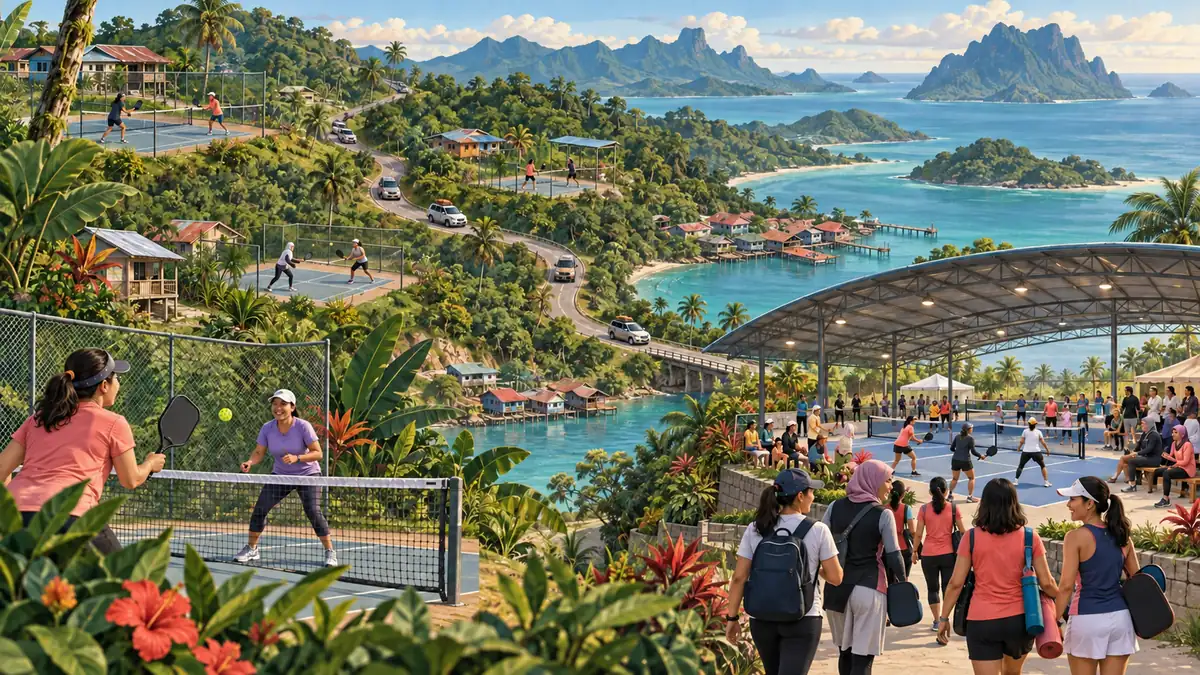
160 players and 80 women's teams in Kota Kinabalu
The event was the Women’s Pickleball Championship 2026, two days centered on doubles, split into three categories: beginner, intermediate and veteran (40 and over). Total prize money was RM30,000. Bounce Pickleball Club and DPPC Ladies ran the event, and Datin Noria attended the opening ceremony on behalf of the state chief minister's office. Entrants came not only from Kota Kinabalu but from towns across the state including Tawau, Keningau, Kota Belud and Kudat. That players travelled from one end of the state to the other, hours away by car, says a lot about the character of this tournament.
Nur Zahiera Putri Ismail, president of Bounce Pickleball Club and chair of the organizing committee, explained the growth this way: "Last year's first tournament had 50 teams entered, and this year it grew to 80. It shows rising interest in pickleball among women in Sabah." Thirty more teams in a year, a rise of 60 percent. For a one-off regional event, that is not a rate you can ignore.
Why growth is coming from the provinces and from women
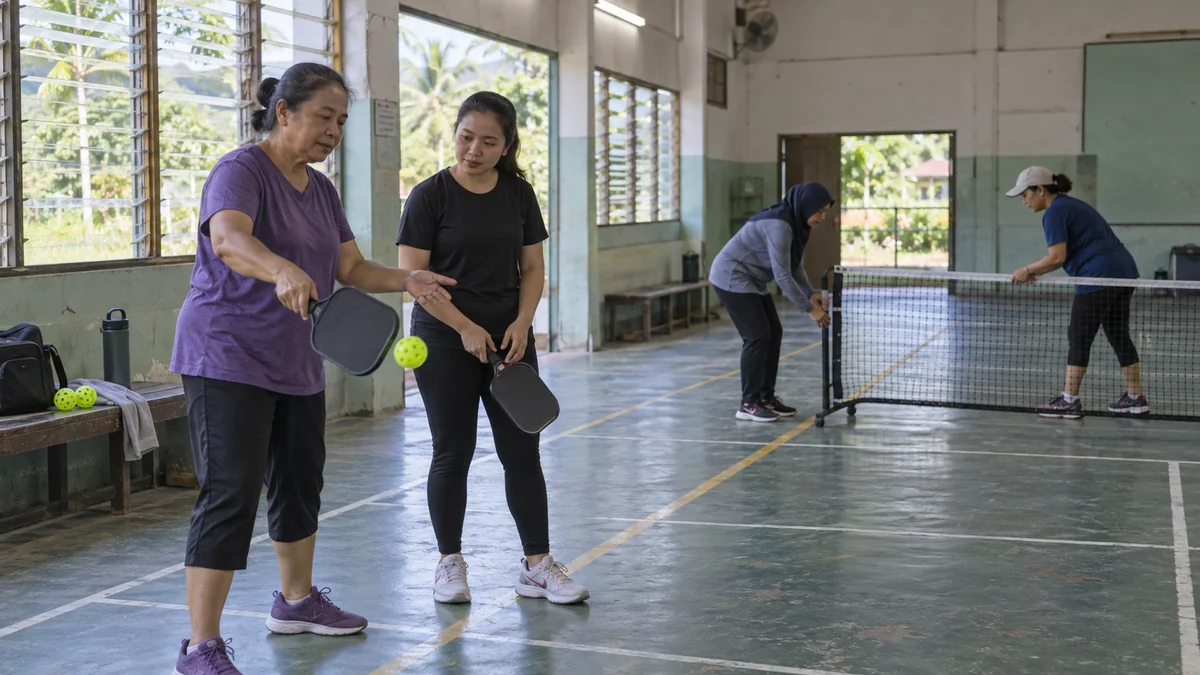
The story that pickleball is growing in Southeast Asia has been repeated for several years. Look closely, though, and the growth is not only a capital-city or big-city phenomenon. This publication has followed cases such as Kuching in Sarawak, Malaysia, where courts were built into a festival program, and the Philippines, where a doctor and his wife opened six courts with no membership system. What they share is a lightness that does not assume expensive memberships or dedicated facilities, starting instead by borrowing a gym, a square or an existing sports venue. The court is smaller than in tennis, the gear is cheap, and the rules are simple enough that a beginner can reach a match on the same day. That low entrance is what lets the sport work even in areas with little facility investment.
The women-led aspect is no accident either. Pickleball is built around doubles, where shot placement and partner coordination matter more than physical strength. It absorbs a wide range of ages and athletic backgrounds, and a veteran division for players over 40 works as an independent category. Splitting the Sabah event into beginner, intermediate and veteran was likely a choice to put finding opponents you can keep playing ahead of winning and losing. In a sport trying to widen its base, that consideration decides retention.
How much it grew in a year
Lining this growth up with other Southeast Asian cases this publication has followed shows the scale at which grassroots activity outside the cities is moving. All figures come from the organizers' or press announcements.
| Case | Location | Scale and figures |
|---|---|---|
| Women's championship (this event) | Kota Kinabalu, Sabah, Malaysia | 160 players / 80 teams (50 teams the previous year, up 60%) |
| Built into a festival program | Kuching, Sarawak, Malaysia | Courts built into the city festival as a standing attraction |
| Entrepreneurs' tournament | Da Nang, Vietnam | About 1,600 participants |
| Opening tournament in a provincial town | Iloilo, Philippines | An 80-player tournament right after opening |
In absolute numbers, Da Nang's 1,600 stands out, but the figure to watch is the growth rate. The jump from 50 to 80 happened within a year in a state with limited facilities and budget. Growth in the provinces may not match cities in total volume, yet it can outpace them in rate of increase. Because the ceiling is low, word of mouth and one successful tournament can lift the next year's turnout sharply.
What the organizers took from it
Ismail, the organizing chair, described the rising interest simply as more teams entering. It is a grounded explanation that claims no more than the numbers say. That a representative of the state chief minister's office stood at the opening ceremony can be read as a signal that the administration is starting to see this in a regional development frame. It has moved up from a gathering of enthusiasts to an event the state is willing to put its name on.
That players came from across the state backs up that read. People travelling from distant towns like Tawau and Kudat do so because they have practice partners and regular sessions at home. A single tournament is only the tip of an iceberg of everyday play in the area. In the grassroots cases this publication has covered in the Philippines and Sarawak, there was always a community court behind the one-off event. Sabah is almost certainly the same. The independent veteran division is also worth noting. The category for players 40 and over was only added this year, and the question now is whether it can encourage women of that generation to take part and keep them in the game.
What works for women's and regional growth in Japan
Brought back to Japan, the case offers two lessons. One is designing women's categories by playing level. Taster sessions in Japan tend to be one-off and aimed at beginners, leaving thin provision for people who want to go a step further. A women's tournament split into beginner, intermediate and veteran, as in Sabah, turns a trial into something continuing. At the APP qualifier in Utsunomiya this publication reported on, Hinano Fukunaga took silver, and Japan's women's field is starting to gain depth. Widening the base and providing somewhere to go next are two halves of one wheel.
The other is that starting outside the big cities is fine. In Japan too, examples like the taster festival in Hachioji show a 24-court setup can be assembled away from a major city center. What Sabah shows is that if you create an environment people will travel to from towns beyond the state capital, total numbers can grow while the bases stay dispersed. Rather than building one large facility in a single place, putting small courts and an annual tournament in each area is more realistic and longer-lasting in the provinces.
Ripple Effects on the Industry
Grassroots spread across the map creates openings in equipment, facilities and event operations. If running events without memberships becomes the norm, demand grows for the bring-your-own kind of gear: portable nets, lines and outdoor paddles. As local governments get involved for regional development, hourly rentals of public gyms and municipally run beginner courses will increase as well. For Japanese equipment makers and facility operators, provincial Southeast Asia is an entry-stage market, before it matures the way tennis did. At this stage, whoever holds low-priced gear and the know-how to carry beginners through to a match has the advantage.
For players thinking of entering
For players in the provinces or women who want to join events like this, a few points are worth keeping in mind. First, check whether there are divisions by level. With a beginner division, you can face opponents of the same standard even with little experience. Second, settle on a doubles partner in advance. Regional events center on doubles, and partner coordination shows up directly in results. Third, do not be put off by distance. As Sabah shows, travelling entrants are not unusual. Plan around travel, including accommodation and transport, and the options widen at once. The shortest route to staying in the game is to find regular hitting partners at a local community court first, and place the tournament at the end of that line.
Summary
Sabah's women's championship showed, through 160 players, 80 teams and a 60 percent year-on-year rise, what grassroots growth from the provinces and from women looks like in Southeast Asia. Totals may not match the cities, but in growth rate and in designing for retention, the provinces can be ahead. Growth among women and outside the big cities in Japan faces the same question: how to provide level-based divisions and dispersed bases rather than leaving people with a single taster session. One tournament on Borneo offers a concrete template.
Sources
- Pickleball News Asia「Women’s Pickleball Championship in Sabah draws 160 players as sport grows in state」
- A court next to cosplay and K-pop: Kuching's festival puts pickleball on the program
- Overseas players swept Utsunomiya, and what Hinano Fukunaga's silver means
- A taster festival with up to 24 courts: the Hachioji template for growing pickleball