From July 10 to 12, the KINTO APP ASIA Qualifier Series UTSUNOMIYA 2026 was held at Nikkan Arena Tochigi in Utsunomiya, Tochigi Prefecture. Built around a pro category with a total purse of 2 million yen, it ran three days: singles on Friday, doubles on Saturday, and mixed doubles plus wheelchair and unified events on Sunday. In a word, the top of almost every pro division was carried off by players who came from overseas. Among them, Japan's Hinano Fukunaga paired with Bobbi Oshiro and pushed through to second place in women's doubles.
This was not just a domestic tournament. It doubled as the selection event for Japan's team at the Pickleball World Cup 2026, held in Da Nang, Vietnam from August 30 to September 6. The courts in Utsunomiya were where Japanese players could measure themselves against world-level opponents at the same venue. That overseas players swept the event is, as a yardstick for selection, useful: it showed in results where Japan's best currently stand.
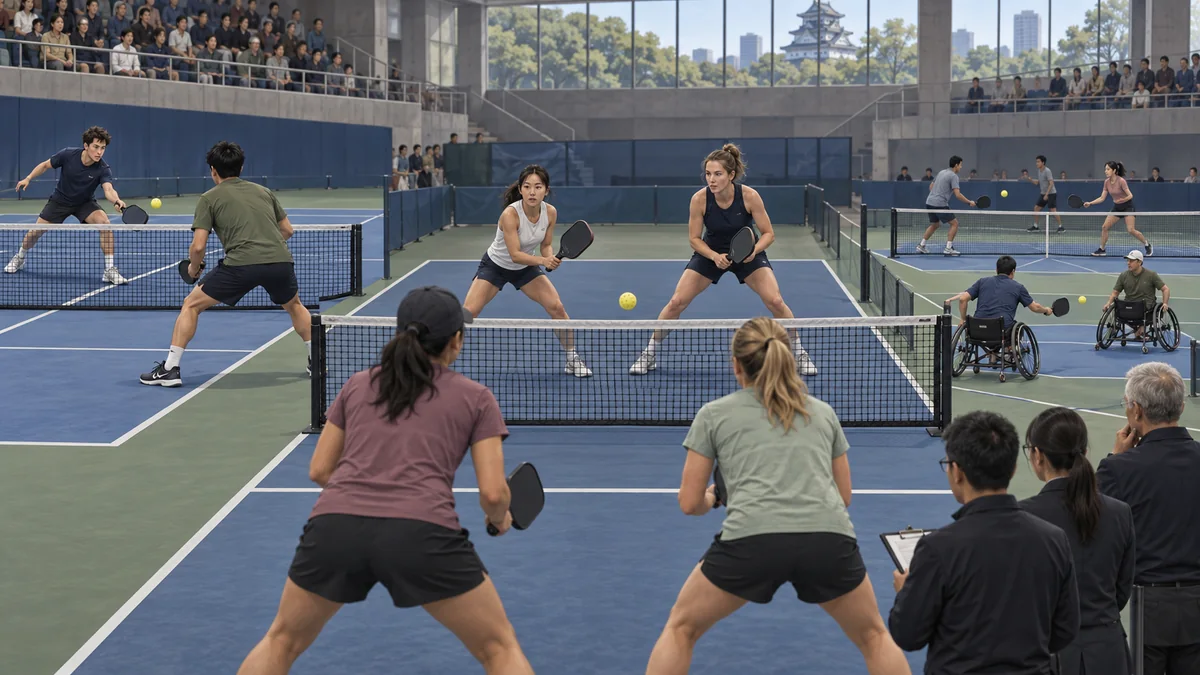
The double meaning of the Utsunomiya event
The APP in the tournament name is the Association of Pickleball Professionals, an international tour founded in the United States. Utsunomiya was a stop on its Asia series, so winning here feeds directly into tour points and record. On top of that, the organizer, the Pickleball Japan Federation, made the tournament a selection opportunity for the national team going to the World Cup in Da Nang. An official stop on an international tour and a national selection event, two different things, overlapped at one venue.
The outline of the tournament was as set out before it began, anda 2 million yen total purse and its standing as an international eventput it a head above other domestic tournaments. A stage where pros come in earnest for prize money and points was placed in Utsunomiya rather than Tokyo. Treat it as another example of regional cities beginning to host international events.
Overseas players took every pro division
Men's singles was the most telling. Gold went to 18-year-old Mauro Garcia of Spain, who beat 23-year-old Jake Bauer of Florida in straight games to become the face of the tournament. Women's singles went to Bobbi Oshiro, who dropped the first game in the final before coming back to beat Yu-Chieh Hsieh of Taiwan.
Overseas players filled the top of the doubles draws as well. Men's doubles went to Kevin Wong and Daniel Moore. Oshiro and Wong shared gold in mixed doubles, and women's doubles was won by Australians Brooke Revuelta and Nicola Shorman. Almost all the gold in the main pro divisions went to players who had crossed an ocean to get there.
What Hinano Fukunaga's silver was made of
The highest Japanese finish was Hinano Fukunaga in women's doubles. Partnered with Bobbi Oshiro from overseas, she finished second behind the winning Revuelta and Shorman pair. At a tournament where most of the gold went to visiting players, a Japanese player reaching the final is no small thing. Unlike singles, where individual power tends to decide things, in doubles Japan's best can contest a final with the world's strongest, and Fukunaga's silver showed exactly where that line sits.
Doubles is a discipline where gaps in individual athleticism can be covered by shot selection and positioning. The contrast is no accident: pushed aside in straight games by a teenage foreign player in singles, a pair including Fukunaga reached the final.The trend of Japanese doubles closing in on finals in Asiacontinued in Utsunomiya as well.
Why the overseas players were this strong
Look at who won the pro divisions and the origins scatter: Spain, Florida, Australia, Taiwan. What they share is an environment where matches pile up from an early age. The United States and Australia have prize tournaments spread across the year, so a teenager can play hundreds of matches against pros. Garcia winning at 18 without flinching comes not only from talent but from the sheer volume of match repetition behind him.
Japan cannot yet supply that volume at home alone. That is exactly why increasing international events inside the country, as in Utsunomiya, matters. A chance to face world-level opponents without travelling abroad lifts a player's growth curve directly. This tournament, doubling as team selection, was a place to train as much as a place to choose.
To the Da Nang World Cup, with Japan's position measured
Next after Utsunomiya is the Da Nang World Cup from the end of August. On a stage where countries across Asia send national teams,with India naming a captain and coming for gold, the seriousness of Japan's neighborshas gone up a level. For Japan, whose singles depth showed a gap against overseas players in Utsunomiya, Da Nang is a test of whether that gap can be closed.
The clue is the position Utsunomiya revealed: in doubles, the final is within range. Against opponents you cannot overpower alone, a pair can hang on through coordination. Fukunaga's silver points to the realistic path Japan should aim for in Da Nang. Rather than going head to head with the world's 18-year-olds in singles, the question is how to turn a doubles run that reached one step short of gold into gold. That is where the blueprint for the national team lies.
In closing - the accuracy of the measure matters more than the result
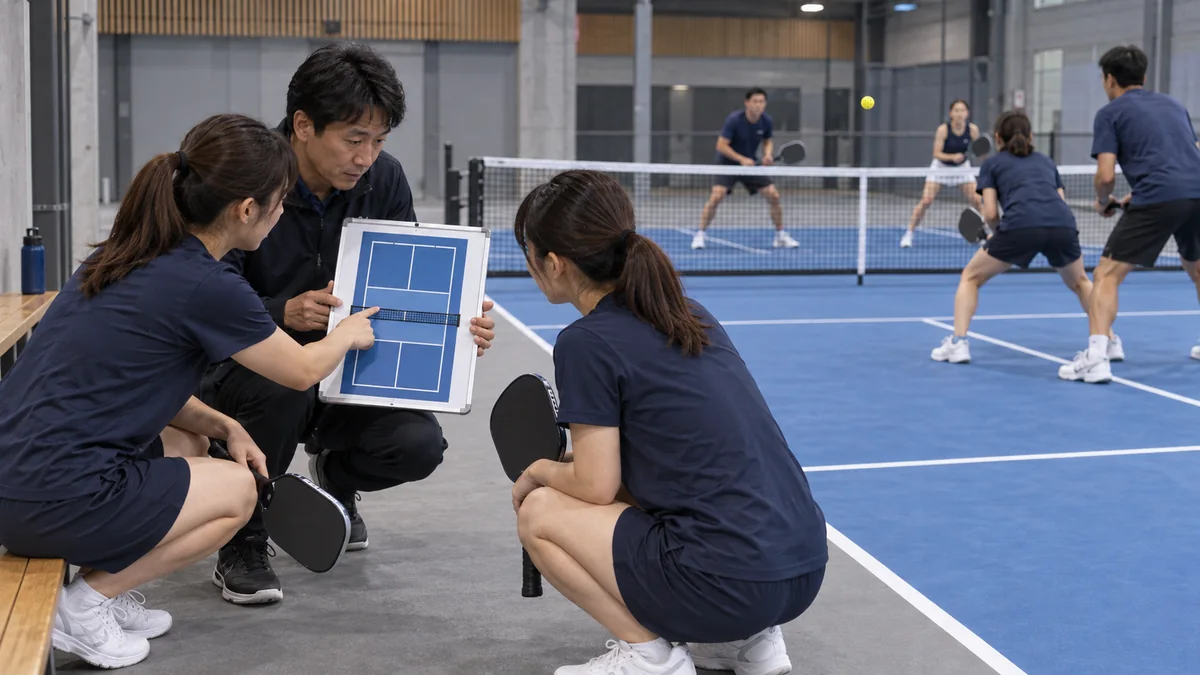
Reading Utsunomiya, where overseas players carried off the pro gold, as a defeat would be a waste. The value of this tournament as a selection event lies less in the wins and losses than in being able to measure precisely where Japan's best stand in the world. Singles shows the gap, doubles shows the range. Heading to Da Nang with those two facts is the payoff from running the selection event at home. Hinano Fukunaga's runner-up finish was a small but certain light on that position.