USA Pickleball(USAP)は10月1日、パドルのスピンを測る方法を切り替えた。表面のザラつきを測る従来のやり方をやめ、実際にボールが何回転しているかを直接計測し、毎分2100回転を上限に据えている。回転数の数字だけを追うと「また規制が厳しくなった」で終わってしまう。だが海外の専門メディアが突いたのはそこではない。テスト方法よりも、その手前にあるhole in the certification system itselfだ。既存の認証パドルを持つ日本のプレーヤーにとっても、この変更は他人事ではない。
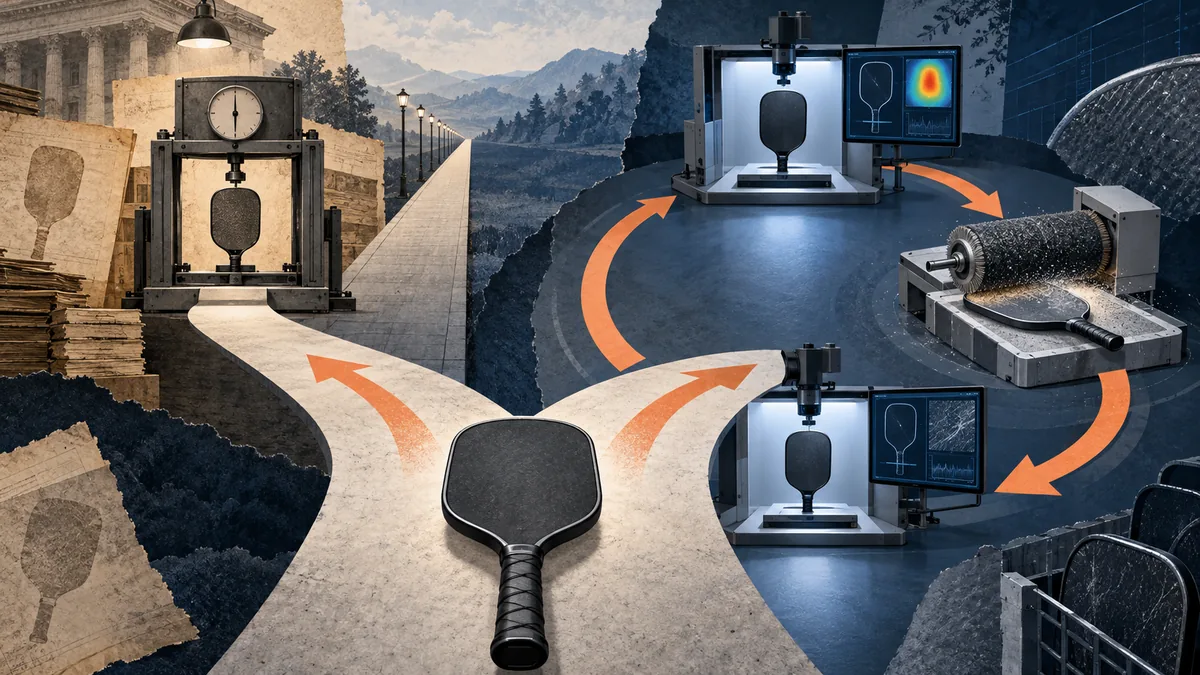
The issue is not the number but what certification covers
What tends to get overlooked in this change is that USAP keeps its grandfather clause, leaving paddles it certified in the past valid in perpetuity. A paddle that passed under the old standard and one that passed under the new standard carry the same "approved" stamp on the list. The US outlet The Dink described the structure this way: a standard that grants permanent rights forever is not a standard, only a snapshot of a single moment. Under the same stamp sit paddles judged in completely different eras under completely different rules.
The comparison that comes up is the testing run by UPA-A, which oversees the pro tours. UPA-A requires recertification every two years, putting each paddle through the latest test again. Where a USAP pass lasts forever, UPA-A sets an expiry date. The word certification is the same, but what it guarantees is entirely different.
The old and new tests, and two certification systems
What changes, and where does it diverge from the pro system? Laying it out side by side makes the shape clear.
| Item | USAP until now | USAP from October | UPA-A (pro side) |
|---|---|---|---|
| Measurement approach | Measures surface roughness | Measures the ball's actual spin rate | Measures the ball's actual spin rate |
| Spin ceiling | No explicit numerical ceiling | 2,100 revolutions per minute | Managed on an output basis |
| Recertification | None (valid permanently) | None (existing paddles unchanged) | Required every two years |
| Condition of the paddle tested | Brand new | Brand new | Tested with wear reproduced and damage assumed |
Set out in a table, the October change turns out to move the measurement method closer to the pro side while leaving the foundations untouched: permanent validity, and a test that only looks at new paddles.
Three cases that expose the gap in the system
The risk in this structure has surfaced not as abstract argument but as specific incidents.
The first is the issue around JOOLA's Gen3. It passed the test in new condition, but after buyers had used it for a few weeks the surface changed, fell outside the rules and led to core damage, ending in litigation. The case showed that a USAP method measuring only new paddles cannot vouch for what a paddle becomes once it has been used. The second involves OWL, which was accused of quietly receiving an exemption from roughness testing for more than two years while USAP publicly investigated the same kind of violation at other brands. A relief route existed that was invisible from outside. The third is 11Six24, whose spin numbers themselves are within legal limits but whose HexGrit surface exceeds the roughness spec, leaving it unable to obtain USAP certification. The same roughness question is waived for one maker and becomes a wall for another.Inconsistent enforcementis eroding trust in the system.
What happens to the paddle you already own
The first thing players in Japan will want to know is whether the certified paddle they own becomes unusable. The short answer: because of the grandfather clause, existing certified paddles are not invalidated all at once in October. The stamp already given stays for a while. But it cannot simply be taken as reassurance.
The problem is that what the stamp stands for is thinning out. Depending on whether the tournament you enter follows the USAP standard or the pro-oriented UPA-A standard, the same paddle may or may not be allowed. If you treat the words "USAP approved" as your only measure of trust when buying, you lose track of when and under which standard the paddle passed. Models with surface treatments sold on spin are, as the JOOLA case showed, prone to changing behaviour with use, and legality when new is no guarantee once the paddle has been played in. The more a product advertises high spin, the more its position is at risk when standards are next revised. Higher-priced paddles tend to push spin performance hardest, so the reversal can happen where the largest investment turns out to be the most vulnerable to a rule change.
Maker roadmaps and the factories in Asia
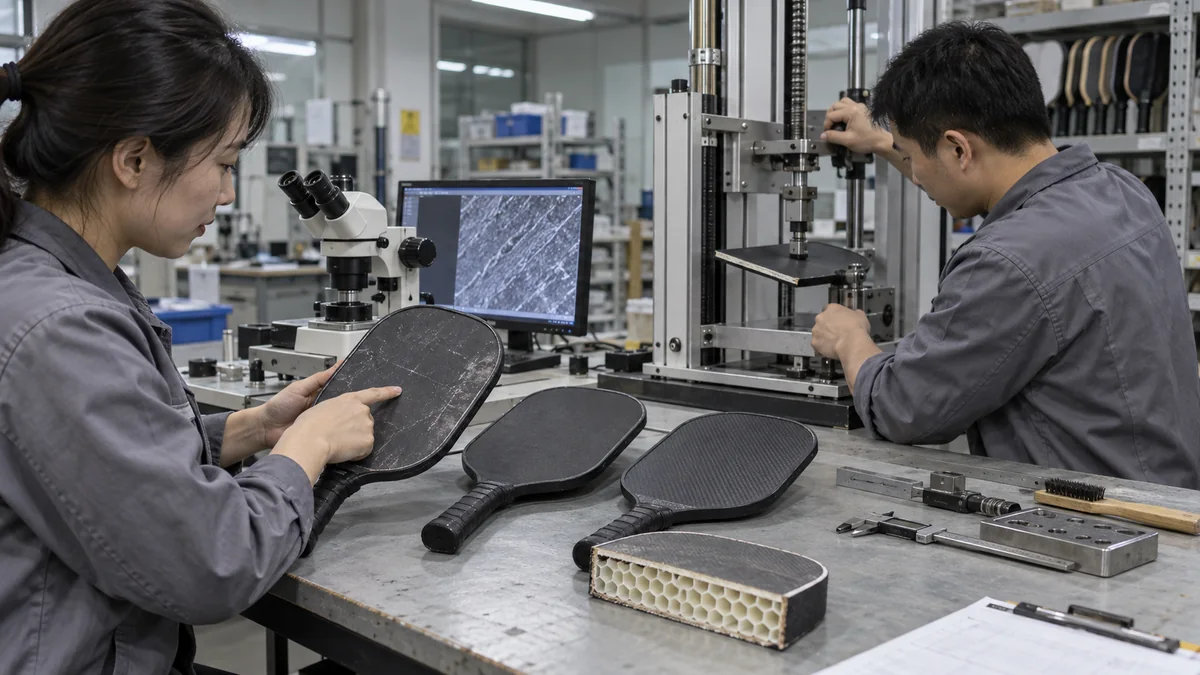
This double structure weighs more heavily on the makers. Most paddles are mass-produced at OEM factories in China, Vietnam and Taiwan, and surface treatments and moulds are costed on the assumption that once set they will be used for a long time. If USAP and UPA-A require different tests, makers are forced to build separate surfaces and materials for amateur and pro use. Meeting a durability test that reproduces wear means designing for core degradation from the start. A design that generates spin through surface texture becomes an unreadable bet the more the reading of the spec wobbles.
The timing of certification feeds straight into inventory risk as well. Run mass production while the standard is moving and stock sitting in the warehouse can be treated as old-standard before it ever sells. Given the time from development to mass production, certification and the shop floor, nobody can say for certain which standard will be in force by the time the model now on the drawing board goes on sale. The spin ceiling itself has already been reported, but what the factories are bracing for is not the number; it is not knowing when or where the line gets redrawn. Many of the overseas brands on sale in Japan sit downstream of those factory decisions.
Ripple Effects on the Industry
A certification authority splitting in two is no small thing. The further UPA-A's strict standard for pros drifts from USAP's looser enforcement across the amateur base, the more what "approved" means depends on context. Makers carry the cost of serving both, and consumers have to work out for themselves which standard is being talked about. It is ironic that the move toward unified rules and the fracturing of certification are happening at the same time. The more the sport tidies itself up as a competition, the more lines get drawn at the equipment gate. In Japan, equipment rules still vary from tournament to tournament, and before the overseas debate is imported wholesale it is worth deciding at home which standard to stand on.
What to Check Before Buying
In practical terms, keep the following in mind when choosing a paddle.
- Separate the types of certification: check whether it is USAP approved, UPA-A compliant, or both
- Find out when the model was certified; it may still be riding on an old standard
- Understand that spin-focused surfaces can behave differently when new and after heavy use
- Check in advance which standard the tournament you plan to enter uses
- When buying used or on sale, always confirm the certification year and the type of standard in the listing
The days of choosing by the presence of a certification mark alone are ending. Only by looking at which standard and which year the certification came from can you tell whether the paddle will pass where you play.
Summary
10月のスピンテスト変更は、測定方法をプロ側に近づける一歩ではある。だが本当の論点は、恒久有効のグランドファーザー条項と、新品しか試さない試験という制度の土台にある。同じ「認証済み」の判子が、違う時代・違う運用の産物を覆い隠している。日本のプレーヤーは、手持ちパドルが即座に無効化される心配よりも、認証という言葉の中身を自分で見極める習慣を持つほうが実益は大きい。数字の裏にある制度設計を読むことが、パドル選びの前提になっている。
Sources
- The Dink Pickleball「Why USAP’s New Spin Test Presents a Bigger Certification Problem」
- A ceiling on spin: October's 2100 spin-rate limit shakes Asia's paddle factories
- [2026 rule revision] The 7 changes to USA Pickleball's new rulebook
- JOOLA patent lawsuit: Paddletek and ProXR settle—resolved with royalty payments