マレーシア・ボルネオ島の街クチンで、ピックルボールがコスプレやK-popダンスカバー、ポケモンカードと同じ祭りの演目に並ぶ。市が主催する「クチンフェスティバル2026」の一角に競技が組み込まれ、7月25日にコート施設PicklePro Kuchingで男子・女子・混合ダブルスの大会が開かれた。優勝賞金は各部門RM800。日本のピックルボール関係者にとっては、競技がスポーツの枠を越えて「若者文化の娯楽」として受け入れられていく過程を、生きた事例として見られる場面だ。
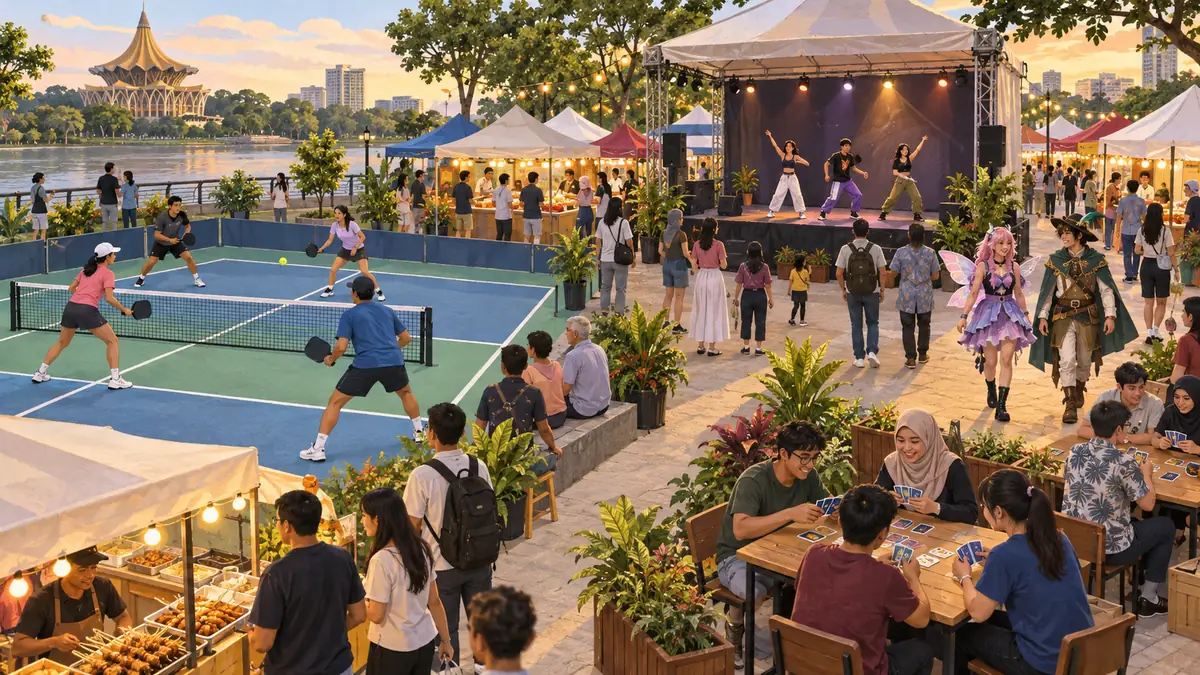
A food festival turns into an event about creativity and young people
Kuching Festival has long been known as a food carnival built around street stalls. Kuching, the capital of Sarawak state, is a regional city of about 600,000 people, and the festival is a fixture of the local summer. The 2026 edition widened its character considerably. The organizer, Kuching South City Council (MBKS), describes this year's theme as a celebration of creativity, youth development, healthy living, digital culture, sport and community participation all at once.
The program makes the intention clear. A pickleball tournament takes place at PicklePro Kuching on July 25, and the festival period also includes an individual cosplay catwalk, K-pop dance covers and a Pokemon Trading Card Game tournament. What was a food festival now has the pastimes that teenagers and people in their twenties are excited about lined up side by side.
The prize money shows what the organizers really want
Lining up the prizes for each event shows what the festival wants at its center. Yen figures are calculated at about 40 yen to the ringgit (mid-July 2026).
| Event | Top prize (local currency) | Yen-conversion guideline |
|---|---|---|
| K-pop dance cover | RM2,000 | About 80,000 yen |
| Pokemon cards | RM1,500 | About 60,000 yen |
| Cosplay (individual) | RM1,000 | About 40,000 yen |
| Pickleball (each division) | RM800 | About 32,000 yen |
Pickleball pays RM800 to the winner of each division, with a separate RM300 for the MVP King and MVP Queen who become the faces of the tournament. The sum is more modest than K-pop or Pokemon cards, but the amount is not the point. What matters is that the sport has been placed on the same table as dance and card games, as a draw that pulls people in with prize money on the line. Sport here is not framed only as health promotion but treated as festival programming. That is what is new about this event.
The mayor's words and the value of a wide door
Kuching South mayor Wee Hong Seng said of the tournament that pickleball suits every age group, and that he hopes it encourages healthy habits and creates interaction in the community. Anyone can start regardless of age, the rules are simple and the court is small. That width of entry is the biggest reason pickleball has taken root so quickly around the world.
The government leading the way matters too. The organizer is the city council, not a private club. A local authority picked pickleball as a device to bring young people back to civic events and create interaction across generations. The spread of the sport is starting to be used as a tool of public policy. The same picture appears in Africa, inZimbabwe's run of back-to-back tournaments in two cities to root the sport in a blank area. The thinner the playing population, the more it is governments and community organizations doing the sowing.
What Japan can take from Asia's spread of the sport as entertainment
This is where people in Japan have something to think about. Pickleball in Japan has grown largely as a landing spot for former tennis players or as a business for commercial indoor facilities, so the competitive and fitness angles come to the front. Kuching put the sport on the shelf marked fun, next to cosplay and idol dance. The design of the entrance is entirely different.
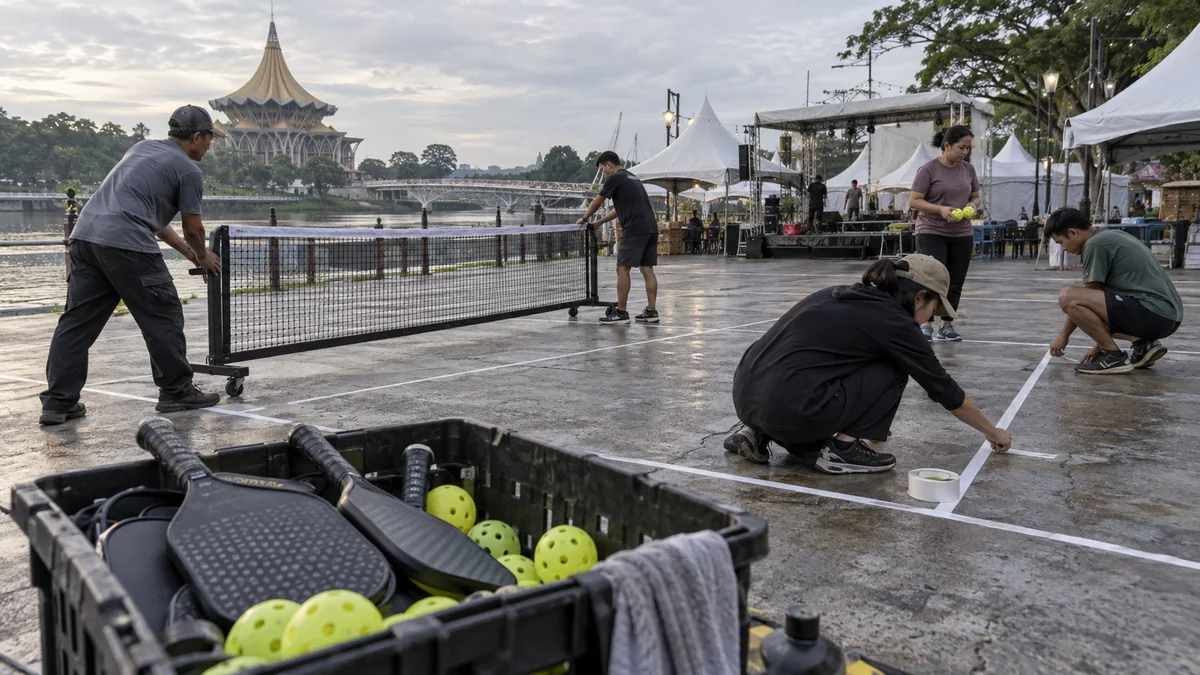
This way of dissolving the sport into entertainment stands out in Asia's newer markets. In Vietnam a bank held astaff-benefit pickleball tournament that whole families could join, turning the sport into recreation for the workplace and the home. Also in Vietnam, a nine-month push to take beginners all the way to the national final stage -Designing a development league- is under way. What they share is a stance that puts getting a broad range of people to try the sport ahead of polishing it for advanced players. Kuching's approach of making it one act in a festival is the most easily understood form of that.
Japan has no shortage of summer festivals, community events and promotions at shopping complexes. Bringing in a single court and adding a taster session or a small mixed doubles tournament is enough to give a first swing to people with no connection to the sport. What Kuching shows is a practical point: without a big dedicated facility or a large purse, riding on a crowd that already exists widens the base.
A festival can be the way in
Kuching Festival 2026 shows pickleball in a regional Asian city starting to carry several roles at once: health, exchange between generations and local revitalization. Before sharpening it as a competitive sport, dissolve it into the town as festival fun. Anyone thinking about the next move for the sport in Japan needs to consider not only new dedicated courts but how to insert the game into places where people already gather. Put a pickleball taster booth on the agenda for the next community event. Kuching's attempt is a concrete prompt to do so.