Basic knowledge for choosing a pickleball paddle
For those who have just started pickleball, choosing a paddle may be the first big wall.
In fact, when I myself thought about buying a paddle on my third time playing pickleball, I was at a loss, having no idea what standard to choose by. Searching on Amazon displayed a vast number of products, but I could not understand the differences and features of each, and in the end could not decide which to choose.
The paddle looks simple, but it is actually a deep piece of gear. To find the best paddle, you need to consider as many as nine elements: core material, face material, thickness, shape, weight, balance, grip size, and more. For a beginner, understanding all of these and choosing is not easy.
But do not worry. This guide conveys, clearly and systematically, the information for finding the paddle best for you, from beginner to advanced. If you understand the meaning of each element and choose to match your playing style and skill level, pickleball should become even more fun.
The paddle core material: why you should choose PP (polypropylene)
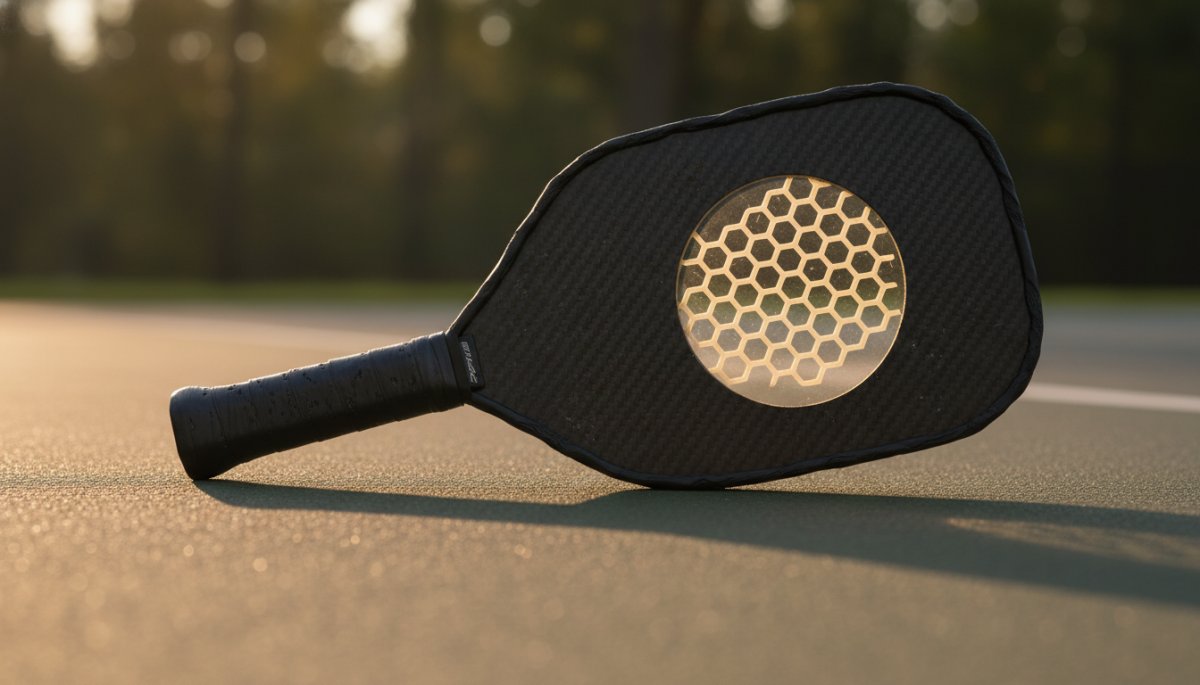
The core material, which could be called the paddle's heart. It is the first choice point that sways feel, control, and durability.
Why the PP core is mainstream
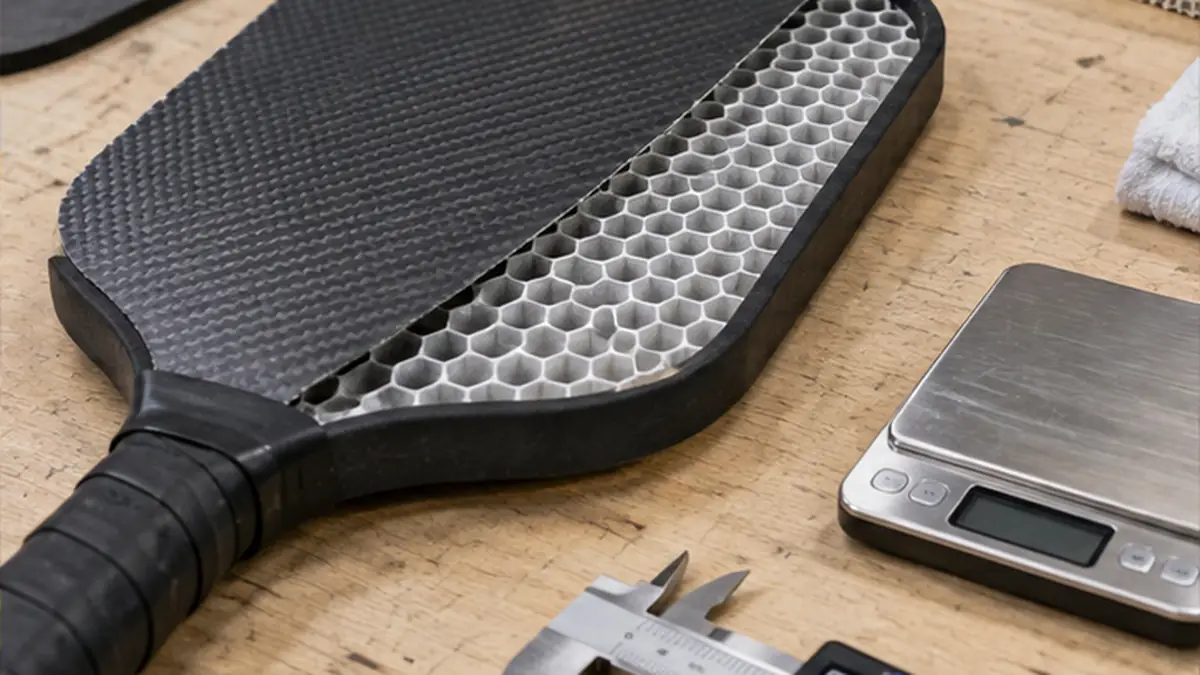
About 95% of paddles on the market now use a PP (polypropylene) core. There is a clear reason for this. The PP core provides maximum control with a soft touch and is the material with the most advantages.
The difference among Nomex, aluminum, and wood cores
As other materials, there are the Nomex core and the aluminum core. The Nomex core is a hard material with excellent durability, but it has the drawback of becoming very loud. It was once used in high-performance paddles, but its share has now been largely taken by polymer cores. The aluminum core may be good for beginners and juniors, but it dents quickly and wears easily, so it cannot be recommended.
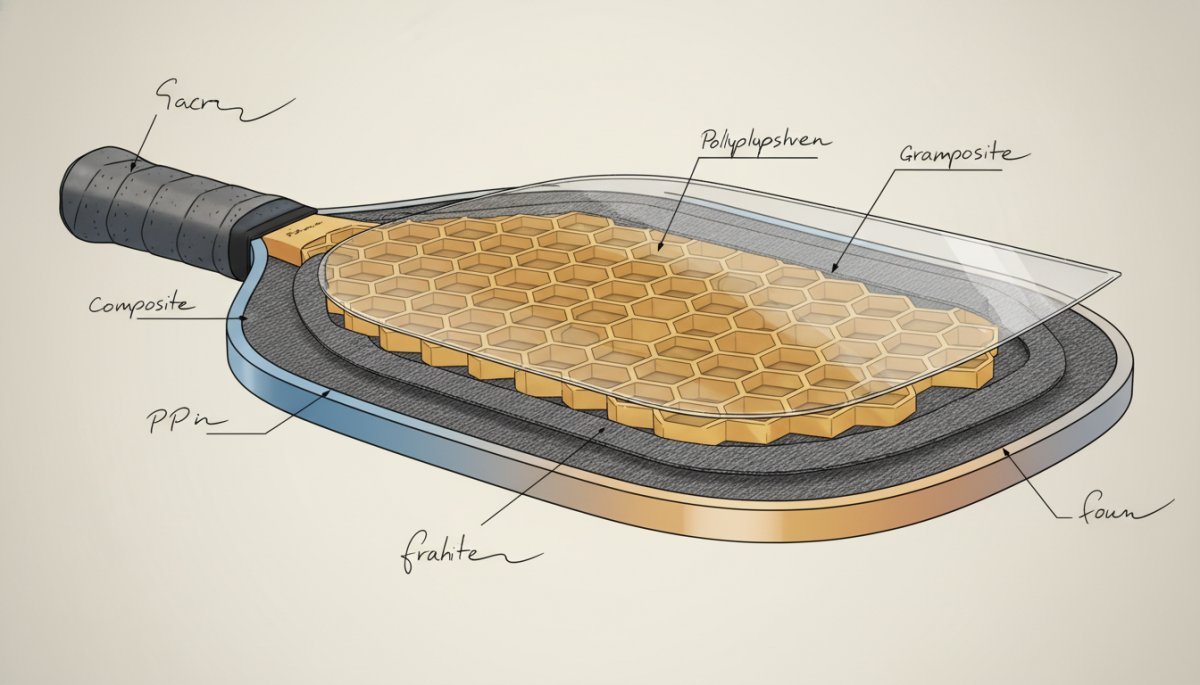
Wood paddles also exist, but this is an old material. Tennis too once used wood rackets, but now materials using the latest technology are mainstream. When buying a paddle, choose a PP-core paddle without hesitation.
| Core Material | Features | Who It's Suited To |
|---|---|---|
| PP (polypropylene) | Good control with a soft touch. About 95% use it | Everyone from beginner to advanced |
| Nomex | Hard and high-rebound but loud on impact | Some who weight power |
| Aluminum | Light but dents easily and wears fast | Temporary use when starting out |
How to choose the face material: why carbon fiber is mainstream
The face material is the element that decides feel and spin performance.
Carbon's feel and spin characteristics
The current mainstream is carbon fiber. Carbon fiber makes spin easy to apply and excels at control. Light and tough, it excels at absorbing the ball's impact energy and redistributing that energy. The feel comes across as soft. Being hard it excels at maneuverability, but because power drops, hitting fast shots takes technique.
The difference from graphite and glass fiber
Graphite was also common before, but since carbon appeared its frequency of use has decreased. Graphite is suited to control too and, like carbon fiber, is a hard material. Its feel comes across as harder than carbon. It is considered a material suited to players who weight control over power.
Glass fiber is a material offered at a low price and has the trait that spin is hard to apply. Of the three surface materials, glass fiber tends to be somewhat heavier than carbon or graphite. It has power but falls short of carbon and graphite in control performance. Basically, choosing to match your own skill and style is fine, but when in doubt, choosing carbon fiber is recommended.
| Face material | Feel and performance | Who It's Suited To |
|---|---|---|
| Carbon Fiber | Excels at spin and control, feel on the soft side | When in doubt, this |
| Graphite | On the hard side, leaning toward control | Control-focused |
| Fiberglass | Cheap, has power but weak on spin | Cost priority |
Choosing paddle weight: the difference among light, mid, and heavy
A paddle's weight greatly affects power, control, and how easily you tire.
| Weight class | Guide | Features and who it suits |
|---|---|---|
| Light | About 170 to 200 g | Suited to control and dinks. For women and beginners |
| Medium | About 200 to 230 g | A balanced type, the most versatile. Ideal for a first paddle |
| Weight | About 230 to 250 g | Power-focused. For advanced and aggressive players |
The features of light, mid, and heavy
A light paddle (about 170 to 200 g) is easy to control and suited to dinks and drop shots. It allows play that makes use of the wrist, and its feature is being less tiring even over long play. It is recommended for women, beginners, and players who weight control.
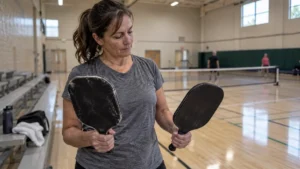
A mid-weight paddle (about 200 to 230 g) has a good balance of power and control and is also effective at preventing injury. It is the most versatile and suits many players. When buying a paddle for the first time, starting with a mid-weight paddle is the safe bet.
A heavy paddle (about 230 to 250 g) is ideal for power players. You can hit powerful shots, but it also has the drawback of being tiring. It suits advanced players and those who prefer an aggressive playing style.
When playing outdoors, because you are exposed to the natural environment such as wind and rain, choosing a paddle with good control increases stability. For women, considering the burden on the arm, a lighter paddle is recommended. For indoor use, a paddle with power is good for faster-tempo matches.
Paddle shape and size: standard, hybrid, and elongated
A paddle's shape is decided by its length and width.
The features of each shape and how to choose between them
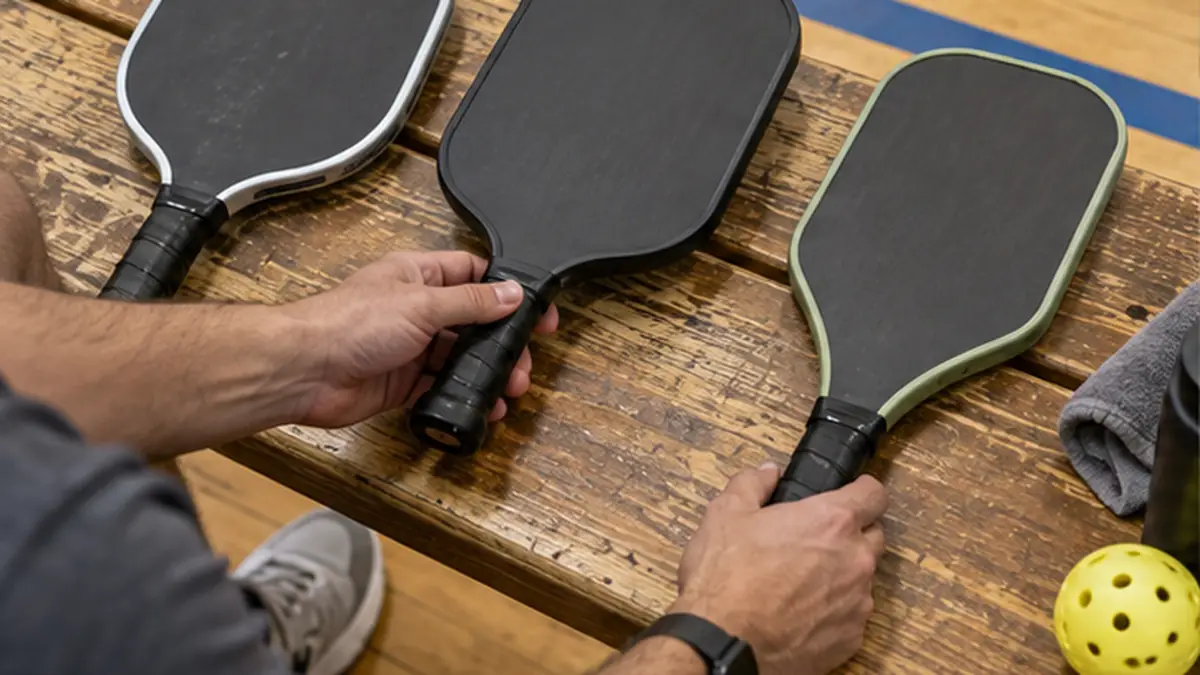
Under the rules of USAP (USA Pickleball), the length combining the paddle's total length and width must not exceed about 61 cm (24 inches). Within this constraint, makers develop paddles of various shapes.
| Shape | Guideline dimensions | Features |
|---|---|---|
| Standard | About 40 x 20 cm | Wider sweet spot. Suited to beginners |
| Hybrid | About 41 x 19 to 20 cm | A balance of reach and forgiveness. Popular with intermediates |
| Elongated | About 42 x 19 cm | Reach and power. Suited to those with tennis experience |
The standard type (about 40 cm x 20 cm) has high control performance and a wide sweet spot. Spin and power are modest, but because it allows stable play, it is ideal for beginners. It has few mis-hits and helps you get used to play.
The hybrid type (about 41 cm x 19 to 20 cm) can handle various playing styles. With a good balance of reach and forgiveness, it is popular with intermediates. It is a shape combining the good points of the standard and elongated types.
The elongated type (about 42 cm x 19 cm) is popular with those who have tennis experience. Its feature is a long reach (the range you can cover) and being easy to produce power. It is advantageous for net play and suits an aggressive playing style. However, because the sweet spot becomes somewhat smaller, some degree of technique is needed.
For beginners, a paddle with a large sweet spot is recommended. Intermediate and advanced players can strengthen power, spin, and precise control by choosing a higher-performance paddle. Especially for the competition-minded, considering a model that excels in performance even if a little pricey is a good idea.
How to choose grip size: the importance of a size that fits your hand
Grip size is also a point not to overlook.
Guideline for grip diameter
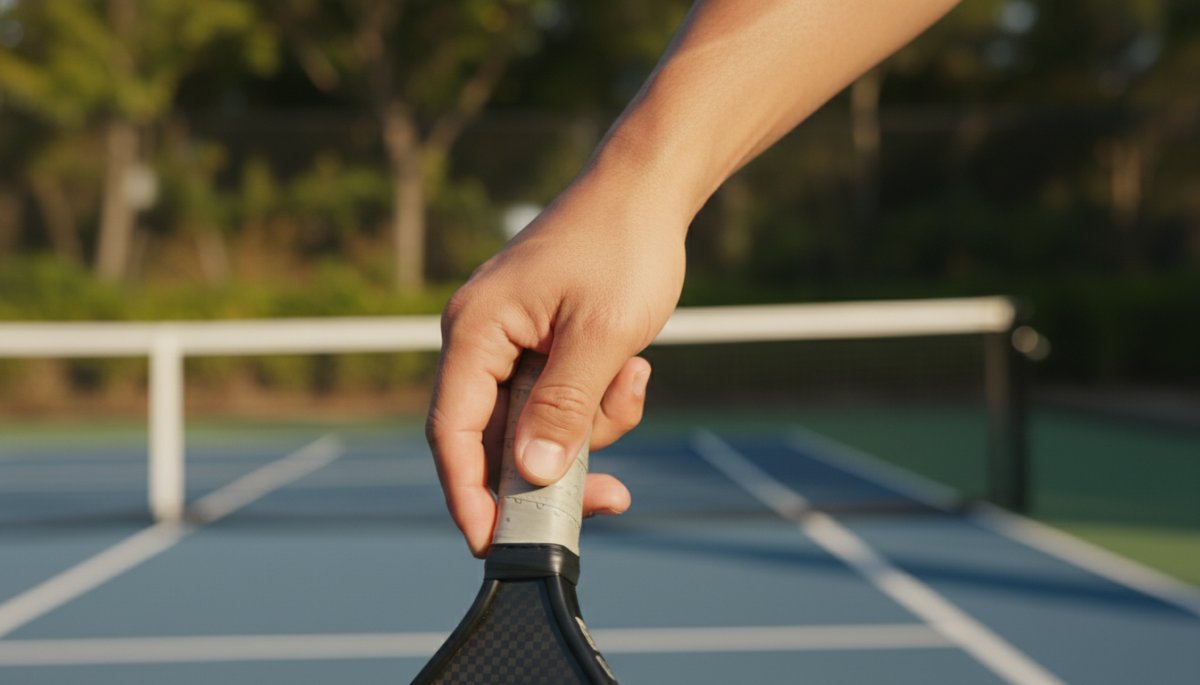
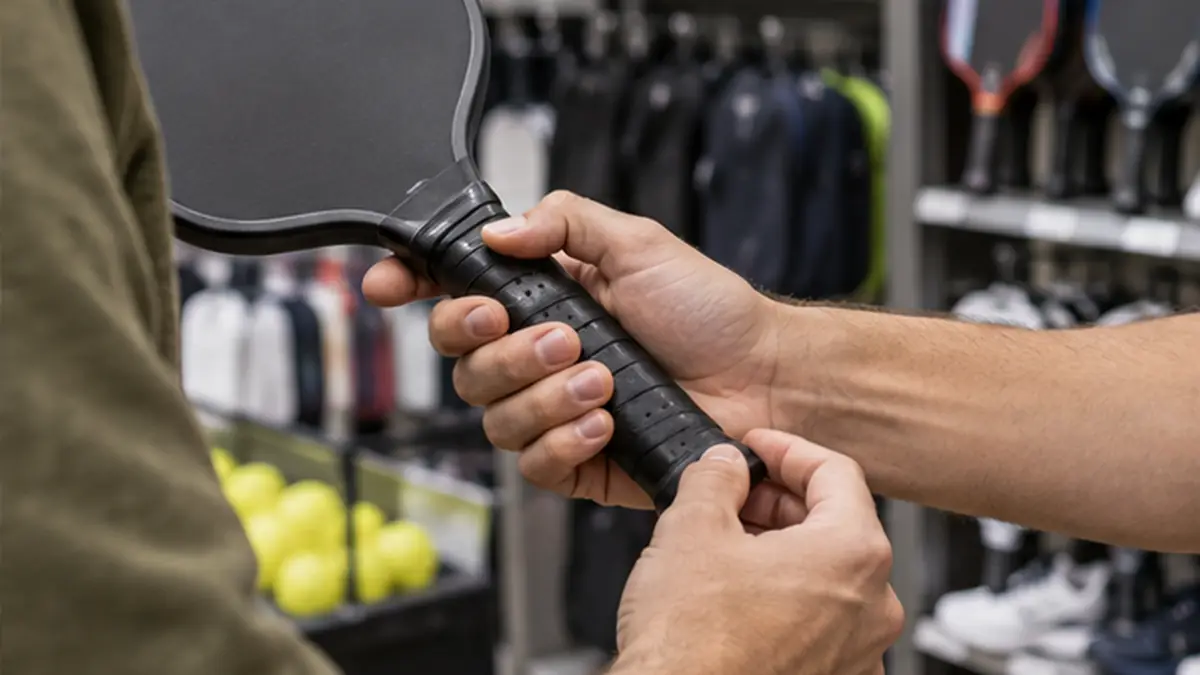
A size that does not fit your hand can cause discomfort during play. A small grip allows play that makes use of the wrist, but too large can lower maneuverability. A common grip circumference is about 103 mm, but it differs by maker and model.
How to choose grip length
Grip length is also a point to consider. The standard handle length is about 136 mm, but for players who hit shots with two hands, a somewhat longer grip is suitable. If your play is mainly one-handed, the standard length is enough.
As a guideline for choosing grip size, it is considered appropriate that when you grip the paddle, your index finger lightly touches the base of your thumb. Gripping too tight or too loose makes control hard. If possible, actually gripping it before buying is recommended.
Choosing a paddle by playing style: the dink camp and the power camp
Choosing a paddle to match your own shot style is also important.
How the dink and control camp should choose
If you excel at strategic shots like dinks and lobs, a control paddle with suppressed rebound is suitable. A paddle with a thick core (about 16 mm) is designed with modest rebound and a control focus. Combining it with a carbon-fiber face material allows delicate touch.
How the power camp should choose
If your playing style attacks with powerful shots, a paddle that is highly responsive and produces power is a good choice. A thinner core (about 14 mm) is high-rebound and allows fast shots. Choosing a somewhat heavier paddle (about 230 g and up) can strengthen power further.
How intermediate and advanced players should choose
For intermediates, a paddle in the standard-to-long-hybrid shape, with a core thickness chosen from the thin-to-thick range, is a good idea. If you weight a bit more rebound, choose a thinner core. A mid-to-somewhat-heavy weight (about 200 to 230 g) lets you strike a balance of power and control.
For advanced players, a long-type shape with a thin core or a high-rebound material (a high-performance composite, etc.) is suitable. A somewhat heavier, follow-through design allows power-focused play. An edgeless-design paddle is recommended for players who want ease of following through.
Major brands and the rise of Vietnam-born brands
Many brands have entered the pickleball paddle market.
Standard international brands
Selkirk Sport is known as a premium paddle maker and is used by many pro players. Paddletek is rated for its balance of durability and performance and is supported by a wide range from beginners to pros. Engage Pickleball achieves excellent spin performance through special surface processing technology and is popular with competition-minded players.
JOOLAwas founded in Germany in 1952 and is now operated by a U.S. company, a table-tennis-born brand with over 70 years of history in table tennis gear, and it earns high marks for pickleball paddles too. Major tennis gear makers such as HEAD andWilsonhave also entered the pickleball market, offering products that make use of the technology cultivated in tennis.
The rise of Vietnam-born brands
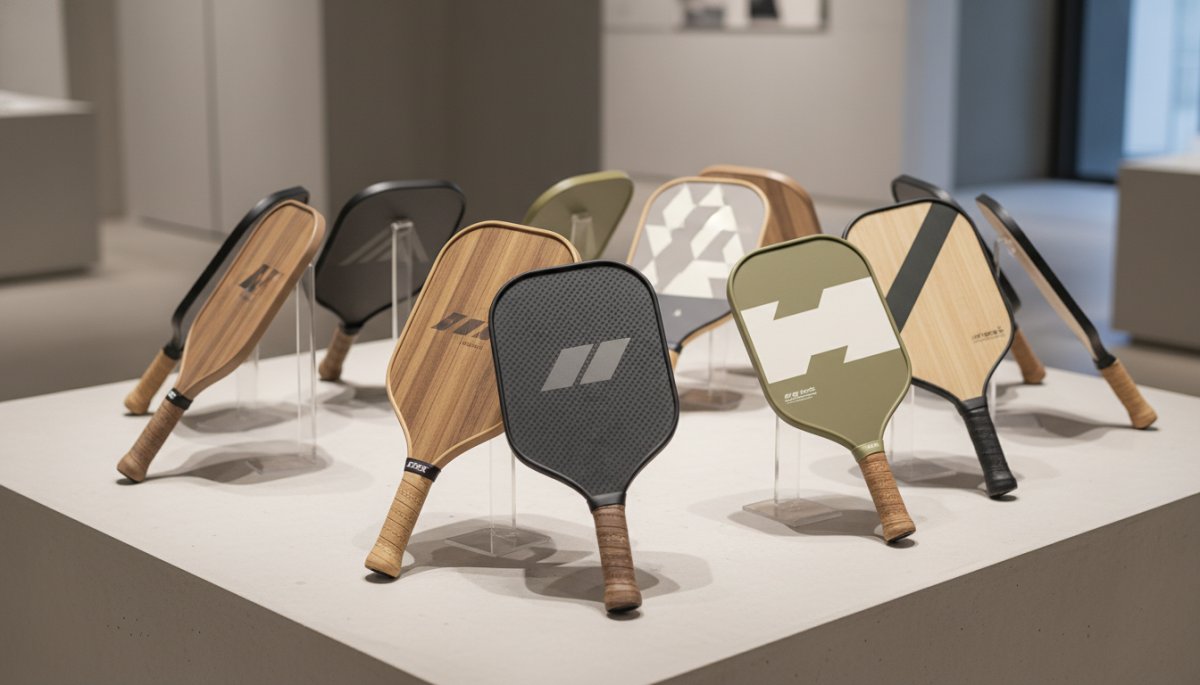
Worth noting is the rise of Vietnam-born brands. Vietnamese brands such as Kamito, Sypik, and Facolos are rated as securing solid basic performance at an affordable price band and fitting the Asian market well.
Kamito is drawing attention as a Vietnam-born sports brand launched in 2018. After operating across multiple sports, it expanded its product line with an eye on the growth of the pickleball market. Kamito's paddles, while in an affordable price band, adopt a polymer honeycomb core and a fiberglass surface and provide performance suited to beginners and intermediates. Their feature is a design matched to Asian hand sizes and preferences, with a somewhat smaller grip size and adjusted weight balance.
Sypik is a pickleball specialty brand growing rapidly in Vietnam. Using a composite material combining carbon fiber and graphite, it excels at the balance of lightness and power. It also offers models for competition-minded players, centered on designs conscious of the balance of control and spin.
Facolos has entered the market as an emerging Vietnamese pickleball brand. It offers models with basic performance at an affordable price band, and products assuming outdoor use are also seen.
Common to these Vietnamese brands is a response to the rapidly growing domestic market and an effort to improve quality with an eye on advancing into the international market. While maintaining price competitiveness against international brands, they are gradually expanding market share by meeting quality standards.
Final check points when you are unsure about choosing a paddle
When you are unsure about choosing a paddle, reconfirm the following points.

Editor's Note
If you are unsure about your first paddle, choosing by the standard of PP core, carbon face, mid-weight, and standard-to-hybrid shape will not go far wrong. Fine-tuning by core thickness and weight once your playing style has settled is the shortcut to improvement.
Choose by experience level
First, consider your own experience level. For beginners, a wide-body or standard shape with a wider sweet spot, a thick core (modest rebound and control-focused), and a somewhat light-to-medium weight (prioritizing ease of swinging) are suitable. Because an edgeless design has lower impact resistance, it is not suited to beginners.
For intermediates, a standard-to-long-hybrid shape, a thin-to-thick core (thin if you weight a bit more rebound), and a mid-to-somewhat-heavy weight (a balance of power and control) are good. Those who want ease of following through are recommended edgeless.
For advanced players, a long type (allowing fast shots), a thin core or high-rebound material (a high-performance composite, etc.), and a somewhat heavier follow-through (power-focused) are suitable. An edgeless design is recommended.
Choose by environment and budget
Next, consider your environment. If you often play outdoors, choosing a paddle with good control makes it less affected by wind, rain, and the like. If you often play indoors, choosing a paddle with power lets you handle fast-tempo matches.
Budget is also an important element. For beginners, there is no need to buy an expensive paddle from the start. Even a mid-price-band paddle around 10,000 to 20,000 yen has plenty of performance. Once you have gotten used to play and your own style is established, stepping up to a higher-performance paddle is wise.
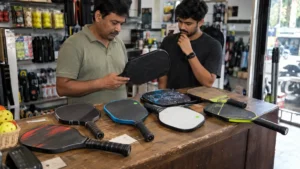
If possible, trying it out before buying is strongly recommended. Many pickleball clubs and courts have rental paddles, so you can decide after trying several models. Actually hitting with it lets you check the feel and maneuverability that a spec sheet alone does not show.
Finally, do not forget that a paddle is a consumable. Depending on frequency of use and playing style, replacement may become necessary in one or two years. Think of your first one as an investment for learning, and find the paddle best for you after gaining experience.
Pickleball is a sport that becomes even more fun by choosing the right paddle. Use this guide as a reference, find the paddle perfect for you, and savor your pickleball life.
FAQ
What kind of paddle should a pickleball beginner choose first?
A paddle with a PP core, carbon face, mid-weight (about 200 to 230 g), and standard-to-hybrid shape is the safe bet. Because the sweet spot is wide and it is easy to handle, it suits a first paddle before your playing style has settled.
What is a good core material for a paddle?
The PP (polypropylene) core, which about 95% of retail paddles now use, is recommended. It is easy to control with a soft touch and handles a wide range from beginner to advanced.
Which face material should I choose?
When in doubt, carbon fiber. It excels at spin and control, and the feel is on the soft side. If cost is the priority, glass fiber, and if you weight control, graphite are also options.
How should I choose the paddle's weight?
For control-focused players, women, and beginners, light (about 170 to 200 g); for a balanced type, mid (about 200 to 230 g); and for power-focused, heavy (about 230 g and up) are guidelines. For a first paddle, mid-weight is the safe bet.
How long is a paddle's lifespan?
It depends on frequency of use, but one or two years is a guideline. When the core has sagged and rebound has dropped, or you feel the face's spin performance has declined, it is time to replace it.
Related Articles Worth Reading
- Heavy Paddle vs. Light Paddle | How Weight Affects Your Hitting Style Explained
- How to Replace the Grip Tape on a Pickleball Paddle | Choosing the Wrap and the Material
- The Best-Value Pickleball Paddle Selection Guide | Recommendations for Beginners
- Solving Your Pickleball Paddle Questions | Explained in Depth in FAQ Form
- Recommended Pickleball Paddle Rankings! From How to Choose to Maintenance
Reference Links
Related Articles