[PR] This article uses an affiliate program (Amazon Associates).
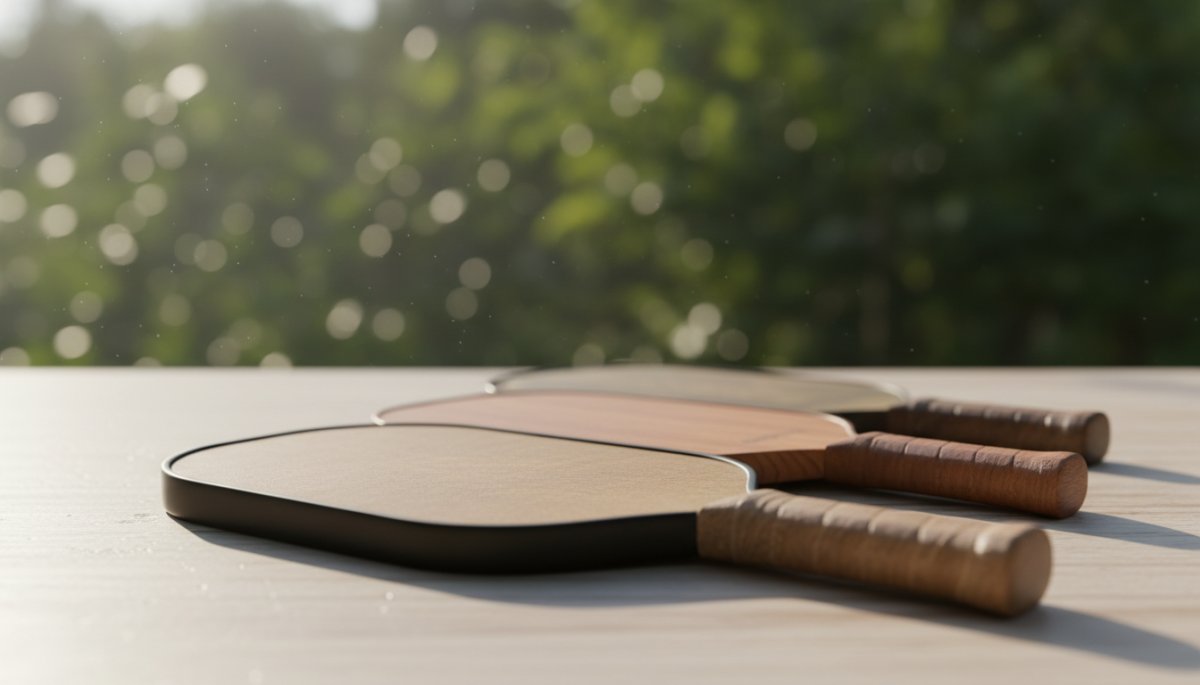
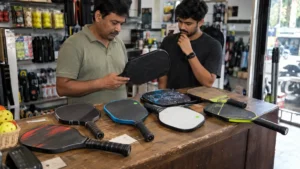
When choosing your first own paddle after starting pickleball, what many people stumble over is the question of how much of a paddle to buy.
You may worry that you cannot improve without an expensive paddle. But price and performance do not line up neatly, and even at the high 10,000s to 20,000s yen you can get a paddle good enough to hold your own from beginner to intermediate. This article, rather than chasing specific product names, lays out the traits of each price band and the criteria for judging a good-value paddle yourself. Models and prices turn over quickly, so having a yardstick for choosing ends up being the better deal.
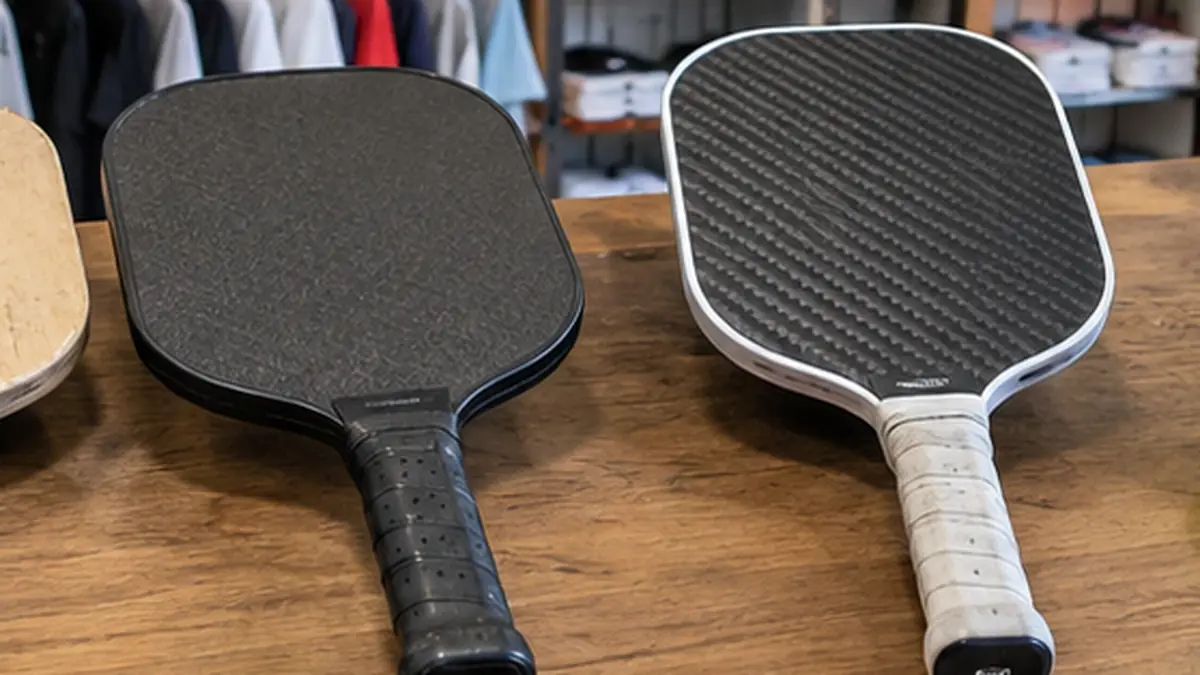
Traits of each paddle price band [quick reference]
First, get the big picture. Pickleball paddles range from a few thousand yen for cheap ones to over 40,000 yen for premium models. The table sums up the tendencies of each price band.
| Price range | Main traits | Who It's Suited To |
|---|---|---|
| Under 10,000 yen | Mostly wood or aluminum core. Wears fast and tends to assume replacement | People who just want to try it out |
| 10,000s to 20,000s yen | The mainstream band, stocked with practical PP-core plus carbon-based-face models | Beginners to intermediates buying their first own paddle |
| the 30,000-yen range | High-density cores and special materials bump spin and power up a notch | Intermediate and above whose playing style has settled |
| 40,000 yen and up | Pro-grade, latest materials. Enters the realm of preference more than performance gaps | Advanced players who want to pursue their preferences all the way |
The band to watch is the mainstream one of 10,000s to 20,000s yen. Each maker's best sellers concentrate here, and it is the zone where you can most easily find a paddle that lasts while keeping the price down. To chase value, narrowing candidates from this band first is the shortcut.
Treat under 10,000 yen as a trial
The advantage of a paddle under 10,000 yen is keeping the initial cost down.
However, many are wood or aluminum-core models, and their feel and durability do not match the latest composite-material paddles. Dents and drops in rebound come early, and it is not unusual to end up replacing it in a year or two. If your aim is to play a few times first and see if it suits you, it is an option, but if you intend to keep at it, considering the mainstream band from the start is more economical.
The 10,000s to 20,000s yen are a beginner's main battleground
If you plan to use it for a long time, this band offers the best balance.
It is stocked with practical models combining a PP core with a carbon or glass-fiber face, designed with a wide sweet spot and a feel that is easy for beginners to handle. Even at domestic shops, 16 mm carbon models under 20,000 yen are in circulation, and as a first paddle you can expect performance that leaves nothing to want. For specific candidates, see ourvalue-focused review for beginnersandexplainer articleis also worth a look.
30,000 yen and up is for stepping up
The band over 30,000 yen is a realm that reflects your own preference more than absolute performance.
Materials such as high-density cores, Kevlar, and the latest carbon bump spin and rebound up a notch. But you can make use of that difference only after your stroke has settled. If a beginner picks one right away, they may have more performance than they can use, or find it hard to handle because the weight or stiffness does not suit them. Building the basics in the mainstream band first, then considering it once your playing style is clear, is the order that avoids mistakes.
Think of value as satisfaction per paddle
Looking only at the price table, your eye tends to go to the cheapest. But the essence of value is not the purchase price; it is how long and how pleasantly you got to use it.
For example, if an 8,000 yen paddle dents in six months and needs replacing, the annual cost is 16,000 yen. On the other hand, if you use a 20,000 yen paddle for three years, the yearly burden comes to about 7,000 yen. That what looks cheap ends up costing more is a common pitfall in choosing paddles.
Seen through the lens of satisfaction per paddle, durable materials, a fit with your own hand and playing style, and not getting bored of it become as important as price. The specs listed next are the elements that sway that satisfaction.
Three specs that sway value
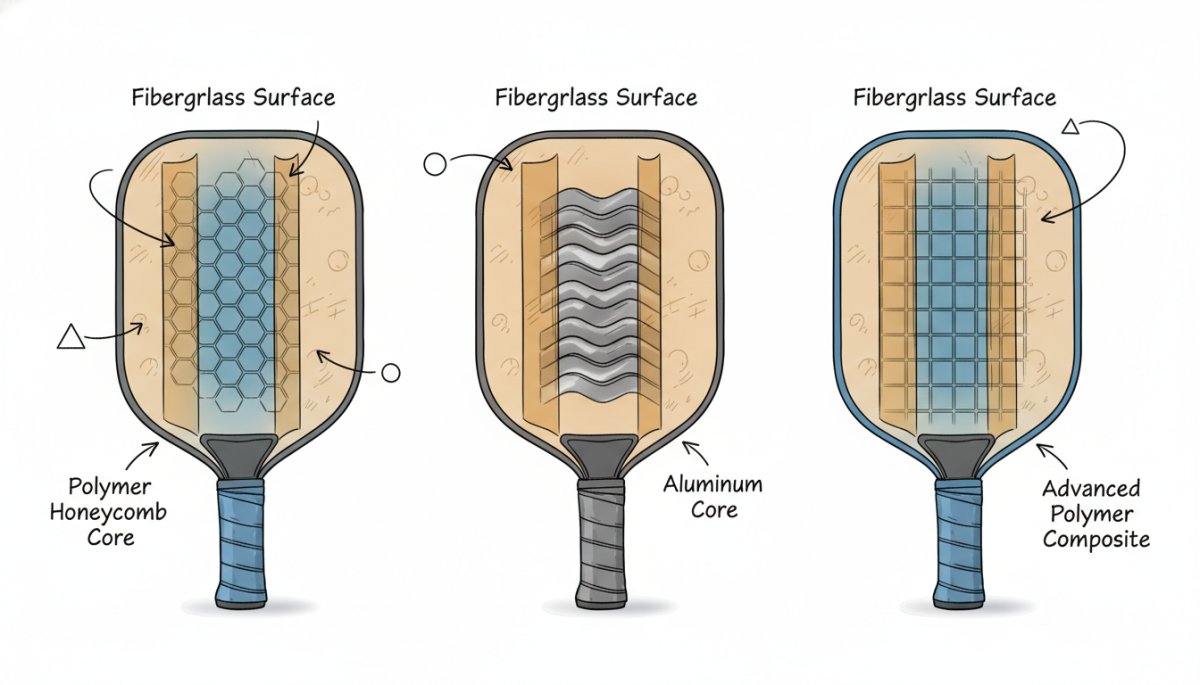
The price table alone does not show what differs even between two 20,000 yen paddles. What you want to grasp in judging value is three points: core material, face material, and thickness. Here we focus on the essentials needed to judge price. If you want to dig into each spec from the ground up, usethe complete paddle-choosing guideas a dictionary, picking and choosing as needed.
PP (polypropylene) is the standard core material
What greatly sways a paddle's feel and durability is the core material.
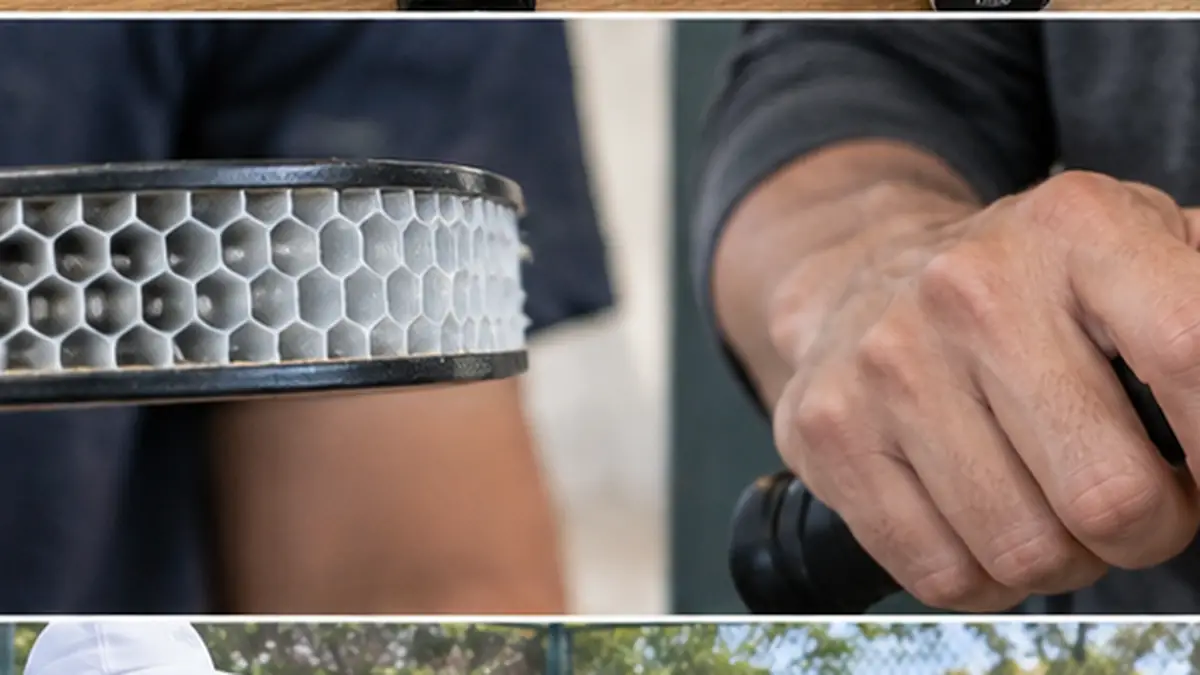
Most paddles today use a PP (polypropylene) core. With a soft touch that is easy to control, it is a versatile material that suits a wide range from beginners to advanced players. A Nomex core, by contrast, is hard and loud on impact, so it is sometimes shunned at facilities, while an aluminum core is cheap but dents easily and wears fast. If you choose for value and ease of handling, a PP core is the safe choice. For the differences among core materials,a thorough comparison of core materialsexplains it in detail.
A carbon-based face material strikes a good balance
The material of the face where the ball lands affects spin and durability.
A carbon-fiber face makes spin easy to apply and excels at control, and being light and tough it holds its performance for a long time. Glass fiber is cheap and tends to give a poppy feel with good rebound, but its feel differs in tendency from control-oriented carbon. Lately, even the same carbon changes feel by weave and layer structure, and each model has its own character. If you weight the balance of price and durability, choosing with a carbon-based face as your baseline makes it hard to miss.
For a first paddle, 16 mm thickness is easy to handle
Paddle thickness divides into thin (up to 12 mm), standard (13 to 15 mm), and thick (16 mm and up).
The 16 mm class excels at shock absorption and stability and is forgiving of mis-hits, so it suits a first paddle. Thin models lean toward maneuverability and thick models toward stability, but you can re-choose that once your playing style has settled. Even within the same series, feel changes with thickness, so it is nice to leave it as a pleasure for when you upgrade.
A checklist for spotting the best-value paddle
With price and specs in mind, we sum up in a table the check items for narrowing candidates in store or online. The more that apply, the closer you are to a good-value paddle you can use for a long time.
| Check item | Point to look at |
|---|---|
| Core Material | Is it a PP (polypropylene) core? |
| Face material | Is it carbon-based, with a balance of spin and durability? |
| Thickness | For a first paddle, is it around 16 mm? |
| Weight | Does it fall in the mid-weight range (roughly 7.3 to 8.4 ounces)? |
| Sweet spot | Is it a forgiving shape such as a standard or hybrid type? |
| Grip | Is the thickness and length right for your hand size? (if thin, you can fine-tune with an overgrip) |
| Accessories and warranty | Does it come with a case or an official warranty? |
You do not need to meet all of them, but if the four of PP core, carbon-based face, 16 mm, and mid-weight are in place, it is a setup that keeps the price down while being hard to go wrong with.
Review articles to read next, by type
Once your yardstick is set, look at specific candidates according to what you weight most. By type, we lay out entry points to our explainer articles.
| If this is you, | Article to read next |
|---|---|
| Entry-level players who really do not want to go wrong | Onix Graphite review (a value entry standard) |
| Weighting feel and control | Vatic Pro Prism Flash review |
| Want to make durability the top priority | Gearbox durability review |
| Want to understand the specs from the ground up | the complete paddle-choosing guide |
Each explainer article lays out tendencies and user reputation that a spec sheet alone does not show. Narrowing candidates with the yardstick (this article), then making the final call in an explainer article, is the way to buy that is good value and avoids mistakes.
Four value-focused recommended paddles you can buy on Amazon
[Ad] The following are Amazon Associates affiliate links.
Building on the thinking about price bands and specs so far, we narrow it to four value-focused models you can actually buy on Amazon.co.jp. All are in the trial-to-entry price band available under 10,000 yen. This band once centered on near-disposable products with wood or aluminum cores, but in recent years models combining a polypropylene core with a carbon or fiberglass face and earning USAPA approval have appeared. They suit people who want to start first, and people looking for a first paddle on the assumption of replacing it. Prices fluctuate, so check the latest amount at the link.
Trial 2-paddle set
VINSGUIR Pickleball Paddle 2-Pack (fiberglass)
Two paddles come with a carry bag, suiting the first step for people who want to start with family or friends. Light, and plenty for the stage of simply piling up court experience first.
An all-in-one kit
Pic Ten Pickleball Starter Kit (2 paddles + 4 balls + bag)
Two paddles, four balls, and a carry case are all here, so you can start with this alone. With a polypropylene honeycomb core, it has a solid feel for an entry set.
A benchmark PP-core model
Raw T700 Carbon Fiber Paddle 16 mm Power Polymer Core (USAPA approved)
PP (polypropylene) core plus a raw carbon surface. A single-paddle model that fits this article's checklist (PP core / carbon-based face / 16 mm) exactly.
Brand entry (USAPA approved)
Diadem Rush Pickleball Paddle 16 mm (USAPA approved, lightweight)
A USAPA-approved lightweight model. It suits people who want to step up a notch from the budget band and try an approved brand paddle affordably.
That said, the budget band gives ground to higher models in the brand's warranty structure and in durability over long use. Once your play frequency rises and you feel you're keeping at it for real, usethe complete paddle-choosing guideas a dictionary and consider stepping up to a PP-core-plus-carbon model in the 10,000s to 20,000s yen.
Traits of paddles that go wrong easily
Conversely, there are also tendencies in paddles beginners are better off avoiding. Jumping on something for cheapness alone can, in fact, run up your spending.
Wood or aluminum-core paddles that are too cheap
Budget paddles under 10,000 yen call for caution.
Wood is an old-style material that falls far short of composite-material paddles in feel and rebound. Aluminum cores also dent easily and wear fast, so repeated replacement tends to make the total pricier. Choosing a good-quality paddle in the mainstream band from the start is more economical in the long run.
Paddles that are too heavy or too light
Weight ties directly to power, control, and how easily you tire.
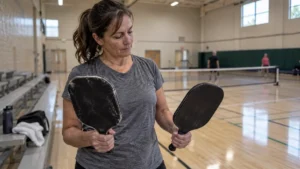
A light paddle (up to around 7.2 ounces) is easy to control but can be overpowered on strong shots. A heavy paddle (from around 8.5 ounces) produces power but tires you and adds strain on the wrist. For beginners, mid-weight (around 7.3 to 8.4 ounces) is the safe choice, well balanced and helping prevent injury. For the differences by weight,a comparison of heavy versus light paddlesdigs into it.
Paddles with a narrow sweet spot
The more mis-hits a beginner has, the more a paddle with a wide sweet spot suits them.
The elongated type excels at reach and power but has a side that makes it easy to miss the core. Standard and hybrid types have a wide sweet spot and make stable shots easy to hit, so for a first paddle it is reassuring to choose a forgiving shape.
Purchase channels for buying smart

Even the same paddle changes price by when and where you buy. Grasp three ways of buying that maximize value.
Aim for sales on older models
The launch period of a new model is a good chance for older models to drop in price.
A previous-year model that is still plenty capable often comes out at a discount, and registering for makers' and shops' newsletters lets you catch such sale news early. Some shops also offer a first-purchase coupon, so checking before you buy avoids waste.
Buy from authorized dealers and watch for parallel imports
If it is extremely cheap, it may be a parallel import or a counterfeit.
Buying from an authorized dealer lets you receive warranty and after-sales service, and handling of initial defects is reassuring too. Comparing prices matters, but for anything too cheap always check the channel and whether there is a warranty. If you intend to use it for a long time, the presence of a warranty is worth prioritizing over a difference of a few hundred yen.
Use domestic shops and reviews together
The advantage of domestic pickleball specialty shops is that Japan-facing stock and support are in place.
For the actual feel of use, ourdurability reviewand other explainer articles also serve as decision material. Reducing mistakes comes from supplementing the tendencies and durability a spec sheet alone does not show with each explainer before you decide. For the order of assembling a full set of gear, seethe beginner's gear guideis also worth a look.

Paddle model names and prices turn over very fast, and it is common for a six-month-old top-five list to already be unbuyable. That is exactly why remembering the yardstick of PP core, carbon-based, 16 mm, and mid-weight, rather than individual product names, is the shortcut to value-based choosing. For any model that catches your eye, always check the latest stock and price at an official or authorized store before buying.
FAQ
About how much should a pickleball paddle cost as a guideline?
For a first paddle, the 10,000s to 20,000s yen is the guideline. Practical models with a PP core and a carbon-based face are stocked, handling everyone from beginner to intermediate well. Under 10,000 yen is often wood or aluminum core and wears fast, so for long use the mainstream band is recommended.
What differs between cheap and expensive paddles?
Mainly the core material, face material, thickness, and precision of the build. The budget band has wood or aluminum cores with low durability, and as price rises, high-density cores and special carbon raise spin and power. However, since beginners can hardly make use of a premium model's difference, the mainstream band is plenty at first.
What are the points for spotting a good-value paddle?
Use whether the four of PP core, carbon-based face, 16 mm, and mid-weight (roughly 7.3 to 8.4 ounces) are in place as your guide. Checking whether it is a wide-sweet-spot shape, and whether it comes with a case or an official warranty, also makes it harder to go wrong.
Is it all right to buy used or parallel-import items?
If it is extremely cheap, it can be a counterfeit or a parallel import outside warranty coverage. For long use, buying from an authorized dealer where you can get warranty and after-sales service is reassuring. Aiming for sales on older models lets you get genuine products affordably too.
Summary: With a yardstick, value-based choosing won't go wrong
What matters in choosing a pickleball paddle for value is understanding that expensive does not equal good.
The mainstream band of 10,000s to 20,000s yen is stocked with practical models such as PP core, carbon-based face, and 16 mm, handling everyone from beginner to intermediate well. If you grasp the traits of each price band and narrow candidates with the check items of core material, face, thickness, weight, and sweet spot, you can judge a good paddle yourself even as models turn over.
Avoid budget wood or aluminum-core items, and make smart use of sales on older models and authorized dealers to buy affordably. Check the latest stock and price at an official or authorized store before buying, and by re-choosing flexibly to match your own level, you can enjoy pickleball with good value for a long time.
This site is a participant in the Amazon Associates Program, an affiliate program designed to provide a means for sites to earn referral fees by advertising and linking to Amazon.co.jp.
Related Articles Worth Reading
- The Complete Guide to Choosing a Pickleball Paddle | Material, Weight and Grip
- Onix Graphite Paddle Review | A Value Staple for Beginners
- A Thorough Comparison of Pickleball Paddle Core Materials | The Differences Between Polymer, Nomex and Aluminum
- Heavy Paddle vs. Light Paddle | How Weight Affects Your Hitting Style Explained
- How to Replace the Grip Tape on a Pickleball Paddle | Choosing the Wrap and the Material
Related Articles