Some people may be surprised to hear "HEAD, the tennis brand, doing pickleball?" But look at the specs and the reputation, and the seriousness comes through.
HEAD, trusted worldwide for its tennis equipment, has made a full-scale entry into the pickleball market. Its flagship model is "Radical Pro."
This article organizes the specs and design philosophy of the Head Radical Pro, along with user reviews, and covers how easily a tennis player switching over can adapt.
In This Article
– The detailed specs and design philosophy of the Head Radical Pro
– Feel and handling as seen from published specs and user reviews
– How easily a tennis player can adapt after switching
– SelkirkandFranklin· Comparison with other brands' paddles, such as JOOLA
– How recommended it is for beginners and intermediate players respectively
[PR] This article uses an affiliate program (Amazon Associates).
The model explained in this article
HEAD Radical Pro Textured Paddle
The Pro model of the Radical series from tennis giant HEAD. A serious paddle whose textured face makes it easy to put on spin.
What is the Head Radical Pro? A paddle a tennis giant built in earnest
The background of HEAD's entry into pickleball
HEAD is a brand long favored by top pros for its "Radical" tennis racket series. It's also famous for being used by Andre Agassi—any tennis player will react just to hearing the name.
That HEAD judged that "pickleball's growth is the real deal" and extended the Radical brand directly into pickleball paddles. A design that clicks by name alone is a clever strategy for winning over tennis players.
Where the Radical series sits
Even within HEAD's pickleball lineup, the Radical Pro is theflagship model. Its competition-oriented design emphasizes a balance of power and control, clearly differentiating it from entry models for lighter users. For the basics of choosing a paddle, you can also checkthe complete paddle-choosing guideas well.
Specs and appearance: the Radical Pro's ability in numbers
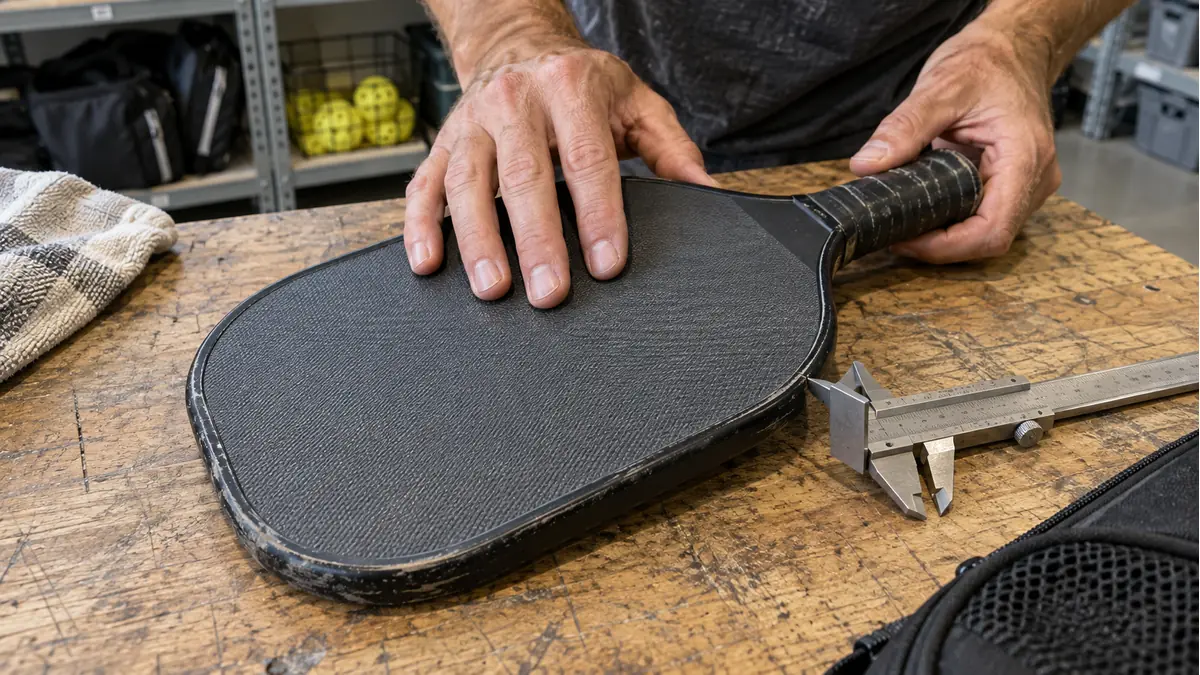
Key specs at a glance
| Item | Spec |
|---|---|
| Weight | Approx. 220–235g (midweight) |
| Face length | Approx. 40.6–41.9cm (varies by model) |
| Grip length | Approx. 13.3cm |
| Core material | Polymer honeycomb |
| Face material | Glass fiber (fiberglass) |
| Shape | Elongated (long shape) |
The weight isapproximately 220–235g, in the midweight zone. Compared with a tennis racket (around 280–300g), it's lighter, so it may feel a little off at first, but you'll get used to it after a few shots.
Note that the Radical Pro's face material and shape differ by model (standard/EX series). This article evaluates it assuming the carbon-face, elongated (long) spec. When buying, check the specs of the specific model.
How each spec affects playability
The numbers in a spec sheet translate directly into playability. Let's lay out the key points for reading them.
| Spec item | What this number means |
|---|---|
| Midweight (approx. 220–235g) | A power-and-control balance type. Not too light, not too heavy—easy on you even over long sessions |
| Elongated (long) shape | Extended reach gives an edge on smashes and attacks. On the flip side, the sweet spot runs lengthwise and takes getting used to |
| Fiberglass face | The ball leaves quickly and is easy to spin. The feel at contact is direct |
| Polymer Honeycomb Core | Absorbs impact for a soft feel, keeping touch shots stable |
In other words, the numbers show the Radical Pro is designed for players who "combine reach and maneuverability while building their game with spin and touch."
The feel a fiberglass face produces
The defining feature of this paddle is the glass fiber (fiberglass) used for the face. The ball comes off quickly and spin is easy to apply, which makes the common comment that the feel of contact comes straight through easy to understand.
The elongated (long) shape offers wide reach and works in your favor on smashes and attacks. Honestly, though, since the sweet spot extends lengthwise, it does take a little practice to get used to.
From specs and reputation: compatibility with tennis players
First impression
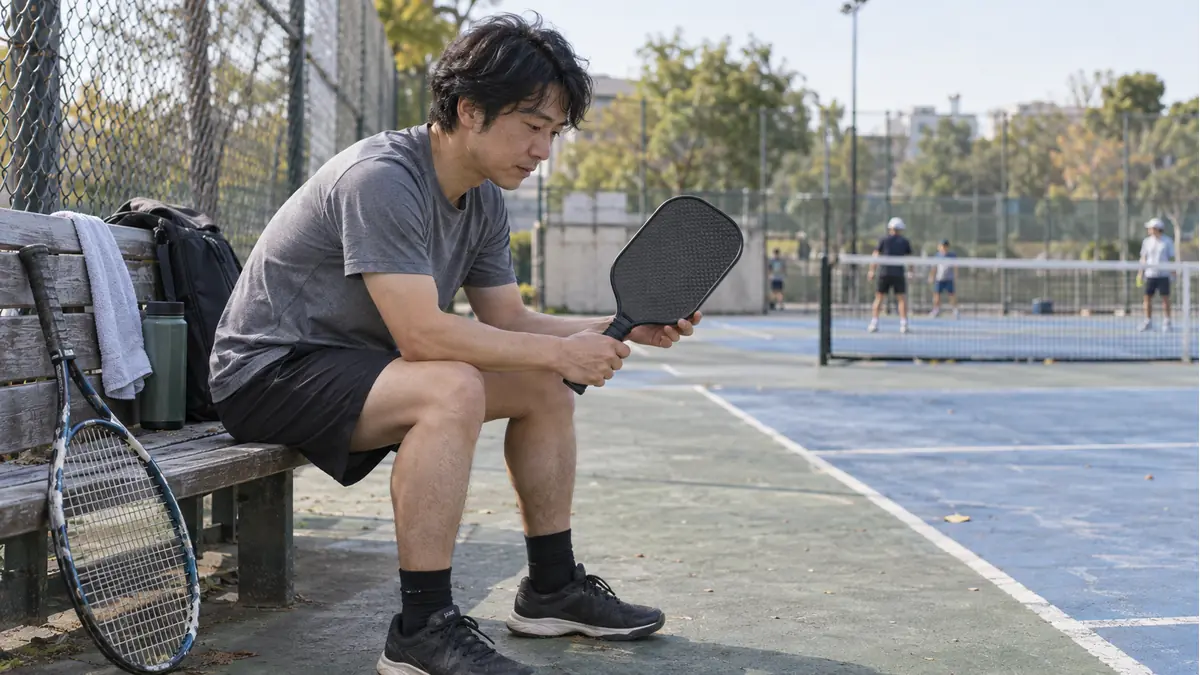
The Radical Pro is said to be close to a tennis racket in grip shape and swing feel, so for tennis players ease of transition is an advantage.
Because it's easy to move into your swing without feeling off,tennis players tend to get used to the basic hitting motion quickly—that's the word on it. Compared with someone starting from zero, many say the adaptation is smooth.
Power type vs. control type—what's this paddle's personality?
To be honest, the Radical Pro is a "control-leaning balance type."
Rather than the power-type thrill of "hit it and it flies!", it's designed to prioritize the precision of "dropping it where you aim." In pickleball's characteristic exchanges, where rallies tend to run long, this trait becomes a weapon.
Compatibility with serves, volleys, and smashes
Let's look at how it suits each shot too. On serves, it's easy to apply underhand control and steadily target deep corners. On volleys, the quick ball release from the carbon face works well, keeping the face stable even in fast exchanges at the net. The reach of the elongated shape helps you take that one extra step for balls just out of range.
On smashes, the reach of the long shape and its moderate weight give it finishing power. But since it's not a power-only paddle, aiming to "pick your line" is more of a weapon than relying on brute force. All in all, each shot suits players who build their game with precision rather than pushing with hard hitting.
Spin performance rating
Thanks to the carbon face, it's designed so spin goes on readily. It's easy to put the topspin feel you built in tennis to use, and some users describe it as "close to the feel of a cross-court rally."
The feel of dinks and drop shots
This paddle's strength lies in soft shots. It's easy to get precision on dinks near the kitchen (non-volley zone), and because the polymer honeycomb core material absorbs impact moderately, it's designed so your hands stay stable even on delicate touch shots.
The third-shot drop is easy to hit too, making it a paddle that especially resonates with players who love the cat-and-mouse at the net. If you want to raise your dink precision, seedink mastery guideis also worth a look.
Comparison with other brands' paddles: how does it differ from Selkirk, Franklin, and JOOLA?
Main paddle comparison table
| Paddles | Weight | Maneuverability | Power | For tennis players | Price range |
|---|---|---|---|---|---|
| Head Radical Pro | 220〜235g | ★★★★☆ | ★★★☆☆ | ◎ | High |
| Selkirk Vanguard | 220〜230g | ★★★★★ | ★★★☆☆ | ○ | High |
| Franklin Signature | 215〜225g | ★★★☆☆ | ★★★★☆ | △ | Moderate |
| JOOLA Ben Johns | 218〜223g | ★★★★☆ | ★★★★☆ | ○ | High |
Comparison with Selkirk
Selkirk has a long track record as a pickleball-only brand, and its maneuverability is on par or better. That said, the Head Radical Pro has one clear strength: "ease of transition from tennis." Factoring in the brand's familiarity, tennis players have plenty of reason to choose Head.
Comparison with JOOLA
JOOLA, with a long track record as a table tennis equipment maker originally from Germany, has also made a full-scale entry into pickleball. On power, JOOLA seems to have a slight lead, but on the balance of control and spin I felt the Head Radical Pro has the edge. For the differences between the makers, seethe major maker comparison.
How recommended it is for beginners and intermediate players
Recommendation for beginners: ★★★☆☆
For a pure beginner, this may be a "slightly tricky to handle" paddle. That's because drawing out its control performance takes a certain amount of swing precision.
That said, it's a different story for a beginner with tennis experience.Because the grip feel is close, it's overwhelmingly easier to get used to than for someone with no tennis experience. For anyone who "has played tennis but is new to pickleball," it's more than recommendable as a first paddle.
Recommendation for intermediate players: ★★★★★
For intermediate players, we recommend it with confidence. This paddle's performance shines most in the phase where you keep rallies going while expanding your shot variety.
The Radical Pro's control performance fits perfectly during the period when your dink, third-shot drop, and attack are all starting to stabilize.
A special recommendation for tennis players
Personally,as a first paddle when a tennis player starts pickleball, the Radical Pro is one of the best choices.
You can start without feeling off, and keep using it for a long time even as you improve. Paddles that combine these two things are surprisingly rare.
The play styles it works best with
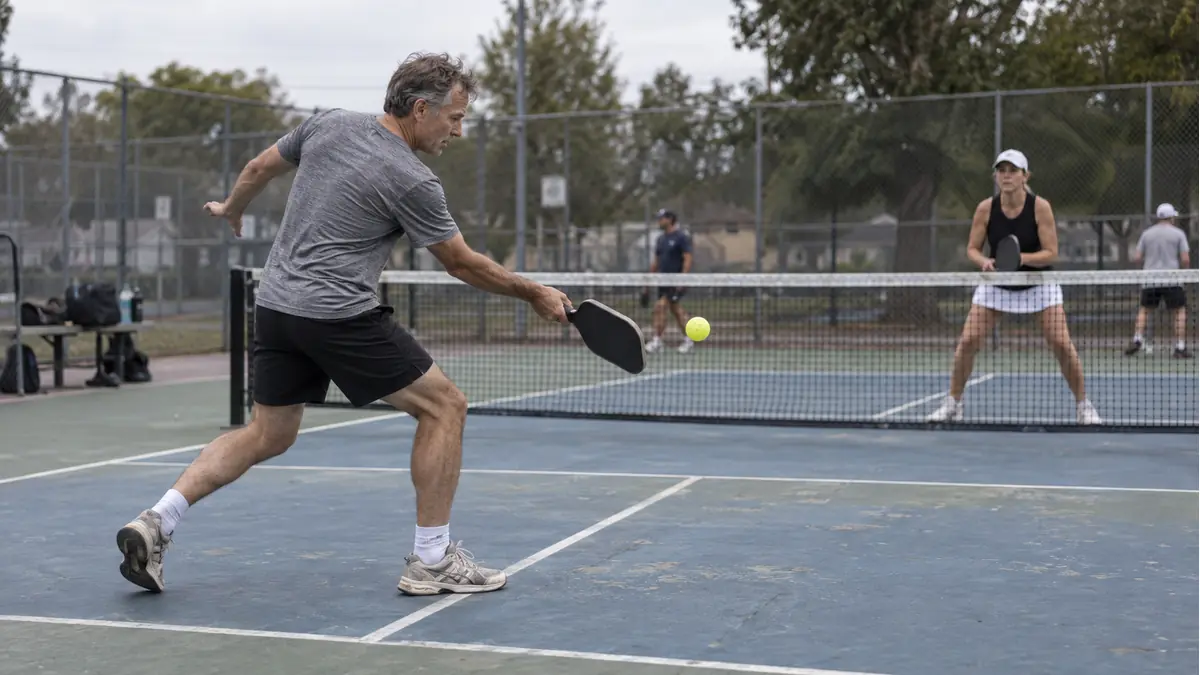
Even the same paddle suits different play styles differently. Let's look at the three types the Radical Pro works best for.

Editor's Note
The Radical Pro suits "people who want to keep the tennis feel while rebuilding their game for pickleball" best. The more your style is about taking control with placement and spin rather than pushing through with power, the more you'll draw out its performance.
The rally type who builds points with control
It fits best with a style of steadily dropping the ball where you aim, moving your opponent around, and breaking them down. The soft feel of the polymer core and the honest spin of the carbon face keep dink and drop precision stable. It becomes a weapon for anyone who wants to take control in long rallies.
The intermediate player who wants to expand their range of shots
It also pairs well with intermediate players at the stage of using dinks, drops, and attacks depending on the situation. The reach of the elongated shape widens your coverage and makes switching between offense and defense smooth. It suits the period when you want to practice a wide range of shots with a single paddle.
The convert who wants to leverage their tennis feel
Because the grip feel and how spin goes on are close to tennis, the strength is how little feels off even right after switching. You can bring the placement reads and spin sense you built in tennis straight over.
Three adjustments to be mindful of first when switching from tennis
The Radical Pro is an easy paddle for tennis players to get used to, but there are also parts where the tennis feel doesn't carry over as-is. Here are three points to lock in first so your adaptation goes even faster.
Make your swing small and compact
If you swing with the same big tennis swing, you'll hit more overs and outs against the light paddle and fast ball. The Radical Pro is designed to reward a sense of carrying the ball on the face, so shortening your takeback and switching to a mindset of stopping at impact keeps you stable. For dinks especially, the correct image is "placing" rather than "swinging."
Rebuild your serve as an underhand serve
The fast overhead tennis serve can't be used. You need to rebuild your serve form from scratch into an underhand serve that makes contact below the waist. The Radical Pro's control works precisely during this rebuilding process. For the serve-practice steps, seePractice methods to stabilize your serveis a good reference.
Learn the spacing of the kitchen (non-volley zone)
There's a rule that you can't dash into the kitchen in front of the net. Charging in too far with the feel of a tennis net dash is a fault. To make the most of the Radical Pro's touch performance, first get into your body the spacing of stopping short of the kitchen line and waiting for one bounce.
Durability and maintenance for long-term use
On a carbon-face paddle, spin performance drops as the surface texture wears down. If you want to use the Radical Pro for a long time, the basics are to wipe dust off the surface with a dry cloth after play, and not to leave it in direct sunlight or a hot car interior. If you notice a loose edge guard or something off with the core, inspecting it early keeps its original feel.
If you use it frequently in competition, check the surface grit condition regularly. The more you use it on rough outdoor surfaces, the faster it wears, so how long it lasts feels different depending on whether you play mostly indoors or outdoors.
How to choose weight and grip size
Even with the same Radical Pro, choosing a grip size that suits your hand raises maneuverability a notch. As a guide for grip circumference, use the length from the crease in the center of your palm to the tip of your ring finger (roughly 10–11cm). Too thin and gripping strains your wrist; too thick and quick face adjustments lag.
The weight is close to fixed midweight, but you can change how it feels with the number of overgrip wraps or fine-tuning with lead tape. Using it as-is at first, then adjusting a few grams to your preference once you're used to it, is an approach that's also easy for tennis players to take to. For how to think about weight, seethe complete paddle-choosing guide.
Price and how to buy in Japan
As befits HEAD's flagship, the Radical Pro sits in the higher price band. Since authorized handling in Japan is limited, the main routes to get it are handling by tennis equipment shops or parallel imports via Amazon and specialty shops. Parallel-import items can keep the price down but may make warranty and support harder to get, so checking reviews and the return policy before buying is reassuring.
Overseas reference prices don't apply directly; domestically they fluctuate with shipping and exchange rates. For how to think about total initial costs, also checkthe beginner's cost guideas well.
Differences from other HEAD models
Besides the Radical Pro, HEAD offers models for entry to intermediate players. Entry models have more affordable face and core material specs and keep the price down, but yield to the flagship on the upside of spin and control. The Radical Pro has a competition-oriented finish and the performance to keep using for a long time even as you improve—that's the difference in positioning.
"An entry model if you want to try it casually first," "the Radical Pro if you want to build your game in earnest leveraging your tennis feel"—that's an easy-to-grasp guide for choosing between them.
Pre-purchase checklist
Precisely because it's an expensive paddle, check the following points before buying so you don't regret it afterward.
| Item to check | What to look at |
|---|---|
| Your own level | Pure beginners get more from an entry model; tennis players and intermediate players make the Radical Pro shine |
| Play style | For people who want to build their game with control and spin rather than power alone |
| Grip size | Whether it fits your hand size. If possible, check by actually holding it |
| Where to buy and warranty | Parallel import or authorized handling. Check the return policy and support |
| Budget | High price band. Judge its investment value on the premise of long-term use |
If it meets these, the Radical Pro will be a highly satisfying paddle. Especially for tennis players who want to develop a control-focused style, it's more than recommendable as a first serious paddle.
Summary: These are the people we'd want to buy the Head Radical Pro
To pull the discussion together, the Head Radical Pro clearly has people it "suits" and people it "doesn't."
| Who It's Suited To | Who it doesn't suit |
|---|---|
| A tennis player trying pickleball for the first time | Those who want a pure power type |
| A control-focused play style | Those who prefer a lightweight paddle |
| Those who want to choose a trusted brand | Those looking for a low price band |
| Players who use a lot of spin | Beginners who prioritize ease of handling above all |
The price is by no means cheap, but from the standpoint of "a paddle you can use for a long time" it offers plenty of cost performance. Including the reassurance of the HEAD brand, it's well worth considering.
If you want to convert the skills you built in tennis to pickleball, definitely pick one up. You'll surely feel "ah, this is easy to hit."
FAQ
Can even a tennis beginner use the Head Radical Pro?
If you have tennis experience, you can use it without any problem even as a pickleball beginner. Its feature is that the grip feel is close to a tennis racket, making the transition easy. For a pure pickleball beginner, a somewhat easier-to-handle entry model may be a better fit in some cases.
How heavy is the Head Radical Pro?
The weight is in the midweight band of about 220–235g. Compared with a tennis racket (around 280–300g) it's lighter, but among pickleball paddles it falls in the standard weight band.
Is it easy to put spin on?
Because it uses a fiberglass face, spin performance is high. Topspin technique built in tennis carries over largely as it is, making this an especially easy paddle for players with a tennis background.
How does it differ from HEAD's other paddles?
The Radical Pro is a flagship model that emphasizes control and balance. Compared with HEAD's entry models, both its face and core materials have competition-oriented specs, and the price is set higher too.
What's the biggest difference between a tennis racket and a pickleball paddle?
The biggest differences are size and material. A paddle is smaller than a racket, has no strings, and has a solid-material face. The sweet spot is also different, so it takes getting used to at first, but tennis players can adapt relatively quickly.
This site is a participant in the Amazon Associates Program, an affiliate program designed to provide a means for sites to earn referral fees by advertising and linking to Amazon.co.jp.
Related Articles Worth Reading
- The Complete Guide to Pickleball Skill Ratings (2.0–5.0) | Know Your Level
- Are There Pickleball Tournaments Beginners Can Enter? How to Join and the Right Mindset
- Pickleball and Mental Health | Why It Works for Stress Relief and Preventing Depression
- A Stretching Routine Before and After Pickleball | Care to Enjoy It Injury-Free for Years
- Elbow Injuries Common in Pickleball | Preventing Tennis Elbow and Self-Care Methods
Reference Links
Related Articles