The City of Toronto, Canada, has opened an 11-court pickleball-only facility in the east of the city with public money. An opening ceremony was held on July 10, 2026, and the courts atMain Sewage Treatment Playgroundwere not built by a private operator, nor bankrolled by a corporate sponsor. About C$1.05 million from the mayor's annual budget (roughly 120 million yen at about 115 yen to the Canadian dollar) went into free courts the city built with tax money. Where most of the high-profile new courts in Japan are privately led, Toronto shows another route: a municipality sets a budget and adds courts. The idea of using public works to drive participation gives Japanese municipalities and club operators plenty to read.
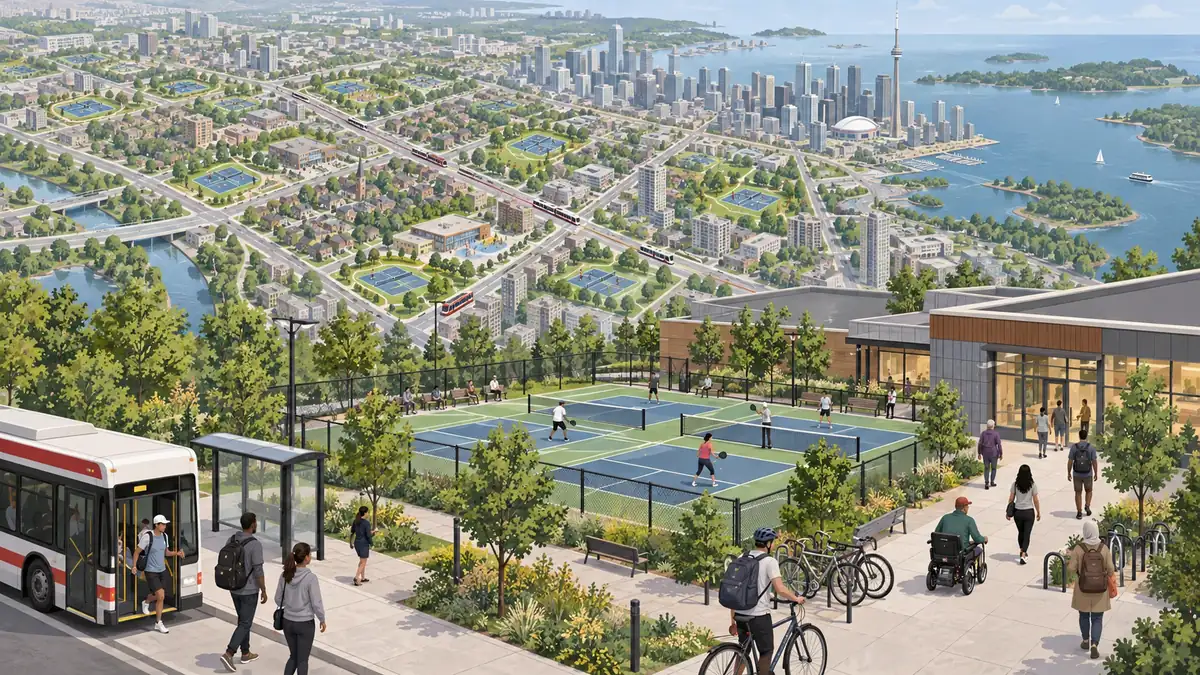
Eleven dedicated courts built on the mayor's budget
The facility sits in eastern Toronto along Embaadiimok Avenue, near Eastern Avenue and Coxwell Avenue in an area facing the lake. It covers about 25,000 square feet (roughly 2,300 square metres) and holds 11 pickleball-only courts. Three of them are designed as oversized courts usable from a wheelchair, and the site has shade canopies, spectator benches, improved fencing and colour-coded court surfaces. It is said to be the city's first tournament-ready public facility.
The money comes from Back on Track, a recreation facility renewal program that Mayor Olivia Chow put into the 2026 budget. In the city's announcement, Chow said recreation spaces are where neighbours gather, get active and build a stronger community, underlining a policy of adding places to exercise that anyone can use, paid for publicly. The mayor hit the first ball herself at the opening ceremony.
Four years of resident requests moved the city to build
The facility was not decided unilaterally by the city. The local East Toronto Pickleball Association (ETPA) spent about four years pressing the city and local councillors, and that request turned into a budget line. The courts opened for play on June 1, 2026, ahead of the formal ceremony, and were reported to be busy with users before the opening. Hours run from 8am to 9pm; there is no lighting, so use centres on daylight hours.
Play is drop-in with no booking required, while some courts can be reserved for exclusive use with an online permit. It combines free open use with paid booking slots. Residents raise their voices and the city arranges budget, land and operating rules, and that process itself shows pickleball maturing as a public sport.
Toronto's public court network in numbers
These 11 courts are not a one-off facility; they are part of a city-wide network. Toronto has published the following figures for its public pickleball provision.
| Item | Figure |
|---|---|
| Dedicated courts opened now | 11 courts (3 wheelchair accessible) |
| Total site area | About 25,000 sq ft (about 2,300 m2) |
| Construction cost (public funds) | About C$1.05 million (about 120 million yen) |
| Total public courts in the city | More than 300 |
| Outdoor summer locations | 108 sites |
| Indoor drop-in locations | 49 sites |
Chow has said the city now has more than 300 public pickleball courts and has no intention of stopping there. A city of about three million people spreads public courts across 108 outdoor and 49 indoor locations, then adds a dedicated facility on top. Divide about 120 million yen by 11 courts and it comes to roughly 11 million yen per court, covered by the municipal budget, and that is the biggest difference from Japan.
Japan builds privately, Toronto builds publicly
When court numbers grow in Japan, the lead actor is usually a private operator. A hot-spring resort lining up 20 courts as its main draw is one example (A 20-court hot spring resort, and the day Izu Inatori becomes Japan's biggest pickleball home), and tennis schools and leisure facilities adding courts to an existing customer base are another visible trend. In both cases the starting point is whether it works as a business.
Toronto's model, by contrast, treats courts as public infrastructure: the city sets a budget for free courts and adds more in response to residents. The closest Japanese parallel is Chigasaki, where the municipality built free courts that need no reservation (Chigasaki opens free courts with no booking required, and why a city is building a pickleball hub). What sets Toronto apart is that it put the work into the mayor's annual budget program and built it up into a network of more than 300 courts. Rather than stopping at a single free court, embedding facility development in the city's budget line has changed the order of magnitude.
The point of public money is the entry point it buys
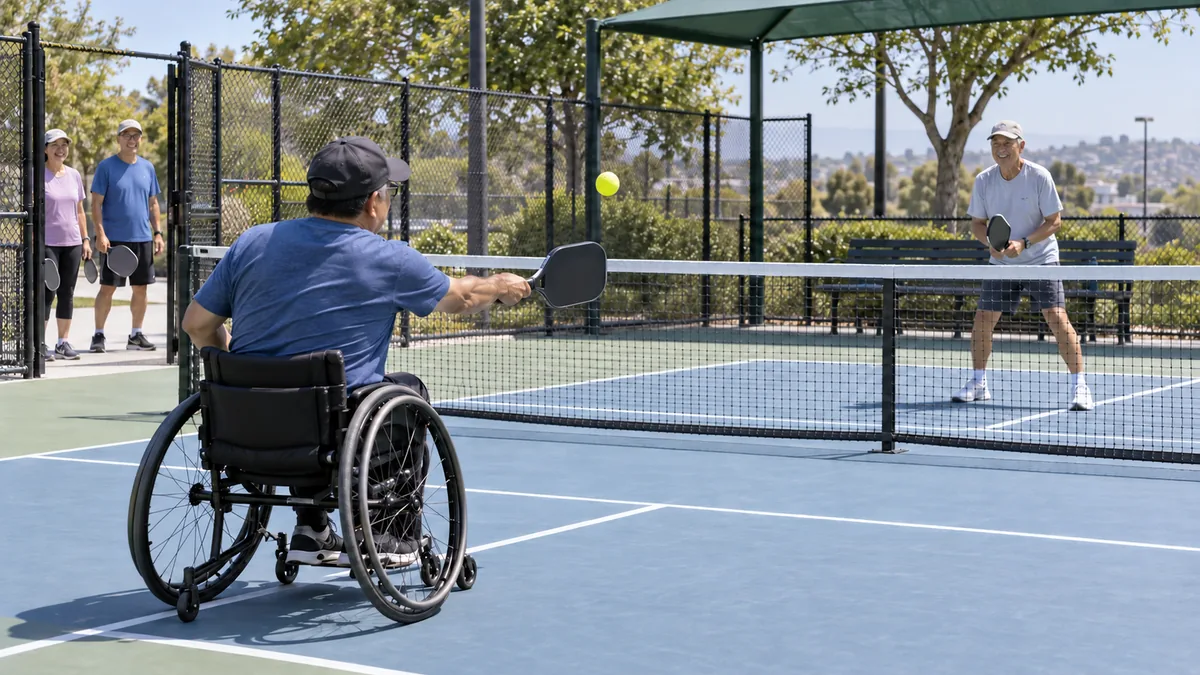
The logic for spending public money on courts goes beyond sports promotion. Pickleball has simple rules, cheap equipment and no barrier of age or athletic background, which fits policy goals such as health promotion, giving older residents a reason to go out, and rebuilding local community. Just as Taiwan runs a publicly led push to get seniors onto court (Why Taiwan sends seniors to the court: a national policy that works for preventive care), building public courts is close to handing out a free entry point to exercise.
For Japanese municipalities, that framing helps get budgets approved. Fold pickleball into tennis court renovations or unused park space and you can add usable courts quickly for a relatively small investment. Design wheelchair-accessible courts in from the start, as Toronto did, and it connects to inclusion policy as well. Free public courts do not necessarily compete with paid private facilities; they widen the base as the place where beginners first pick up a paddle, and can feed people on to private lessons and dedicated venues.
Splitting roles between public and private thickens the market
More courts mean more activity in the businesses around them: equipment, lessons, tournament operations. It is telling that Toronto's new site is tournament-ready. Once free public courts host competition, demand follows for event supplies, officials and local league administration. Public provision widens the base while private operators take the top end on competitiveness and comfort, and when that division of roles meshes, the whole market gains depth.
In Japan too, if people who learn the game on municipally built free courts move on to permanent indoor venues and paid lessons, private operators gain rather than lose. Treating public court building as a machine that produces beginners pays better than bracing against it as public encroachment on private business. Toronto's 300-plus courts are a preview of what it looks like when public and private stand side by side in different roles.
Facility overview
| Facility Name | Main Sewage Treatment Playground (known as the New Woodbine Courts) |
|---|---|
| Location | Eastern Toronto, Canada, along Embaadiimok Avenue (near Eastern Ave / Coxwell Ave) |
| Developed by | City of Toronto (Parks, Forestry & Recreation division) |
| Number of courts | 11 pickleball-only courts (3 wheelchair accessible) |
| Total area | About 25,000 sq ft (about 2,300 m2) |
| Setup cost | About C$1.05 million (about 120 million yen at about 115 yen per CAD), from the mayor's Back on Track budget |
| Hours | 8:00-21:00 (no lighting; mainly daytime use) |
| How it is used | Free drop-in, with some courts bookable online (paid permit) |
| Open from | Open for play June 1, 2026 / opening ceremony July 10 |
Summary
Toronto's 11 courts offer an alternative to the Japanese assumption that courts are something the private sector adds. Free public courts built on the mayor's budget, more courts added in response to residents, grown into a network of more than 300. A Japanese municipality could start by painting a single line on unused park space or in a tennis court's idle hours. Operators, for their part, should treat free courts as a beginner's entrance rather than a rival and design a path from there to their own venues and lessons. Public builds the base, private builds the height. What Toronto showed is that this division of labour changes the order of magnitude in court numbers.