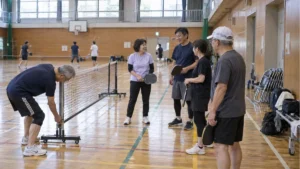
That's in! No, it's out! Have you ever had such an argument on the side of a pickleball court?
In pickleball, where self-judging is the basis, disputes over line judging tend to sour the mood of the game all at once. Especially when you have just started, honestly it is hard to tell where you should judge from.
This article gives that answer clearly. We have summed up, from a player's viewpoint, the standard for judging in and out based on the official rules, and concrete ways to prevent trouble in self-judging. By the time you finish reading, you will be able to step onto the court with confidence.
In This Article
- The correct call when the ball touches the line
- The basic rules for in and out (official standard)
- Common trouble in self-judging and how to deal with it
- Rule differences from tennis and badminton
- Three habits to raise your judging accuracy
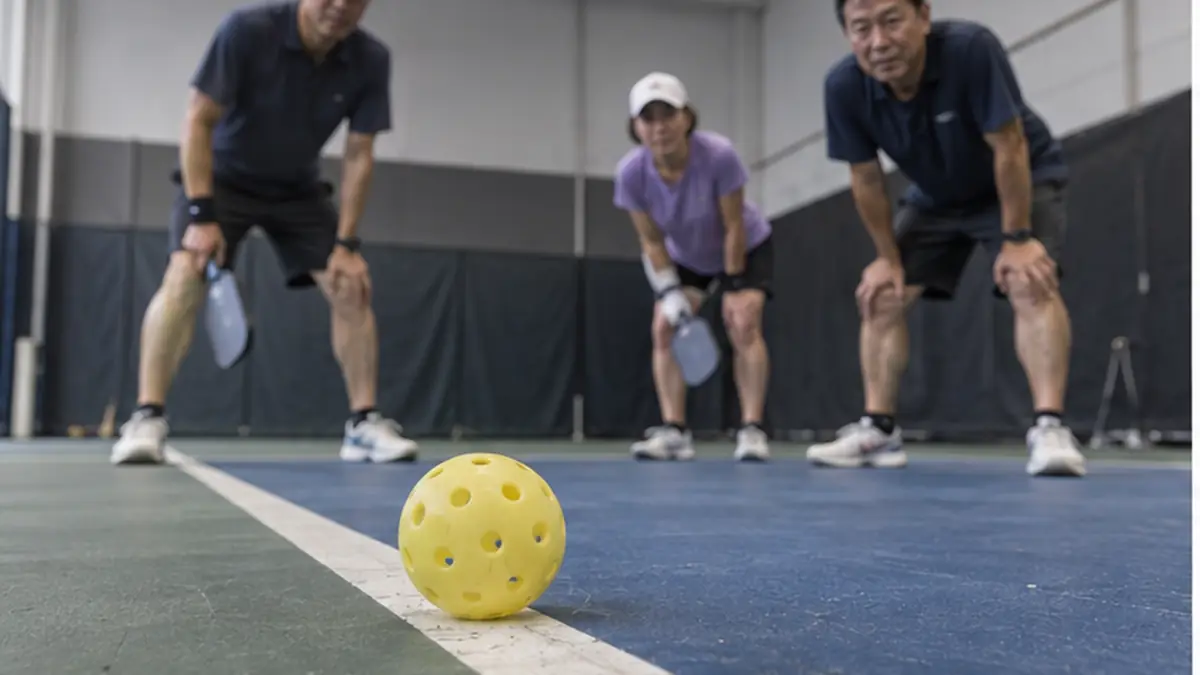
Pickleball line judging comes down to just one rule at its base
You do not need to think about it in a complicated way. The standard for line judging is, in fact, summed up in one word: simple.
Touched the line = in is the absolute grand principle
Under pickleball's official rules,if the ball touches the line even slightly, it is inWhichever part of the ball it is, if it is in contact with the line, play continues. Conversely, only when the ball lands completely outside the line is it out.
When you hesitate, thinking it might have been just barely out, the correct stance is basically to call it in. Incidentally, the ball's diameter is about 7.4 cm and the line's width is about 5 cm. The room for the ball to catch the line is surprisingly large, and whether it touched is easier to see than you think.
Judge by the first landing point of the bounce
The point to watch is only the position ofthe moment the ball first touches the groundJudge by the first landing point, not where it rolled after the bounce. Getting this wrong creates a gap from the actual call, so it is a point to keep in mind.
Three points for correctly judging in and out
We have narrowed to three the points to be conscious of when line-judging in an actual game. Just keeping them in your head changes the speed and accuracy of your judgment.
| Point | Details | Tip for judging |
|---|---|---|
| 1. Contact with the line | In if it touches even slightly | Look only at whether it touches |
| 2. The first landing point | Judge by the position right after the bounce | Do not look after it rolls |
| 3. The angle you view from | View from a position parallel to the line | Viewing from an angle makes it easy to be off |
1. Contact with the line: look only at whether it touched
This is most important. Focus only on whether it touches the line, not which side of the line it landed on. Thinking about extra things slows your judgment. Look simply; that is all.
2. Look at the first landing point of the bounce
A bounced ball may roll after it bounces or come back toward the net. But what you use for the call is only the point where it first touched the ground. Judging by looking where it rolled means you look at a spot more off than the actual one, so take care.
3. Your standing position sways your judging accuracy
Viewing from a position at an angle to the line creates parallax and makes judging in and out markedly harder. The basic play is to stand at a position as parallel to the line as possible to confirm. Just changing your standing position a little makes how it looks quite different.
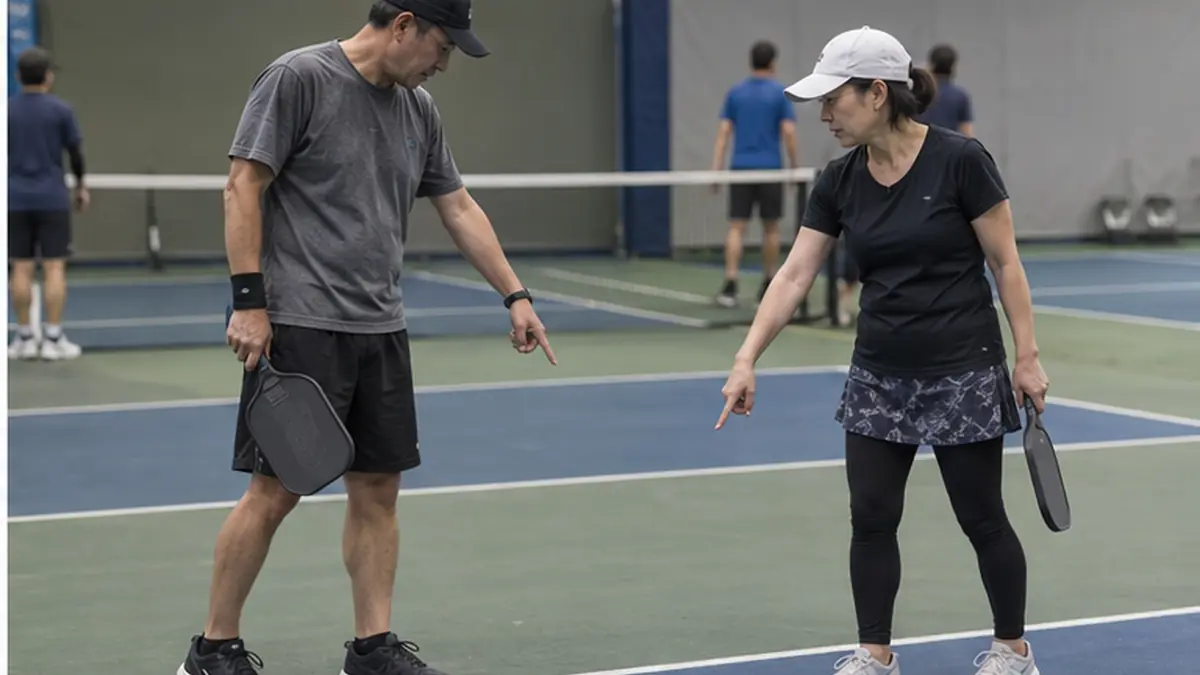
Common trouble in self-judging and how to deal with it
Pickleball basically proceeds by self-judging. Even at official tournaments there are often no referees, and this is a part that tends to be a hotbed of trouble. Just knowing the patterns lets you deal with it calmly.
Common trouble patterns
| Trouble | Main cause | Correct handling |
|---|---|---|
| Your call differs from the opponent's | You viewed from a different angle | Apply when in doubt, call it in |
| You are told you were not looking | The match moves fast | Replay the point |
| Your calls are always late | You are not following the ball | Call out as soon as you judge |
When in doubt, in is the ironclad rule
When you hesitate over a call, for a ball on your side,if you cannot be sure it is out, call it inis the basis of fair play. This is also clearly stated in the official rulebook.
Much of the trouble in self-judging arises from calling it out even while hesitating. If you are not sure, call it in. Just being thorough about this one point greatly changes the mood of the game.
How to respond in a dispute
Getting emotional makes it impossible to sort out. Respond calmly with the following steps.
- Calmly confirm what each of you saw
- If neither can be sure, replay the point
- In the case of an official tournament, call a referee
A replay is not a loss. It is proof of fair play.
A rule comparison with tennis and badminton: what is the same and what is different?
A common question from those with experience in other sports is is it the same as the tennis rules? The answer is basically the same, but some care is needed in parts. Let us organize what is the same and what is different.
| Sport | How line contact is handled | Self-judging | Special notes |
|---|---|---|---|
| Pickleball | In if it touches | Basically self-judged | The kitchen line needs care |
| Tennis | In if it touches | Amateurs self-judge | Nearly the same way of thinking |
| Badminton | In if it touches | Amateurs self-judge | Judged by the base of the shuttle |
| Table Tennis | In if it touches | Usually there is a referee | There are edge balls |
The principle that if it touches the line it is in is common to many racket sports. Those with experience in other sports are fine with that same sense.
However, as a point of care unique to pickleball, there isthe line judging of the kitchen (non-volley zone)The meaning of the call changes by area, such as a serve touching the kitchen line being a fault. Since it is a concept not in tennis, be sure to remember this part firmly.
When you get good at line judging, your whole game changes
Raising your line-judging accuracy ties directly to leveling up your whole game. This is because the habit of firmly following balls near the line naturally raises your concentration.
Three habits to be conscious of during a match
Habit 1: Always follow the ball with your eyes to the end
If you take your eyes off the ball, distracted by the net or the court, your line judging becomes inaccurate. Keeping your eyes on it until the moment it touches the ground is the foundation of judging accuracy. Just this makes how it looks quite different.
Habit 2: Call the call out immediately
Claiming out after the play is over makes the opponent doubt you, wondering why you did not say so right away. Call out as soon as you judge. Just forming this habit sharply reduces needless disputes.
Habit 3: Have a stance of respecting the opponent's call
When you can switch your mindset to the next shot over the line call, your play gets markedly better. Being able to have a pleasant game with opponents you can trust each other with, that is the most enjoyable pickleball, isn't it?
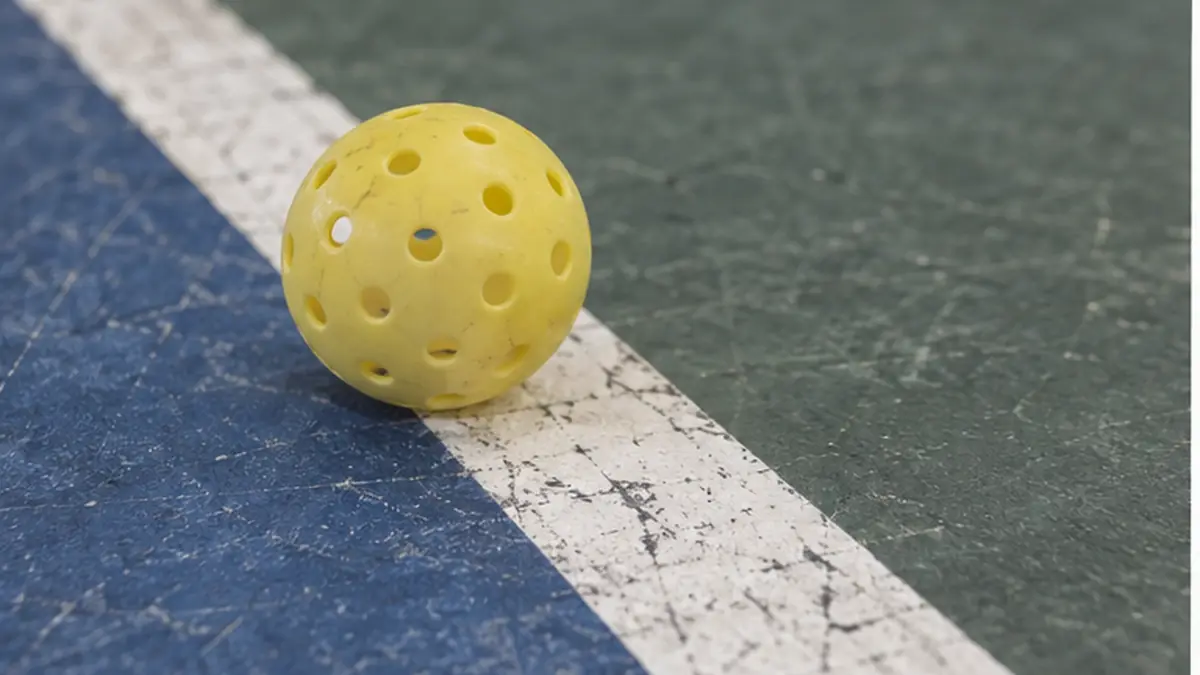
Summary: For pickleball line judging, you only need to remember three things
Organizing the talk so far, the points to remember for line judging are just three.
- If it touches the line even slightly, it is in(this is the grand principle)
- Judge by the first bounce point(after it rolls is irrelevant)
- When in doubt, in(if you are not sure, do not call it out)
Simple, right? But just keeping these three greatly reduces trouble in self-judging. Knowing the rules correctly is the number-one shortcut to an enjoyable game.
When in doubt, call it in. That one phrase makes for a fair, pleasant game. Do be conscious of it from your next play!
FAQ
Q1: How do I judge if the ball lands on top of the line?
A1: If it touches the line even slightly, it is in. A state of resting on top of the line is of course called in. Use whether it touches the line, not whether it is inside the line, as your standard.
Q2: What should I do when I dispute with the opponent in self-judging?
A2: If neither can be sure, replaying the point is the correct response. Without getting emotional, proceed following the principle of when in doubt, in. In the case of a tournament, you can call a referee.
Q3: Is line judging in the kitchen different from usual?
A3: The kitchen (non-volley zone) line especially needs care. If a serve touches the kitchen line, it is a fault. Also, if your foot was stepping on the kitchen line when you volleyed, that too is a fault.
Q4: Is it self-judging even at tournaments?
A4: Self-judging is the basis even at many official tournaments. However, depending on the tournament, line judges or referees are sometimes assigned. If you cannot accept a call, you can appeal to the referee.
Q5: Which team does the line judging?
A5: Basically, the receiving side judges balls that come to their own court. The rule is to respect the opponent's call rather than claiming out on a ball you hit into the opponent's court yourself. Even for a clearly out ball, you can call out only when the receiving side has not noticed.
Related Articles Worth Reading
- The Complete Guide to Pickleball Skill Ratings (2.0–5.0) | Know Your Level
- Are There Pickleball Tournaments Beginners Can Enter? How to Join and the Right Mindset
- Pickleball and Mental Health | Why It Works for Stress Relief and Preventing Depression
- A Stretching Routine Before and After Pickleball | Care to Enjoy It Injury-Free for Years
- Elbow Injuries Common in Pickleball | Preventing Tennis Elbow and Self-Care Methods
Reference Links
Related Articles