この記事の要点
- ピックルボールパドルの性能を大きく左右するのが、内部に使われるコア(芯材)の素材です。
- 最も広く使われているコア素材です。
- 「ソフト」と表現されることが多い打球感です。
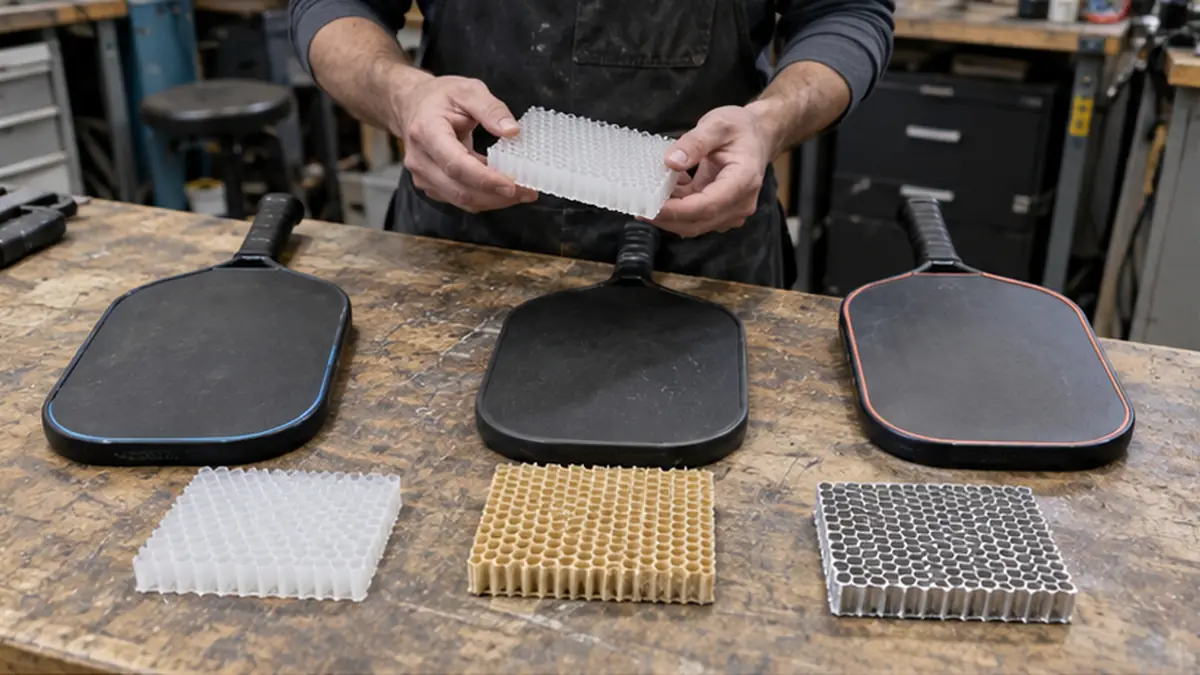
The core material decides a paddle's performance
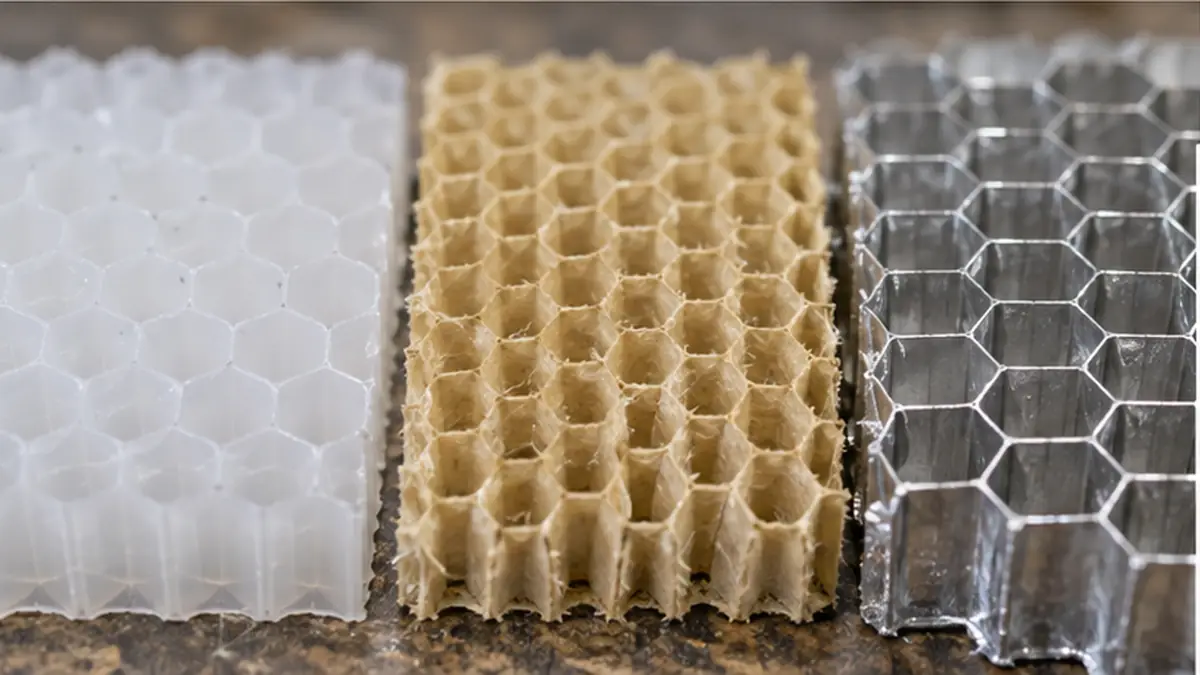
What greatly influences a pickleball paddle's performance is the material of the core used inside. The core material greatly changes the feel, power, and control performance. In the current pickleball market, mainly three types of core material are used.
Polymer (polypropylene) core
Features and structure
最も広く使われているコア素材です。ポリプロピレン樹脂をハニカム(蜂の巣)状に成形した構造で、軽量かつ適度な弾力性を持っています。現在広く使われているコア素材ですが、採用比率を示す公的な市場統計は確認できないため、製品ごとの公式仕様で判断してください。
Feel
A feel often described as "soft." There's a cushioning at the moment the ball hits the paddle, and it's characterized by being easy to control.dinkand drop shots, and other shots that call for delicate touch, it's well suited to.
Pros
With high control performance, it handles a wide range of levels from beginner to advanced. It also has excellent quietness, making it suited to use on courts near residential areas. Durability is also good, and a major advantage is that performance stays stable over a long period.
Cons
On the power side, it's slightly inferior to the other core materials. For power hitters seeking intense smashes and hard drives, there may be times it feels lacking.
Nomex core
Features and structure
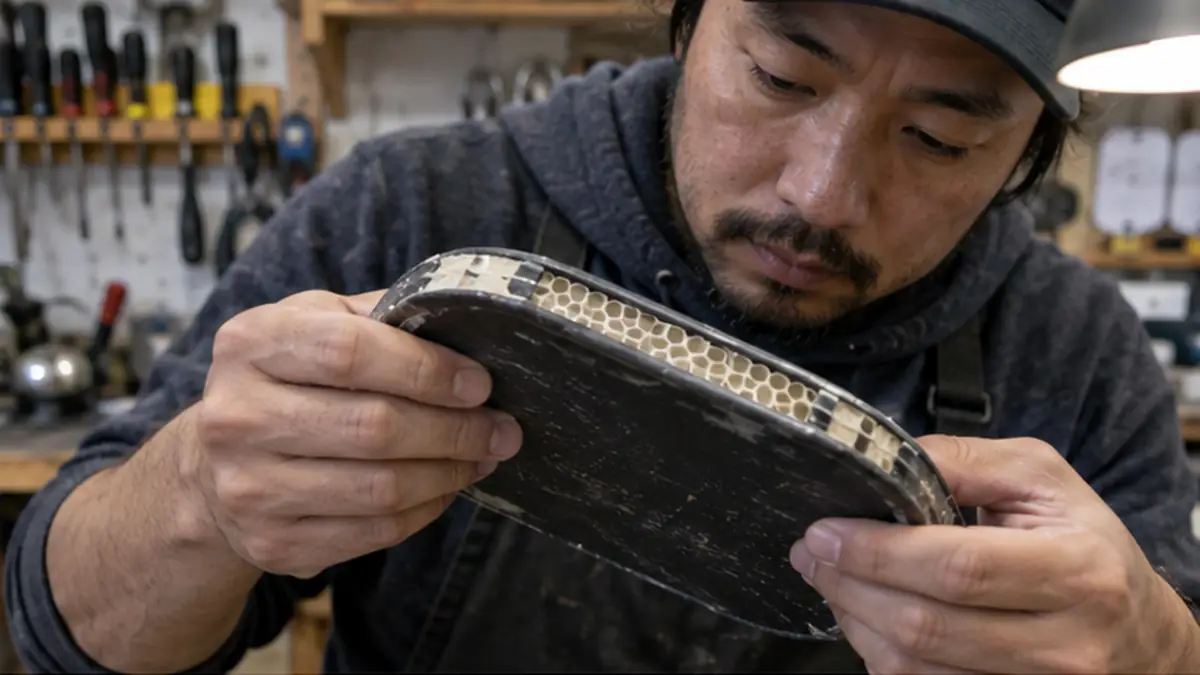
Nomex is a honeycomb-structure core material made from aramid fiber developed by DuPont. Originally a material used in the aerospace industry and firefighting gear, it's extremely hard and has excellent heat resistance.
Feel
Characterized by a "hard," "snappy" feel. The time the ball touches the paddle is short and the popping-back force is strong, so you can hit shots with speed. The impact sound is loud too, with a sharp clack.
Pros
A core material with excellent power and speed. It's ideal for power hitters who want to draw out the maximum force of drives and smashes. Because the ball flies well, it's suited to aggressive play from the baseline.
Cons
Because of the hard feel, some players find it hard to control. In particular, on soft shots like dinks, the ball can fly too far. Also, because the impact sound is loud, it's unsuited to environments where noise is a concern.
Aluminum core
Features and structure
A core material of aluminum formed into a honeycomb structure. Because it's metal, it has a distinctive feel compared with the other core materials. It was used in many early pickleball paddles, but is now on a somewhat declining trend.
Feel
A feel in between polymer and Nomex. It has moderate hardness and feedback, and is characterized by transmitting the ball's feel to the hand easily.
Pros
With excellent touch sensitivity, the ball is easy to control. It has high precision on dinks and reset shots, and is well regarded by players who center their play on the soft game. It's also often used in relatively inexpensive paddles, and its good value for money is another merit.
Cons
Durability is somewhat low, and with use, deformation and sagging of the core tend to occur. It's unsuited to power shots and can feel lacking for aggressive play styles.
A guide to choosing a core material
If you focus on control, the polymer core is the most stable choice. If you're unsure, start with a polymer-core paddle first. If you seek power and speed, the Nomex core. However, it may take time to get used to delicate touch shots.
As a recent trend, the mainstream approach is to adjust the balance of power and control by varying the thickness of the polymer core. The general tendency is that a 16 mm thickness is control-focused and 13 mm is power-leaning.
In addition to the core material, consider the surface material and the paddle's weight comprehensively too, and find the one that suits your play style.
迷ったときはコア単体ではなく、パドル全体で比べる
同じコア素材でも、厚み、フェイス素材、形状、重量配分が違えば打感は変わります。素材名だけで結論を出さず、候補を2〜3本に絞って試打し、ミスヒット時の安定感と振り抜きやすさを確認してください。大会で使う場合は、購入前に最新の承認リストで製品名を照合しましょう。
確認した一次情報
Related Articles Worth Reading
- Solving Your Pickleball Paddle Questions | Explained in Depth in FAQ Form
- A Model-by-Model Selkirk Paddle Comparison Guide | The Differences Between the Vanguard, Luxx and Amped Series
- The Wilson Pickleball Paddle Guide | Testing the Strength of a Prestigious Tennis Brand
- The Gamma Sports Pickleball Paddle Guide | Features and How to Choose, Explained in Depth
- Heavy Paddle vs. Light Paddle | How Weight Affects Your Hitting Style Explained
Reference Links
Related Articles