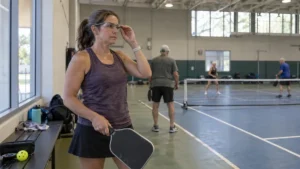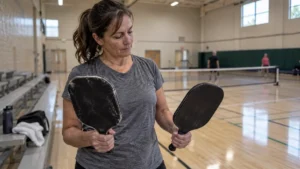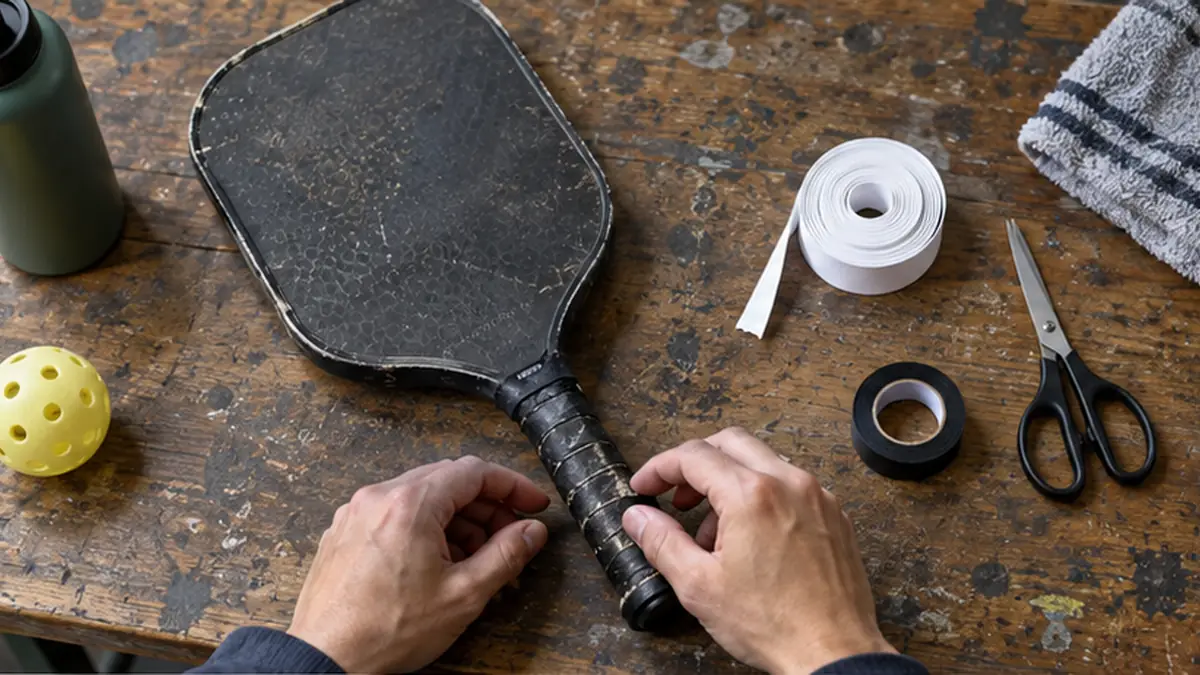
Let's understand the types of grip tape
Replacement grip
The base grip wrapped on the paddle from the start. It's thick and has excellent cushioning. It's the type you replace entirely once it deteriorates, and it greatly affects the grip's thickness.
Overgrip
A thin grip tape wrapped over the replacement grip. It's used for purposes like absorbing sweat and adjusting fit. Because it's easy to replace, many players rewrap it regularly.
Differences by material
Dry type
A material with a dry, smooth surface that resists slipping even when you sweat. It's ideal for people who sweat a lot on their hands or for summer play. It has excellent sweat absorption and quick drying, but in dry environments it can feel a bit hard to grip.
Wet type (tacky type)
A grip with a tacky surface and a moist grip feel. It suits people with dry hands or for winter play. The clinging sensation when new is pleasant, letting you hold the paddle firmly.
Cushioned type
A grip with built-in thick sponge material that absorbs shock. It's recommended for those who want to reduce hand blisters and fatigue, but caution is needed since the added thickness makes the grip thicker.
Steps for replacing grip tape
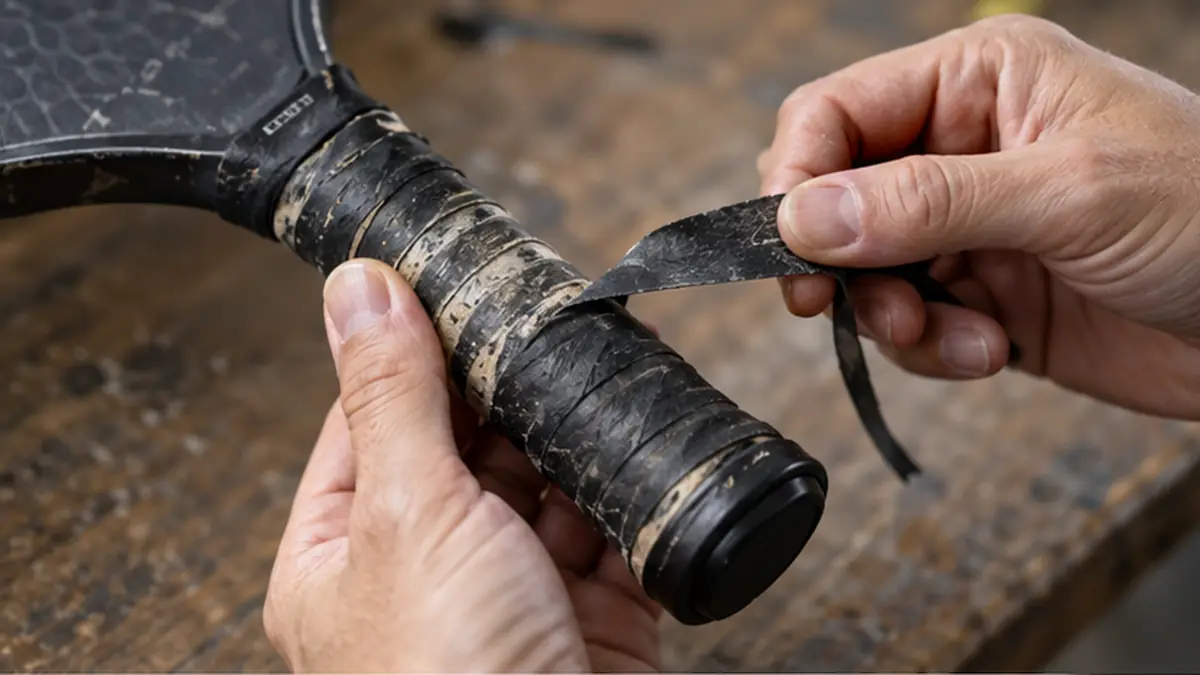
Step 1: Peel off the old grip
For an overgrip, peel the tape at the finishing end and slowly unwind it from bottom to top. When replacing a replacement grip, carefully peel off the adhesive part, and if stickiness remains, wipe it off with alcohol.
Step 2: Prepare the new grip
Peel off the grip tape's protective film and check the thin, tapered tip. You start wrapping from this thin part at the grip end (the bottom of the paddle).
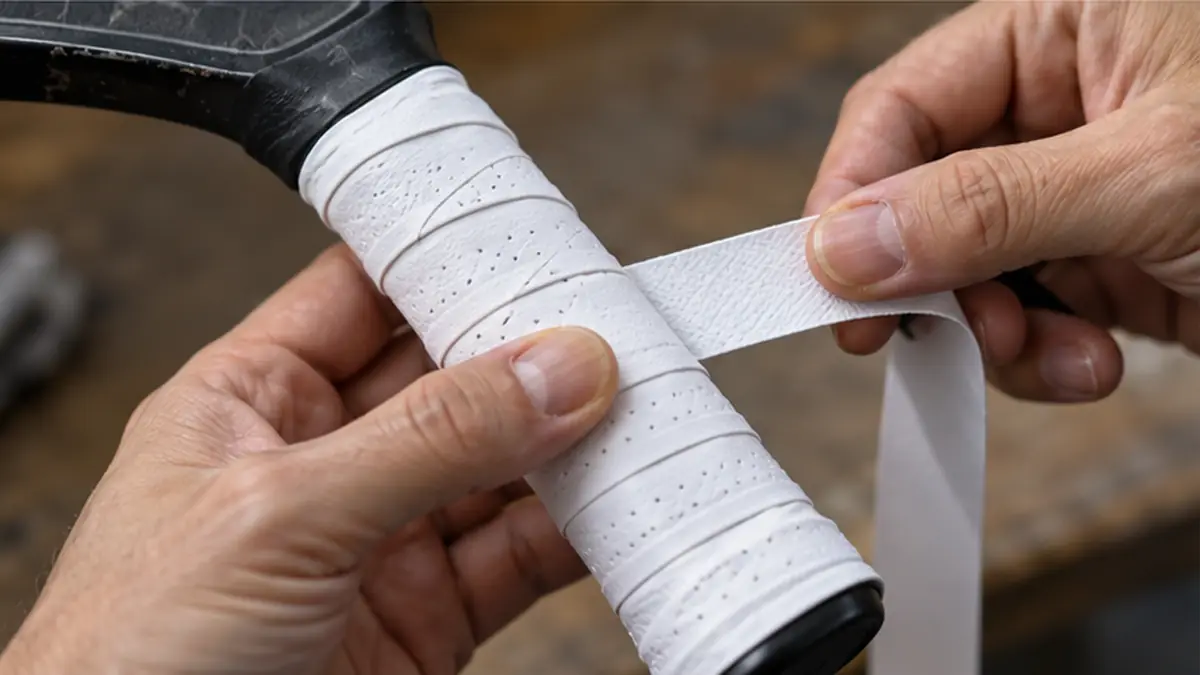
Step 3: Start wrapping
Place the thin tip diagonally against the grip end, fold back the edge of the tape slightly to secure it. It's common for right-handers to wrap counterclockwise and left-handers to wrap clockwise.
Step 4: Keep wrapping
Overlapping about 3–5 mm with the previous wrap, wrap upward at an even tension. If the tension is too strong, the tape stretches and thins; if too weak, wrinkles form—so aim for a moderate amount of force.
Aim for a diagonal angle of about 30 degrees. A steep angle leaves little overlap so the base shows through, while a shallow angle increases the number of wraps and makes the grip too thick.
Step 5: Finish wrapping
Once you've wrapped up to the top of the grip, cut the tape at an appropriate length. Wrap the included finishing tape (securing tape) to hold down the end, and it's complete. If you don't have finishing tape, vinyl tape can be substituted.
When to replace it
For an overgrip, it's time to replace it when you feel the sweat absorption or tackiness has dropped. As a guide, if you play two to three times a week, replacing it once every two to three weeks is recommended. If the grip is damp after play, wiping it with a towel and drying it makes it last longer.
A replacement grip is generally replaced about every three to six months. If the cushioning sags and hardens, or the surface becomes slick, that's the sign to replace it.
Adjusting the grip thickness
Grip thickness greatly affects handling. Too thin and you overuse your wrist, throwing off your control; too thick and you need more grip strength, tiring you out.
Generally, the proper thickness is said to be one where, when you grip it, your index finger fits between your fingertips and palm. You can also fine-tune it by layering overgrips, so try to find the thickness that suits you.
Related Articles Worth Reading
- The Pickleball Paddle Official-Match Guide | Usage Rules and How to Choose Explained
- What Are the Approval Rules for Pickleball Paddles? The USAPA Certification Standards Explained
- Heavy Paddle vs. Light Paddle | How Weight Affects Your Hitting Style Explained
- The Best-Value Pickleball Paddle Selection Guide | Recommendations for Beginners
- A Beginner's Guide to Pickleball | The First Gear to Get and How to Choose It
Reference Links
Related Articles