When entering a pickleball tournament, what is surprisingly easy to overlook is therules for using paddlesIn official pickleball matches, there are regulations on usable paddles, and if you are told on tournament day that this paddle cannot be used, all your practice up to that point goes to waste. This article sums up and explains the practical paddle matters to keep you from being troubled on tournament day, from the conditions for a paddle usable in official matches and tournaments to a pre-tournament checklist, the rules for bringing paddles on the day, and common no-go examples.
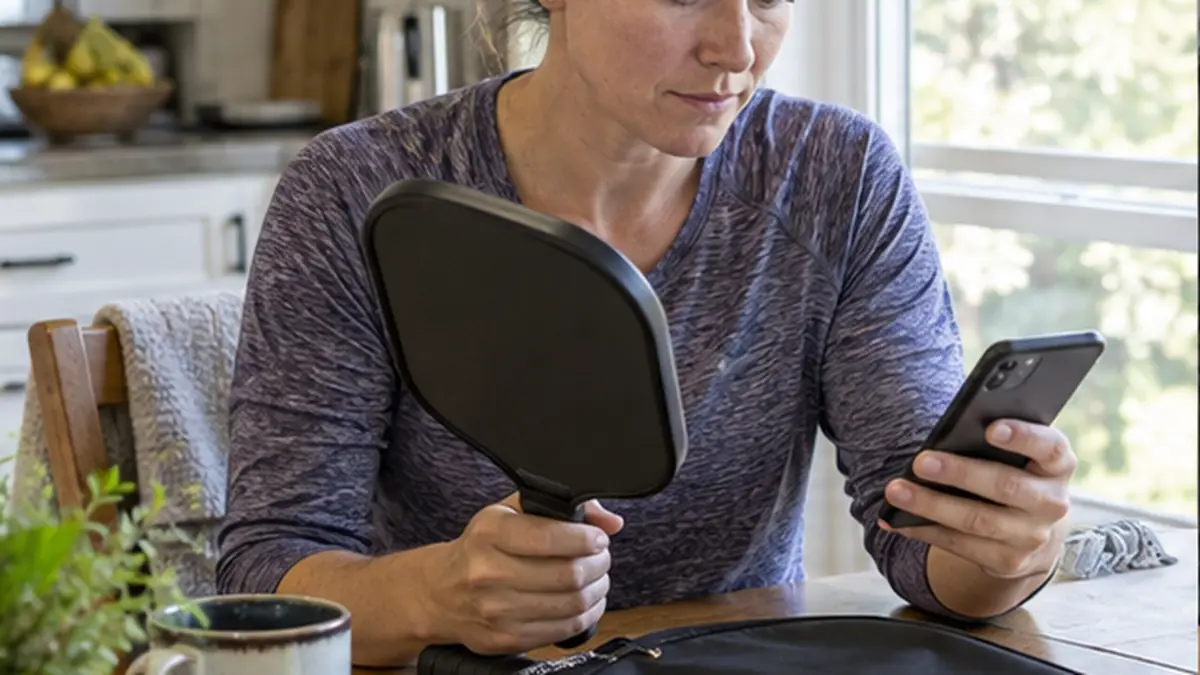
Conditions for a paddle usable at tournaments [check here first]
The basic premise for a paddle usable in official matches and tournaments is that it bea model that has received USA Pickleball (formerly USAPA) approvalApproved paddles clear standards for size, weight, material, rebound, and more, and the certification mark is displayed on the body or in the product description. No matter how high-performance it is, a paddle without approval cannot be used in official matches.
Furthermore, in recent times the response to high-rebound paddles has been strengthened, and the 2025 Equipment Standards Manual codified the PBCoR test that measures the coefficient of restitution of paddle and ball. A lapse of approval affects play at USA Pickleball sanctioned tournaments, and even a previously approved model may become ineligible, sochecking the latest approval list before a tournamentis the ironclad rule. For how the approval system works, seethe explanation of approved paddles and USA Pickleball certificationsums it up in detail.
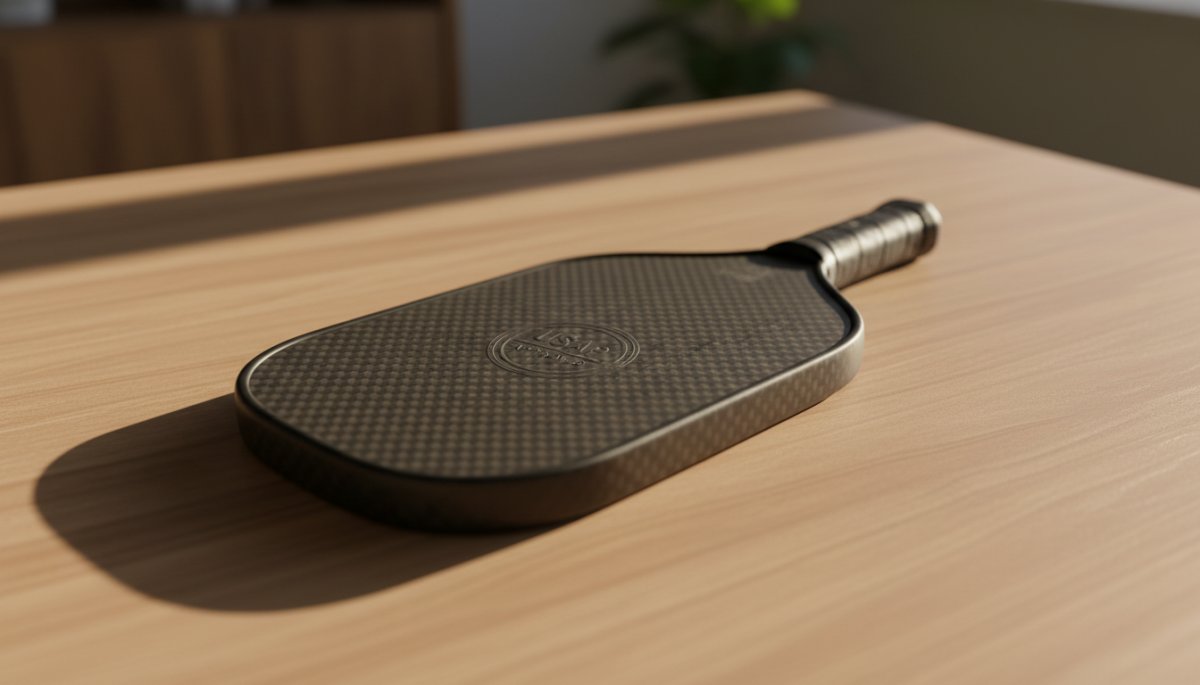
A pre-tournament paddle checklist [quick reference]
Once your entry is done, check the following items before the tournament.
| Check item | What to confirm |
|---|---|
| Approval status | Whether the model you use is listed on USA Pickleball's approval list |
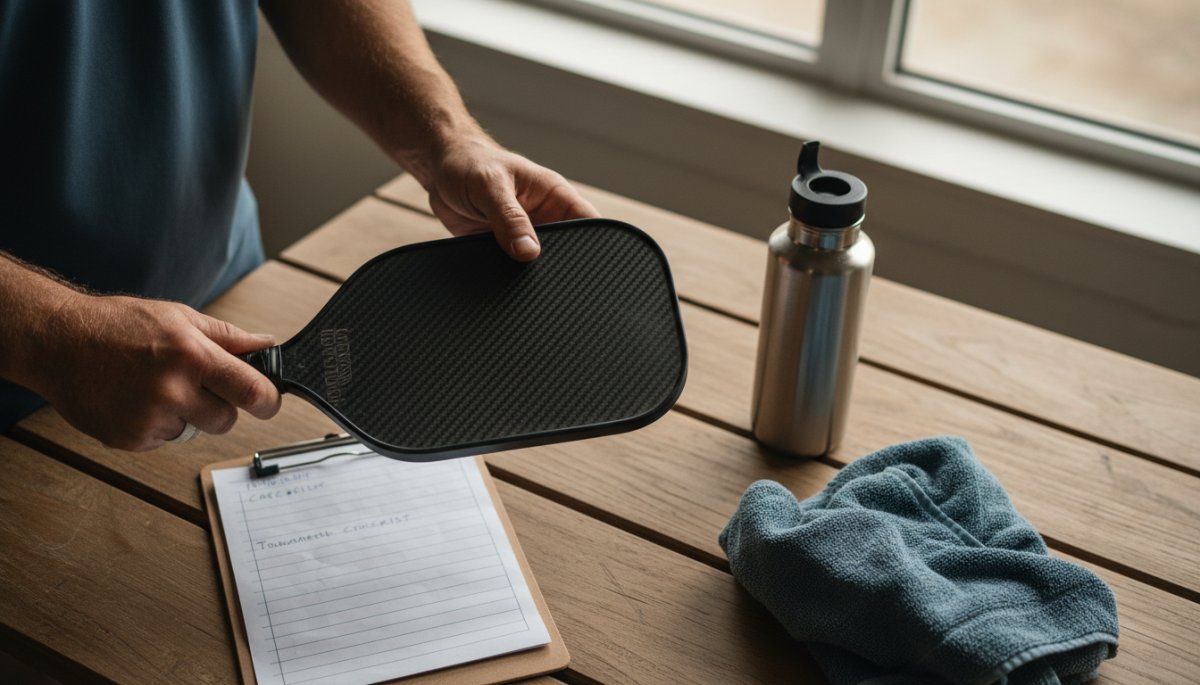
| Surface condition | Whether there is major damage or significant wear. If it is badly worn, use may not be allowed |
| Edge and grip | Whether there is peeling of the edge guard or looseness or deterioration of the grip |
| Surface processing and decoration | Whether stickers or processing violate the regulations. Check how identification markings are handled in the tournament rules |
| Preparing a spare | Having a spare of the same model lets you continue without changing the feel even if one breaks |
| Tournament rules | Thoroughly read tournament-specific rules such as the number of paddles you may bring and dress codes |
How to check approval status
For confirming approval, cross-checking the maker name and model name on the approved-paddle list on USA Pickleball's official site is the sure way. The certification mark on the paddle body or package is also a marker, but because the situation can change with the introduction of new standards, a final confirmation on the list is recommended. Since approval is sometimes split by variation, such as by size or thickness, check the very model you use.
Points for checking condition
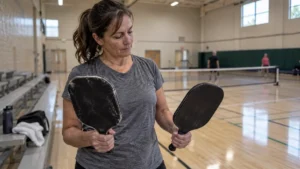
The surface condition especially tends to be overlooked. Under the equipment standards, surface cracking, peeling, and an excessively rough surface may violate the regulations. Because a paddle whose condition has changed greatly from heavy use may not be allowed at a tournament, prepare a good-condition one for tournament use. Your everydaypaddle maintenanceis also part of tournament preparation.
Rules for bringing and inspecting paddles on tournament day
Rules on handling paddles
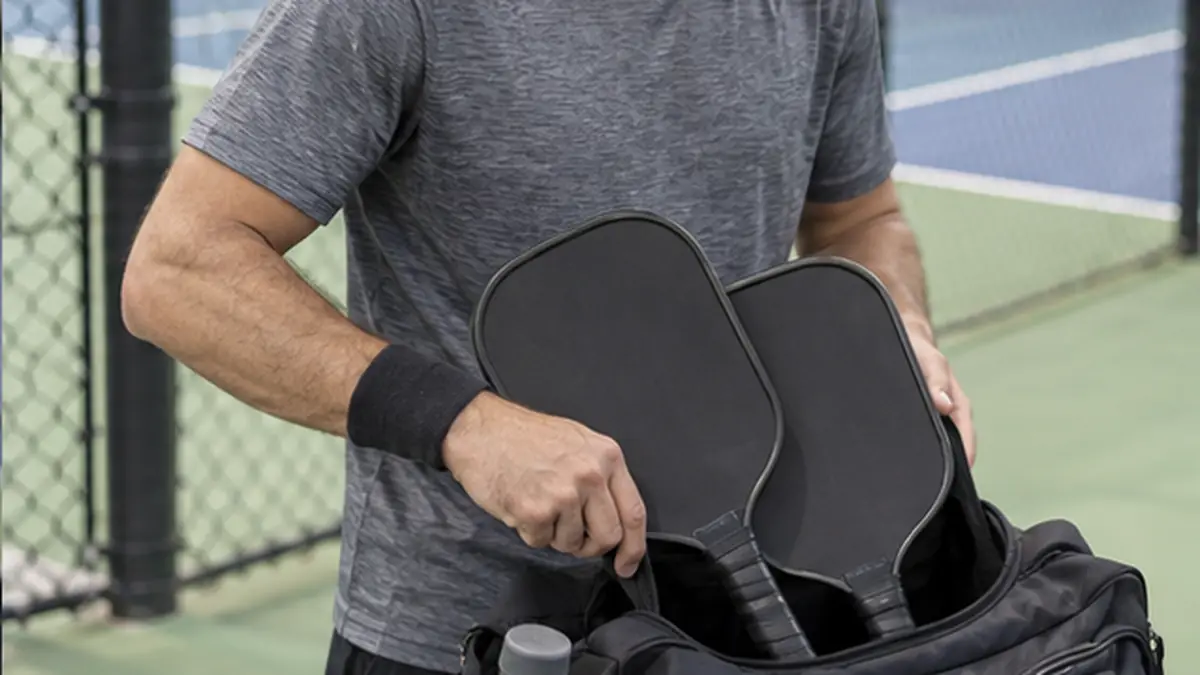
Under the official rules, you use one paddle for play during a match, and replacement in cases such as breakage is allowed. Because how bringing spares and their storage is handled differs by tournament, from world championships to local tournaments, check the rules of the tournament you enter. Having a spare of the same model ready lets you continue without changing the feel even when you replace it.
Dress and other regulations
There are dress regulations too, and at official tournaments, attire and shoes appropriate for competition are required. Because the fine rules differ by tournament, thoroughly reading the tournament rules before entering and inquiring with the organizer in advance about anything unclear is the sure way.
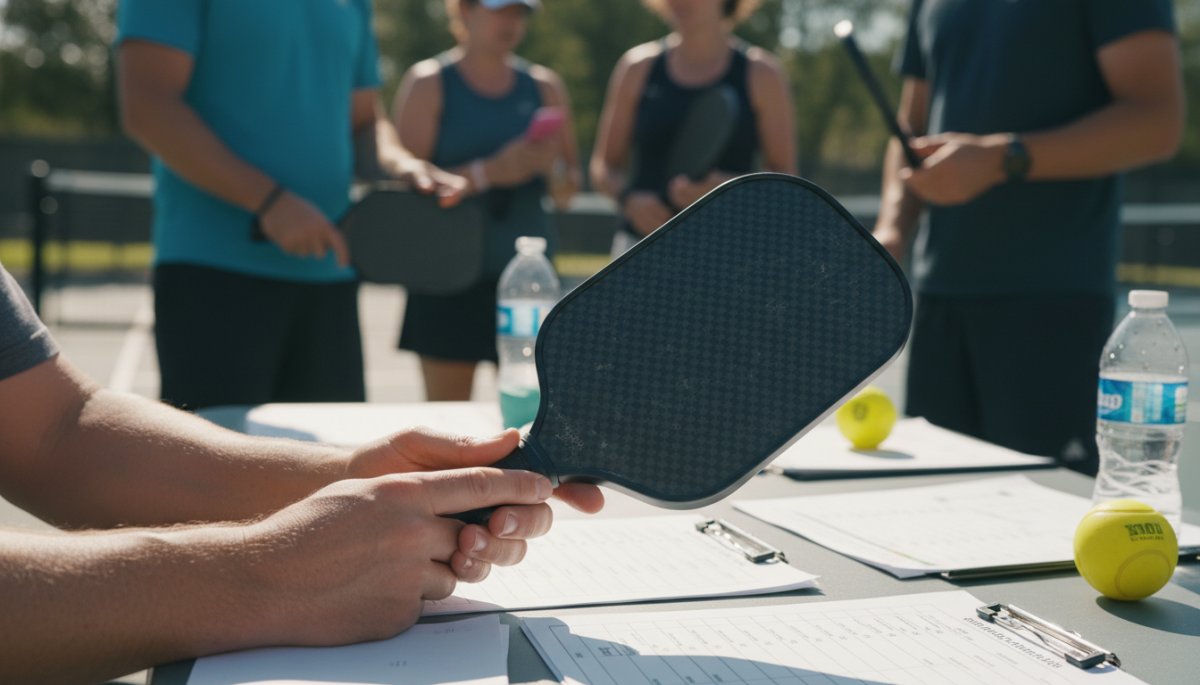

Finishing the three-part set of checking the approval list, checking condition, and thoroughly reading the rules a week before the tournament lets you focus on competing on the day.
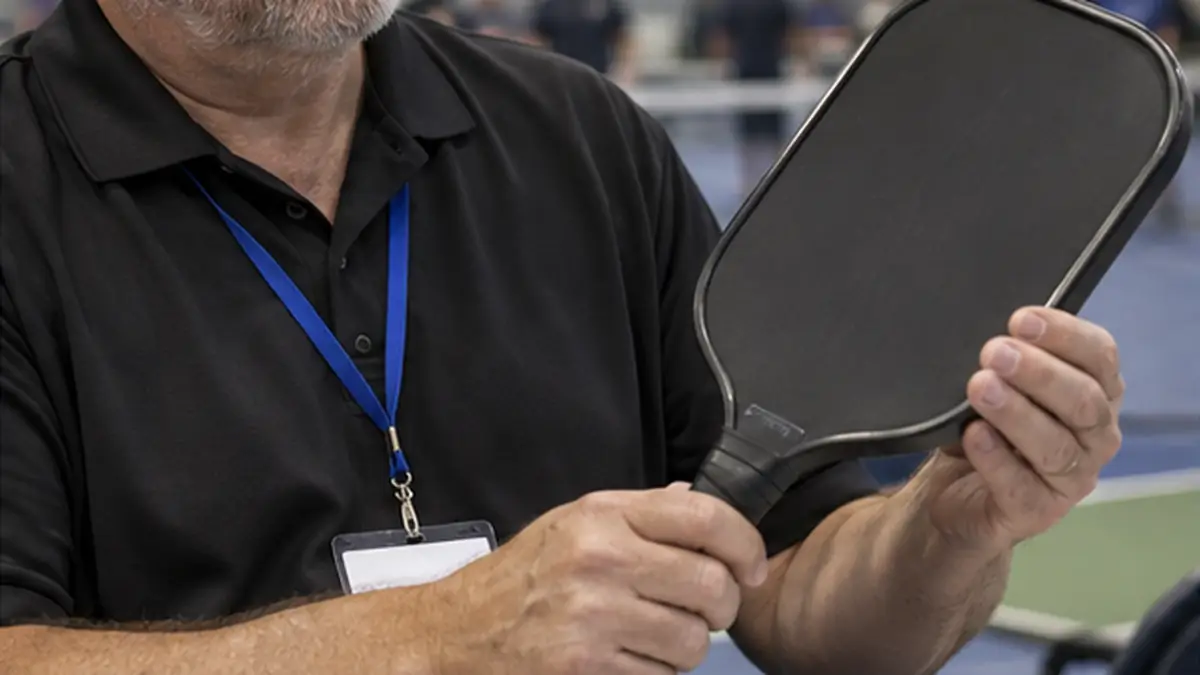
Common no-go examples and how to avoid them
What actually tends to cause problems at tournaments is cases like the following.
- Overlooking deterioration in a state that violates the regulations, such as surface cracks, peeling, or significant wear
- An old model becoming ineligible under new standards (PBCoR, etc.)
- Not checking tournament-specific rules (handling of spares, decoration regulations, etc.) in the rules
- Suddenly using a paddle different from practice on the day, and the feel not matching
All of these can be prevented by checking in advance. When buying a used or discontinued model, always confirm whether it is still on the approval list. Because the latest approval status can change, it was OK when I bought it may not hold.
How to think about choosing a paddle for tournaments
For a tournament paddle, the basic play is to use the same model as your everyday practice, after satisfying being approved. If the feel changes between practice and the real thing, your hard-won adjustment goes to waste. If you are replacing it, do so not right before the tournament but securing a period to get used to the new paddle.
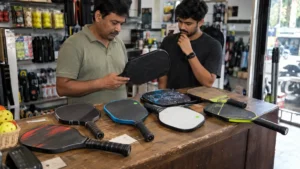
For the concrete way to choose, seethe complete guide to choosing a paddleChoosing while consulting at a specialty shop is also a shortcut to preventing a mismatch in size or feel.
For those entering a tournament for the first time
Those entering a pickleball tournament for the first time tend to be thrown by many things besides the paddle rules, such as the match format, how to count the score, and the flow of the warm-up. It is recommended to gain experience first from local tournaments and open-participation events that are easy even for beginners to join. For choosing a tournament suited to your level,the skill rating explanationis helpful. Once your paddle preparation is in order, all that is left is to play your heart out.
FAQ
Where can I check whether the paddle I use at a tournament is approved?
Cross-checking the maker name and model name on the approved-paddle list on USA Pickleball's official site is the sure way. Because approval is sometimes split by variation such as by thickness, confirm the very model you use.
Can I use a paddle I bought long ago at a tournament?
Even if it was approved when purchased, its approval may have lapsed with an update to the equipment standards, such as the PBCoR test. Check the current status on the latest approval list before a tournament.
Should I bring a spare paddle to a tournament?
Having one ready is recommended. Paddle replacement is allowed in case of breakage, and a spare of the same model lets you continue playing without changing the feel. Check the handling of bringing and storing it in the tournament rules.
Summary: Tournament paddle preparation is the three points of approval, condition, and rules
The points for preventing paddle-related trouble at a pickleball tournament come down to three: (1) whether the model you use is on USA Pickleball's approval list, (2) whether the condition of the surface, edge, and grip is good, and (3) whether you understand the tournament rules for bringing paddles and dress.
Because approval status can change with updates to the equipment standards, such as the codification of the PBCoR test, form a habit of checking the latest list before every tournament. Get your preparation in order and focus on play on the day.
Related Articles Worth Reading
- What Are the Approval Rules for Pickleball Paddles? The USAPA Certification Standards Explained
- The complete pickleball paddle maintenance guide: care, storage, and lifespan
- The Complete Guide to Pickleball Skill Ratings (2.0–5.0) | Know Your Level
- The Complete Guide to Choosing a Pickleball Paddle | Material, Weight and Grip
- JOOLA vs. CRBN Paddle Comparison | Which One Suits You?
Related Articles