At 1,250 meters above sea level, a lakeside is about to host two days where saunas, music and pickleball share the same ground. On August 1 and 2, 2026, IZUMIKO CAMP FESTA 2026 will be held at Izumiko Park in Shimosuwa, Nagano, and Noah Indoor Stage, a major tennis school chain, will set up a pickleball taster area there. The wellbeing program it began in a city park is being carried to a regional tourism festival surrounded by forest. Rather than building permanent courts, it slots pickleball into an event, an approach full of hints for operators in Japan looking to spread new sports into regional areas.
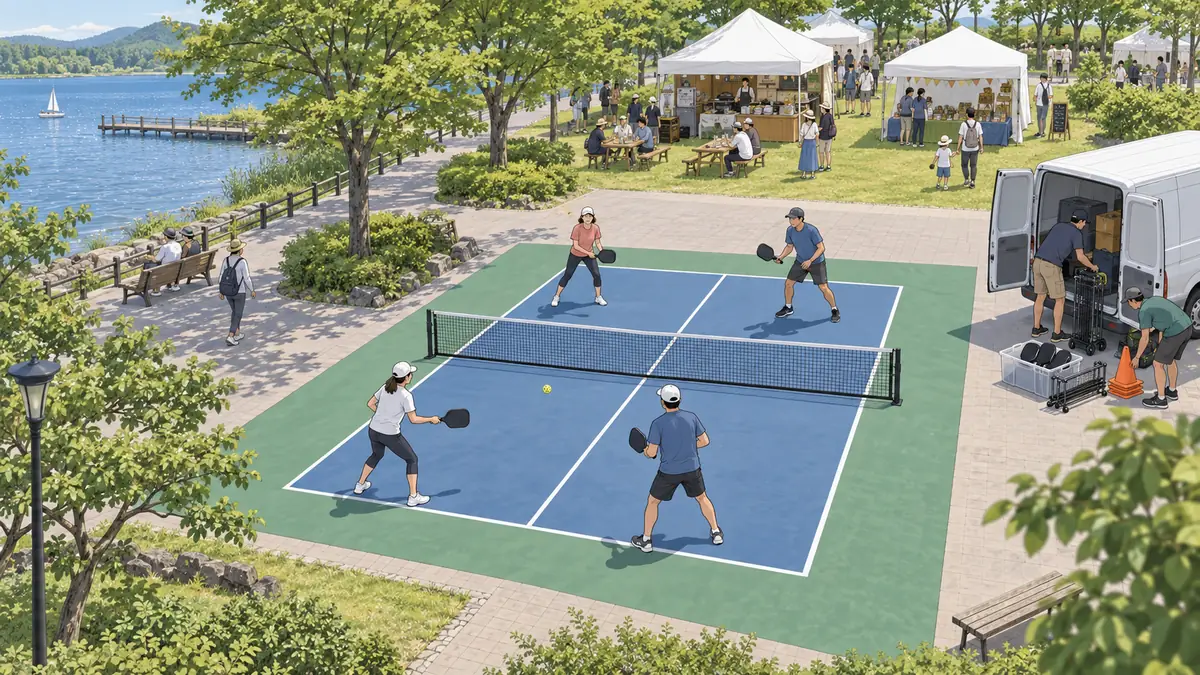
A pickleball taster area joins a lakeside festival
Izumiko Park, the venue, sits in forest at 1,250 meters, about three kilometers from central Shimosuwa. Surrounded by larch and maple, it is a town-run park with a campground, tennis courts and a multipurpose field. For two days it will host outdoor experiences built on camping and local food, with saunas, music and pickleball at the center.
The organizer is Human Scale LLC, with support from the Shimosuwa Town Education Division. Noah Indoor Stage will run the pickleball taster area as part of W ARC, the wellbeing business it is developing with the startup MIC FIELD Inc. Rather than building a dedicated facility, it slots an entry point to the sport into a lakeside event where people already gather, and that is the key here.
From a city park to a country lakeside
W ARC, from Noah and MIC FIELD, started out as an urban project. The first edition was Wellness Park Tokyo, held at Meiji Park in spring 2026, which bundled pickleball with saunas, lessons and meditation (Tennis operator Noah takes on a new market built from pickleball and sauna). The business leans less on the sport itself than on how the experience is edited and delivered.
Shimosuwa is the second move, shifting that program to a regional tourism festival. A Tokyo event that gathers office workers on weeknights and weekends draws a different crowd, with different motives, than a Nagano one where people come for camping or a hot-spring trip. Even with the same sauna-and-pickleball pairing, the destination has shifted from corporate wellbeing and social demand in the city to a place where people taste something out of the ordinary while traveling. One experience package, sent to different places depending on the location.
Adding an experience at a festival versus building permanent courts
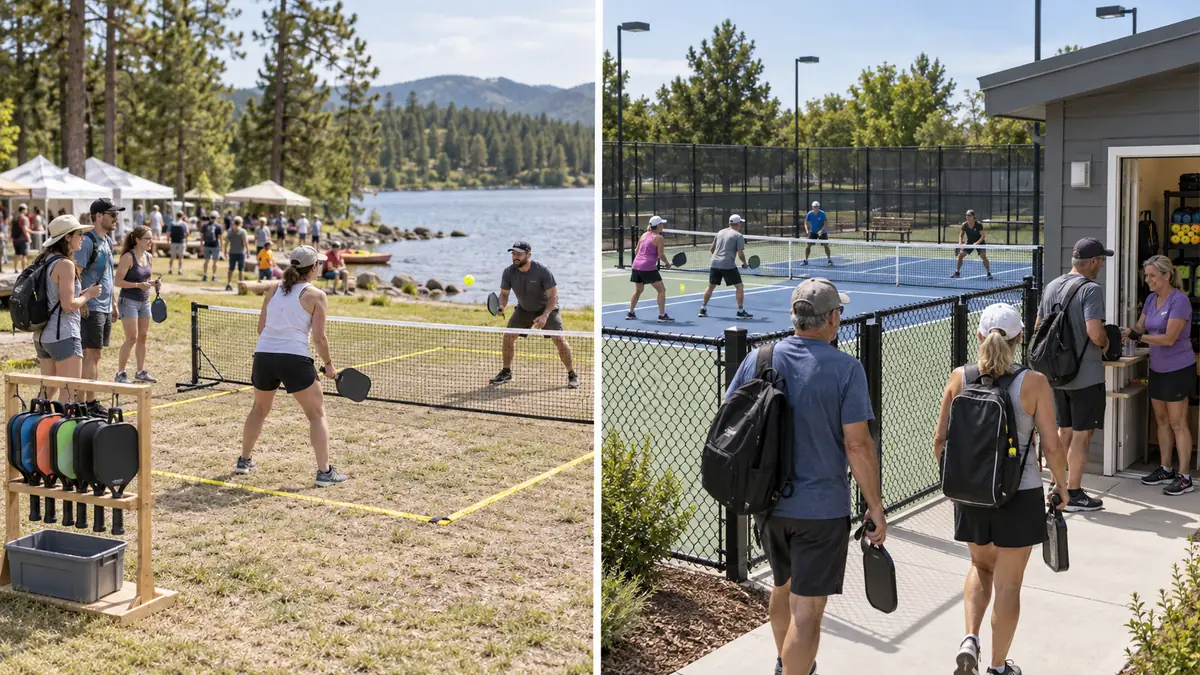
There are broadly two ways to spread pickleball. One is to build permanent courts at a hot-spring resort or leisure facility; the other, as here, is to set up a temporary taster area at an event. The aims and the investment differ.
| Comparison axis | Festival booth model (Shimosuwa) | Permanent court model |
|---|---|---|
| Capital investment | Small (temporary area) | Large (building and maintaining courts) |
| How contact is made | Hand the experience to festival visitors | Booked customers come back again and again |
| Who brings the crowd | The festival itself | The facility, on its own |
| What it suits | First-time trials and building awareness | Repeat use and keeping utilization up |
Projects lining up 20 courts at a hot-spring resort to become a destination (A 20-court hot spring resort, and the day Izu Inatori becomes Japan's biggest pickleball home) and the Fuji-Q group's outdoor facility placing the sport in an all-weather racket venue (Fuji-Q opens an all-weather racket facility, with pickleball one of seven activities) are both permanent. Build the venue first, then draw people to it. The Shimosuwa festival booth instead opens a temporary window onto the experience where people already gather. As a way to get a paddle into a first-timer's hand, it is the lighter route.
What the Shimosuwa venue means
Shimosuwa is already known for Suwa Taisha shrine and its hot springs, and the lakeside park serves as a base for camping and trekking. In July 2026 the town invited trial soundings for Izumiko Park, a market survey seeking private-sector ideas to broaden how it is used. Local governments, too, are moving toward putting idle public space to work through outside projects.
A pickleball booth at a festival fits that trend. The town provides the place, the festival organizer brings the crowd, and Noah brings the experience of the sport. Splitting the roles three ways lightens the load on each. When trying a new sport in a regional park, this division of venue, audience and content can be a workable model.
What operators and local governments in Japan can take from this
There are three lessons here for operators and local governments that want to spread pickleball in their area.
- First, choose where to deliver the experience. Before building courts, go to festivals and events where people already gather and grow the number who try it. Put awareness first and hold off on permanent investment until you see the response.
- Change the audience by choosing what you pair it with. Pair it with saunas, music or camping and it reaches people who did not come for the sport. Offering pickleball as part of an experience rather than as the purpose works.
- Split the roles and stay nimble. With the park providing the place, the festival the crowd and a specialist operator the content, both the investment and the running burden are lighter than carrying it all in-house.
For Noah, it is also an experiment in taking the operating know-how and coaching staff built up in tennis schools outside the court. In the sense of moving its own assets into a new market, the city park and the country lakeside sit on the same line.
Where tourism and new sports overlap
Folding a sports experience into an outdoor festival has room to grow in Japan, where camping and saunas remain popular. For visitors after something out of the ordinary while traveling, pickleball slots in easily: the rules are simple and you can return a ball right away. From the festival's side, an experience families and groups can enjoy together lifts length of stay and satisfaction. From the sport's side, it creates contact in bulk with people who never come to a court. Both sides' aims line up.
If regional tourist areas adopt this model, simply adding a sports experience to an existing festival or camping event opens a new angle for drawing visitors. Without waiting for dedicated facilities to be built, chances to encounter pickleball may keep growing out of festivals around the country.
Overview
| Event Name | IZUMIKO CAMP FESTA 2026 sponsored by Nihon Wrecker Service |
|---|---|
| Dates | Saturday, August 1 to Sunday, August 2, 2026 |
| Venues | Izumiko Park, Shimosuwa, Suwa District, Nagano |
| Host | Human Scale LLC |
| Supported by | Shimosuwa Town Education Division |
| Core experiences | Sauna, music and pickleball (alongside camping and local food) |
| Pickleball booth | Noah Indoor Stage × MIC FIELD Inc. (W ARC project) |
Summary
The Shimosuwa booth is an example of carrying pickleball to where people gather rather than calling people to permanent courts. Noah's move, extending a pairing it began in a city park to a country lakeside, gives operators and local governments a low-investment entry point for trying a new sport locally. Start by asking whether one section of an existing event in your town could host a taster area, splitting the venue, the audience and the content between different parties. The next place people meet pickleball may be a summer lakeside rather than a dedicated facility.