A US pickleball industry body published the first full report on pay for coaches and facility staff in 2025. It was compiled by the International Association of Pickleball and Padel Facilities (IAPPF). The 45-page survey showed cases of head coaches at indoor facilities earning $130,000 to $200,000 a year (about 19.5 million to 30 million yen at 150 yen to the dollar). Released to members, those figures make visible a turning point that lifts the sport from a hobby to a job you can live on. For readers in Japan the meaning is plain: now that a career in coaching is opening up overseas, the question of whether the same job can exist here has become real.
What the report says
The IAPPF report is new in that it surveyed pay levels across the six core roles that keep a facility running. The association itself notes that experienced staff are hard to secure and that pay benchmarks had never been published, which confirms that the industry was expanding fast without any yardstick for its labor market. Income for the top head coaches is not a fixed salary but built mainly on a revenue split from lesson sales. A commission structure that pays according to the students you attract and teach is what pushes the ceiling to $200,000 a year.
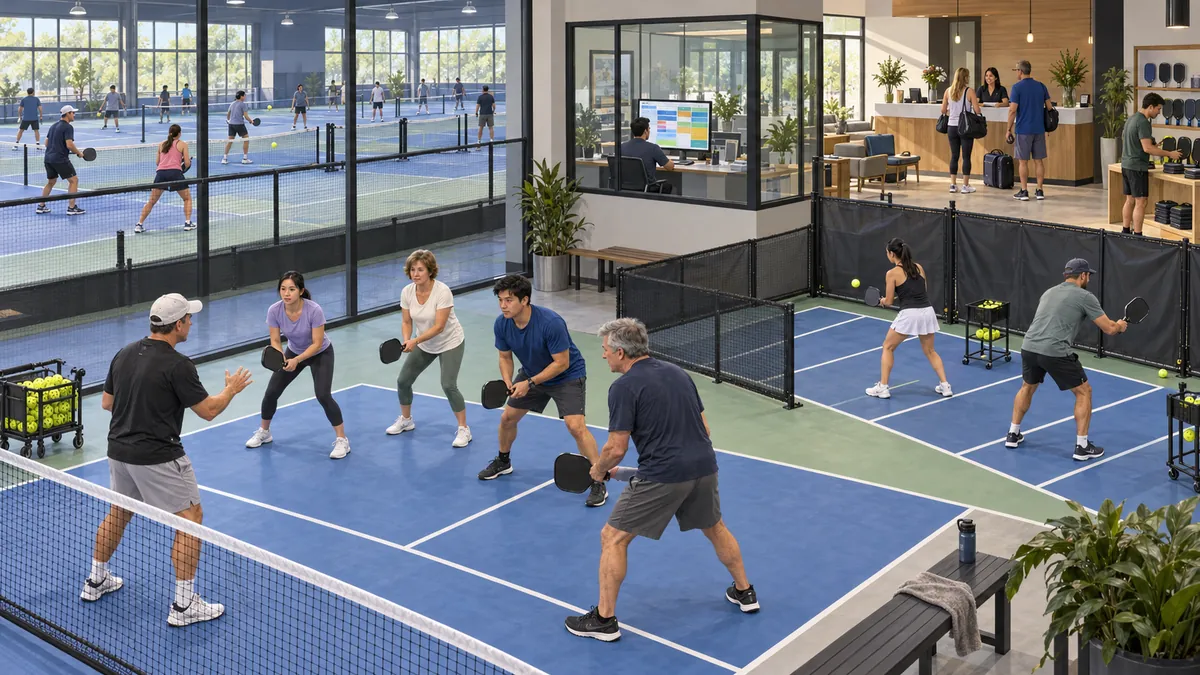
The base that makes this pay possible is the surge in facilities. The report notes that private indoor facilities in the US now exceed 1,500, most of them opened within the last 36 months. Because places to teach spread nationwide in a short span, demand for coaches and the price of a lesson rose together. Behind the numbers is a structural change in the market, where growth in players met matching growth in venues.
Why these numbers are appearing now
Pickleball has cheap equipment, simple rules and a lower physical bar than tennis. That ease of entry pushed the playing population up quickly and created demand for coaches to teach beginners. In the US, indoor facilities work as membership businesses, and lesson income on top of court fees is the second revenue line that supports them. Coaches sit at the center of that engine, so the better the coach, the larger the split.
That said, $200,000 is the top of the range. Look at the other roles in the report and the industry is clearly still developing. General managers earn a standard $60,000 to $85,000 a year, and front desk staff $12 to $25 an hour. Only teaching expertise is valued far above the rest, the lopsided shape of an early market.
Pay by role, in data
The table below converts the pay for the main roles in the report into yen at the exchange rate of the time (this article uses about 150 yen to the dollar for 2025, a year that moved between 140 and 158 yen). No unverifiable estimates are added; only the published ranges are listed.
| Role | Pay (USD) | In yen (at 150 yen to the dollar) |
|---|---|---|
| Head coach (top end) | $130,000 to $200,000 | About 19.5 million to 30 million yen |
| General manager (standard) | $60,000 to $85,000 | About 9 million to 12.75 million yen |
| General manager (large or premium facilities) | $110,000 to $175,000 | About 16.5 million to 26.25 million yen |
| Program director | $42,000 to over $75,000 | About 6.3 million to over 11.25 million yen |
| Front desk staff (hourly) | $12 to $25 (median $17 to $18) | About 1,800 to 3,750 yen (median about 2,550 to 2,700 yen) |
What stands out is that the top of the head coach range far exceeds the standard pay of a general manager. That inversion, with the coach on the floor out-earning the manager, shows the power of a commission built on lesson revenue. The report also notes that padel roles earn 15 to 40 percent more than equivalent pickleball roles, a sign that the earning power of the indoor facility business is rising across both sports.
日本の関係者の受け止め方
この数字を日本の当事者はどう見るか。立場ごとに現状は異なる。
First, facility operators. A membership model built around indoor courts is starting to move in Japan as well. The city-center facility that opened in Toyosu and sold out its memberships in 48 hours shows that demand for lessons exists in urban areas. For an operator, a well-paid coach can be an investment that generates revenue rather than a cost.
Second, existing tennis school operators. Businesses with teaching know-how and a member base can fold pickleball in as a new revenue line. A major tennis company aiming at the new market with a sauna-equipped facility, and a school coach who won an amateur tournament and showed the strength of that teaching background, both point to a realistic path that repurposes existing infrastructure.
Third, individuals who want to coach. Two hundred thousand dollars in the US is attractive, but Japan's playing population and lesson prices cannot yet support the same split. On top of that, Japan simply does not have enough coaches, to the point that trials are under way to see whether AI coaching can fill the gap. Read the other way, a shortage of people means a first-mover advantage for anyone who establishes expertise early.
日本で報酬が成立する条件
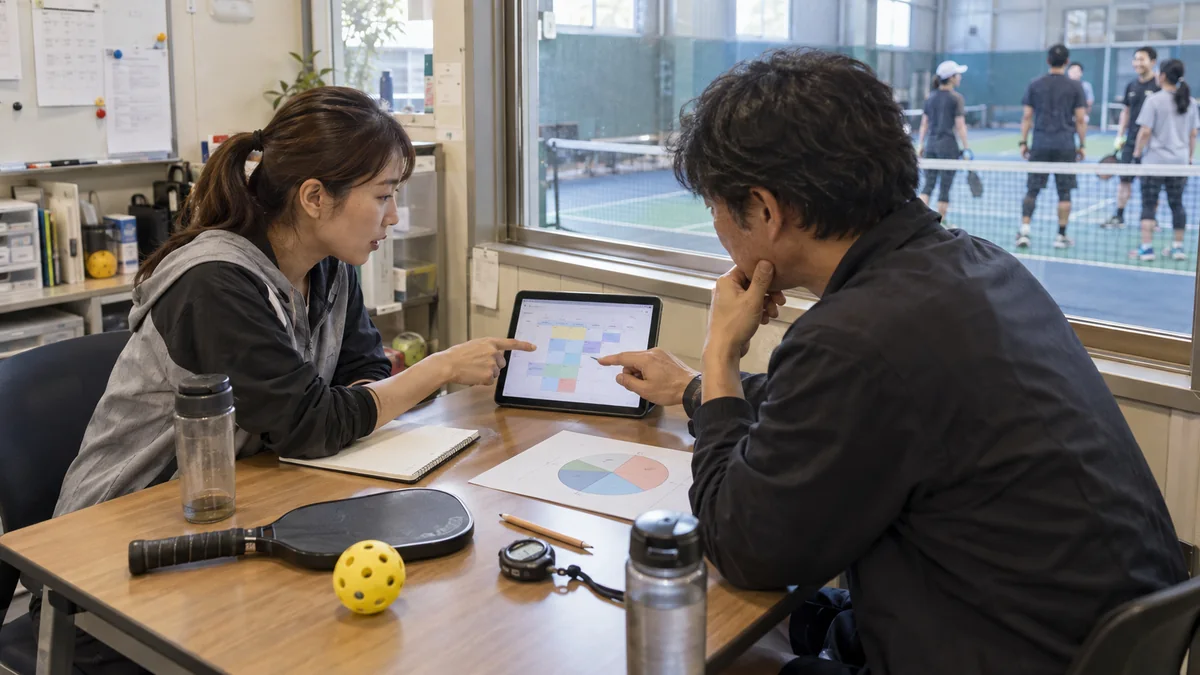
The US model cannot be imported as is. The decisive difference is whether there are enough members, at a high enough price, to make a lesson revenue split work. High US pay rests on indoor facilities that multiplied past 1,500 in a short time and on a dense market that can run indoor lessons year-round. Japan still has few venues and remains at a growth stage built on public gyms and free outdoor courts.
それでも道筋は見える。指導者を単なる時給スタッフとして雇うのではなく、生徒獲得と定着に応じて報酬が伸びる歩合設計を組み込めば、腕のある人材を惹きつけられる。テニススクールが持つ会員管理・予約システム・コーチ育成の仕組みは、ピックルボール指導のインフラにそのまま流用できる。ゼロから施設を建てるより、既存の運動施設に指導プログラムを載せる方が、日本では現実的な最初の一歩になる。
業界への波及と整備される基準
Making pay visible pushes along the creation of coaching credentials and evaluation standards. In the US, the facility association and the player rating bodies are working together to show coaching ability in objective terms. The question of how to prove skill that matches the pay will reach Japan's organizations before long. Lesson rates, coach certification, the form of contracts between facilities and coaches: the more these settle, the sharper the outline of a career that pays.
Put the other way, if high rates run ahead without standards, poor teaching risks damaging trust in the market. It is telling that the US report treated the absence of benchmarks as the first problem. If Japan can design pay and qualifications together at this stage, there is room to grow the sport and professionalize teaching at the same time.
これから指導を仕事にしたい人が今できること
日本で指導を収入に変えたい個人が実現しやすいステップは限られている。まず、公共体育館や自治体主催の体験会は、指導経験を積む入口として使いやすい。参加者に教える立場を経験しながら、地域の需要を肌で測れる。次に、テニスやバドミントンなど近接競技の指導歴があれば、それは強みになる。ラケットスポーツの基礎指導力はピックルボールに転用が利く。
On income, it is realistic to stack up earnings through group lessons and capacity-managed beginner courses rather than relying on one-off lesson fees alone. Even the high earners in the US maximize revenue by combining private instruction with running groups. If you work with a facility, settle before signing whether pay is fixed or commission-based and how far your responsibility for recruiting students extends. Understanding the pay structure decides whether you can make a long career of it.
Summary
Behind US head coaches earning $200,000 a year are the surge in indoor facilities and a commission structure that splits lesson revenue. Japan has not caught up on facility count or playing population, so the same level of pay will not arrive straight away. But add a teaching program to an existing sports facility and design pay that tracks student acquisition, and there is plenty of room to make coaching a profession. With people in short supply, now is the moment for coaches who lock in expertise early to take the first-mover advantage. Whether pickleball becomes a job you can live on in Japan depends on how facilities and school operators design it.
Sources
- The Dink Pickleball「Pickleball Compensation Report: Top Coaches Can Earn $200,000」
- International Association of Pickleball & Padel Facilities (IAPPF) official site
- Pickle Times, "Can AI coaches fill the coaching shortage? Sansan's trial in Ikebukuro"
- Pickle Times, "The coach on the teaching side wins, and a tennis school shows its underlying strength in pickleball"
- Pickle Times, "Memberships sold out in 48 hours: what Toyosu Picklr shows about demand in the city center"