Opened on July 10,Sansan Pickleball Court Ikebukuro, one of the largest dedicated facilities in Tokyo,を実証フィールドに、名刺管理のSansanがプレー動画をAIで解析し、上達に向けたフィードバックを自動生成するサービスの検証を開始しました。技術パートナーは骨格認識のジー・サーチ(富士通グループ)と映像解析のAllClip。コート運営とデータ解析を同じ企業グループが握る座組みは、指導者不足に悩む国内の競技環境にとって見過ごせない実験です。何を検証し、日本のプレーヤーや施設運営者が何を読み取るべきかを整理します。
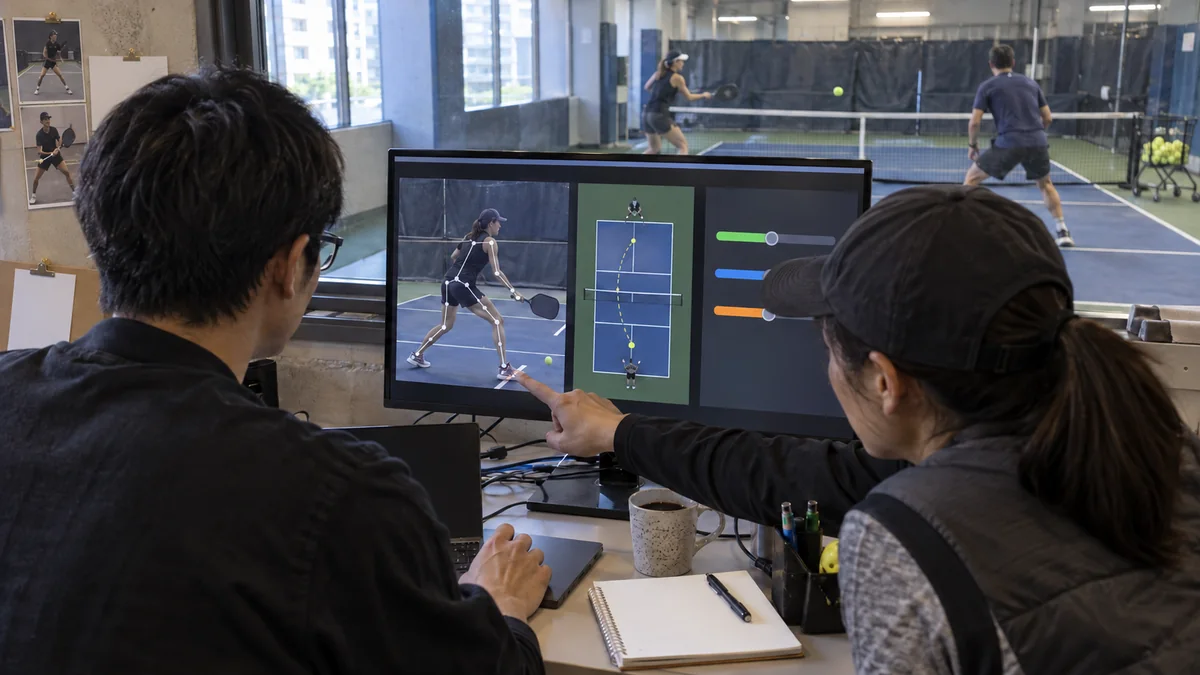
AI grades the rallies you play: three features in the trial
Sansanが検証対象に掲げたのは、映像から選手の動きを読み解く3つの機能です。骨格認識技術を使った「動作分析」でフォームやフットワークを可視化し、「ラリー分析」で打球の流れや配球を数値化、そのうえで「スキルレーティング」として実力を指標化する。コーチが目で追っていた要素を、映像だけで機械的に拾い上げる構図です。
役割分担は明快です。ジー・サーチが人体の関節位置を推定する骨格認識を担い、AllClipが試合映像を解析する。両社の技術をSansanのコート環境に組み込み、まずは撮影環境でどこまで分析精度を出せるかを詰めていきます。Sansanの発表によると、7月は有識者やコーチを交えたワークショップで評価項目を整理し、9月以降に一般利用者へ対象を広げる予定とされています。
Why a business card company is stepping into skill development
Sansan's move looks abrupt but is technically continuous. Its R&D division has spent years refining the OCR and image processing needed to read business cards, an uneven printed surface, with high accuracy. Recognizing where characters sit and estimating where joints sit both belong to the same lineage of pulling meaning out of an image. Reading it as image processing assets built on business cards turned toward court video is the natural interpretation.
The motive on the facility side is consistent too. Ryosuke Koike, the office head leading the Ikebukuro facility, points to the company's mission of creating innovation out of encounters, and explains that it bet on creating encounters through the sport and on the room the market has to grow. A company whose core business is connecting people is moving into a sport with a strong community character from both the court side and the data side.
There are precedents abroad, so where does Sansan win?
AI analysis of play video is already at the implementation stage globally. The leading example is PB Vision in the US, where uploading match video returns shot-by-shot statistics and a DUPR-style rating, with a free first try. AI tools for ordinary players are spreading in Japan as well, and moves around shot trackers and line-calling AI have been covered underthe 2026 trends in AI changing pickleballhere on Pickle Times as well. Sansan is a latecomer.
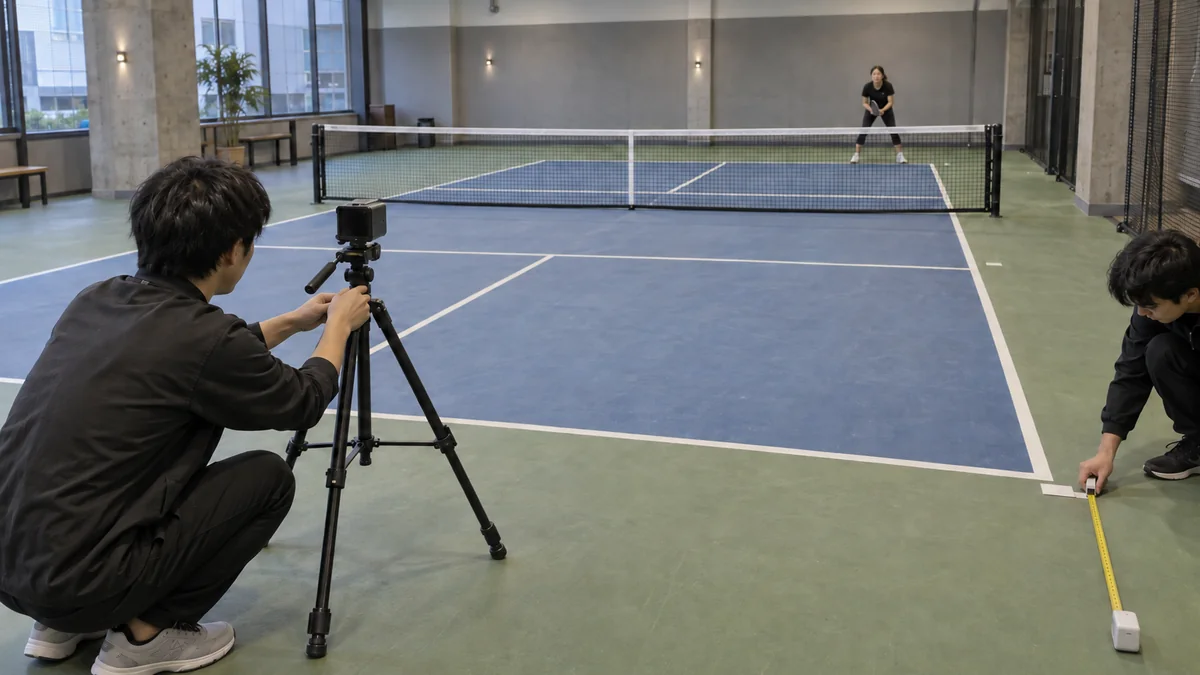
The reason a latecomer still has a path is that it controls the filming environment itself. Existing AI analysis services mostly rely on users uploading video shot on a tripod, and variation in camera height and angle has been a wall for accuracy. PB Vision is sensitive enough to shooting conditions that it recommends a fixed camera at least about 1.2 meters high, framing all four corners of the court. Because Sansan builds the analysis into its own courts, it can design that filming environment. Clearing the accuracy problem at the entrance is the strength of a company that owns the courts.
| Element | Sansan's trial | Leading overseas example (PB Vision type) |
|---|---|---|
| Filming environment | Analysis built into its own courts, environment controlled | Users film and upload on their own |
| Analysis technology | Skeletal recognition (G-Search) + video analysis (AllClip) | In-house computer vision |
| Output | Motion analysis, rally analysis, skill rating | Shot statistics, DUPR-style rating |
| Stage | 2026年7月検証開始、9月一般拡張予定 | Already generally available |
Open questions about the trial
A few points still need checking before this effort can be judged.
- The accuracy barrier - how far can court-mounted cameras steady the variation in filming conditions that existing services struggle with? Whether skeletal tracking holds together during fast rallies is the first hurdle.
- Validity of the criteria - how closely will the evaluation items worked out with experts and coaches at the July workshop match the feel coaches have on court? If the numbers do not lead to improvement, the people on the ground will not use them.
- Scope of availability - when the service opens to general users from September, will it stay closed to people using the Ikebukuro courts, or extend to other facilities and home filming? Reach will decide the value of the service.
Three takeaways for players and facility operators in Japan
This trial puts three questions to the Japanese market.
First,Taking on the structural shortage of coaches with technologyis the idea. Japan's playing population is put at roughly 330,000, and low awareness is reported to leave plenty of room to grow, but the number of coaches able to teach has not kept up with the influx of beginners. One-on-one instruction with a person on hand costs both time and money. Filling that gap with video and AI is a direction that facilities and associations in Japan hoping to spread coaching capacity more widely need to look at squarely.
Second,Vertical integration of facilities and datais the strength of the setup. When the company that owns the courts handles the analysis in-house, everything from controlling the filming conditions to accumulating data and delivering improvement support sits on one line. That is the reverse of the overseas pattern, where accuracy suffers because filming is left to the user, and for operators running courts in Japan it shows that a facility does not have to stop at renting out space.
Third,Core business technology becomes a weapon in sports DXis the point. Turning image recognition honed on business card digitization toward skeletal tracking and video analysis shows a template for companies entering the sport from another industry. Where a company's core technology meets a problem in the sport, even a firm with no sports background can help players improve. For companies involved in the sport in Japan, it is a useful reference for finding an opening by taking stock of their own technology.
The Ikebukuro facility as the testing ground, and the basics of the trial
| Item | Details |
|---|---|
| Facility Name | Sansan Pickleball Court Ikebukuro |
| Location | Sansogo Ikebukuro Building 4F-6F, 4-27-10 Higashi-Ikebukuro, Toshima, Tokyo (3 minutes on foot from Higashi-Ikebukuro Station) |
| Courts | インドア3面・アウトドア4面の計7面 |
| Open | July 10, 2026 |
| Usage fee | Indoor 5,500-8,800 yen / outdoor 3,300-5,500 yen (per hour, rentals 500 yen each) |
| Technology partners | G-Search (skeletal tracking) / AllClip (video analysis) |
| Features under trial | Motion analysis, rally analysis, skill rating |
| Schedule | 2026年7月ワークショップ開始、9月以降に一般利用者へ拡大予定 |
Summary - will improvement be democratized, and what to watch next
Replacing a coach's rules of thumb with video and AI goes straight at a weak spot in the Japanese market, where the playing population grows while coaches stay scarce. Players from tennis and badminton are flowing in and the group hungry to improve keeps thickening, as can also be seen inWhat the interest of tennis players says about the room left in the marketからも読み取れます。その層に手頃な上達支援を届けられれば、コートは打つ場所から学ぶ場所へと役割を広げます。まず確かめたいのは、9月の一般拡大でどこまで精度と使い勝手が仕上がるか。次に、池袋以外の施設や自宅撮影へ開放されるかどうか。そして、AIレーティングがDUPRのような既存指標と接続するのか。この3点を追えば、上達支援のAI化が一部の施設の実験で終わるのか、国内標準へ向かうのかが見えてきます。
Sources
- Sansan begins trial of an AI feedback service for pickleball players (Sansan official news)
- Sansan opens Sansan Pickleball Court Ikebukuro, Tokyo's first large dedicated pickleball facility, on July 10 (Sansan official news)
- Sansan begins trial of AI feedback service (PR TIMES)
- PB Vision (official site of the pickleball AI video analysis platform)
- DUPR Partners with PB Vision to Enable AI-Powered Ratings (DUPR official blog)