MENU
  • top
  • About Us
  • Basics
  • Paddles
  • Practice
  • Brands
  • VietnamA category covering the pickleball scene in Vietnam. It looks at how the sport is spreading locally, the reasons behind its popularity, venue and brand information, and its growth potential going forward.
  • Trends
  • CourtsA category that brings together information on pickleball courts. It covers court sizes and regulation dimensions, how to set up a court, and venue information at home and abroad—practical knowledge to help you get your playing environment in order.
  • OverseasA category introducing the pickleball scene overseas. It offers an easy-to-follow overview of how the sport is spreading, market trends and country-by-country characteristics across regions such as the United States, Asia and Europe.
  • All Venues
  • All Tournaments
  • All Events
  • All Player Directory
  • All Brands
  • All PaddlesA pickleball paddle directory. Reviews of popular models by spec and price.
  • Contact Form
  • Privacy Policy
ピックルタイムス
The Pickleball Specialist Guide
  • Find a Court
  • Vietnam
  • Articles
  • Tournaments
  • Directory
    • Player Directory
    • Paddle Directory
    • Brands
  • Search
  • Request a Listing
  • Find a Court
  • Vietnam
  • Articles
  • Tournaments
  • Directory
  • Search
  • Request a Listing
ピックルタイムス
  • Find a Court
  • Vietnam
  • Articles
  • Tournaments
  • Directory
    • Player Directory
    • Paddle Directory
    • Brands
  • Search
  • Request a Listing
  1. Home
  2. Courts
  3. Analyzing the Pickleball Scene in Japan | A Thorough Look at Its Spread and Future Outlook

Analyzing the Pickleball Scene in Japan | A Thorough Look at Its Spread and Future Outlook

2026 6/17
Courts Trends Health & Fitness Basics Overseas
February 1, 2026June 17, 2026
Links on this page may include advertisements.
Article Summary
Japanese pickleball's playing population is surging from about 45,000 in 2025 to an estimated roughly 330,000 in 2026, with the potential pool estimated at about 11.89 million. Led by the Tokyo metropolitan area, it's spreading to Kinki and Tokai, and in January 2026 the JPA and PJF announced a basic agreement toward a merger. The US major "The Picklr" is also advancing into Japan. From spread by region, governing-body moves, facility expansion, to market size and challenges, this article sums up Japan's latest state and future outlook.
日本のピックルボール事情を分析|普及状況と今後の展望を徹底解説

TOC

Why Pickleball Is Drawing Attention in Japan

Pickleball, which enjoys explosive popularity in the US, is now quietly but surely spreading in Japan too.

A new-sensation racket sport fusing elements of tennis, badminton and table tennis, it was born in 1965 in Washington State, USA. Its greatest appeal is that anyone can casually enjoy it regardless of age or fitness. The court is about a quarter of a tennis court, and the ball is a lightweight, perforated plastic one. With little intense movement, even beginners can enjoy rallies right away.

For an aging Japanese society, pickleball can become an ideal lifelong sport. With a low risk of injury and little strain on the joints, it's drawing attention as a rehabilitation and senior exercise program too. This article organizes, with information as of June 2026, Japan's domestic playing population, spread by region, governing-body moves, the expansion of dedicated facilities, and the future outlook.

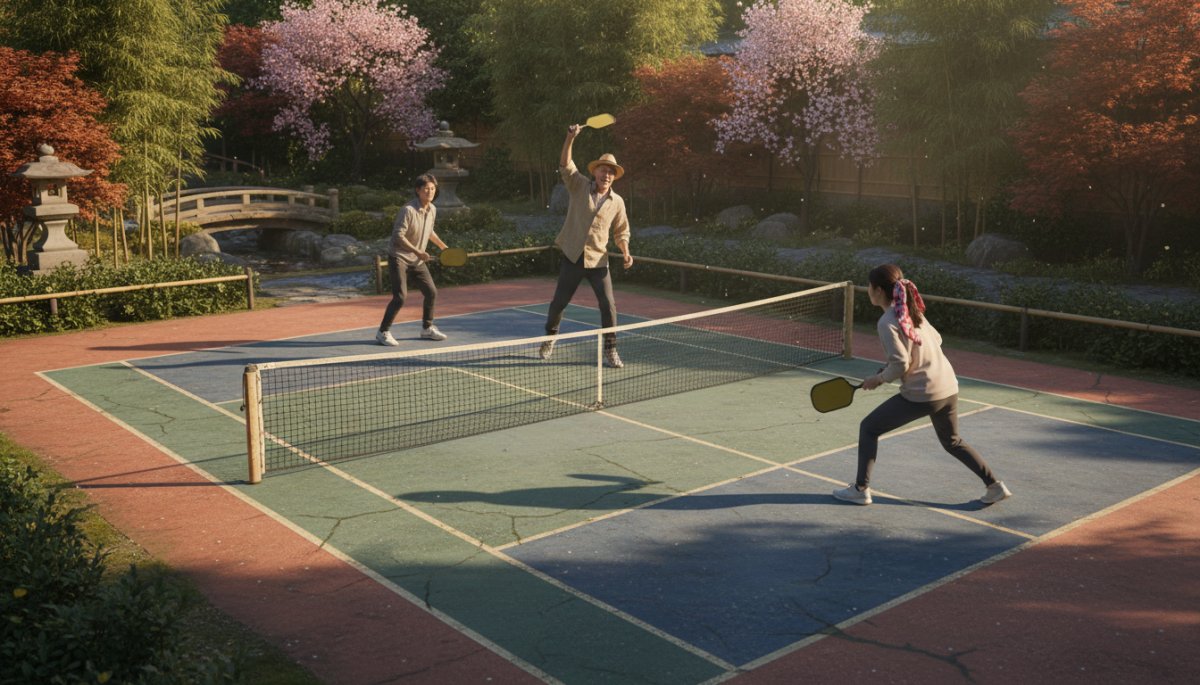
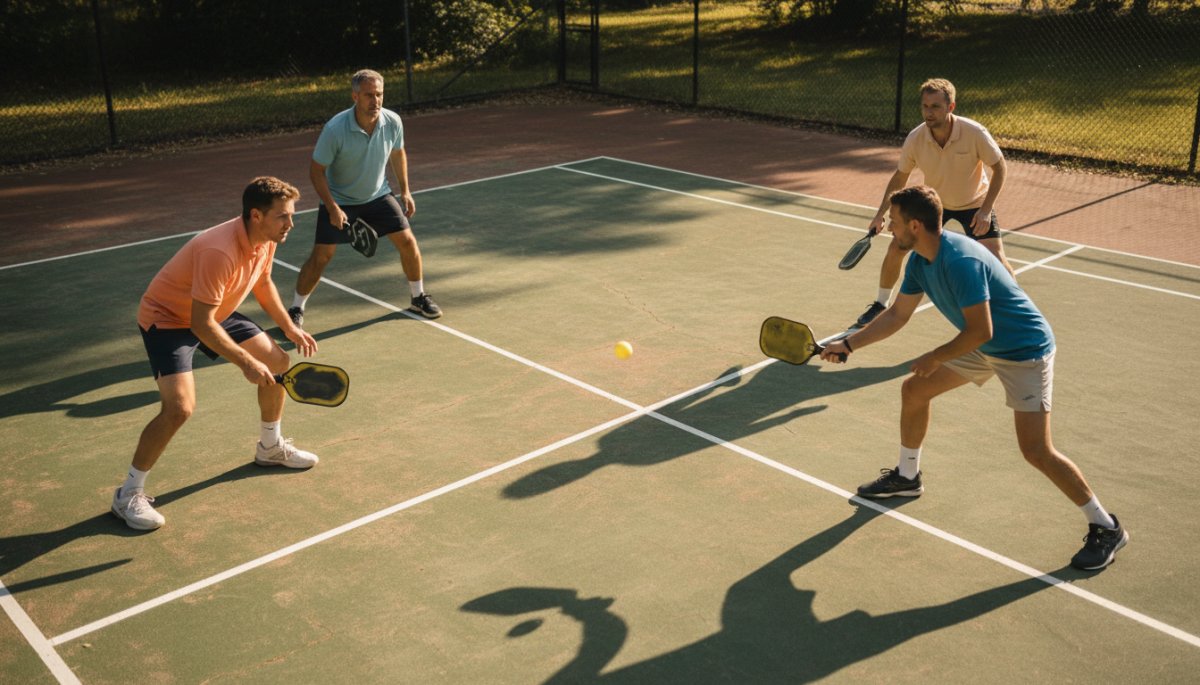
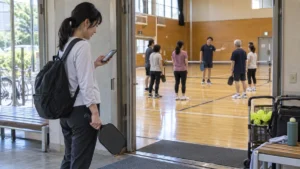
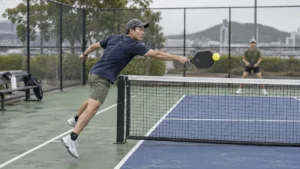
日本のピックルボールコートでのプレー風景

Japan's Playing Population and Growth Speed [Trend Table]

Japanese pickleball is growing at a surprising pace. First, let's look at the trend in the playing population.

Point in Time Estimated Playing Population
March 2024 About 6,000
March 2025 About 45,000 (roughly 5x year-on-year)
2026 Estimated about 330,000 (roughly 7x year-on-year)

Roughly 7x Rapid Growth in One Year

The domestic playing population reached an estimated roughly 45,000 as of March 2025, expanding about 5x in just one year.

The momentum didn't wane after that either: a 2026 market survey reports an estimated roughly 330,000, an expansion of about 7x from the previous year. This is an estimate based on things like the user base of domestic pickleball specialty media, accelerating mainly around Golden Week and the summer season. The shift is surely progressing from a "sport I'm curious about" to a "sport with players close by." The number of active clubs and groups keeps rising too, and trial sessions and tournaments are now held all across the country.

The Potential Playing Population Exceeds 10 Million

The size of the room to grow is also a feature of the Japanese market.

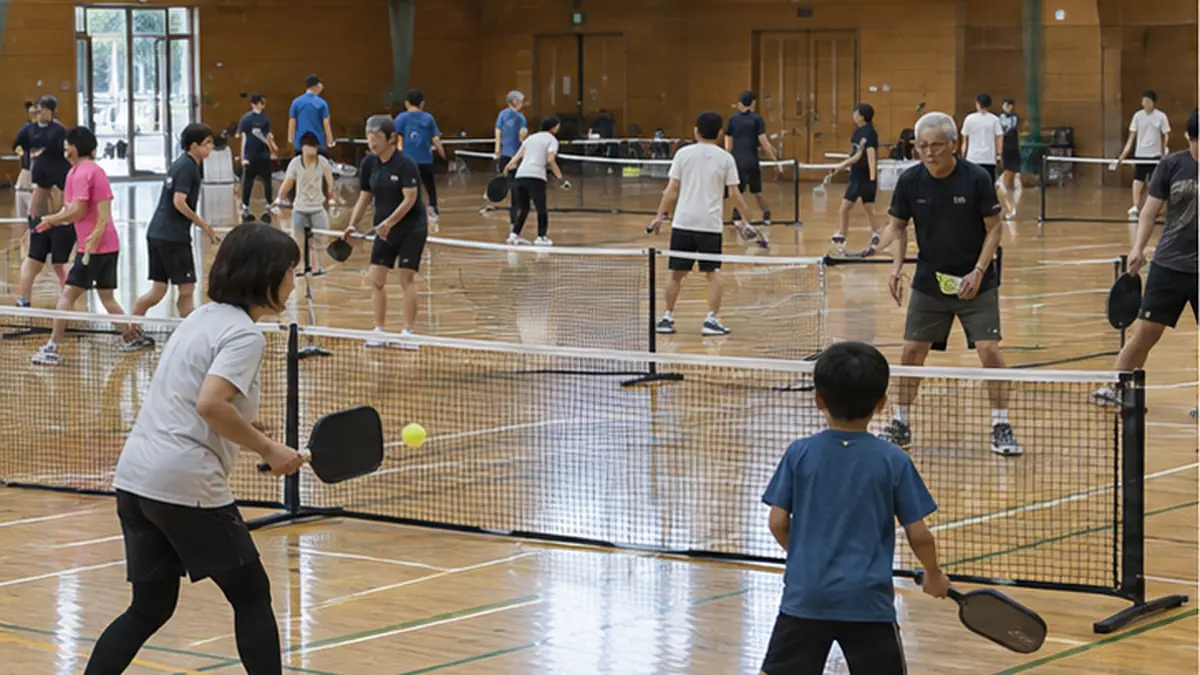
The potential pool—those who "know pickleball and want to start it if given the chance"—is estimated at about 11.89 million. At a scale dozens of times the current playing population, it shows there's large room for players to keep increasing as awareness widens. Currently, activity centers on public gymnasiums, and developing dedicated courts is seen as a challenge for promoting the sport.

Source Pickleball One, Inc. "Estimate of the Domestic Playing Population"Created from this and others

Spread by Region

There are regional differences in spread, and right now the Tokyo metropolitan area strongly leads the whole. We've organized the regional share based on access data.

Region Share (by access ratio) Features
Tokyo Metropolitan Area About 66.5% Trial sessions, tournaments and corporate circles are lively, centered on Tokyo
Kinki About 13.5% Local tournaments and corporate events are expanding, centered on Osaka
Tokai About 6.8% Communities are forming, centered on Nagoya

A wave of adoption led by the greater Tokyo area

The Kanto region commands an overwhelming share of attention.

In access data broken down by prefecture, the greater Tokyo area accounts for the majority at roughly 66.5%. Trial sessions and tournaments are held daily, centered on Tokyo, and companies are adopting the sport for circles and team activities, using it to promote communication among employees and support their health. In April 2025, the "VIP Indoor Pickleball Club" opened in Koto Ward—a dedicated facility run by a major indoor tennis school operator that brought a new development to the domestic scene.

Kinki and Tokai emerge as the second wave

Momentum is building in the Kansai and Chubu regions as well.

As the second wave, Kinki accounts for about 13.5% and Tokai about 6.8%, with company-sponsored events and regional tournaments expanding. Communities are forming mainly in major metropolitan areas such as Osaka and Nagoya, and the sport is steadily taking root as a next-generation activity in regional hub cities like Hokkaido, Fukuoka, Shizuoka, and Tochigi.

Source Pickleball One, Inc. "Estimate of the Domestic Playing Population"Created from

The Japan Pickleball Association and the moves of governing bodies

Several governing bodies support the sport's spread across Japan, and major organizational shifts are underway.

The role of the Japan Pickleball Association (JPA)

Founded in 2015, the Japan Pickleball Association (JPA) is the central organization responsible for standardizing and promoting the sport.

It has established a player registration system, setting up a framework that governs eligibility for sanctioned tournaments and inclusion in the Japan rankings. It accepts both individual and group registrations and can plan sanctioned courts and tournaments. It holds clinics and trial events nationwide, working to create an environment where even beginners can take part easily. For more on the organization, see theJPA overviewas well.

Moves toward a unified body

Another major organization is the Pickleball Japan Federation (PJF), a general incorporated foundation.

The PJF has more than 2,700 registered members and works with 52 partner organizations to host international tournaments and carry out promotional activities. Then, in January 2026, the JPA and PJF announced a basic agreement toward a merger. It is a move to unify the country's multiple governing bodies into one, and an important step for standardizing rules and tournament operations and for advancing international coordination. The consolidation of international governing bodies is also a key point in discussions about making pickleball an Olympic sport, so the domestic unification is in line with that trend.

Source PR TIMES, "JPA and PJF Announce Basic Agreement Toward Merger"(January 2026) and other sources

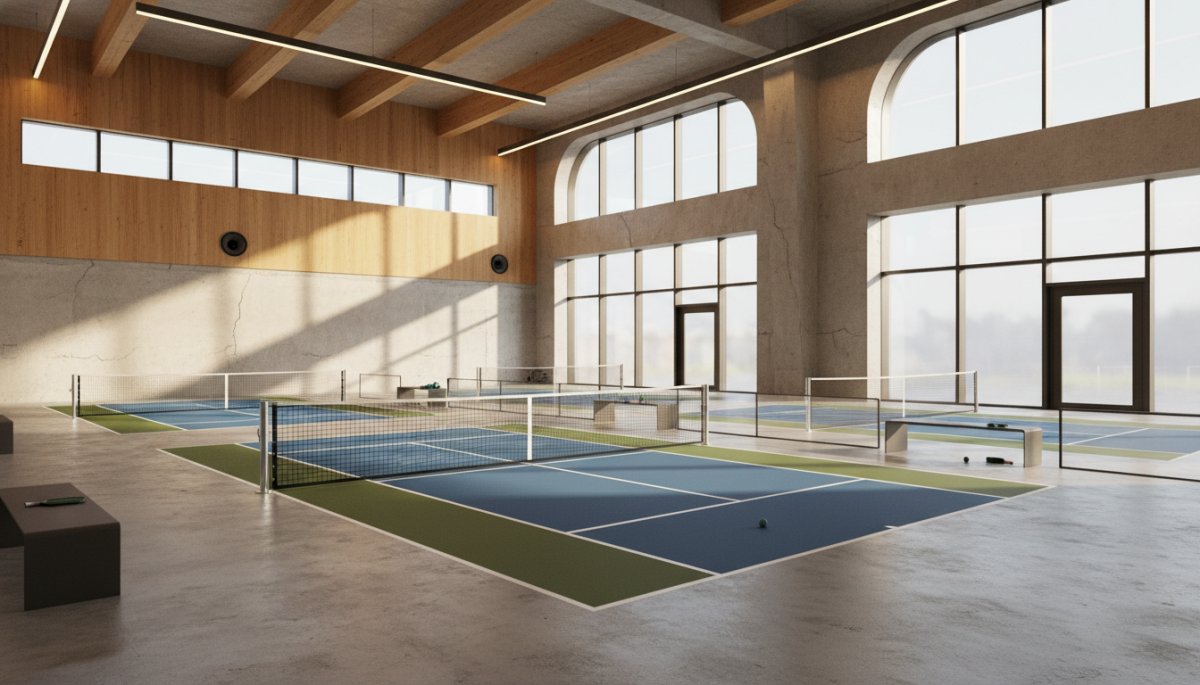
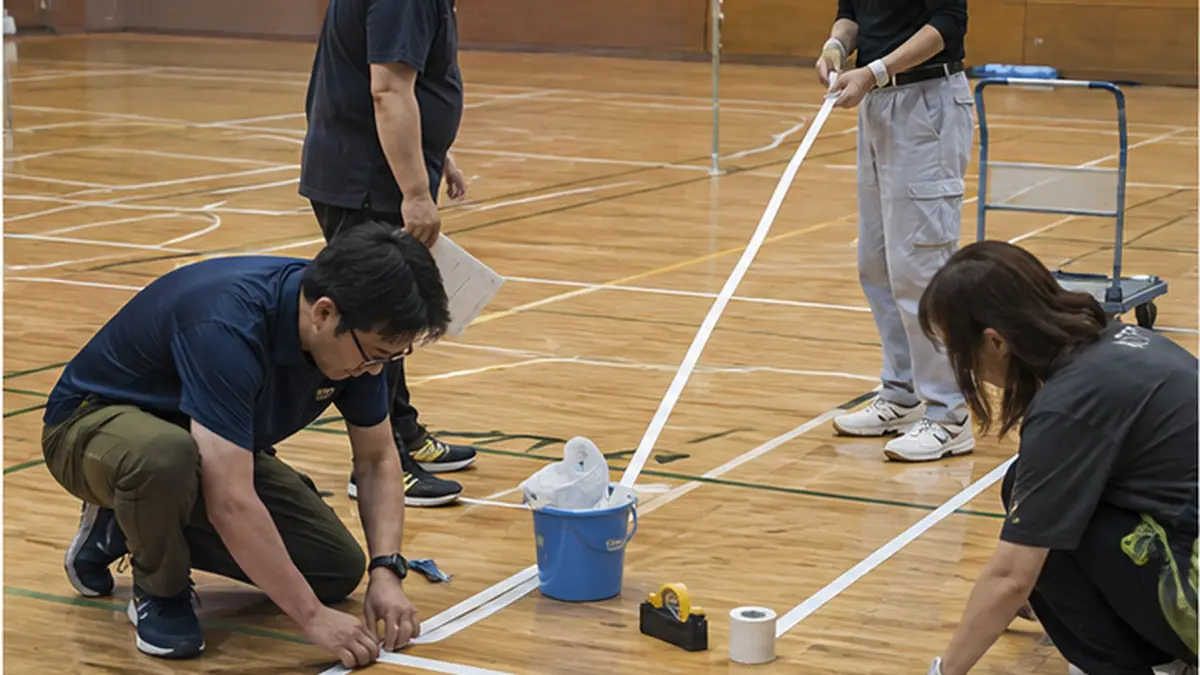
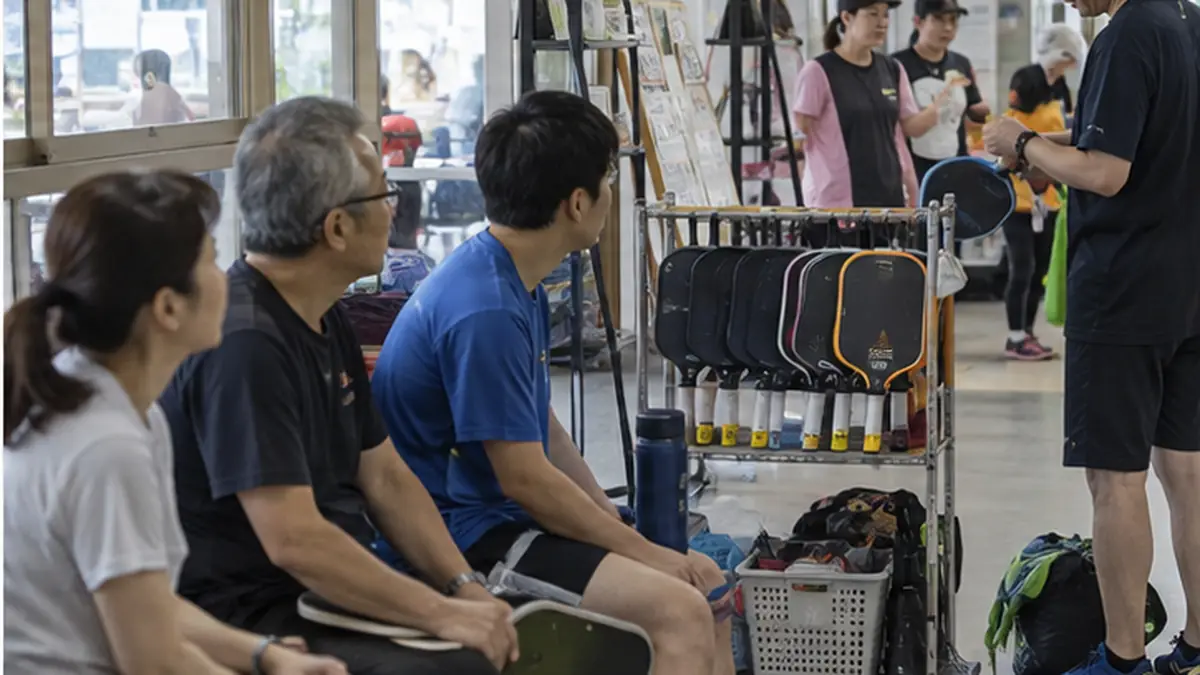
東京のインドアピックルボール施設

Expansion of dedicated facilities and what comes next

Moves to resolve the shortage of facilities—the bottleneck for the sport's spread—are also gaining real momentum.

The Picklr, the largest U.S. operator, enters Japan

Major international companies are also eyeing the Japanese market.

The Picklr, which operates numerous facilities in the U.S. and holds franchise agreements for roughly 400 locations worldwide, has announced its entry into Japan. A domestic holding company has acquired the exclusive master franchise license and plans to develop 20 indoor facilities nationwide over the next five years. Targeting the greater Tokyo area, Hokkaido, Miyagi, the Chukyo area, the Hanshin area, Hiroshima, Fukuoka, Okinawa, Karuizawa, Hakuba, and other locations, it is considering sites tailored to local needs, including dedicated sports facilities, commercial complexes, and office buildings.

Conversion of tennis facilities is also underway

Making effective use of existing facilities is also key to expanding capacity.

Because about four pickleball courts fit into the space of a single tennis court, the sport can be rolled out efficiently even in urban areas. Courts are being built by making use of vacant spaces, parking lots, rooftops, and existing sports facilities. The aforementioned VIP Indoor Pickleball Club offers both a school format and a rental court format, and has succeeded in building a viable revenue model.

Source Nihon Pickleball Holdings Inc., "The Picklr Enters Japan"(2025)

Differences from the U.S. and Japan's own path

In Japan, where the cultural context differs, the sport may develop along a different path than in the U.S.

In the U.S., SFIA's tally counted about 24.3 million participants in 2025, while a separate survey (APP) that includes anyone who played even once a year estimated about 48.3 million players. In 2023 it was hailed as the "fastest-growing sport," and it has taken hold as a key social activity in retirement communities, especially among those aged 50 and older. Several pro tours have emerged, and prize money and investment capital are flowing in.

In Japan, by contrast, its suitability for an aging society is drawing particular attention. Because the intensity is easy to adjust and the risk of injury is low, it is seen as a sport that can help extend healthy life expectancy. A growing number of companies are also adopting it as a tool for team building and health management. Beyond that, a playing style that draws on the Japanese traits of meticulousness and strategic thinking may take shape.dinkandThe third-shot dropand other delicate techniques could be said to suit the characteristics of Japanese players.

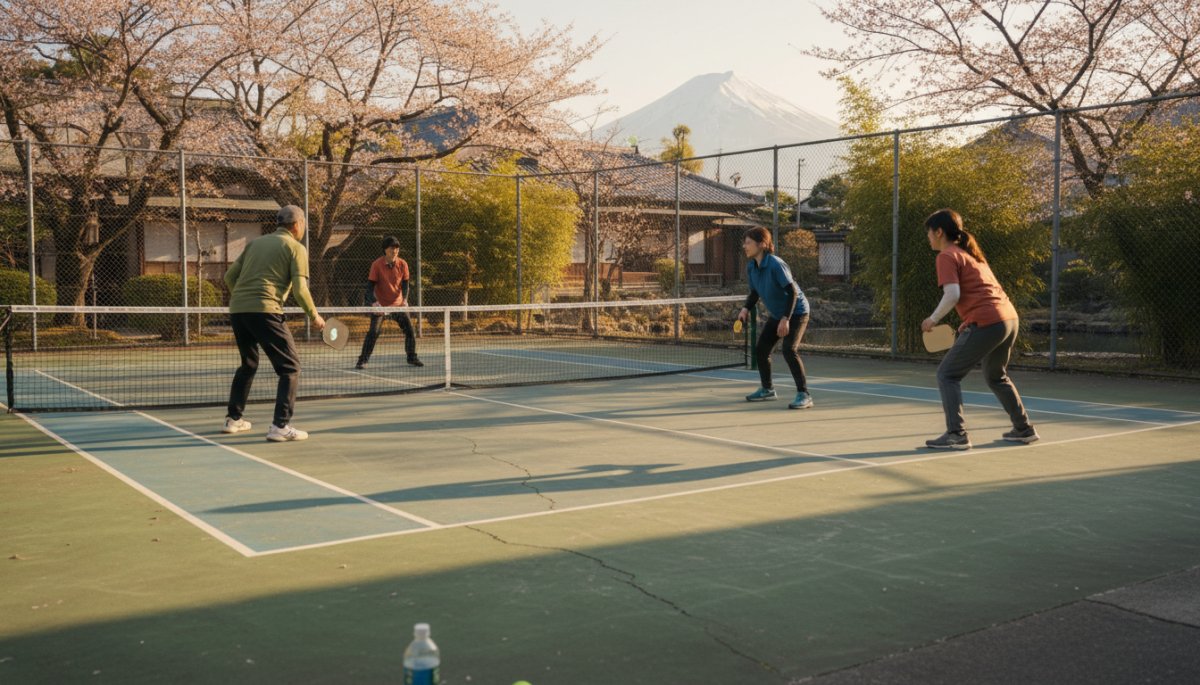
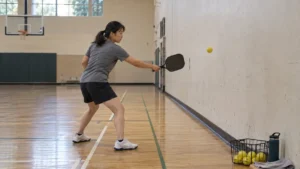
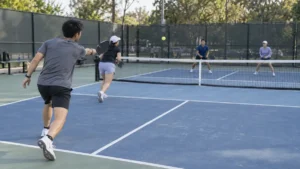
日本人プレイヤーの戦略的なプレー

Growth outlook and challenges ahead

Outlook for market growth

The global market continues to expand rapidly.

The global market size as of 2023 is estimated at roughly $1.5–1.9 billion, and it is projected to grow to a scale of several billion dollars by 2033. With a compound annual growth rate in the low double digits, it is expected to see extremely high growth even within the sports market. The Japanese market is still in its infancy, but it holds significant growth potential if it draws on the successful U.S. model. As the number of players grows, the entry of sports brands and the expansion of equipment distribution are also expected to advance. We cover the market's future in more detail in themarket forecast articleas well.

The challenge of a shortage of dedicated courts

The biggest bottleneck for the sport's spread is the shortage of facilities.

At present, activity is centered on public gymnasiums, and the development of dedicated courts is an urgent task. It is drawing attention as a new business opportunity for fitness clubs, tennis clubs and schools, and leisure and resort facilities. Cooperation with local governments is also key: the sport holds the potential to create a new lifestyle—serving as a hub that fosters community "places to belong," exercise habits, and cross-generational exchange, as well as a venue for drawing crowds and socializing at commercial complexes and office buildings.

The future pickleball can bring to Japan

This sport holds value that goes beyond mere recreation.

Promoting cross-generational exchange, extending healthy life expectancy, and revitalizing local communities—pickleball holds the potential to achieve all of these at once. It is one of the few sports grandparents and grandchildren can enjoy on the same court, and it can also be an occasion to strengthen family bonds. For companies, it can serve as a means of promoting employee health and building teams; for local communities, as a place where multiple generations gather and mingle—making it a possible answer to the challenges Japan faces.

Over the coming years, as the consolidation of organizations and the expansion of dedicated facilities progress, Japan's pickleball scene is likely to change significantly. More dedicated facilities, the development of pro players, and the hosting of international tournaments. And above all, more people are expected to discover the fun of this sport and make it part of their daily lives.

ピックルボールタイムス編集部
Editor's Note

Japan's playing population is growing at a pace of several times over in a single year, but the biggest keys right now are the "number of dedicated courts" and the "unification of organizations." In that sense, the 2026 merger agreement between the JPA and PJF is a major step forward. Following these two developments, rather than the player-count figures, reveals just how firmly pickleball will take root in Japan.
FAQ

How large is Japan's pickleball playing population?

It is growing rapidly. As of March 2025 it was estimated at about 45,000 people (roughly five times the previous year), but a 2026 market survey estimated it at about 330,000—roughly a sevenfold expansion from the year before. The latent group of people who "would like to start if given the chance" is estimated at about 11.89 million, so there is considered to be very large room for growth.

Which regions are pickleball most active in within Japan?

The greater Tokyo area is overwhelming, accounting for about 66.5% of the total in access data. It is followed by Kinki at about 13.5% and Tokai at about 6.8%, with communities spreading mainly around Osaka and Nagoya. The sport is also gaining ground in regional hub cities such as Hokkaido and Fukuoka.

What is the situation with pickleball's governing bodies in Japan?

The main bodies are the Japan Pickleball Association (JPA), founded in 2015, and the Pickleball Japan Federation (PJF), a general incorporated foundation. In January 2026, the two organizations announced a basic agreement toward a merger. It is regarded as an important step for standardizing rules and tournament operations and for advancing international coordination.

Are dedicated facilities increasing in Japan too?

Yes. In April 2025, the VIP Indoor Pickleball Club opened in Koto Ward, and the major U.S. operator The Picklr also announced its entry into Japan, planning to develop 20 indoor facilities nationwide over the next five years. Because about four courts can be set up in the space of one tennis court, the conversion of existing facilities is also progressing.

Summary: Japan's rapidly growing pickleball scene

Japan's pickleball is still in its infancy, yet it is growing at an astonishing pace.

The playing population expanded rapidly from about 45,000 in 2025 to an estimated 330,000 in 2026, and the latent group is estimated at over 10 million. Led by the greater Tokyo area and spreading into Kinki and Tokai, the groundwork is being laid on both the organizational and facility fronts—with the JPA–PJF merger agreement and The Picklr's entry, among others. The shortage of dedicated courts remains a challenge, but the sport's good fit for an aging society and its use by companies and communities are likely to drive further expansion.

Pickleball can be enjoyed across generations and connects to health and social exchange. If you're intrigued, start by finding a nearby trial session and try holding a paddle once. Its appeal is sure to surprise you.

Related Articles Worth Reading

  • Pickleball's popularity spreading worldwide | The background of the boom and its growth drivers
  • How will the pickleball market grow going forward? Analyzing its potential and market forecasts
  • The rapidly growing pickleball market | Why it became a growth sport, explained
  • What Is the Japan Pickleball Association (JPA)? Overview, Activities and How to Join
  • Will Pickleball Become an Olympic Sport? The Possibility and Future Trends Explained

Related Articles

Gear ReviewsThe Complete Gamma Sports Paddle Guide | 5 Points for Choosing2026.03.30›BasicsA 3-Stage Drill to Steady Your Pickleball Serve2026.03.30›Gear ReviewsThe Onix Graphite Paddle Explained | A Value Staple for Beginners2026.03.30›Gear ReviewsThe Head Radical Pro Explained in Depth | A Serious Paddle From a Tennis Heavyweight2026.03.30›PaddlesComparing Pickleball Paddle Core Materials | Polymer, Nomex and Aluminum2026.03.30›How-ToHow to Replace Pickleball Grip Tape | Choosing the Material and the Wrap2026.03.30›
Courts Trends Health & Fitness Basics Overseas
2025 United States Courts Trends Pro Players Ball Beginner Injury Info Japan
Let's share this post !
  • Copied the URL !
  • Copied the URL !
  • Does pickleball require stamina? Explaining the exercise intensity and physical abilities needed
  • Where Can You Play Pickleball in Osaka? Court Info for the Kansai Region

Author of this article

小島 怜's avatar Rei Kojima

I'm a pickleball enthusiast in my third year living in Vietnam. In high school I was on the badminton team, spending every day chasing the shuttle. Now, amid the buzz of Ho Chi Minh City, I'm fully immersed in the speedy volleys my badminton background enables and the strategic mind games unique to pickleball. I'll casually share the real playing scene in Vietnam—local court info and improvement tips that only a former badminton player would know!

Related Articles

  • The Complete Gamma Sports Paddle Guide | 5 Points for Choosing
    March 30, 2026
  • A 3-Stage Drill to Steady Your Pickleball Serve
    March 30, 2026
  • The Onix Graphite Paddle Explained | A Value Staple for Beginners
    March 30, 2026
  • The Head Radical Pro Explained in Depth | A Serious Paddle From a Tennis Heavyweight
    March 30, 2026
  • Comparing Pickleball Paddle Core Materials | Polymer, Nomex and Aluminum
    March 30, 2026
  • How to Replace Pickleball Grip Tape | Choosing the Material and the Wrap
    March 30, 2026
  • Heavy Paddle vs. Light Paddle | How Weight Affects Your Hitting Style
    March 30, 2026
  • How to Choose a Pickleball | A Thorough Indoor vs. Outdoor Comparison
    March 30, 2026

Latest Articles

  • A 3-Stage Drill to Steady Your Pickleball Serve
  • The Complete Gamma Sports Paddle Guide | 5 Points for Choosing
  • The Head Radical Pro Explained in Depth | A Serious Paddle From a Tennis Heavyweight
  • The Onix Graphite Paddle Explained | A Value Staple for Beginners
  • Comparing Pickleball Paddle Core Materials | Polymer, Nomex and Aluminum

Categories

  • Gear Reviews
  • Courts
  • Columns
  • Trends
  • News
  • How-To
  • Paddles
  • Brands
  • Vietnam
  • Health & Fitness
  • Basics
  • Tournaments
  • Technique & Improvement
  • Overseas
  • Practice
Popular articles
  • The Complete Guide to Pickleball Facilities in Kanagawa | A List of Places to Play in the Prefecture
  • Where Can You Play Pickleball in Tokyo? A Look at Courts in the City
  • Where Can You Play Pickleball in Shizuoka? A Look at Courts and Sports Facilities in the Prefecture
  • Where Can You Play Pickleball in Chiba? A Look at Playable Locations in the Prefecture
  • A Beginner's Guide to Pickleball | The First Gear to Get and How to Choose It
ピックルタイムス

One of the largest pickleball specialist media readable in Japanese. We deliver firsthand information from two bases: Japan and Vietnam.

Find Pickleball

  • Find a Court
  • Tournament Info
  • Event Info

About Pickleball

  • Paddle Info
  • Brand Info
  • Player Info
  • Columns
  • Latest News

About Our Service

  • Pickleball in Vietnam
  • About Us
  • Contact Us
  • Privacy Policy
  • top
  • About Us
  • Basics
  • Paddles
  • Practice
  • Brands
  • Vietnam
  • Trends
  • Courts
  • Overseas
  • All Venues
  • All Tournaments
  • All Events
  • All Player Directory
  • All Brands
  • All Paddles
  • Contact Form
  • Privacy Policy

© 2026 PICKLE TIMES | Operated by our Ho Chi Minh City-based editorial team

  • Menu
  • Home
  • Courts
  • Vietnam
  • Articles
  • Search
TOC
Popular Searches Ho Chi Minh City Indoor Paddles Hanoi
Pickle Times
Find a Court Vietnam Pickle Articles Tournaments & Events

Directory

Player Directory Paddle Directory Brands
Find a Court ⚲
Home Courts Vietnam Articles Search
English
日本語