この記事の要点
- カーボンパドルは欲しいけれど、大手メーカーのハイエンド機は3万円超で手が出ない——そんなときに名前が挙がるのが「 Vatic Pro Prism Flash(ヴァティック・プロ プリズム フラッシュ) 」です。
- この記事では、Prism Flashの技術仕様と高品質を支える設計、打感・コントロールの傾向、PrismシリーズのV7・Bloomとの違い、他ブランドと比べた価格帯での立ち位置、購入前のチェックポイントまでを、2026年6月時点の情報で解説します。
- Vatic Proは、上位モデル相当の技術を手頃な価格で提供することで知られるアメリカ発のブランドです。

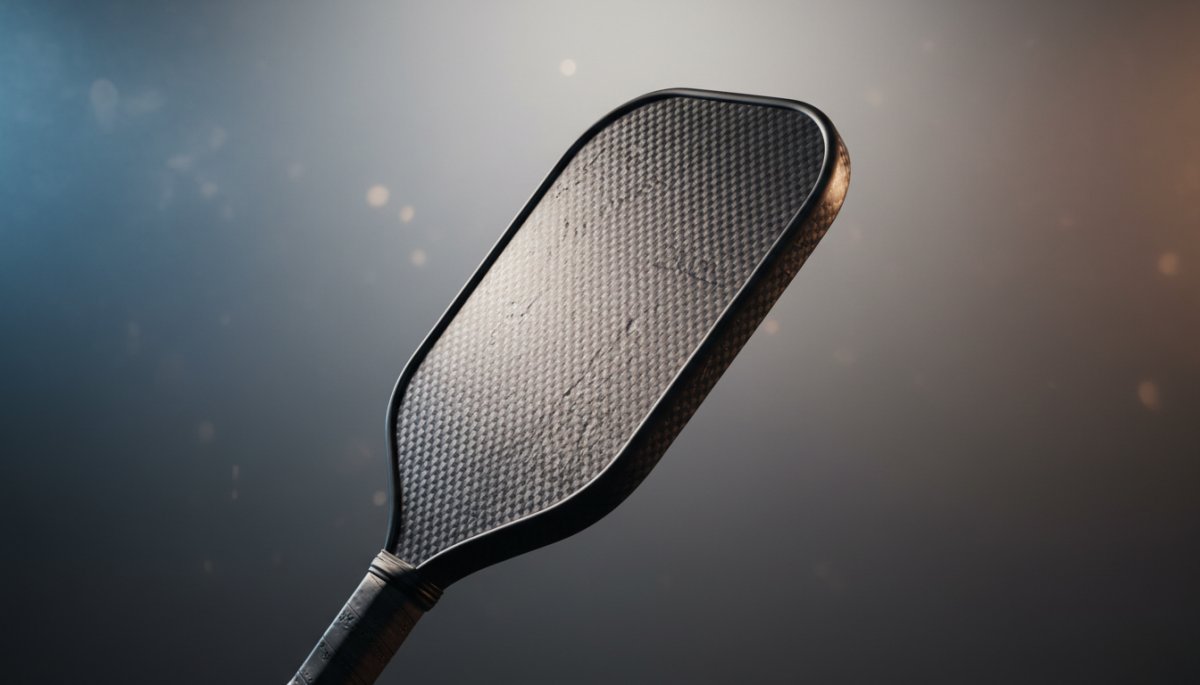
You want a carbon paddle, but the major makers' high-end models top 30,000 yen and are out of reach—that's when the name that comes up isVatic Pro Prism Flash. Because it adopts upper-class construction like a Raw Carbon surface and thermoforming while being available at an affordable price band, it's drawing attention as a "first serious carbon paddle" candidate for beginners to intermediate players.
This article explains, with information as of June 2026, the Prism Flash's technical specs and the design that underpins its high quality, its feel and control tendencies, how it differs from the Prism series' V7 and Bloom, where it stands by price band versus other brands, and the points to check before buying. We hope it serves as material for judging "whether it's okay to choose this as your first carbon paddle."

What is Vatic Pro? A value-oriented brand that spread by word of mouth
Vatic Proは、上位モデル相当の技術を手頃な価格で提供することで知られるアメリカ発のブランドです。ブランド名の公式な由来は、確認できる一次情報では明示されていません。大規模な広告やスポンサー契約に頼らず、口コミと性能で評価を広げてきたタイプのブランドで、アメリカのピックルボール施設では使用者をよく見かける定番ブランドの一つになっています。
Its hallmark is keeping the price down while adopting construction often used in the upper price band—thermoforming, foam injection at the edges, and a carbon surface. In Japan, purchasing is now possible through an authorized distributor, so the barrier to getting one has come down from before. For specifics on how to buy from Japan, seeA buying guide for Vatic Pro paddles.
The Prism Flash's technical specs [spec table]
The Prism Flash is a representative model of Vatic Pro's Prism series. Here are the main spec guidelines based on retailer and authorized distributor product information.
| Item | Details (as a guide from sales information) |
|---|---|
| Surface material | T700-class Raw Carbon (said to be Toray T700). Heat-compressed texture processing |
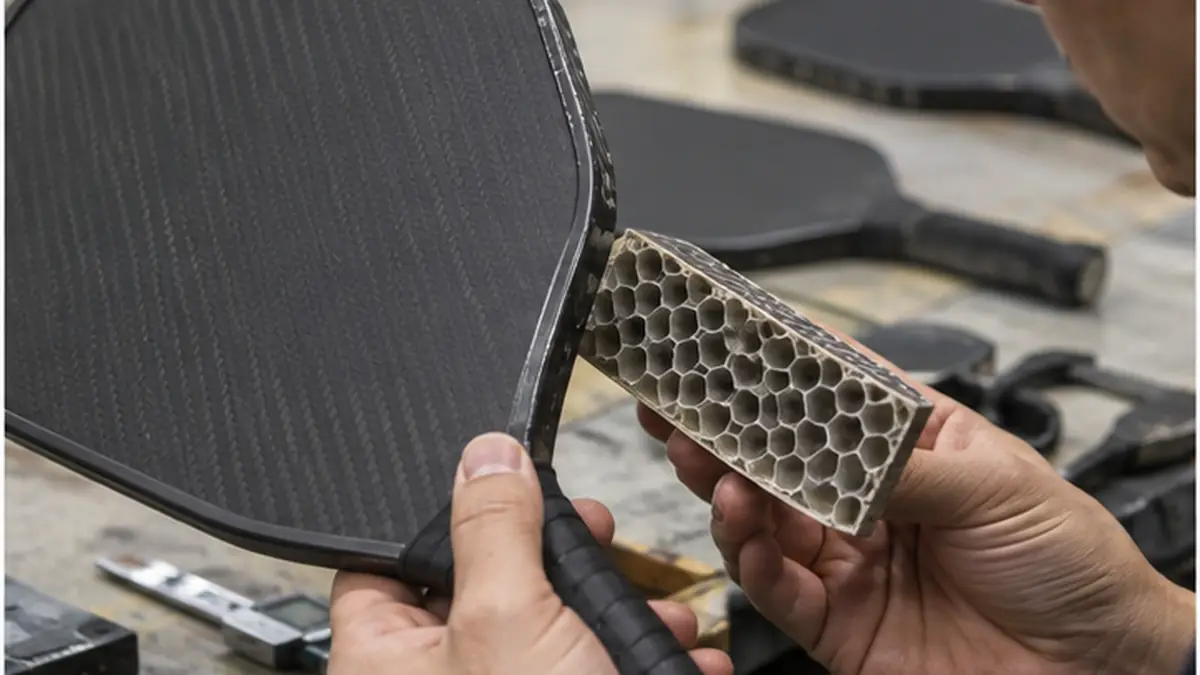
| Structure | Thermoforming + foam injection at the edges (unibody design) |
| Core | Polymer honeycomb. Two thicknesses: 16mm / 14mm |
| Weight | Approx. 224–232g (7.9–8.2oz, 16mm model) |
| Size | Overall length approx. 41.3cm × width approx. 19.6cm |
| Other | A shock-absorbing insert inside the handle, TPU edge guard |
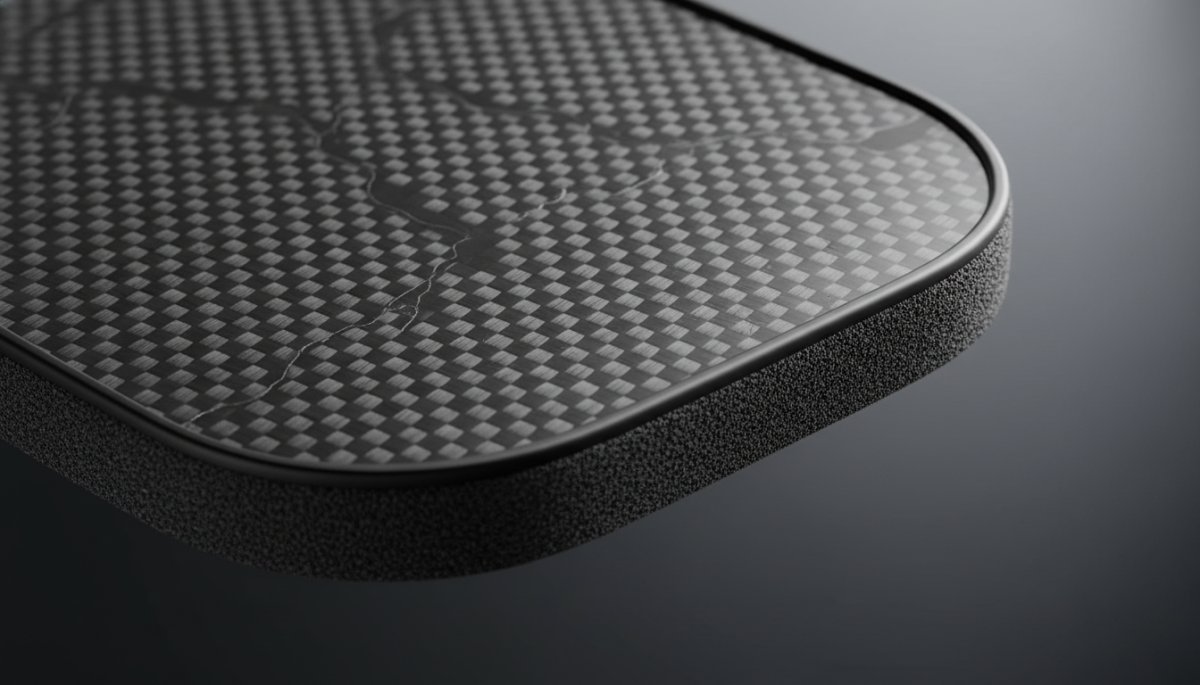
The Raw Carbon's characteristic surface roughness grips the ball easily, making it a construction well-suited to putting on topspin and slice. The edge foam injection widens the sweet spot and is billed as a design that leads to stable shots even on off-center hits. The weight of about 224–232g is standard to slightly light for a pickleball paddle, easy on the arm even in long rallies while still securing the minimum weight not to get pushed around by the ball. Specs can change by period and lot, so check the latest information with the seller when buying.
A deeper look at the technology used: what works in play
The effect of thermoforming
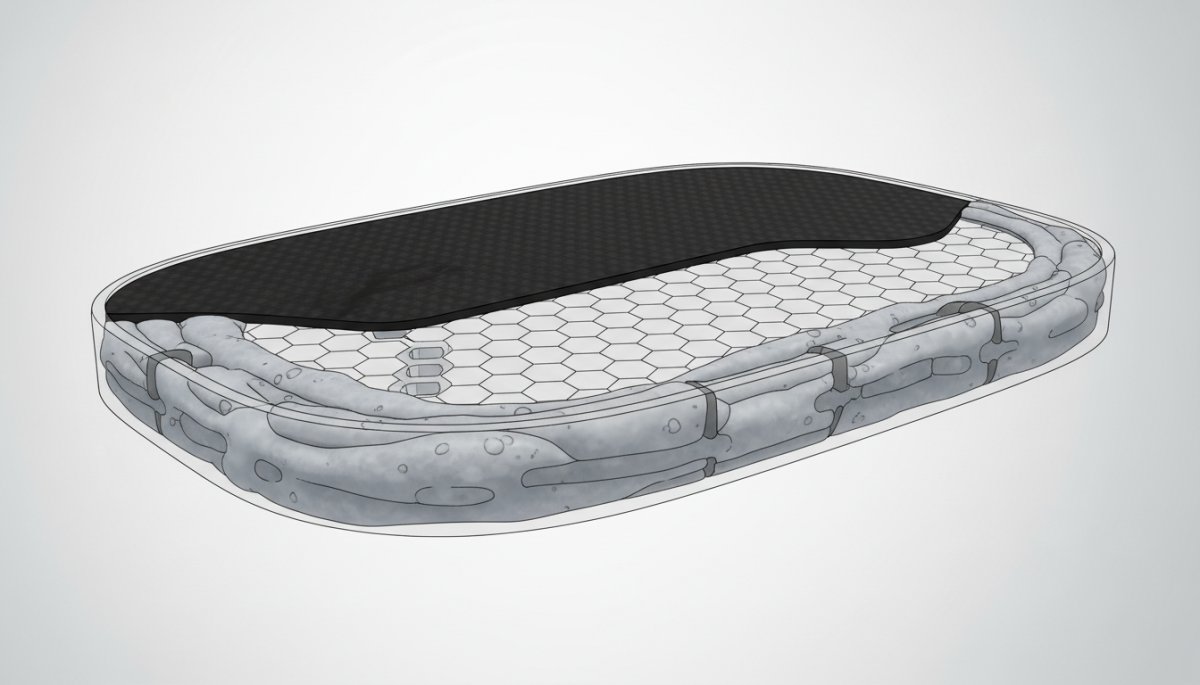
Thermoforming is a manufacturing method that molds the entire paddle as one piece with heat and pressure. Because it results in a structure with few seams, there's little loss in force transmission at contact, and the rigidity of the whole face tends to be uniform. As a result, the "stall" you feel when you miss the sweet spot is smaller, and the ball's flight is less disrupted even if your contact point wavers a bit. Adopting this method—which until a few years ago was the exclusive province of the upper price band—at this price band is a strength of the Prism series.
Edge foam injection and stable feel
Foam injection at the edges is a technology that tunes the rigidity and weight distribution of the face's outer edge. Reinforcing the outer edge stabilizes how the face flexes and softens vibration on off-center hits. Combined with the shock-absorbing insert inside the handle, it's a construction that contributes to a mild feel with less jolt to the elbow and wrist.
T700 Raw Carbon and its relationship to spin
The surface's T700-class carbon (a grade said to be Toray T700) is known as a material with an excellent balance of strength and elasticity. The Raw Carbon finish is processing that leaves fine roughness on the surface, lengthening the time the ball's surface is "gripped," so it's easier to gain spin from the same swing. It's a surface well-matched to players who make heavy use of drives sunk with topspin or slice-type returns. Since the roughness wears down with use, keeping upeveryday maintenanceis also important to preserving spin performance.
Feel and play impression: a control-leaning design
Easy to hit dinks and drops
The Prism Flash's hallmark is high control performance. Because it's designed with suppressed rebound,dinkand "placement" shots like the third-shot drop are easy to hit, making it well-suited to learning the foundational skills of building a rally. Fewer errors and rallies that keep going is an advantage for practice efficiency too.
This control-leaning performance works especially well in the cat-and-mouse at the net. Resets that catch your opponent's fast ball on the face and kill its momentum, dinks that put spin on and sink into the opponent's court—it makes "not going for the outright winner" building easy. The soft feel of the 16mm thickness is dependable on the functional side that requires this kind of delicate touch. Conversely, it's a paddle where you need to generate the power of your attack yourself through swing speed and quality of contact; the sense of making the ball with technique rather than leaving it to the gear is one reason it suits the entry-to-intermediate period.
It may feel lacking for power-oriented players
On the other hand, because of the control-leaning design, attack-type players who push through with smashes and drives may feel a lack of power. For someone considering the steps of "solidify the basics with a technique focus, then move to a more aggressive paddle," it's a rational choice as a first paddle.
Choosing between 16mm and 14mm
| 16mm | 14mm | |
|---|---|---|
| Forte | Stability, control, soft feel | Maneuverability, swing speed, pop |
| Who It Suits | First paddle / people who want to reduce errors | People focused on fast exchanges and handling |
For a first carbon paddle, starting with the miss-forgiving 16mm is the safe move. Once you're used to play and start wanting faster exchanges, consider switching to the 14mm or using both.
Trends in how it's rated in overseas reviews
When the Prism Flash is discussed in overseas reviews and communities, what often comes up is "high control performance for the price," "ease of handling on dinks and resets," and "honest follow-through." On the other hand, there's a fair number of comments that "power is modest" and "you need to generate the attack on the swing side," matching the design character laid out in this article. Since it's a model with a clear direction to its reputation, it's also easy to judge whether it suits your own play style.
Who it suits and who it doesn't
Given the features so far, the Prism Flash suits players like these:
- Beginners to intermediate players who want to solidify control-type fundamentals like the dink and drop
- People who want to try their first serious carbon paddle while keeping the price down
- Rally-oriented players who want to compete with shot placement and building points
Conversely, for power types who want to prioritize the punch of a single smash above all, or advanced players already used to high-rebound high-end models, the modest-rebound design may feel lacking. In that case, it's a good idea to consider the same series' V7 or attack-type brands from other makers.

Differences between the Prism series' three shapes [comparison table]
Besides the Flash, the Prism series has two shapes, the V7 and Bloom. Here are the differences organized (figures are guidelines from sales information).
| Model | Features | Who It's Suited To |
|---|---|---|
| Prism Flash | A balanced type at overall length approx. 41.3cm × width approx. 19.6cm. Combines follow-through and stability | People who want to use it all-around / first paddle |
| Prism V7 | Has a substantial feel and emphasizes stability. A longer grip also handles two-handed shots | People who want stable power shots |
| Prism Bloom | A wide face with a large sweet spot. Emphasizes maneuverability | People who emphasize volley exchanges and reactions at the net |
If you're unsure, the middle-positionedFlash is the baseline choice. It's a series composition that makes it easy to expand to the stable V7 or the maneuverable Bloom once your play style takes shape. Note that beyond Prism, Vatic Pro also offers series like SOL. You can check the latest lineup with the authorized distributor.
Where it stands by price band versus other brands
If you're considering the Prism Flash, grasping where it sits versus makers in the same and upper price bands makes it easier to choose. In the category of carbon paddles in the 10,000-yen range, it competes with value-orientedrecommended entry paddles, but among them the Prism Flash stands a head above in quality by having "T700-class Raw Carbon + thermoforming"—construction originally used in upper models.
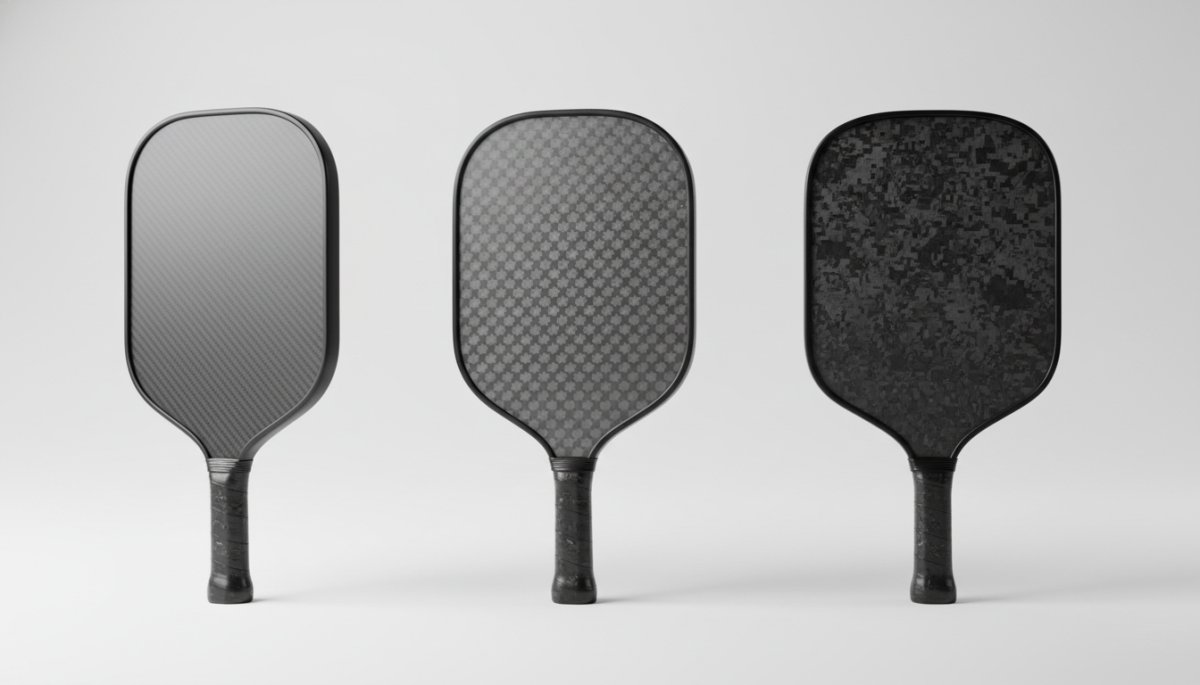
On the other hand, the flagships of upper brands like Selkirk, Six Zero, and JOOLA pursue the last few percent of performance with the latest core materials and proprietary surfaces, and their prices center on roughly the upper 20,000-yen range and up. The Prism Flash isn't a model that takes them head-on; it's more accurate to see it as adesign aimed at the segment of "a first serious carbon paddle on a reasonable budget."Its design is black-based and low on quirks, making it hard to dislike—another point that makes it easy to handle as an entry model.
In other words, for someone nervous about suddenly investing tens of thousands of yen in a high-end model, the Prism Flash is "a paddle to try the world of carbon paddles at low risk." Grasp the basics and your preferences here, then step up to an upper brand as needed—that flow makes for a low-waste way to choose.
Points to know before buying
In Japan you can buy it through an authorized distributor, and depending on the sales period there are sets that include a paddle case. Since the price changes with exchange rates and timing, check the authorized distributor's latest price before buying. Your buying options (domestic distributor, overseas official, overseas EC) are compared in detail atHow to buy Vatic Pro paddles from Japan.
If you're considering using it in tournaments, check before buying whether the model you'll use is on the USA Pickleball approval list. Approval status varies by model and timing (an explanation of approved paddles)。

"Solidify the basics with a control type, then move to an attack type" is the royal road of paddle selection. The Prism Flash is an easy paddle to choose as the entry point.

FAQ
Is the Prism Flash easy for beginners to use?
Because it's a control type with modest rebound, basic shots like the dink and drop stabilize easily, making it well-suited as a first serious carbon paddle. However, you may feel it lacking for power play centered on the smash.
Should I choose 16mm or 14mm?
16mm if you emphasize stability and control; 14mm if you emphasize maneuverability and swing speed. The miss-forgiving 16mm is the safe pick for a first paddle, and once you start wanting faster exchanges, consider switching to the 14mm or using both.
Where can I buy it in Japan?
You can buy it through an authorized distributor, and depending on the sales period there are sets that include a paddle case. Since price and stock fluctuate with timing, check the latest information with the authorized distributor before buying.
Can I use it in tournaments?
Check before buying whether the model you'll use is on the USA Pickleball approval list. Since approval status varies by model and timing, checking the latest approval list is reassuring if you're considering tournament use.
Summary: the Prism Flash is a serious carbon entry paddle for "people who want to solidify the basics"
The Vatic Pro Prism Flash is a control-leaning paddle that lets you experience upper-class construction—T700-class Raw Carbon and thermoforming—at an affordable price band. It's easy to hit dinks and drops with and pairs well with learning foundational skills. Within the Prism series it's positioned as the balanced type, an easy pick for a first serious carbon paddle.
Power-oriented players may feel it lacking, so if you emphasize attack, consider it alongside a comparison with other series or brands. Weigh it against your own play style and choose a paddle you can stick with for a long time.
確認した一次情報
Related Articles Worth Reading
- 3 ways to buy Vatic Pro paddles from Japan: comparing authorized distributors and overseas online shopping
- The Best-Value Pickleball Paddle Selection Guide | Recommendations for Beginners
- A Thorough Comparison of Pickleball Paddle Core Materials | The Differences Between Polymer, Nomex and Aluminum
- The complete guide to the pickleball dink: how to hit it and how to practice
- ピックルボールパドルの公認ルールとは?USA Pickleball認証基準を解説
Related Articles