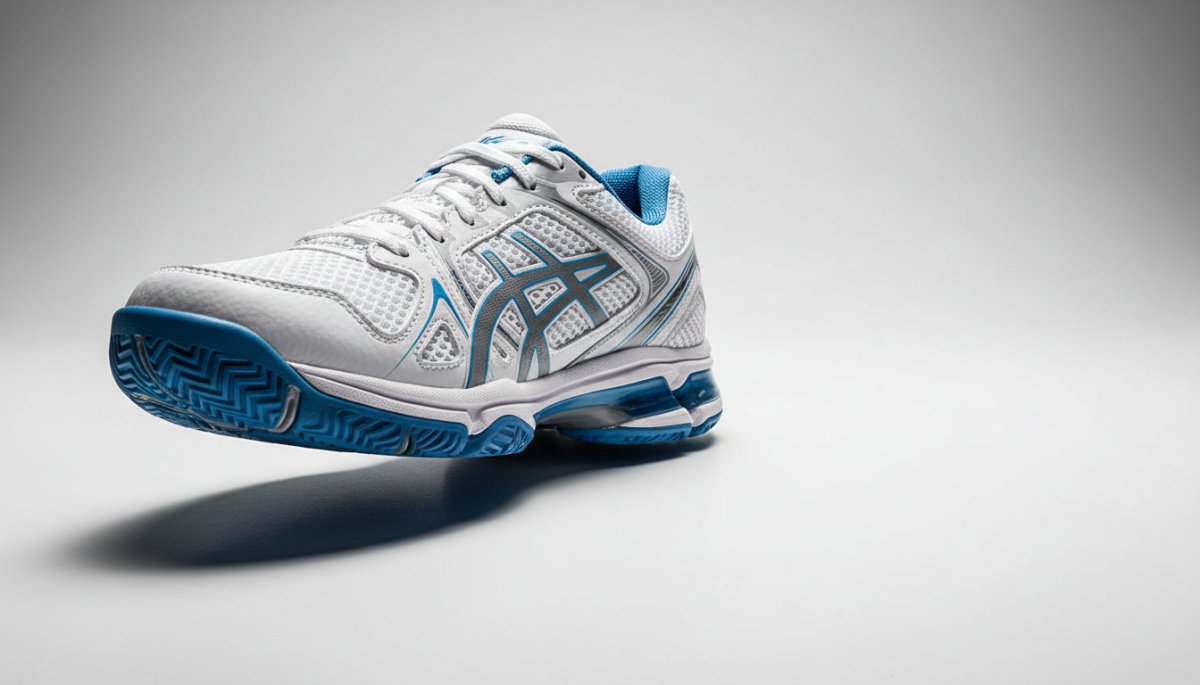
Kamito, a sports brand from Vietnam, offers not only paddles but also pickleball shoes. However, there is still little information in Japan, and many people are unsure "which size fits my foot" or "is my usual size fine."
This article organizes how to read Kamito's size notation, guidelines for choosing standard, wide, and high-instep fits, criteria for switching from other brands, and tips for buying online without failing—based on information as of June 2026. To state the conclusion first,use your usual size as a baseline, adjust in 0.5 cm increments according to your foot shape, and always check the official size chart before buyingis the shortcut to avoiding failure.
Kamito shoe sizing: the basic approach [At-a-glance table]
First, we organize guidelines for choosing by foot-shape type. The table below shows general tendencies only; ultimately, judge by the official size chart described later and your actual measurements.
| Foot-shape type | Choosing guideline |
|---|---|
| Standard width and instep | Use the same cm as your usual size as a baseline |
| Wide (equivalent to 3E/4E) | Consider 0.5 cm up. Check any excess length by trying them on |
| High instep | 0.5 cm up + check for instep pressure |
| Narrow or thin feet | As usual, or adjust with thick socks |
First, check the size notation
Shoe sizes use different notation systems depending on the brand and country of manufacture. Because Kamito is a Vietnamese brand, cm, EU, and US sizes may be used depending on the product. If you look only at "25.5" with a Japanese mindset and order, a size mismatch can occur when the notations aren't aligned. Before ordering, always check what unit the notation on that product page is in and its actual measurement (what foot length in cm it corresponds to).
How to choose for a standard foot shape
People with standard width and instep should start by choosing the same foot length (cm) as the sneakers or sports shoes they usually wear. Pickleball involves a lot of fine stop-and-go, and if there's nearly 1 cm of excess at the toe, it becomes hard to plant your feet. Conversely, too snug a fit makes your toes hit the front, so aiming for about 5–10 mm of room at the toe stabilizes stopping and pushing off.
Choosing a size for wide or high-instep feet
Even if the foot length fits, a poor fit in width or instep can cause pain or fatigue. Let's look at it by type.
For wide feet (equivalent to 3E/4E)
Since Kamito's shoes don't claim an extreme wide design, a realistic method for people who usually choose 3E/4E wide shoes is to go 0.5 cm up in foot length to ease the lateral tightness. However, going up a size leaves excess in foot length, so try them on to check that the heel doesn't slip and the toe isn't too roomy. If you can't try them on, choosing a shop that handles returns and exchanges gives peace of mind.
For a high instep
People with high insteps are also worth considering 0.5 cm up. Pickleball involves a lot of front-back and side-to-side cutting, and strong pressure on the instep tends to lead to instep pain, fatigue, or injury. Whether the model lets you fine-tune the instep fit with the laces is also a checkpoint when choosing.
Guidelines for switching from other brands [Comparison table]
Using the shoes you've been using as a baseline makes it easier to imagine Kamito's size. We've compiled guidelines from representative brands.
| Shoes you've been using | Guideline in Kamito |
|---|---|
| 4E wide design from Yonex, etc. | The same foot length tends to feel snug. Consider 0.5 cm up |
| Tennis shoes from Mizuno, etc. (standard width) | A close feel. Start with the same foot length |
| Slim design from Western brands | The width is close. The same foot length is often fine |
Tennis and badminton shoes share many elements with pickleball, such as stopping performance and lateral stability, making them an easy baseline for switching. On the other hand, Western sports brands often design a narrower foot width, which can feel snug for wide Japanese feet. That said, this is an overall tendency, and the actual width varies by model too. Kamito is said to lean toward standard width, but published data is limited, so ultimately confirm with your actual measurements and the size chart. For those whom Western brands didn't fit, it can be one option to compare against.
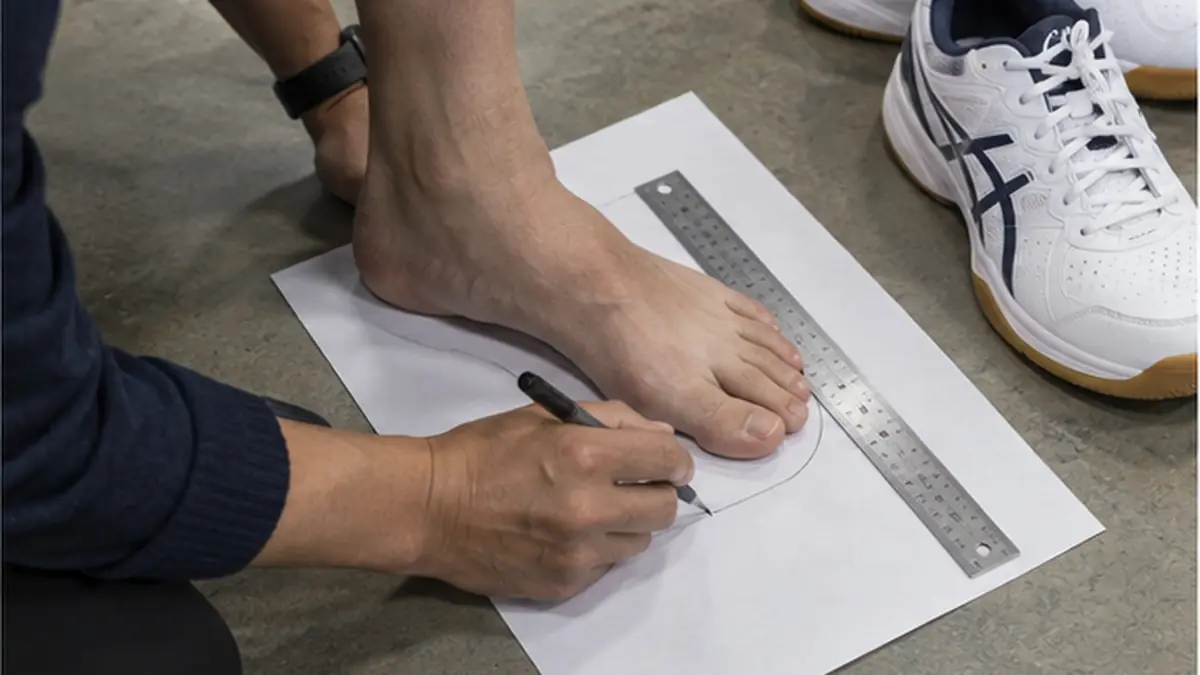
The size measurement procedure
To avoid failure when buying online, measure your feet accurately before ordering. The procedure is simple.
| Step | Details |
|---|---|
| ① Measure in the evening or later | Feet change by a few mm from daytime swelling, so measure in the evening or night when they are largest |
| ② Measure foot length | Measure the length (cm) from the heel to the tip of the longest toe, for both feet |
| ③ Measure foot width too | Measure the widest circumference at the base of the big and little toes to gauge whether you have wide feet |
| ④ Go by the larger foot | If there's a difference between left and right, choose the size based on the larger foot |
Grasping not only foot length but also foot width and instep height improves accuracy when cross-referencing the size chart. Everyone has a left-right difference, so it's a hard rule to always measure both feet and go by the larger one.
Tips for buying online without failing
Because Kamito has limited physical stores in Japan, purchases tend to be mainly online. Since you can't try them on, keeping the following three points in mind reduces the risk.
- Check the product page's size notation (cm/EU/US) and the corresponding foot length
- Check the return/exchange policy in advance and choose a shop that can handle a size mismatch
- Check reviews from people who actually bought them for a "runs large / runs small" tendency
Specialty stores that handle Asian brands may also offer consultation tailored to your foot shape. If you have a chance to try them on, actually putting your foot in before buying is the most reliable. We've also compiled the basic thinking on choosing shoes inHow to choose pickleball shoes.
The durability and care of Kamito shoes
Kamito's shoes are built for use in hot, humid environments and on hard courts, with attention to breathability and durability. They're designed to be easy to use on Japan's indoor and outdoor courts, but daily care is essential to keep using them comfortably for a long time.
After use, wipe off dirt and dry them in the shade in a well-ventilated place. Removing the insole to dry helps curb odor and deterioration. Sole wear directly leads to reduced grip, so if you feel it's hard to stop, that's a sign to replace them.

Overlooking the size notation unit (cm/EU/US) shifts you off by a full size. Before ordering, be sure to check just these two points: the "unit of the notation" and the "corresponding foot length."
FAQ
Is it okay to choose Kamito shoes by my usual size?
If your width and instep are standard, choosing the same foot length (cm) as the sports shoes you usually wear is a starting point. However, whether the size notation is cm, EU, or US differs by product, so always check the corresponding foot length before ordering.
How should I choose for wide or high-instep feet?
People who usually wear 3E/4E wide shoes or have high insteps can go 0.5 cm up in foot length to ease lateral tightness. However, this is a stopgap adjustment, and ideally you should try them on to check that the heel doesn't slip and the toe isn't too roomy.
What are the guidelines for switching from other brands?
From 4E wide such as Yonex, go 0.5 cm up; from standard-width tennis shoes such as Mizuno, the same foot length is the guideline. Western brands tend to have narrower foot widths, but the actual width varies by model too.
What are the tips for buying online without failing?
Three things are effective: checking the size notation unit and corresponding foot length, choosing a shop that handles returns and exchanges, and looking at buyer reviews for a runs-large / runs-small tendency. Measure your feet in the evening or later and go by the larger of the two.
Summary: fine-tune from your usual size plus foot shape
The basic way to choose Kamito pickleball shoes is to use your usual size as a baseline and consider going 0.5 cm up for wide or high-instep feet. Because they lean toward a standard-width design, they can also be a candidate for people whom Western brands didn't fit.
The key to avoiding failure is to check the size notation unit and corresponding foot length before ordering, and to measure your feet accurately. If you have an environment where you can try them on, put your foot in once; if that's difficult, choose a shop that handles returns and exchanges. Once your footwear is settled, stopping and pushing off on the court become stable, and the quality of your play improves too.
Related Articles Worth Reading
- How to choose pickleball shoes without failing even as a first-timer | Tips for comfortable play
- A Beginner's Guide to Pickleball | The First Gear to Get and How to Choose It
- The Detailed Kamito Pickleball Paddle Guide | Performance, Technology and How to Choose
📎 Reference: Kamito official site
Related Articles