What is pickleball? The new sport the world is watching
Do you know the sport with the slightly curious name of pickleball?
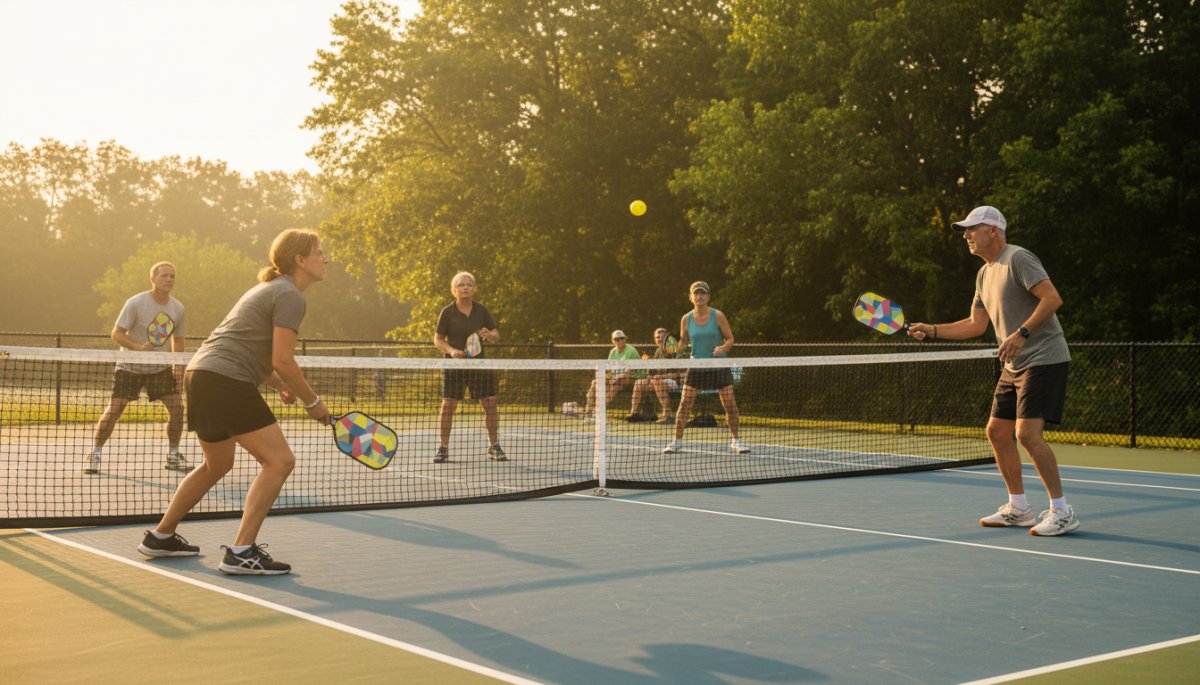
It is a novel racket sport blending elements of tennis, badminton, and table tennis, gaining explosive popularity worldwide, centered on the United States. Born in 1965 on Bainbridge Island, Washington, in the United States, this sport was originally devised on the spot by a family to entertain bored children. A game that started with whatever gear was on hand has, over half a century, become a global movement.
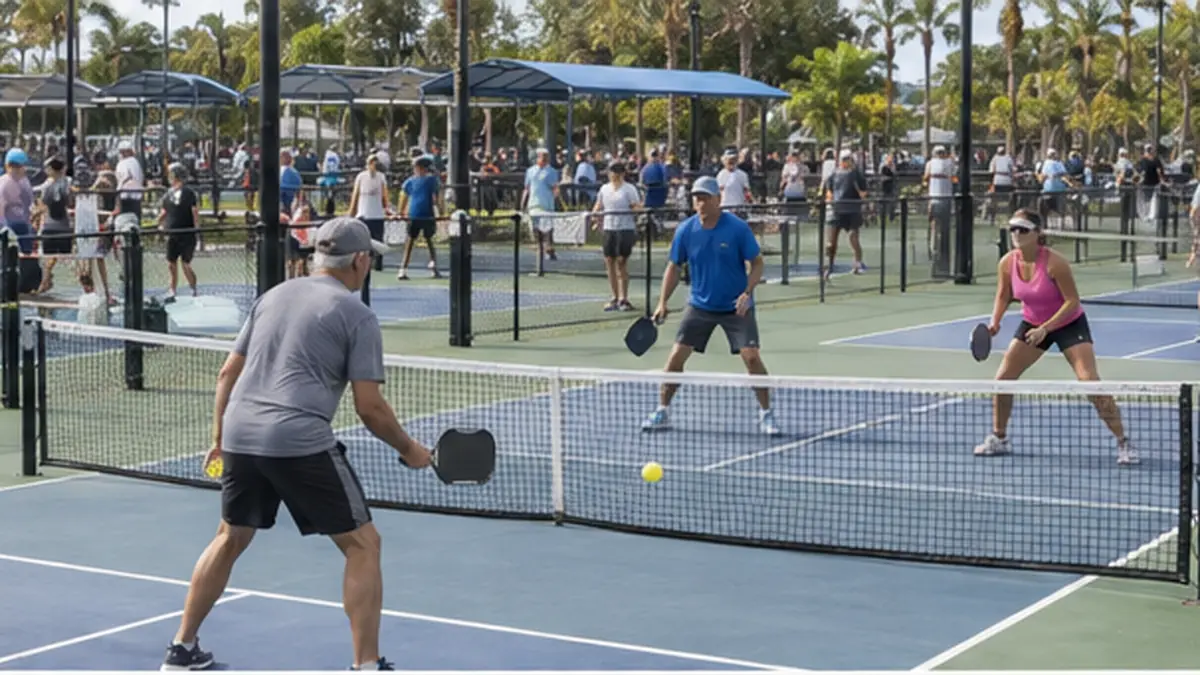
The court is compact at roughly a quarter of a tennis court, and it uses a lightweight perforated plastic ball. The design, with little intense movement and letting even beginners enjoy a rally right away, is the reason it is accepted across a wide range of ages. This article organizes the figures underpinning the worldwide boom, the reasons for its popularity, the background that lit the fire, and the outlook ahead including Japan, with information as of June 2026.
Pickleball's worldwide growth in figures [quick reference]
Its popularity in the United States is no longer a passing boom. Looking at the trend in the player population, you can see that momentum well.
| Year | U.S. player population (SFIA core estimate) |
|---|---|
| 2020 | About 4.2 million |
| 2023 | About 13.6 million |
| 2024 | About 19.8 million |
| 2025 | About 24.3 million |
Becoming the fastest-growing sport in the United States
By SFIA (Sports & Fitness Industry Association) figures, the US playing population reached about 24.3 million in 2025, a remarkable climb of roughly 172% in the past three years alone.
It is momentum enough to be called the fastest-growing sport in the United States for four straight years. Figures vary by survey method, and a different survey (APP) that includes anyone who played even once a year estimates that about 48.3 million people played as of 2023. By any count, there is no doubt it has taken deep root in American society. Worth noting is that the average age of people who play at least once a month is 34.8, with the 25-to-34 bracket the largest. From the former image of a sport for the elderly, it is changing into a cool sport that is spreading to younger generations too.
Source The Dink / SFIA participation dataCreated from
The rapid expansion of the paddle market
The growth of the gear market also tells the story of the boom.
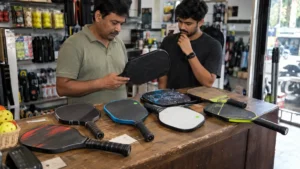
In 2023, it was reported that total sales of pickleball paddles surpassed tennis rackets, drawing wide attention. Global paddle sales exceeded 7.2 million units in 2024, and the market size continues to expand. New entrants among gear makers have come one after another, and with models adopting carbon materials and new core structures appearing in succession, a virtuous cycle in which the sport's growth calls forth industry growth has emerged.
Why is it this popular? Pickleball's five appeals
The reason it spread worldwide this rapidly lies in pickleball's several appeals. Let us look at five representative ones.
1. The ease of anyone starting right away
The greatest appeal is its overwhelming ease of starting.
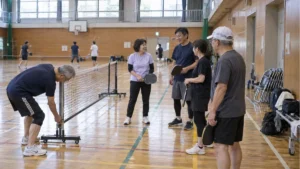
The rules are simple, and even beginners can come to play with a 30-minute-to-one-hour lecture. The gear you need is only a lightweight paddle, a plastic ball, and a net. The court is the same size as badminton and can be enjoyed in familiar places such as parks and school grounds. In tennis, mastering the serve and rallies takes time, but in pickleball you can quickly learn the basic motion of hitting back over the net and enjoy a rally from an early stage. Even people with little exercise experience and the elderly can start without feeling daunted.
2. A design that spans any age or fitness
Because the court is only about a quarter the size of a tennis court, no intense movement is needed and the burden on the body is kept low.
The perforated plastic ball has high air resistance and does not build up speed, so rallies tend to continue, which is another feature. And what bridges the age gap is a special area called the non-volley zone (kitchen). Because volleys are prohibited within this zone in front of the net, you cannot force it through with power. Since placement and control and the persistence to keep a rally going are emphasized over strength, even children and the elderly can go toe to toe with adults and the young. The rare quality of being enjoyable on equal footing across generations makes play by three generations of a family possible.
3. Moderate exercise and health benefits
It looks like simple motion, but it is actually exercise that uses the whole body in good balance.
Using the arms, legs, and core moderately, it helps improve strength, flexibility, and balance. Even 30 minutes to an hour of play raises your heart rate and burns a moderate amount of calories. Because the burden is lower than intense sports, it is excellent as an exercise habit that seniors can keep up without strain, and it is drawing attention from the standpoint of maintaining health and preventing the need for care too.
4. A place for communication and socializing
Pickleball is exercise and at the same time a tool for connecting with people.
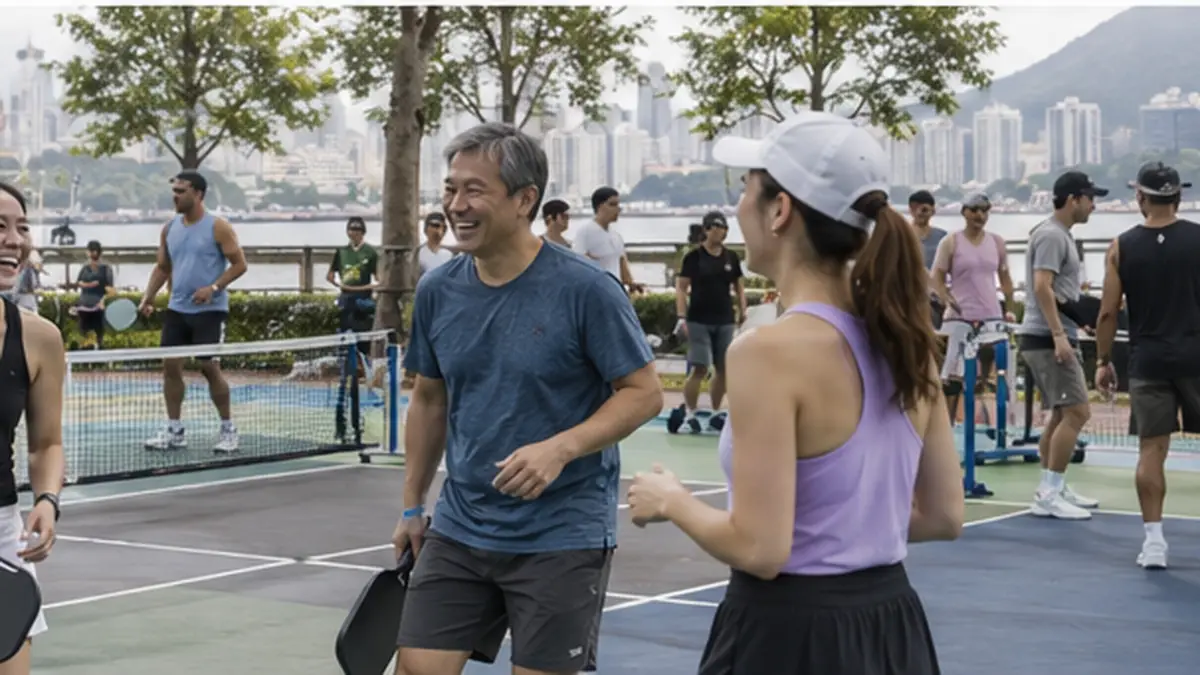
Because the court is small and players are close together, conversation arises naturally. The doubles format is common, and because cooperation and consulting on tactics with your partner are essential, bonds with family and friends deepen through teamwork. Not a few people go to attend for the sake of the interaction there, rather than the play itself.
5. The economy of starting at low cost
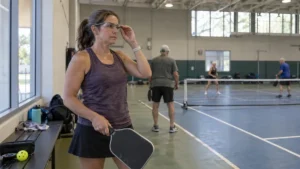
All you need is a paddle, a ball, and easy-to-move-in shoes.
Unlike tennis or golf, it requires no expensive gear or large dedicated facility, and it is easy to carry. A sport that is easy to start spreads that much faster. Soccer and basketball are loved worldwide precisely because of the ease of enjoying them with just one ball, and pickleball has the same strength.
The background that lit the boom
Even with this much appeal, it took a trigger to spread all at once. We organize the background that boosted pickleball's popularity.
The COVID-19 pandemic was a turning point
The big trigger that raised popularity all at once was the COVID-19 pandemic.
As gyms and indoor facilities closed during the pandemic, demand rose to safely move the body outdoors. Because pickleball can be played easily in front of the house, in an open space, or on an unused tennis court, it matched this demand perfectly. That it could be enjoyed with a small number of people while avoiding crowds also suited the situation at the time.
The synergy of celebrities and social media
What spurred it on further was the presence of celebrities and social media.
Scenes of celebrities like Bill Gates and Leonardo DiCaprio playing were reported in the media, and interest rose all at once. Play videos pair well with social media, and because anyone can easily imitate them, their spread accelerated. Moves by investors and pro athletes to invest in teams and leagues also emerged, raising attention as entertainment.
From uncool to cool
Another thing not to be overlooked is the shift in image.
Pickleball, once tending to be seen as a hobby of the retired generation, came to be recognized as a stylish, new sport through posts by younger generations and influencers. With fashionability and the fun of community brought to the fore, an atmosphere in which a wide range of people can take part without resistance emerged, and the boom, rather than ending as a passing thing, is heading toward taking root.
The rise of pro leagues and the inflow of investment money
Not stopping at spreading as recreation, its presence as a business is also rapidly rising.
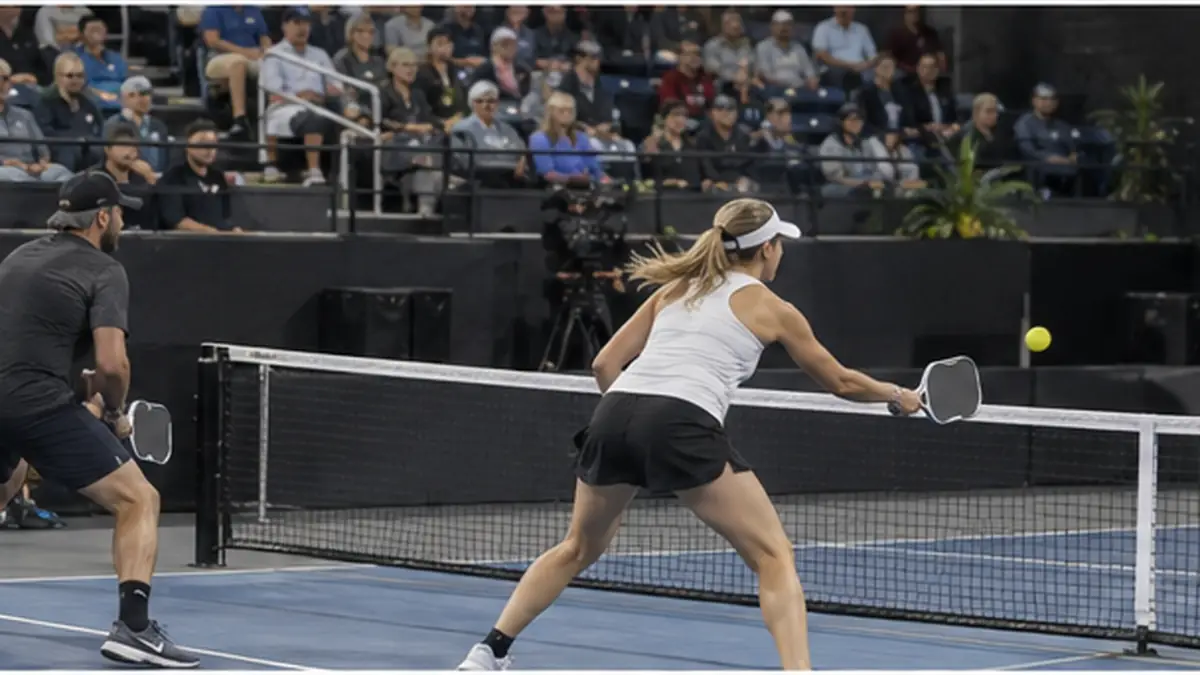
In the United States, the pro PPA Tour and the league MLP (Major League Pickleball) were launched, and prize tournaments and team competitions came to be broadcast on television and streaming. Top athletes such as LeBron James, Tom Brady, and Kevin Durant are listed as team owners and investors, and huge investment money is flowing in. A virtuous cycle has also emerged in which pro matches raise the appeal as a sport to watch, tying into an expansion of the spectator population and sponsors. That not only people who play but people who cheer and people involved as a business are increasing tells the story of this boom's broad base. For how pro leagues work, seethe explainer on MLP.
Source The pickleball specialty media outlet PICKLE ONECreated from this and others
From America to Asia, and to the world
The heat born in the United States has now spread across the world.
The fastest growth in Asia
Asia's growth in particular is striking.
In Vietnam it has expanded explosively, with private estimates of about 16 million in 2025, and along with Malaysia it is considered the fastest-growing market in Asia. In South Korea too it has surged, starting from celebrity posts and the development of public courts, and both countries increased their player populations all at once in a few years. For the detailed situation in each country, seeVietnamandSouth Koreadigs into it in the article.
In Europe and other regions too
In Europe, where tennis culture is rooted, pickleball is steadily spreading too.
Clubs and courts are increasing in the U.K. and other countries, and adoption using existing tennis and badminton facilities is advancing. Against the backdrop of climate and compatibility with existing sports, it is beginning to take root at a different speed in each region, and the player population worldwide continues to expand even now. For the trends, seethe article on Europe.
Hopes for becoming an Olympic sport
The spread of adoption also ties into hopes for becoming an Olympic sport.
Adoption at the 2028 Los Angeles Games was passed over, but with an eye on 2032 and beyond, moves to meet conditions such as unifying the international governing organization and worldwide adoption continue. If becoming a sport is realized, its popularity is seen accelerating further. For details, seethe explainer on becoming an Olympic sport.
The spread in Japan and the outlook ahead
The worldwide swell is surely reaching Japan too.
The domestic player population is surging, and one market survey puts it at an estimated roughly 330,000 as of 2026, expanded roughly sevenfold from the previous year. Furthermore, the latent group who know about it and would start given the chance is estimated at about 11.89 million, so the room to grow can be called very large. The Japan Pickleball Association (JPA) is advancing adoption activities, and trial events and dedicated courts are increasing in various places. For Japan's current state and outlook, seethe state of pickleball in Japanandmarket forecasts.
The health value is also drawing attention. Multifaceted effects such as improved cardiovascular function, maintenance of balance, and mental health from social interaction are being shown in research. Especially for the elderly, it is also pointed out that play that involves thinking about tactics and reading the opponent's movements stimulates the prefrontal cortex and may tie into reducing the risk of depression and dementia. For an aging Japan, it is a presence that can become an ideal exercise habit as a lifelong sport.
Source Japan's pickleball player population data (2026 edition)Created from this and others

The figures of the boom differ greatly by media outlet and research firm. This is largely due to the difference of whether core players and people who played even once a year are counted separately. Rather than being swayed by the size of the figures, focusing on the fact that it is rising in every survey, and that the average age has come down into the 30s, brings the essence of the boom into view.
FAQ
Why is pickleball this popular?
Ease of starting is the biggest reason. The rules are simple, even beginners can keep a rally going right away, and it can be enjoyed regardless of age or fitness. At a time when demand for outdoor exercise rose during the COVID-19 pandemic, celebrities and social media gave it a boost, and it spread all at once.
About how many people play in the United States?
By SFIA's count, the US playing population reached about 24.3 million in 2025, up roughly 171.8% over three years. Other surveys, which count anyone who played even once in a year, put the figure higher still. The average age is 34.8, and the sport is reaching younger players too.
When and where was pickleball born?
It was born in 1965 on Bainbridge Island, Washington, in the United States. It is said to have started when a family devised it on the spot with whatever gear was on hand to entertain bored children.
Is pickleball spreading in Japan too?
Yes. One market survey puts the domestic player population as of 2026 at an estimated roughly 330,000, expanded roughly sevenfold from the previous year. The latent group who would start given the chance is estimated at about 11.89 million, so the room to grow is considered large.
Summary: Why pickleball captivates the world
The reason pickleball is loved worldwide lies in the balance of overwhelming ease of starting and deep strategy.
The simplicity that lets even beginners enjoy a rally right away, a design that spans any age or fitness, moderate exercise and health benefits, and its function as a place to socialize. Triggered by the COVID-19 pandemic, it spread all at once with a boost from celebrities and social media, and has now taken root as a cool sport. In the United States about 24.3 million played in 2025, it has expanded explosively in Asia including Vietnam and South Korea, and the player population is surging in Japan too.
Beyond the mere frame of a sport, pickleball even gives rise to community building, health promotion, and intergenerational and international interaction. If you are interested, do visit a nearby court or trial session. From the day you grip a paddle, new companions and enjoyable time should be waiting.
Related Articles Worth Reading
- Analyzing the Pickleball Scene in Japan | A Thorough Look at Its Spread and Future Outlook
- How will the pickleball market grow going forward? Analyzing its potential and market forecasts
- The rapidly growing pickleball market | Why it became a growth sport, explained
- Vietnam's pickleball expanding in Asia | The current state of its spread and its outlook
- Will Pickleball Become an Olympic Sport? The Possibility and Future Trends Explained
Related Articles