A pro tour taking on the running of a large facility itself. According to a September 17, 2026 report by The Dink, the US pickleball outlet, the PPA Tour has agreed to run pickleball year-round at Arizona Athletic Grounds (AAG), a multi-sport complex in Mesa, Arizona, under a long-term contract spanning decades. The site comes with a history: it was built on investment of some $250 million and then went through bankruptcy. How do you turn that negative legacy into a home for the sport? For Japan, where idle large facilities are a familiar problem, this is a revival with plenty to learn from.
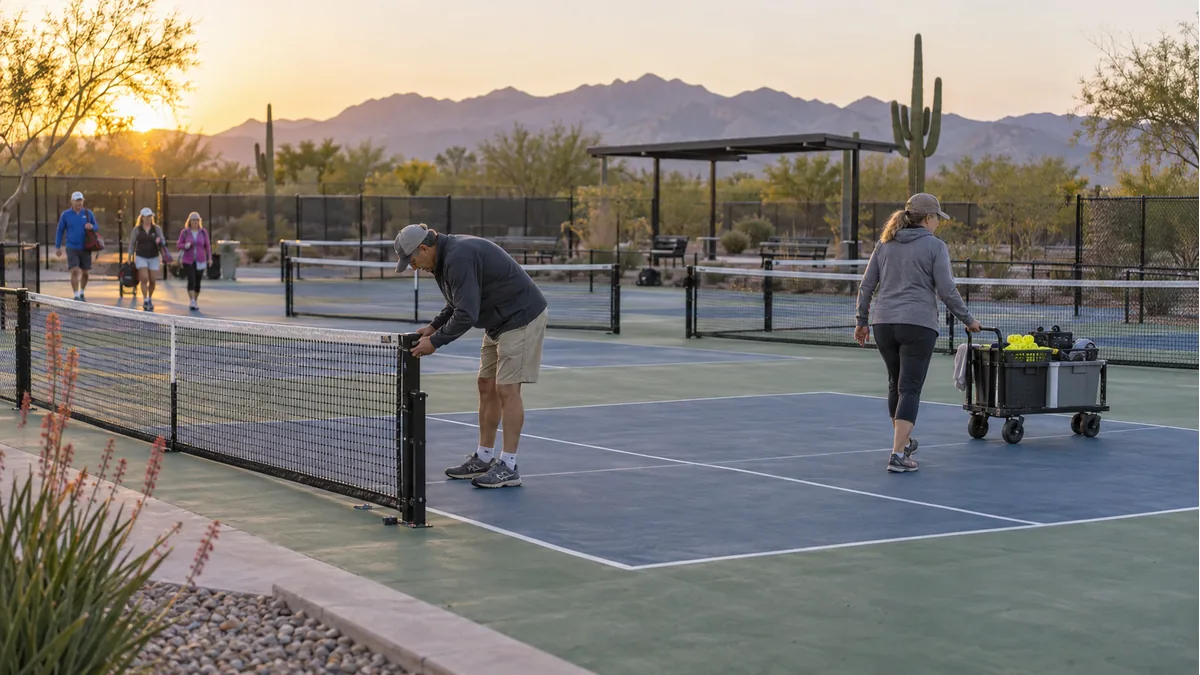
The tour moves to year-round operation of a giant venue with 41 courts
AAGはメサに広がる320エーカーの複合施設で、ピックルボール専用コートを41面備える。うち4面はメダルコートとして観客席を設け、中心となるチャンピオンシップ・スタジアムはおよそ2,000人を収容する。今回の合意でPPAは年間を通じたピックル運営を担い、施設は「PPAキャンパス・アット・アリゾナ・アスレチック・グラウンズ」へと名を改める。単発の大会を借りて開くのではなく、コートの日常運営からプログラム提供までをツアー側が握る、いわば垂直統合の一手だ。契約期間について報道は「数十年規模(multi-decade)」とのみ伝え、具体的な年数は明らかにしていない。2026年2月には2028年までの提携(毎年最低2大会の開催)が結ばれており、今回はそれを大きく上回る長期の枠組みへ踏み込んだ形になる。
A $250 million building goes from bankruptcy to a restart
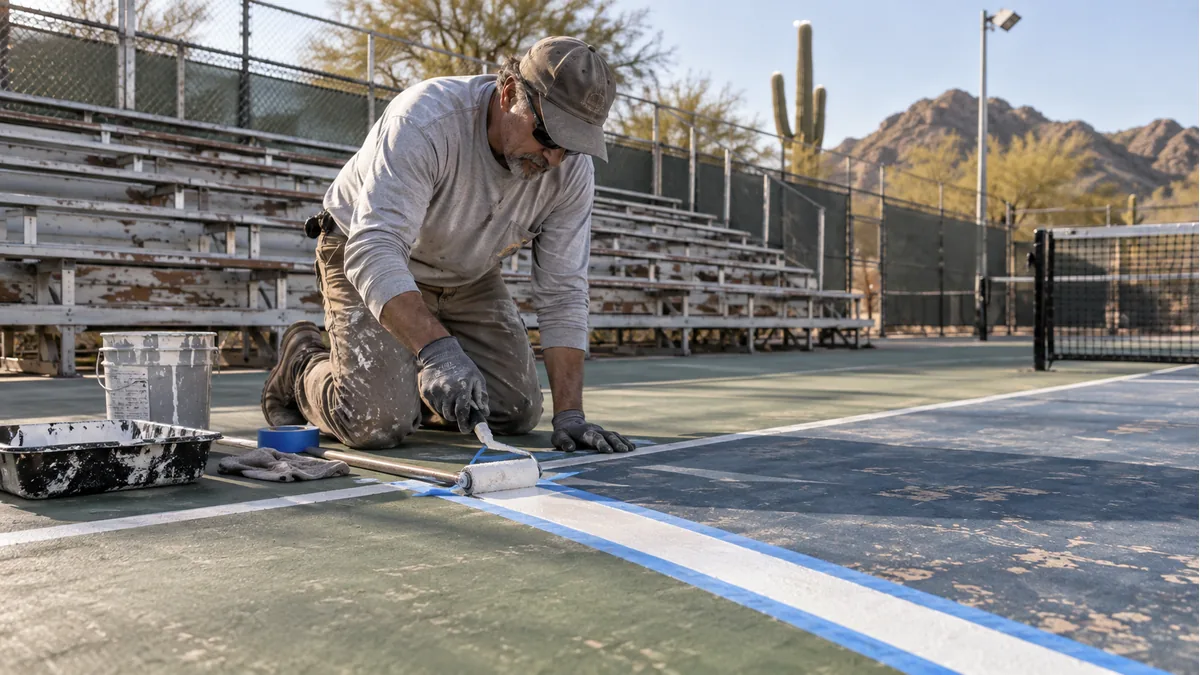
The site's history shows what this contract weighs. On land that was once a General Motors proving ground, about $250 million (roughly 39.2 billion yen at about 157 yen to the dollar, as of mid-September 2026) went into building Legacy Sports Park, which opened in January 2022 as Bell Bank Park. But the operator, Legacy Cares, filed for Chapter 11 bankruptcy protection in May 2023. Debts came to $366.7 million (about 57.6 billion yen) against assets of $242.3 million (about 38 billion yen). That December, Arizona Athletic Associates acquired the facility for $25.8 million (about 4.05 billion yen), and the road back began. A site built with enormous money passed to a new operator at roughly a tenth of the original investment, and it is now trying to breathe again with pickleball at its center.
AAG's history and drawing power in numbers
| Item | Figure | Yen-conversion guideline |
|---|---|---|
| Pickleball courts | 41 (4 medal courts) | — |
| Main stadium capacity | About 2,000 | — |
| Site area | 320 acres | — |
| Attendance at the 2025 Mesa Cup | 18,965 over six days | — |
| Ticket revenue for that event | $300,000 | About 47.1 million yen |
| Acquisition price (December 2023) | $25.8 million | About 4.05 billion yen |
| Annual visitors to the whole complex (2025) | 2.8 million (up 16% year on year) | — |
集客の実績も着実に積み上がっている。2025年の「カーバナ・メサ杯」は6日間で18,965人を集め、チケット収入は30万ドル(約4,710万円)に達した。施設全体では2025年に280万人が訪れ、前年比16%増を記録している。次回の2027年カーバナ・メサ杯は2027年2月15〜21日の開催が当時予定されており、通年運営への移行が単なる名義変更ではなく、少なくとも旗艦大会の日程は確定していることがわかる。
How the people involved put it
Mike Burke, chief executive of AAG, said that with the PPA's remarkable growth and its expertise in running programs, the PPA Campus will bring an enormously positive impact to local, regional and national pickleball communities. Connor Pardoe, founder and CEO of the PPA, said the success of the Carvana PPA Tour at AAG confirms year after year how good the facility, its staff and Mesa's pickleball community are. The facility gains operating know-how and the tour gains a stable home: an agreement where both sides' interests line up. That a tour which used to hold events has widened into running a venue is itself a shift in business model.
Reading this against facility operation in Japan
What makes this instructive for Japan is that the weight of value has moved from building to running. After a hugely expensive site went under, a specialist operator in the sport takes on year-round operation and the place heads toward revival. The operating strength and program design that fill the calendar are what decide whether a facility lives or dies. Japan has no shortage of idle large sports facilities and commercial spaces. The question is whether you can go beyond laying down courts and say who will fill them all year.The case of an asset manager with 5 trillion yen under management facing the question of whether idle space can earn as courtsis an early example of exactly this operating perspective.
At the same time, the risk of adding too much supply deserves attention. In the US, as a reaction to the overheating, there are reports ofpickleball facilities going up for sale one after another, with price cuts averaging close to 40% in a correctionas well. What AAG's rebuild shows is not that you should add more buildings, but that a proven operator committing for the long term matters. Anyone planning a facility in Japan should treat both the bright and the dark side as material to learn from.
Ripple Effects on the Market
A tour holding a home base matters for sponsors and equipment makers too. With a site that draws people year-round, brand exposure and merchandise sales become possible outside tournament weeks, and sponsorships get easier to structure on an annual basis. In fact, among Japanese companies,a support-gear maker signing an annual PPA Tour sponsorship and displaying and selling its products at the venueshas emerged. A flagship facility running year-round can serve as the home for that kind of annual sponsorship. Making a base permanent takes the one-off quality out of events and can spread steady business opportunities to the industries around them.
Wrap-up: what to check next
What to watch is how well AAG, now switched to year-round operation, can fill weekdays and the off-season outside tournament weeks. Whether the depth of 2.8 million visitors converts into pickleball's own usage will decide this business model. Anyone thinking about reviving a facility or opening a new one in Japan should settle first on who runs what programs and how many days a year they fill. It is not the size of the construction budget but the side holding an operating blueprint that survives, and the Arizona case, which turned a bankrupt facility toward revival, makes that principle plain.