Who holds the right to call a pickleball paddle “approved”? On July 24, trade media reported that UPA-A, the regulatory arm of the United Pickleball Association of America, which runs the pro tours, is moving to take the lead on paddle standards. UPA-A stated in the latter half of 2025 that it would shift from a for-profit LLC to a nonprofit 501(c)(6), with the formal switch scheduled for the middle of 2026. For Japanese makers exporting paddles, it is not someone else’s business.
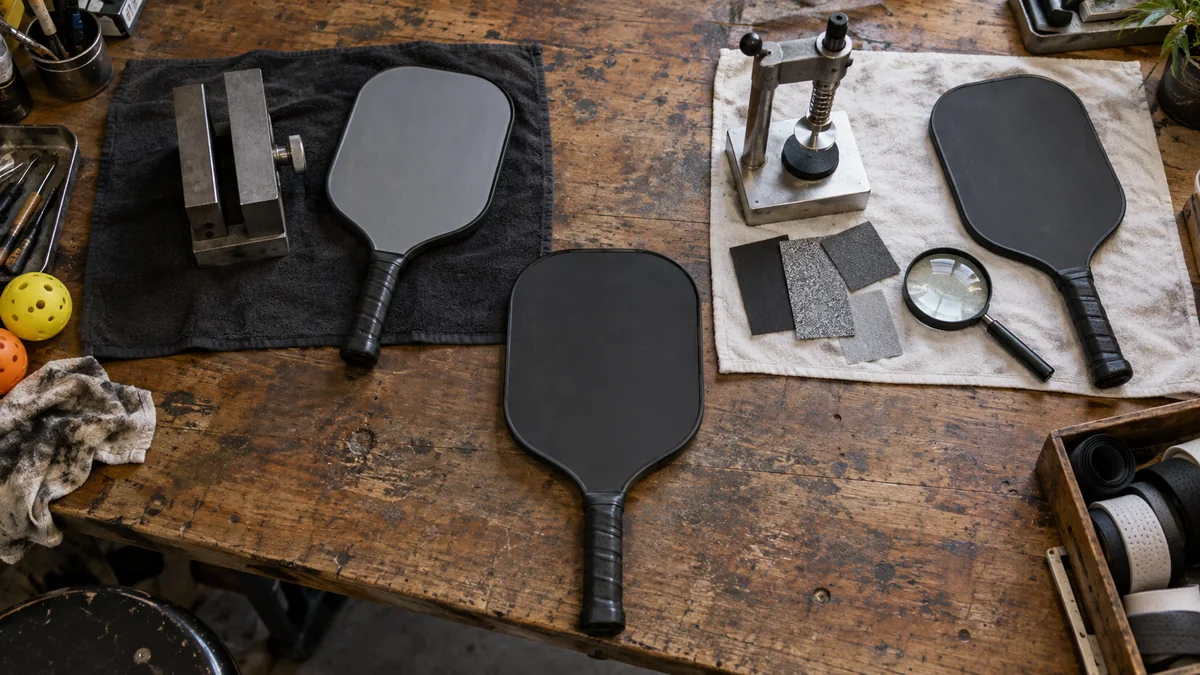
UPA-A certification and USA Pickleball approval: two registers side by side
This is not moving toward a single world standard; it is appearing as a split into two. UPA-A certifies paddles for use in PPA and MLP tour matches. USA Pickleball, the national governing body in the United States, issues approvals on a separate track for the tournaments it sanctions and for recreational play. The result is two registers on the market, the USA Pickleball approved list and the UPA-A certified list, and makers have to decide which to appear on, or whether to appear on both. In most other racket sports, equipment approval is held centrally by the governing body, and players and the market only ever had one standard to watch. In this sport, where the commercial value of the pro product stood up first, that assumption has broken down.
UPA-A tests even for performance drift after break-in
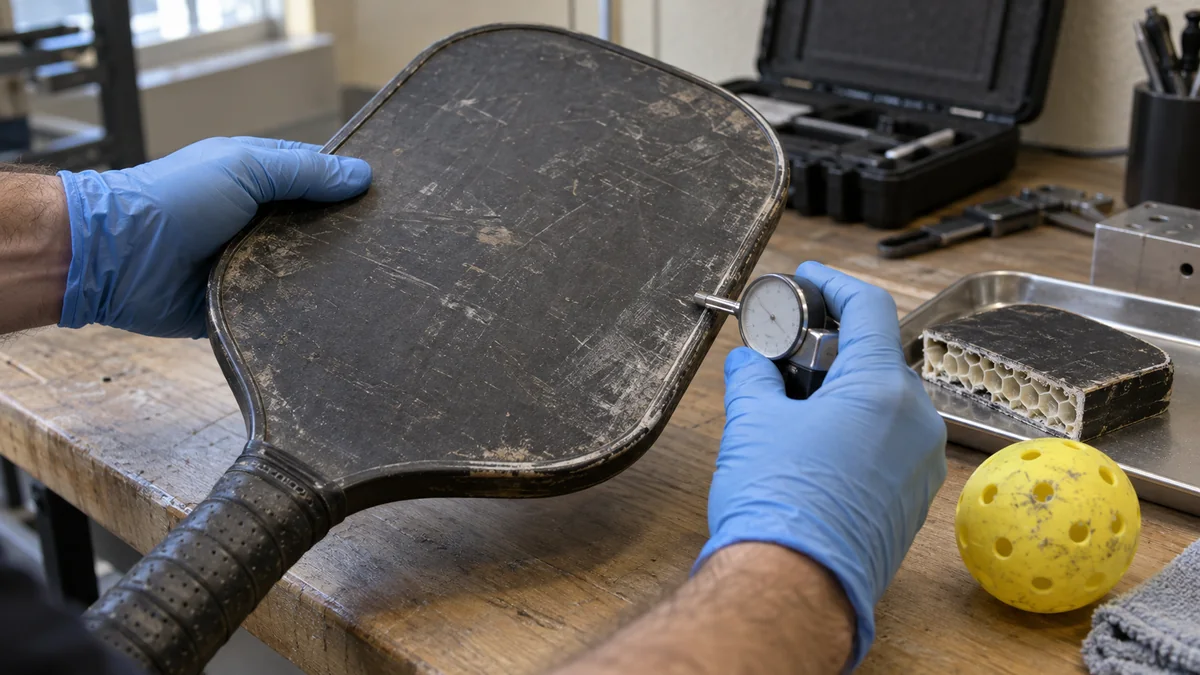
UPA-A testing does not stop at statically confirming that a paddle falls within the dimensions in the rulebook. It goes after paddles whose performance changes as they break in with use, and paddles whose rebound rises through surface treatment or structural alteration. Whether a paddle still sits inside the spec after a player has hit a certain volume with it: the design looks at behavior with time built in. At the top of the sport, core material has begun to shiftfrom honeycomb to foam as the lead material, and the pop and the amount of spin generated change from one generation to the next. Whether certification can keep pace with structural change like that will decide how much the standard actually means.
Reading the two certifications side by side
| Key issues | UPA-A | USA Pickleball |
|---|---|---|
| Main scope | Matches on pro tours such as PPA and MLP | USA Pickleball sanctioned tournaments and recreational play |
| Organizational form | Shifting from an LLC to a 501(c)(6) nonprofit (formalization planned for mid-2026) | National governing body in the US (existing approval system) |
| Focus of certification | Screening out performance drift from break-in, surface treatment and structural alteration | Approval list for sanctioned competition |
For exports, settle the certification market by market first
For a Japanese maker sending paddles abroad, which standard to certify under bears directly on whether the market opens at all. Aiming to have paddles used in pro tour matches means going after UPA-A certification. For the recreational players and sanctioned tournaments where volume sales sit, USA Pickleball approval carries more weight in more situations. Chasing both means the time and cost of putting the same product through two sets of testing. Overseas, as with Six Zero,equipment brands are widening their reach into apparel as well, butwhich certification to prioritize, and which market to go after first, has to be settled early in product planning. In Japanese media too,a debate over what “certified” actually guarantees behind the spin regulationshas been reported.
Even as a nonprofit, authority is built on being adopted
UPA-A going nonprofit can be read as a move to deflect the objection to a for-profit company holding the standard, and as groundwork for acquiring authority. But becoming a nonprofit does not by itself make national governing bodies fall in line; authority is decided by adoption piling up, not by structure. For Japanese makers and people in the sport, the concrete steps come down to two. One is to decide, product by product, which market is being targeted, pro tour or sanctioned tournaments and volume retail, and build the matching certification into planning from the start. The other is to keep watching which standard actually spreads once the 501(c)(6) conversion is formalized in the middle of 2026, and to revise export plans as that plays out. “Certified” on a paddle is no longer one single thing.
Source:The Dink Pickleball(One Sport, Two Standards)/World Pickleball Magazine (July 24, 2026)/UPA-A About Us/Pickletip(USAP vs UPA-A)