Izu Resort Villa, a lodging facility in Inatori, Higashiizu, Shizuoka, held an opening ceremony on July 20 for 20 dedicated pickleball courts. The operator, Izu Bio Park, calls it the largest of its kind in Japan. The resort already had 20 tennis courts, and six of them were rebuilt into 20 pickleball courts. Permanent capacity of 20 courts barely exists in Japan, which makes this an opening that players and coaches hunting for away venues and camp sites cannot ignore.
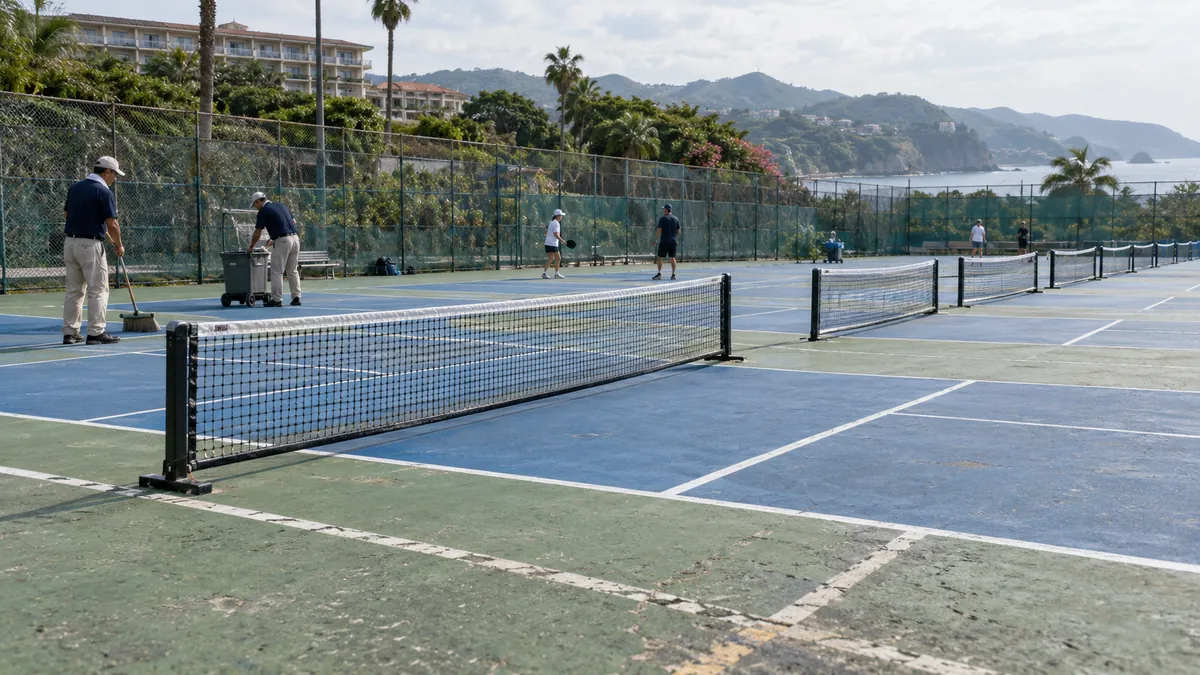
President Miyazaki says he will build Inatori into a mecca
At the ceremony, Izu Bio Park president Yasushi Miyazaki said the courts were built after he had satisfied himself of pickleball's potential, and spoke of wanting to grow the site into a mecca for the sport. General manager Shinichi Sakata also touched on the switch from a tennis facility and on the contribution to the local area. The facility sets out three aims, better health, promoting sport and drawing tourists, with national tournaments and training camps also in view.
How 20 courts were carved out of six tennis courts
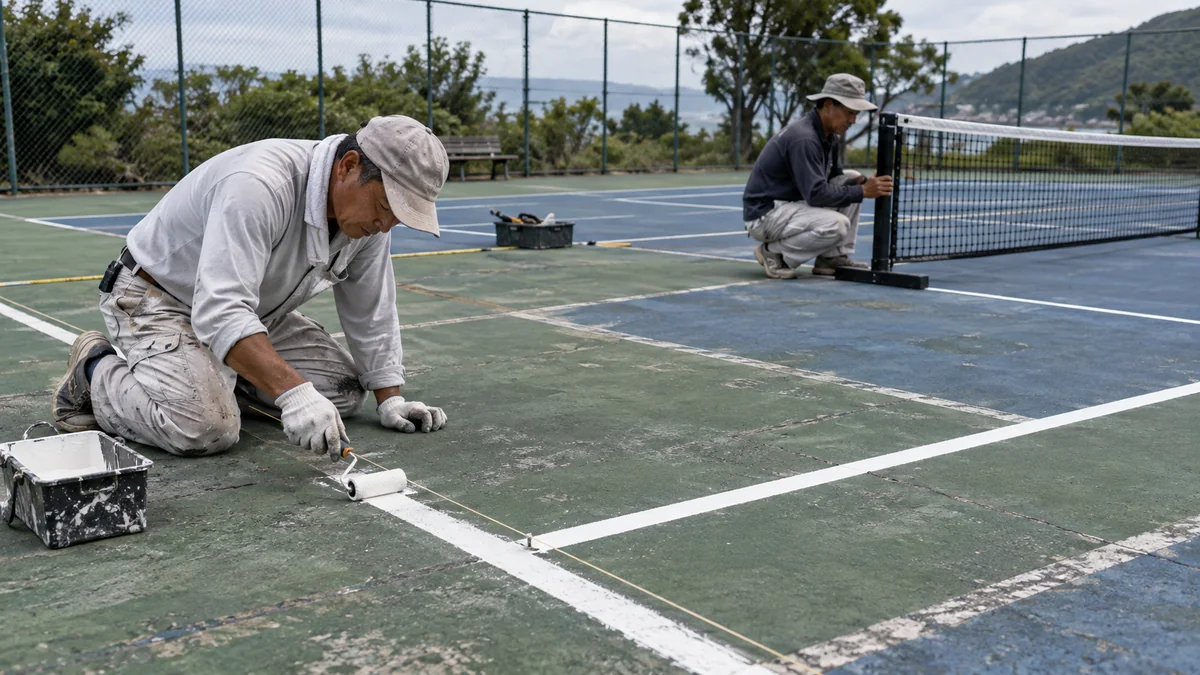
The numbers look confusing at first. Six of the 20 tennis courts were rebuilt, and 20 pickleball courts were taken out of them. A pickleball court is smaller than a tennis court, so several fit into the space of one. Here that meant 20 from six, a little over three per tennis court. The work centered on replacing nets, marking lines and repairing surfaces, which keeps the initial outlay well below building an arena on empty land. Standing up 20 courts at once in Inatori, with its limited transport links, was possible because the conversion is this easy. Room remains to add more dedicated courts while keeping the rest of the tennis courts.
Pricing set at 2,200 yen for visitors and 1,100 yen for Izu Peninsula residents
| Category | Rate (per court, per hour, tax included) | Equipment rental |
|---|---|---|
| General | 2,200 yen | Free through the end of September |
| Izu Peninsula residents | 1,100 yen | Free through the end of September |
Setting the resident rate at half the standard one shows the intent. Visitors pay a rate that fits leisure spending; locals get a price they can afford to use regularly. The first is tourism revenue tied to overnight stays and day trips, the second is local use that fills weekday hours. Given how easy the sport is for older players to take up, the half-price resident rate also fits the health banner. A run-in period with free equipment rental through the end of September lets people try empty-handed before the operation settles into its permanent form.
Twenty permanent courts in a country that has relied on events
Resorts around the country still hold tennis courts built from the bubble era onward, and facilities carrying courts with weak utilization are common. Laying pickleball over them is a practical way to put idle assets back to work with minimal rebuilding. In the US the same kind of conversion has driven the growth of venue chains, and some venues are folded into a chain shortly after opening. Pickle Times has also followeda US venue that joined a chain eight months after opening.
Efforts to build court numbers in Japan have mostly been temporary. In Hachioji there wasa taster festival with up to 24 courts, and a broadcaster-led summer festival broughtan attempt to place a court for just 37 days. Once they end, the courts disappear in every case. What sets Izu Resort Villa apart is that it holds 20 courts permanently, putting in place as fixed equipment the base for taking bookings daily and running leagues and tournaments played over several days. Because it also has accommodation, it can host not only day practice but tournaments and camps with overnight stays on one site.
The value of locking in Kanto tournaments and camps on the ground
For players, one more option for away trips and camps has appeared. A place within reach of Kanto where 20 courts can be booked together is a concrete tool for anyone organizing a regional tournament or a club camp. For operators, it sets out a model that is easy to repeat: converting existing tennis assets rather than building from scratch. Municipalities and businesses sitting on dormant courts can drop Inatori's numbers, 20 courts from six and half price for residents, into their own calculations. Filling 20 courts continuously will not be easy, though. Away from the major cities, utilization swings with the tourist season and a thin local population. Holding onto the mecca label will take both tournament bidding and settled local use running together.
Conditions: 20 courts, 2,200 yen for visitors, half price for Izu Peninsula residents
- Facility: Izu Resort Villa (Inatori, Higashiizu, Shizuoka; operated by Izu Bio Park)
- Courts: 20 dedicated pickleball courts (six of the 20 tennis courts rebuilt)
- Rate: 2,200 yen for visitors / 1,100 yen for Izu Peninsula residents (both per court per hour, tax included)
- Offer: free rental of paddles and other equipment through the end of September
- Inquiries: 0557-95-3935