A pickleball facility billing itself as the largest in the Philippines opened in July 2026 not in the capital Manila or in Cebu, the second city, but in Sibulan, a small town in the southeast of Negros Island. With 17 tournament-grade courts, the site gives clear shape to how the sport's expansion in Southeast Asia is coming from the provinces rather than being led by the capital. A shortage of facilities is said to hold back growth in Japan as well, and a hint at how to solve it lies in this kind of regionally built hub. The development model in Southeast Asia, as seen inthe design of a Vietnamese development league that pushes beginners to a national final in nine months, is thickening fast outside the cities.
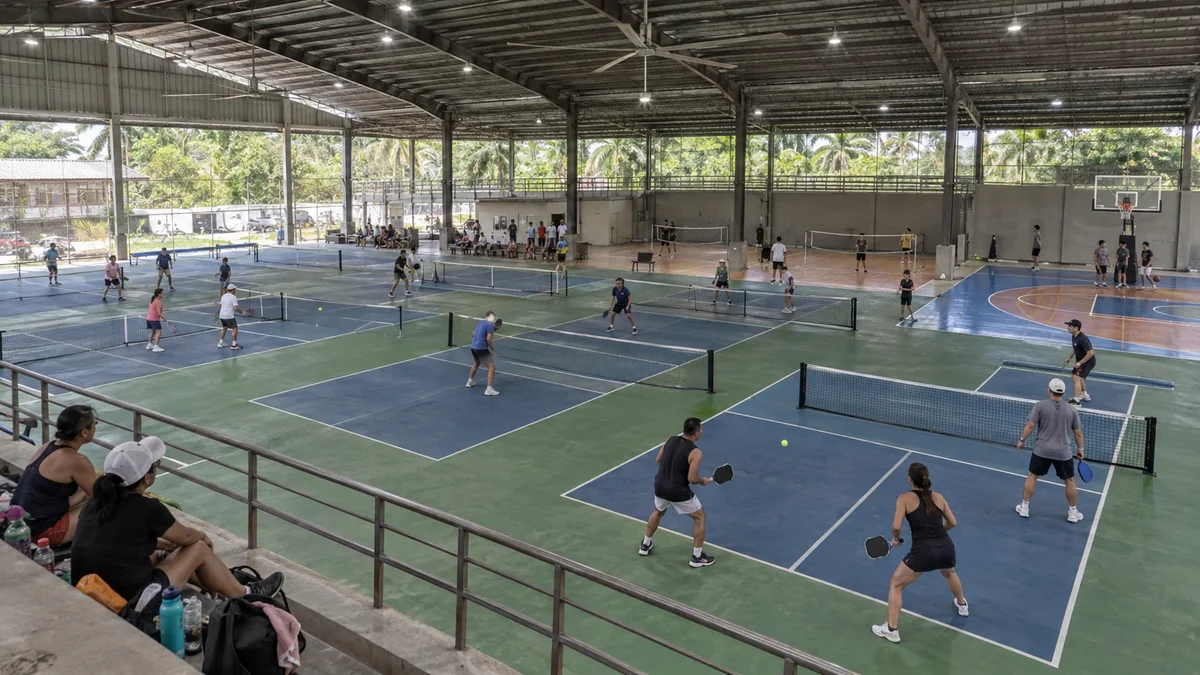
Inside the country's largest facility, opened in Negros Oriental
The facility is PlayPro Active Courts, built by real estate developer PhilSouth Properties and Development. It stands on roughly one hectare along the bypass road in the town of Sibulan, Negros Oriental, as an indoor complex with 17 tournament-grade pickleball courts in its first phase. It also has three badminton courts and two half-courts for three-on-three basketball.
Company president Louie Tijing said the facility will be "a place where people can play, compete, connect and raise their own skills," and stated plainly that it aims to be one of the country's leading pickleball hubs. That a real estate company stepped beyond housing development into a sports facility also shows the sport is becoming an investment target in the provinces.
Why a small provincial town rather than Manila
Pickleball in the Philippines has grown in about 10 years from the first clinic held in Cebu in 2016 to more than 200 registered clubs and 13,000 members. More than 100,000 Filipino players are registered on the court booking app Reclub, and the number actually playing is thought to be far higher. Growth started in Cebu and the Ortigas district of Metro Manila, but the increase in court numbers is sharpest outside the capital.
The symbol of that is Dumaguete, the capital of Negros Oriental. Counting the surrounding towns there are already some 300 courts, enough for the city to call itself the pickleball capital of the Philippines. Numbers alone, though, do not make venues: very few meet the standard needed to host a tournament. Against 300 courts, the hubs that guarantee the quality of competition were missing, and a 17-court complex has filled that gap. While a pro league in the capital is being built from the top down,MPPT, the first pro league in the Philippines, launched by Pacquiaodraws attention as a show, yet the places where people can actually hit were built up in the provinces first, and that order shows through here.
PlayPro's scale in numbers
Laying out the initial setup next to the expansion plans shows this is not a one-off facility but a staged investment.
| Item | Details |
|---|---|
| Location | Along the bypass road, Sibulan, Negros Oriental |
| Site area | About 1 hectare (indoor multi-sport complex) |
| Pickleball | 17 tournament-spec courts (initial) |
| Other sports on site | 3 badminton courts / 2 half-courts for 3x3 basketball |
| Expansion plan | 10 more pickleball courts (4 of them air-conditioned) / 3 table tennis tables / 2 tennis courts |
| Opening | July 2026 |
After the expansion, pickleball alone will reach 27 courts, four of them fully air-conditioned. Air-conditioned courts carry real weight in a hot, humid island region, and preparing an environment that can run tournaments and practice year-round even through the rainy season is what sets this venue apart from the existing, mostly outdoor sites.
A 2,300-player tournament landed right after opening
PlayPro is not letting the opening end as a celebratory one-off; from day one it is out to show what it can do as a competitive base.
- こけら落としの主要大会は「PPL Visayas Open」。7月30日〜8月2日と8月6日〜9日の二部制で開催されました
- 参加規模は約2,300選手が見込まれ、国際ランキング上位の選手も含まれるとされていました
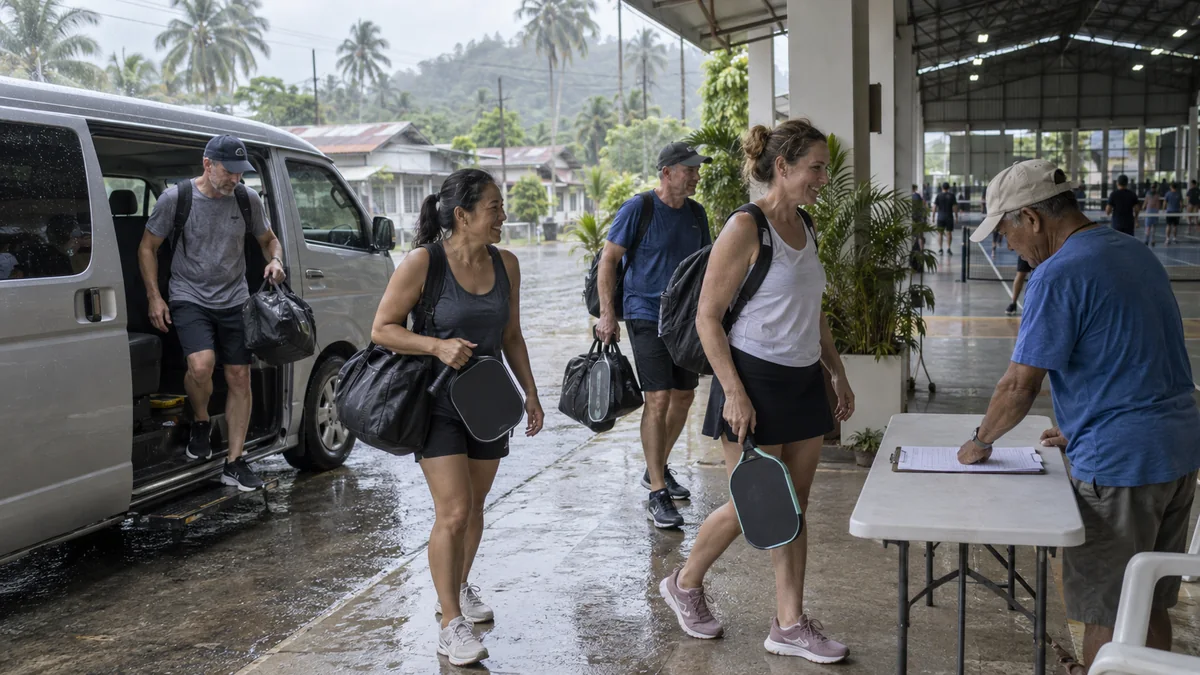
- The organizers have openly stated their aim of selling Negros Oriental and Dumaguete as a sports tourism destination in central Philippines
Rather than building courts and stopping there, they are bringing a tournament of more than 2,000 players to the island the moment the venue opens. Launching the facility and the tournament as a set is designed to capture playing demand and tourist traffic at once, and it is a textbook route for a regional area to fold a sport into its economy.
Three takeaways for Japanese operators and regional cities
For operators and local governments in Japan struggling with a shortage of courts, the Negros case raises three points.
First,Growth does not always trickle down from the capital to the regionsIn the Philippines, the regional city of Dumaguete led on sheer quantity, and the country's largest base emerged when tournament-grade quality was added on top. In Japan, too, the thickest layers of players are not necessarily concentrated in the big cities, so the starting point for building a base is how to pull together existing regional demand. Adding numbers first and bringing courts up to spec later is also a realistic sequence from an investment standpoint.
Second,The link between real estate development and sports facilitiesPlayPro was born when a housing developer widened its business. In Japan, too, idle land and empty space in commercial buildings are being turned into courts in many areas, and the idea of a region building sports infrastructure with public money and public land echoesthe US case where a city of 70,000 used public funds to build 25 covered courts. The common thread is that someone willing to shoulder the land and the cost of adding courts has begun to appear in regional areas.
Third,Designing tournament hosting and tourism as oneBringing a 2,300-player tournament to the island right after opening sketches a blueprint that pulls in lodging, dining and transport along with it. The court is positioned not as a mere playing field but as a device for drawing people to the area. That view transfers directly to Japanese regional facilities that want to capture travel demand.
Summary — what to check next
フィリピン最大のピックルボール拠点が首都でなく地方の小さな町に生まれた事実は、東南アジアの競技拡大が「中央から地方へ」ではなく「地方が中央を出し抜く」局面に入ったことを示しています。読者が次に追うべきは3点です。第一に、7月末から二部制で開かれたPPL Visayas Openに実際どれだけの選手と観客が集まり、島の経済にどう波及したか、公式情報を確認すること。第二に、空調4面を含む27面への拡張が計画通り進んでいるか。第三に、日本の地方でこうした「量を質に変える」拠点が現れるかどうかです。