米ピックルボール専門メディアThe Dinkが7月8日、世界女王アンナ・リー・ウォーターズ(19)の強さの源をたどる特集を公開しました。テーマは「ピックルボールが奪ったサッカーの神童」。彼女がコート上で見せる異常な速さの正体は、フットワークやパワーだけでなく、15歳まで本気で追いかけたサッカーで身につけた「読み」にあるとの切り口です。他競技の経験がラケット競技の実力に直結するという話は、テニスやソフトテニス、バドミントンの経験者が大量に眠る日本にとって他人事ではありません。実際、国内ではa survey showing that more than 70 percent of people with tennis experience are interested in pickleball, and building a place for converts to land is becoming central to growing the sport. Here we dig into the facts of the athletic path that made the world's best player what she is.
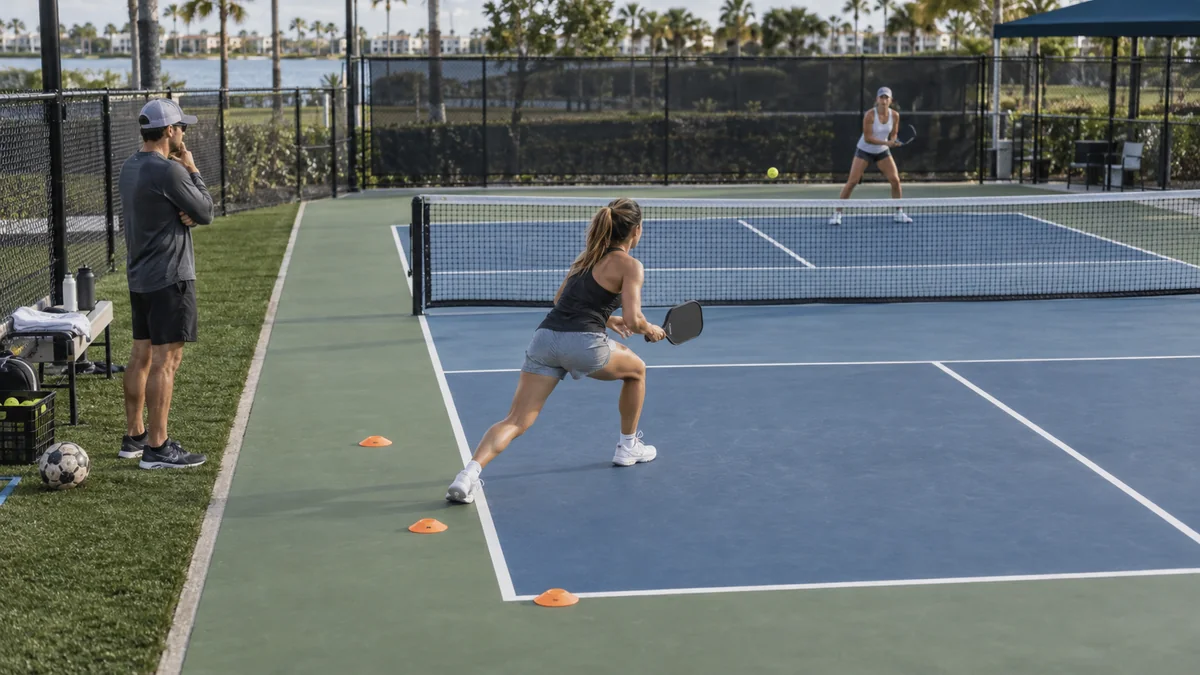
The shape of the soccer prodigy the feature describes
According to The Dink's reporting, Waters played from age 12 for AC Delray Rush, a powerhouse club in Florida, serving as an attacking midfielder and striker in the U15 elite age group. She played up a year against older girls while training with boys on a daily basis.
その実力は数字に表れています。2020〜21シーズンのU15では38試合で46ゴール31アシスト、1試合平均2.03ポイント。チーム内で2番目に多い選手が28ポイントだったことを踏まえると、突出ぶりが分かります。記事はこの数値を、プロのストライカーであるハーランド(1試合平均1.2得点)やムバッペ(約0.9得点)と並べて紹介していますが、こちらは得点のみ・世界トップリーグでの数字であり、U15の得点+アシストと同じ土俵で比べられるものではありません。
A player who had drawn college recruitment, an invitation to train with a professional women's club, a German development pathway and the interest of national team scouts left soccer around age 15, citing injury risk, schedule conflicts and the income that had begun to flow from pickleball. She had turned pro in pickleball at 12. The decision came after several years of running both sports side by side.
Putting the soccer numbers next to the pickleball numbers
Laying her cross-sport record out on one page makes clear that this is an athlete with the physical gifts to stand out in any sport. The pickleball figures are as reported by The Dink in July 2026.
| Period and sport | Metric | Details |
|---|---|---|
| 2020-21 / soccer (U15) | Goals and assists | 46 goals and 31 assists in 38 matches (2.03 points per game) |
| Reference / professional scoring rates | Per-game average | Haaland 1.2, Mbappe about 0.9 |
| 2026年7月時点/ピックルボール | World ranking | No. 1 in singles, doubles and mixed doubles |
| 2026年7月時点/ピックルボール | Gold medals won | 205 in total, 45 triple crowns |
| 2026年7月時点/ピックルボール | Singles win streak | Unbeaten for more than two years |
A player who showed standout scoring in teenage soccer moved to a racket sport and became the best in the world. The sheer speed of that move says something about the asset value of an athletic background. What keeps Waters from breaking down is easier to see alongsidethe path of Yuta Funamizu, who switched over after winning two soft tennis titles, which brings it into focus for readers in Japan.
Coaches and peers on the abilities that transfer
The feature convinces because several people, from different angles, land on the same core point.
- Former coach Clem McAuley: "From the time she was 12, what I saw on the court and what I saw on the soccer field were exactly the same. She practiced like it was a World Cup final."
- Development director Stefan von Rathloff: "She saw space other players could not see. She is one of the smartest athletes I have ever seen."
- Caitlin Carr, a former All-American in women's soccer at Duke and now a professional player: "Explosive acceleration, sudden backpedaling, instant cuts left and right. The core movement patterns are almost identical, and they carry over beautifully."
How the body moves, how space is read, how fast decisions come. Every element the three of them name is not knowledge of one sport's rules but the foundation a player carries between sports. Grip on a paddle can be learned later; that foundation cannot be built in a short time.
Not reaction but anticipation: why a brain trained elsewhere works
Specialist outlets explain the speed of Waters' movement not as quick reaction but as early anticipation. She reads the angle of her opponent's paddle and the contact point before the ball leaves it. So she is not reacting to the ball coming at her; she is moving ahead of thepreparatory motionthat produces it, as the argument goes.
That sense of reading an opponent's intent is exactly what an attacking midfielder in soccer sharpens. Reading passing lanes, sketching the next phase from where teammates and opponents stand. Bring the resolution of anticipation built on a wide pitch where eleven players move onto a court 13.4 meters long, and you can stand in the right place half a step before your opponent. In pickleball, where fast exchanges at the net decide matches, that half step is decisive.
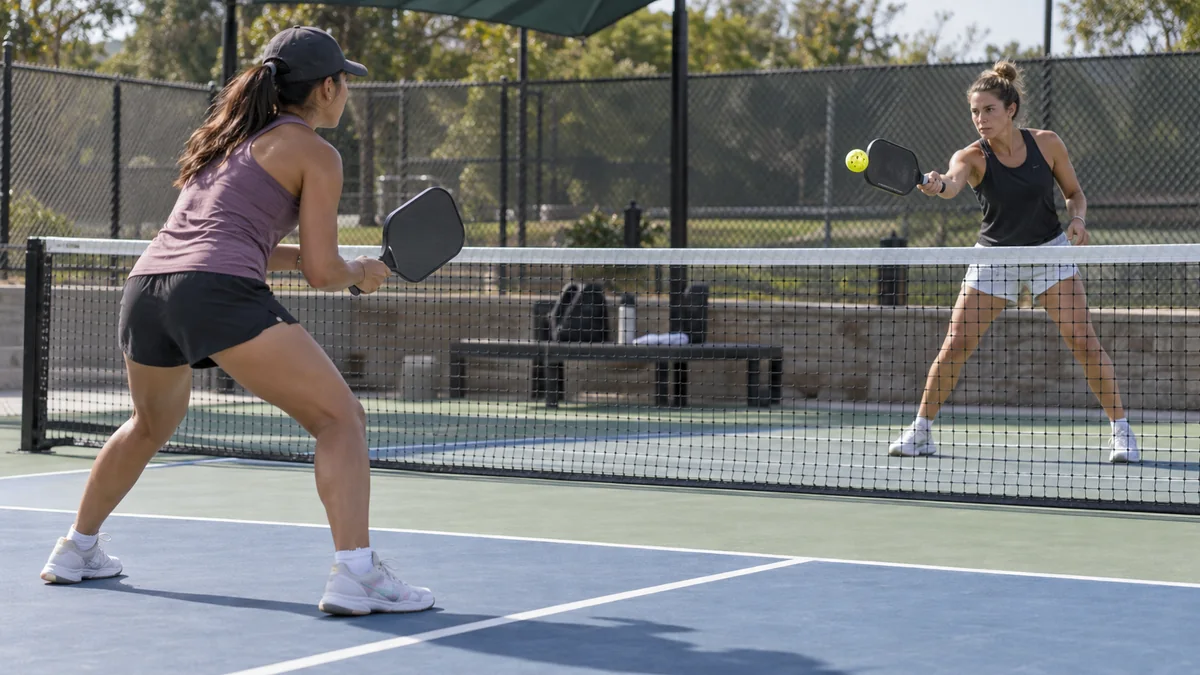
What is interesting is von Rathloff's account: "Training with the boys, she could not beat them physically, so she had to solve it with her head. That made her play better." An environment where she could not simply overpower people sharpened the precision of her reading instead. The fact that a gifted frame is not the only source of strength carries something for Japanese players, who often give away size.
What this means for development and switching sports in Japan
For players, coaches and facility operators in Japan, three points can be drawn from the feature.
First,The first is seeing experience in another sport as an asset rather than a detour. Junior development in Japan still leans hard on early specialization in a single sport, and the multi-sport idea of crossing between several lags behind other countries. The Japan Sports Agency began a Japanese-style multi-sport initiative in fiscal 2024, but awareness on the ground has yet to catch up. Waters' record is a live example of anticipation built in one ball sport becoming the foundation for being the best in the world at another. Whether a switch is framed as a rejection of everything before it or as reuse of a foundation changes the options a player has.
Second,The second is the room to put reading into words and teach it. Waters' strength looks like natural athleticism, but inside it sits a skill that can be broken down: watching the preparatory motion. Training to read an opponent's paddle face and center of gravity and predict what comes next can be built up by players without physical gifts. If coaching in Japan simply changed its words from "react faster" to "read your opponent's preparation," the explanation of where a player can improve would become concrete.Whether junior development at home can keep up while teenagers from abroad post results at international tournamentsis a question that also finds one answer in this way of teaching reading.
Third,The third is the practical matter of spreading injury risk. Behind Waters' departure from soccer was the risk of a knee injury. The point that athletes who narrow to one sport carry higher injury risk is starting to be shared in Japan as well. Former tennis and soft tennis players worried about knees or shoulders shifting their weight to pickleball, which loads the body differently, is also a rational choice for using a body over a long career.
Basic Information
| Item | Details |
|---|---|
| Player | Anna Leigh Waters (United States, 19) |
| Soccer background | Age 12 to around 15 / AC Delray Rush (Florida), attacking midfielder and forward |
| Pickleball | Turned pro at 12 / world No. 1 in singles, doubles and mixed doubles |
| Main record | 205 career gold medals / 45 triple crowns / unbeaten in singles for more than two years |
| Of note | First pickleball player signed by Nike / named to TIME100 Sports |
| Source feature | The Dink, "The Soccer Prodigy Who Pickleball Stole" (July 8, 2026) |
Wrap-up: how to find the next soccer brain
Waters' story is not one of a prodigy marching straight down a single sport. It is the story of a player who reached the top level in soccer, carried the anticipation she built there into another ball sport, and became the best in the world. Once it is clear that the substance of her strength is a transferable skill called reading, the view in Japan changes too. Among the former ball-sport players sitting idle, the next Waters candidate certainly exists. The first thing to check is a single point: which sports the players posting results at domestic tournaments came from. Tracing the origins of those who switched shows which sports Japanese pickleball can pull talent from. Coaches should stop settling for "react faster" and start by putting into words how to read an opponent's preparation.