USA Pickleball, the governing body in the US, is setting a clear ceiling on paddle spin for the first time. Paddles submitted for approval on or after October 1, 2026 must not exceed 2,100 revolutions per minute (RPM) under direct measurement of spin. It looks like an equipment rule, but it is also a manufacturing story: most paddles in circulation worldwide are made in factories in China and Taiwan, and brands including Japan's Mizuno build their products on top of that Asian production network.Asian paddles winning US approval and breaking open what had been a Western brand preserveis gathering pace, and against that backdrop the new standard puts a design constraint on the very formula of making in Asia and selling in the US. It is a change that touches both players in Japan and the people who plan and source paddles, so here is what it contains.
From a pass-fail on roughness to measuring spin itself
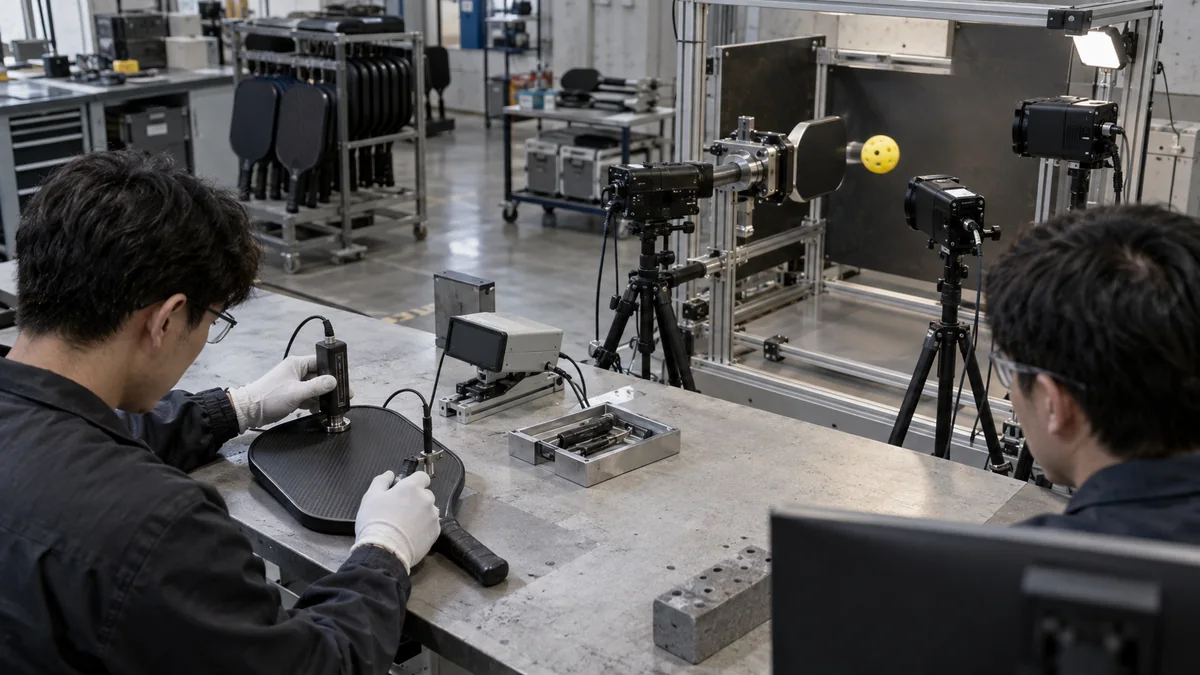
Until now USA Pickleball has managed spin indirectly. It measured the surface roughness of the paddle face and the coefficient of friction, failing anything above the set values. From October 1 those two stop being the basis for pass or fail and are demoted to recorded measurements. Taking their place is a new test that directly measures the spin imparted to the ball.
The measuring is handled by PaddleVision, developed by Sweden's Image Systems. It captures ball spin with high-speed twin cameras and motion analysis algorithms, replacing the old method in which an inspector counted video frames by hand. With less reliance on human eyes, variation in judgments falls, and makers are handed a number telling them exactly why a paddle failed.
The weight behind the number 2,100
Where the 2,100 RPM ceiling has been drawn becomes clear when laid over the spin distribution of paddles on the market. Paddles in circulation are said to cluster around 2,000 RPM, putting 2,100 RPM a step above that, in the range of spin-focused top models. The new standard draws its line right on top of the high-spin band that sells best and evolves fastest.
| Category | Spin benchmarks |
|---|---|
| Average paddle on the market | About 2,000 RPM |
| Above average | 2,050 RPM and up |
| Spin-focused top models | Over 2,100 RPM |
| New ceiling (approvals from October) | 2,100 RPM or less |
Strengthening the fine surface texture known as grit so a carbon face bites the ball and generates spin: the direction design competition has taken these past few years now has a clear ceiling above it. How development kept moving even after the rebound of approved paddles was cut far below its peak is covered inthe state of approved paddles, where the performance race continues even with rebound down 60 percent. For an industry that has re-optimized its designs with every regulation, the spin ceiling becomes the next optimization theme.
The transition schedule and room for a last-minute rush
The switch is phased. The official test protocol is distributed on July 15, and makers can already submit voluntarily to the new test. Paddles that pass under the new standard, however, only appear on the approved list from October 1. Until then the old roughness and friction standards remain in force, and anything that passes during that window goes straight onto the list.
- July 15: official test protocol distributed, finalizing the details of the new standard
- Through September 30: paddles passing the old roughness and friction tests can still be added to the approved list
- From October 1: new applications must pass the 2,100 RPM spin test
- Existing approved paddles: approvals granted before October remain valid regardless of spin
That last point, that already-approved paddles stay valid, is the important one. Clear the current standard by the end of September and a model can keep selling even with high spin. From a factory's point of view, the few summer months are a window for rushing approvals through, and at the same time a period to prepare new products designed under 2,100 for October onward.
Two tensions running through Asia's production network
The most direct impact lands on the factories in Asia, the sport's main production base. High-grit carbon faces that put heavy spin on the ball are exactly the territory Chinese and Taiwanese supply chains have made their own, and now a design ceiling sits on top of it. From the standpoint of planning and sourcing paddles in Japan, three points are worth holding on to.
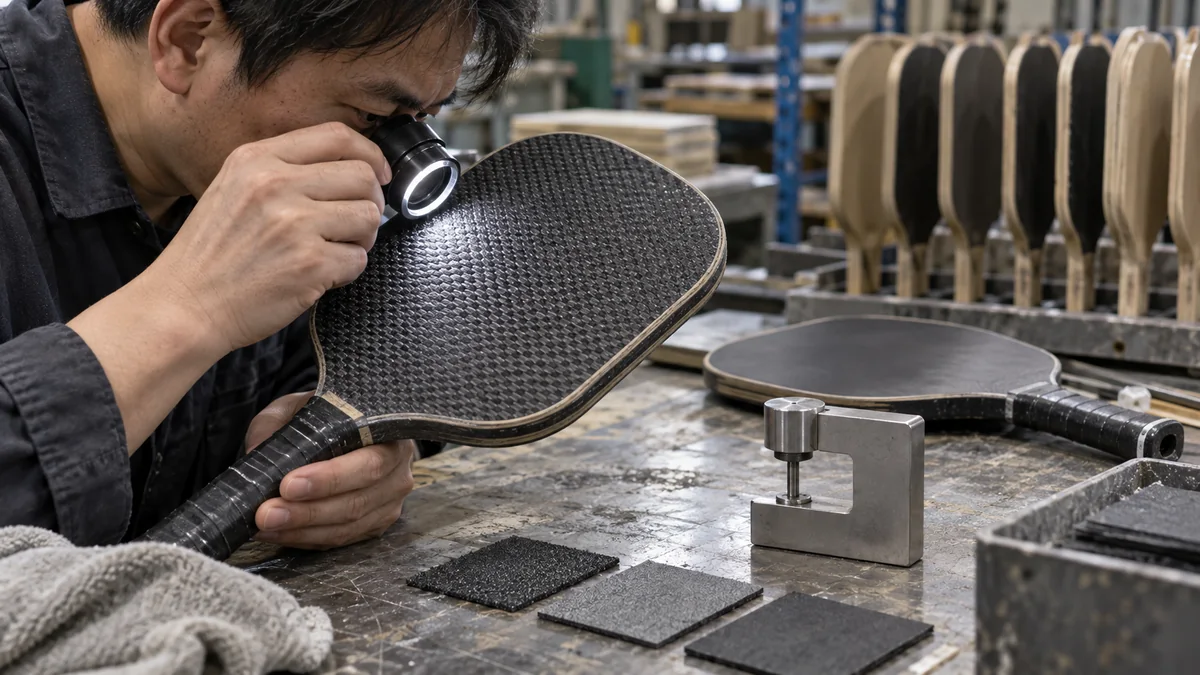
First,A design shift from maximizing spin to building within the ceiling. Until now, more spin meant a stronger pitch; from here the contest is over how to differentiate on control, feel and durability within the 2,100 frame. From a race to raise a number to a race to build quality inside a limit. The nature of the technology factories are asked for changes.
Second,Funding and inventory risk around approval timing. Chase a rushed approval by the end of September, or switch to products built to the new standard from October? A high-spin model approved and produced in volume under the old rules may sell in the market, but it is not a brand's next move, and steering inventory and design investment gets harder. For Japanese brands supplying the US and for OEM sourcing, that call feeds straight into purchasing plans.
Third,For Japanese brands it could work as a tailwind. A maker like Mizuno, which has refined its own materials and surface treatments, finds it easier to show its underlying strength on a field where the contest is completeness within a limit. As seen whenMizuno launched five paddle models in the US in a full-scale entry, the regulation gives brands that compete on total design rather than raw spin numbers an environment where real ability shows.
Key facts on the new standard
| Item | Details |
|---|---|
| Governing body | USA Pickleball |
| Spin ceiling | 2,100 RPM or less |
| Effective date | October 1, 2026 |
| Measurement method | Direct measurement (roughness and friction become recorded values) |
| Measurement system | PaddleVision (twin-camera system from Sweden's Image Systems) |
| Test protocol distribution | July 15, 2026 |
| Existing approved paddles | Approvals granted before October remain valid regardless of spin |
夏から秋にかけて確かめるべき三点
スピンに天井が設けられるという変化は、単なる用具ルールの改定ではなく、アジアの製造網と各ブランドの設計思想に対する再編の号砲です。国内でプレーする側にとっては、手持ちのパドルが「10月前の認定」であれば高スピンのまま使い続けられる一方、これから買う新製品は上限の中で作られたものに置き換わっていきます。ここから追うべきは三点です。第一に、7月15日に確定するテスト手順書の詳細。第二に、9月末までにどのブランドが駆け込み認定を進めるか。第三に、10月以降に登場する「2,100以下で作り込まれた」新世代モデルの評価です。用具選びの基準がスピンの数字一本から総合設計へ移る節目として、各社の動きを確認してみてください。