At the PPA ASIA 500 Sansan TOKYO OPEN 2026 Produced by TBS, which closed on July 4 at Arena Tachikawa Tachihi in Tachikawa, Tokyo, Honolulu's Tama Shimabukuro, 15, took home two gold medals, in men's doubles and mixed doubles. The fact that one of the winners at the first Asian stop of the world's top tour was a 15-year-old who had spent his days skateboarding and surfing until two years ago says a lot about the character of this event. How the tournament came together and how the show was designed were covered inThe world's premier tour opens in Tachikawa — reading the event design of the Tokyo Open, so here the focus is on the young talent behind the results and the development network in Hawaii standing behind him.
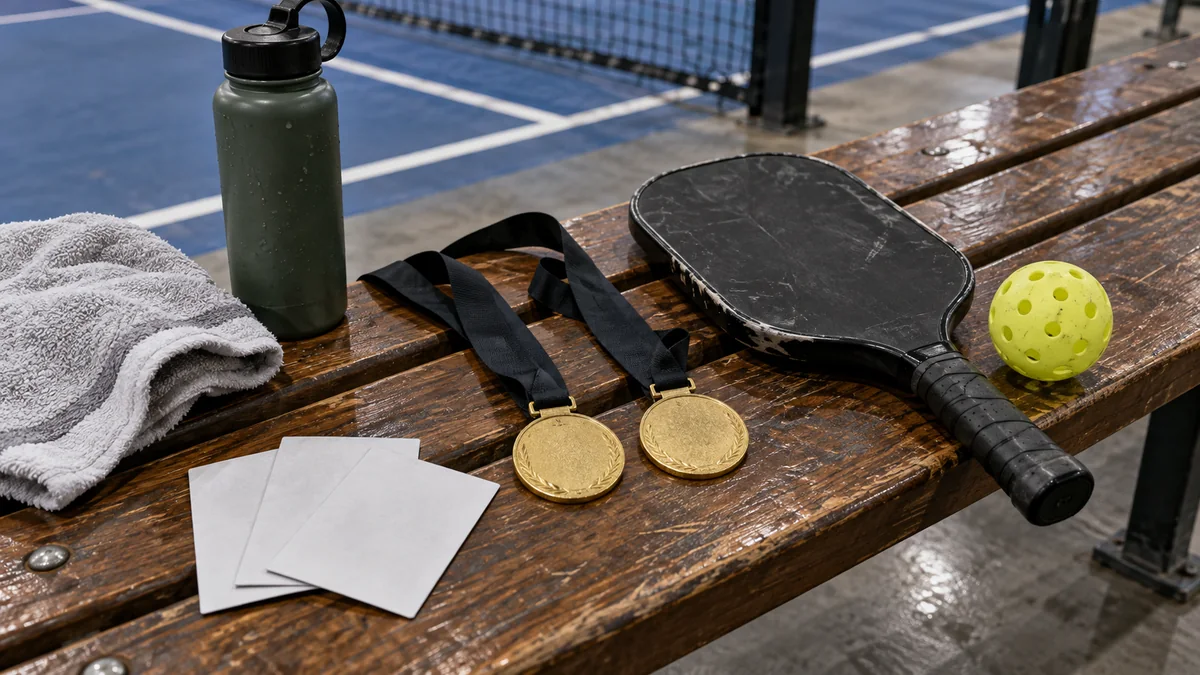
Gold in men's doubles and mixed: the double title Shimabukuro took in Tachikawa
Shimabukuro's golds came in men's doubles and mixed doubles. In men's doubles he paired with Japan's Yuta Funamizu, 32, and beat the American pair of Collin Johns and Ren Yang in the final. That match was also the first PPA Asia title for a Japanese man, and Funamizu's side of it is followed in detail inA homecoming win just as promised: the day Yuta Funamizu beat a former world No. 1 in Tachikawa. In mixed doubles he paired with Australia's Sarah Dennehy and again took the title, beating the Yufei Long and Ren Yang pair in the final.
He did not, however, win the men's singles, where he was seen as the favorite. He lost in the quarterfinals to Australia's Mitch Hargreaves and finished singles without a medal. He entered all three events, reached the top in two and let one slip. The outline of four days in which a 15-year-old traded blows with the world's top group is almost fully captured by that record of two wins and one loss.
A 15-year-old from Kakaako, Honolulu, rising fast two years after switching
Shimabukuro was born and raised in the Kakaako district of Honolulu, Hawaii. He took up pickleball about two years ago, and before that he is reported to have spent his time skateboarding and surfing. He is not a product of elite racket-sport schooling; what sets him apart is how quickly he brought the body sense of board sports into the game.
His breakthrough came in Atlanta in the spring of 2026. Seeded 22nd, he fought his way to the men's singles final of a slam-level event, knocking off higher-ranked players one after another and setting off the "Tama Town" phenomenon, as reported in15-year-old Tama Shimabukuro reaches the PPA Atlanta men’s singles final—a stunning silver from the No. 22 seed. At the time of the Tokyo event his PPA Tour rankings were 12th in men's singles, 17th in men's doubles and 14th in mixed doubles. An all-round young player inside the top 20 in all three disciplines took multiple titles at the host nation's tournament.
What the two golds look like in numbers
Breaking down what Shimabukuro did in Tachikawa by event shows the caliber of the opponents he beat.
| Event | Pair | Opponents in the final | Result |
|---|---|---|---|
| Men's Doubles | Yuta Funamizu (Japan) | Johns / Yan (US) | Champion (gold) |
| Mixed doubles | Sarah Dennehy (Australia) | Long / Yang | Champion (gold) |
| Men's singles | — | Lost to Hargreaves (Australia) in the quarterfinals | No medal |
Collin Johns, whom he beat in men's doubles, is a craftsman nicknamed the Professor who has held the world No. 1 spot in men's doubles with his brother Ben. Yang, whom he beat in mixed, was the player partnering Johns in that same men's doubles final. With top players standing in his way again and again across events, a 15-year-old winning two finals is no small thing.
The depth of players Hawaii keeps sending out
Writing this off as Shimabukuro alone standing out misses the substance of the result. Over the past few years Hawaii has become ground that keeps producing young pickleball players.
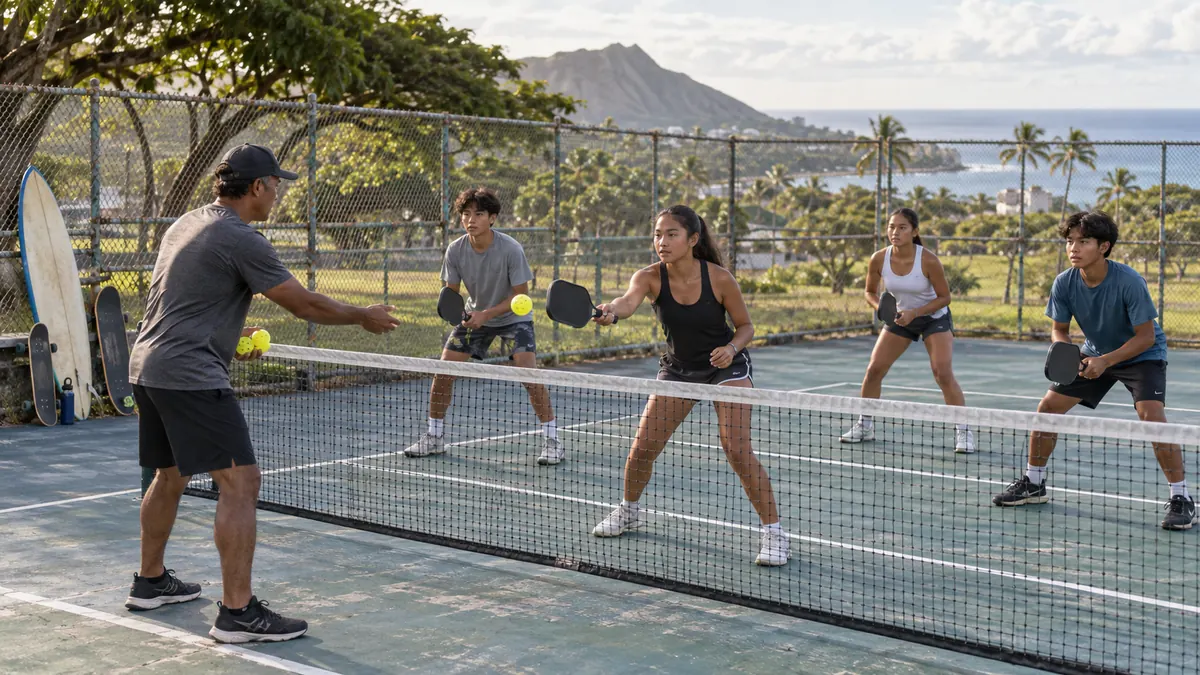
- 島袋は2026年のMLP(メジャーリーグ・ピックルボール)ドラフトで全体9位指名を受け、ユタ・ブラックダイヤモンズと総額12万5000ドルで契約。10代としては当時最高額の指名でした。
- Among the other Hawaiians, Kiola Kunimoto, from Hawaii Island and a convert who won the state high school tennis singles title, was also in the draft and was picked for 45,000 dollars.
- In Honolulu, the Hawaii Pickleball Academy was founded in 2023 and runs kids' programs and development series year-round, so a place for junior players to land is taking shape.
島袋の12万5000ドルという金額は、当時の次に高い10代選手の約3倍に当たります。市場が「ハワイ育ちの10代」に付けた値付けそのものが、この地域の育成網への評価とみて差し支えありません。
What development in Japan can learn
For the competitors and coaches of the host nation that ran the tournament, Shimabukuro's two golds raise three points.
First,Development that does not care which sport a player comes in fromis the first. Shimabukuro is not a former tennis or badminton player; he went from skateboarding and surfing to the world's top group in two years. Development thinking in Japan leans toward converts from racket sports, but Hawaii's case shows there is room to widen the base to athletic board-sport crowds. Japan has plenty of young people in surfing and board culture, and that is an untouched supply.
Second,A circuit that puts teenagers into real competition earlyis the second. Hawaii's players build their base at an academy and then connect over a short distance to the MLP draft and PPA main draws. In Japan, too, promising teenagers are starting to sign pro contracts with the PPA, and the impact of the first of them was discussed inTeenage challengers arrive at the Tokyo Open — can Japan's junior development keep up?. Rather than leaving developed players to sit at home, how quickly can they be put into real matches against stronger opposition? That is where Hawaii and Japan differ.
Third,Turning a home tournament into a place to find talentis the third. This time the name left alongside Shimabukuro's was Japan's Funamizu, and the final was staged in Tachikawa. A tournament that gathers the world's best players at home is a commercial chance to fill seats and, at the same time, a rare chance to put local teenagers on the same court as stronger players. Whether Japan can prepare a route for its juniors to squeeze into even the edges of the main draw by the next Tokyo edition is the organizers' homework.
Tournament and player basics
| Item | Details |
|---|---|
| Tournament Name | PPA ASIA 500 Sansan TOKYO OPEN 2026 Produced by TBS |
| Dates and venue | July 1-4, 2026 / Arena Tachikawa Tachihi (Tachikawa, Tokyo) |
| Tier and prize money | 500 ranking points / 50,000 dollars total prize money |
| Tama Shimabukuro | Born around 2011, age 15 / from Honolulu, Hawaii |
| Results in Tokyo | Men's doubles gold (with Funamizu), mixed doubles gold (with Dennehy), men's singles out in the quarterfinals |
| 2026 team | MLP Utah Black Diamonds (ninth overall in the draft, 125,000 dollars) |
Wrap-up: three signs to watch next
The first PPA Asia event in Tokyo left a double memory: Japan's Funamizu on top in men's doubles, and a Hawaii-raised 15-year-old in the same pair taking gold in mixed as well. Three things are worth following from here. First, how far Shimabukuro can push his rankings in all three events through the crowded MLP and PPA calendar. Second, whether Kunimoto and the Hawaiians behind him can follow the same circuit. Third, how Japan's juniors use a home tournament as a stepping stone. The route by which talent reaches the top of the world while still in its teens was laid out in Tachikawa as a working example. Start by putting the field for Shimabukuro's next event next to the results of domestic junior tournaments and looking at them side by side.