米国のプロリーグMajor League Pickleball(MLP)が2026年7月27日、男女混合の団体戦「MLP Nations Cup(ネーションズカップ)」の新設を発表した。開催は10月30日から11月1日の3日間、会場はテキサス州ダラス近郊ファーマーズブランチのブルックヘブン・カントリークラブ。直後に同会場で開かれる「2026 Pickleball World Championships(世界選手権)」の開幕イベントに位置づけられる。プロのチーム戦を国・地域の代表という枠に載せ替えた初の試みで、今後、日本代表がプロの団体戦で世界と対戦する道を拓く可能性がある。
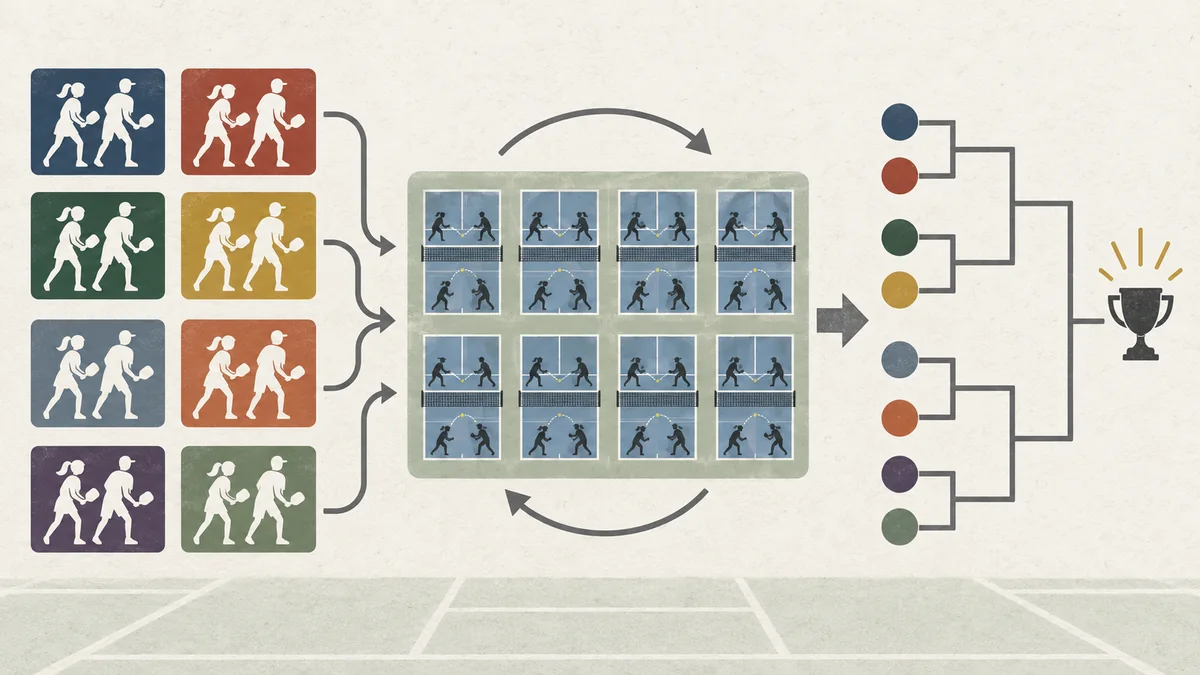
Eight teams — US, Canada, two from Asia, Western and Eastern Europe, South America, Australia — in mixed-gender team play
According to the announcement, each of the eight teams carries a country or region: the United States, Canada, two teams from Asia, Western Europe, Eastern Europe, South America, and Australia. Worth noting is that this is not strictly an eight-nation contest but an eight-team field that includes regional sides. Asia gets two slots, Europe is split east and west, and South America is grouped as a continent. Each team is led by a top player or ambassador who serves as its public face. Friday and Saturday are round robin to set the seeding, and Sunday moves to single elimination for the championship. The mixed-gender design carries the team format MLP has used all along into a national-representation setting.
| Item | Details |
|---|---|
| Announcement Date | July 27, 2026 (MLP official) |
| Run | October 30 to November 1, 2026 (three days) |
| Venues | Brookhaven Country Club (near Dallas, Texas) |
| Entries | Eight teams (United States, Canada, two from Asia, Western Europe, Eastern Europe, South America, Australia) |
| Format | Mixed-gender team play; round robin Friday and Saturday, single elimination Sunday |
| Position | Opening event of the 2026 Pickleball World Championships |
Until now MLP has run a business of assigning players to city-named clubs and buying, selling, and trading them. It has produced players who changed hands three times in a single day, and even anunprecedented circular trade, and observers have pointed to a structure in which players move like currency. The Nations Cup gathers those same players back under the flags of where they come from, at least temporarily. It is a device that emphasizes belonging, running in the opposite direction from the club business.
PPA opening the door to home-country representation laid the groundwork for a national-team stage
The foundation for the pro side to step into national team competition has been forming over the past year. The PPA Tour has signaled it will open a path for top players who had been barred by their contracts from representing their home countries at international events, which this site reported asthe PPA's move to allow home-country representation. Once players can carry a flag, the next thing needed is a stage on which to do it. By placing a team competition at the opening of the World Championships, the Nations Cup supplies that stage from the promotion side. The other backdrop is the crowding of international events and the fight over who leads them, with India putting captain Harsh forward at the World Cup in Da Nang, Vietnam, a picture covered inJapan gets measured at the Da Nang World Cup. International competition organized around national teams has already begun, and MLP is moving to take the lead with its promotional muscle and its appeal on television.
代表戦でも『エキシビション』 国別選手権とは異なる位置づけ

専門メディアの反応は、規模より枠組みの新しさに集まった。MLPは公式発表で、地域の誇りと国際的なライバル関係をトップ選手の顔ぶれで束ねる狙いを打ち出し、世界選手権の口火として演出する構えを示した。The Dinkなどの専門媒体は、MLPが従来のクラブ興行とは別軸で「代表」を商品化した点に注目している。一方で、アジア2枠・欧州東西分割といった編成は、参加国の実力分布と放送上のバランスをにらんだ興行としての線引きであり、純粋な国別選手権とは性格が異なるとの見方も出ている。世界選手権本体がより多くの国を集める建て付けである点と合わせて、Nations Cupは開幕を盛り上げる代表エキシビションの性質が濃いと指摘されている。
For Japan to field its own team, selection criteria and a visible player pool are needed
The implications for Japan come in two stages. In the short term there is little room to enter this framework as a standalone Japan team. Asia holds two of the eight slots, those slots lean regional, and any Japanese player who appears will for now do so as part of a broadly defined Asia squad. Real measurement against international fields will come first on a different stage, such as the World Cup in Da Nang.
Over the medium and long term, the Nations Cup is a proof of concept that pro team competition can be organized around national representation. If it draws crowds and broadcast interest, expanding the number of teams and subdividing the Asian slots — in other words, a path for Japan to hold its own team — moves onto the agenda. What will be needed then is a deep enough player pool and a system for selecting from it: sorting out the relationship between pro contracts and national team appearances, selection based on objective measures such as DUPR, and funding to support national team activity. Countries that put those in place first will slip into the expanded field. Japan still relies on open calls even to send juniors abroad, as this site pointed out inthe gap between how India and Japan pick their squads, and the question is whether Japan can hold a national team as a standing system. How much audience and broadcast attention the eight teams generate in Dallas at the end of October is the number that will start any discussion about adding Asian slots.