At Major League Pickleball's Chicago event (Week 8), the Dallas Flash took a second straight title, beating Brooklyn 21-10 in the deciding DreamBreaker. The standout of the weekend was Dallas's Brooke Buckner, who went 5-1 and won about 65% of the points she played. A team that had been sitting last only a few events earlier switched onto a winning streak on the back of one player's rapid improvement. How far individual growth can move a team sport is a question with plenty to offer anyone in Japan thinking about MLP-style leagues or player development.
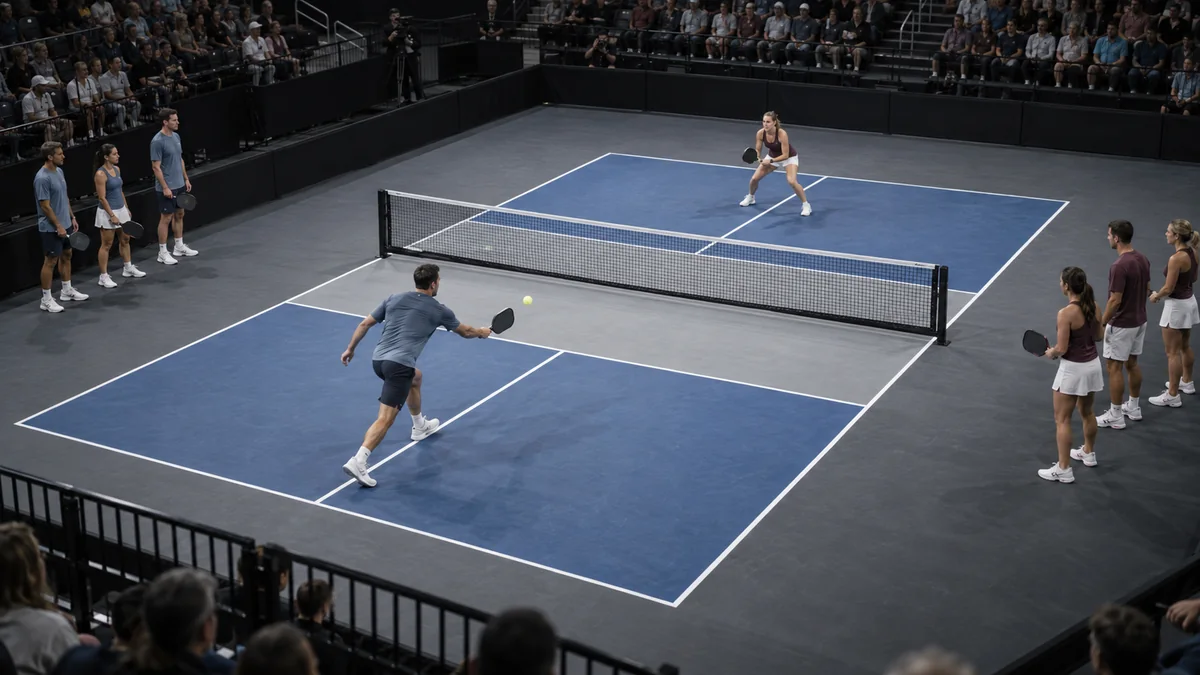
Brooklyn beaten 21-10 in the DreamBreaker, streak reaches 11
Dallas went unbeaten through Chicago, following its San Diego title the week before with back-to-back wins. Over two weekends it beat top sides including Brooklyn, Los Angeles, and Columbus, running its streak to 11. The title brought 25 standings points and lifted Dallas from eighth to sixth for the season. Chicago is a late-season stop ahead of the finale in Orlando. Momentum does not translate straight into standings position under MLP's structure, though. How 11 straight wins still leaves a team sixth is something Pickle Times covered separately inthe math behind the season points system. This article looks instead at how one player transformed behind that.
Buckner won 65% of her points and turned close games into wins
In a word, Dallas's weekend was Buckner's weekend. On top of a 5-1 record, she won about 65% of the points she played. Pulling nearly two-thirds of your points your own way is what turns tight situations into wins. MLP is made up of men's and women's doubles, mixed doubles, and a DreamBreaker when the match is level. The DreamBreaker is a heavily individual format in which players rotate in turn to score, and a team with someone who can string points together tends to take the close ones. The 21-10 margin in the final against Brooklyn shows exactly how destructive one player on a roll can be at that moment.
Acevedo 8-1, McKinnon 1-9 — individual form swings the result
The rest of the team clicked as well. Texas native Nico Acevedo went 8-1 and his partner Erik Oncins 7-1, both near the top of the numbers. In contrast, SoCal's Will McKinnon struggled at 1-9, underlining that this is a sport where one player's form swings a team's results.
| Player | Affiliation | Weekend record |
|---|---|---|
| Brooke Buckner | Dallas | 5-1 (about 65% of points won) |
| Nico Acevedo | Dallas | 8-1 |
| Erik Onsins | Dallas | 7-1 |
| Will McKinnon | SoCal | 1-9 |
Last place early on, and that swing reflects MLP's structure
Dallas finished last at the Austin event early in the season. That same team has now taken two titles in a row. A swing that wide is the flip side of an unsettled team, but it also captures what the MLP format is like. Rosters are small, so if one or two players get hot a team can leap from last to first in a short span, and the reverse happens too. Player movement between events is fluid as well, and Pickle Times followeda trade in which players circled between four clubs. How quickly an acquired player fits in and becomes a scoring source is what separates teams. Buckner's rise is a case where that fit happened fast.
In league design in Japan, scoring ability and match format decide who the stars are

日本でこの一戦から取り出せる論点は二つある。一つは、チーム競技であってもピックルボールは個人の得点力が結果を強く支配する事実だ。育成やクラブ運営を考えるなら、チーム戦術の練り込み以前に、僅差の局面でポイントを取り切れる個人を何人抱えられるかが土台になる。もう一つは、フォーマットが選手の見え方を作る点だ。ドリームブレーカーのように個人の連続ポイントが問われる形式は、バックナーのような選手にスポットライトを当て、スターを短期間で生む。リーグや興行を設計する側にとって、どの形式を採るかは、どんな選手を主役にできるかという選択と表裏一体になる。無名に近い選手が一つの週末で牽引役に躍り出る展開は、観る側の関心を新たに引き込む力を持つ。オーランドの最終戦で、ダラスがこの勢いを順位にどう変えるかが注視される。