この記事の要点
- With changes in how people work, a growing number of companies feel that internal communication has thinned.
- テレワークやフリーアドレスの普及で、部署を超えた交流や雑談の機会が減少。
- Amid this, quietly drawing attention is a sport called "pickleball."


The background of why pickleball is drawing attention in corporate training
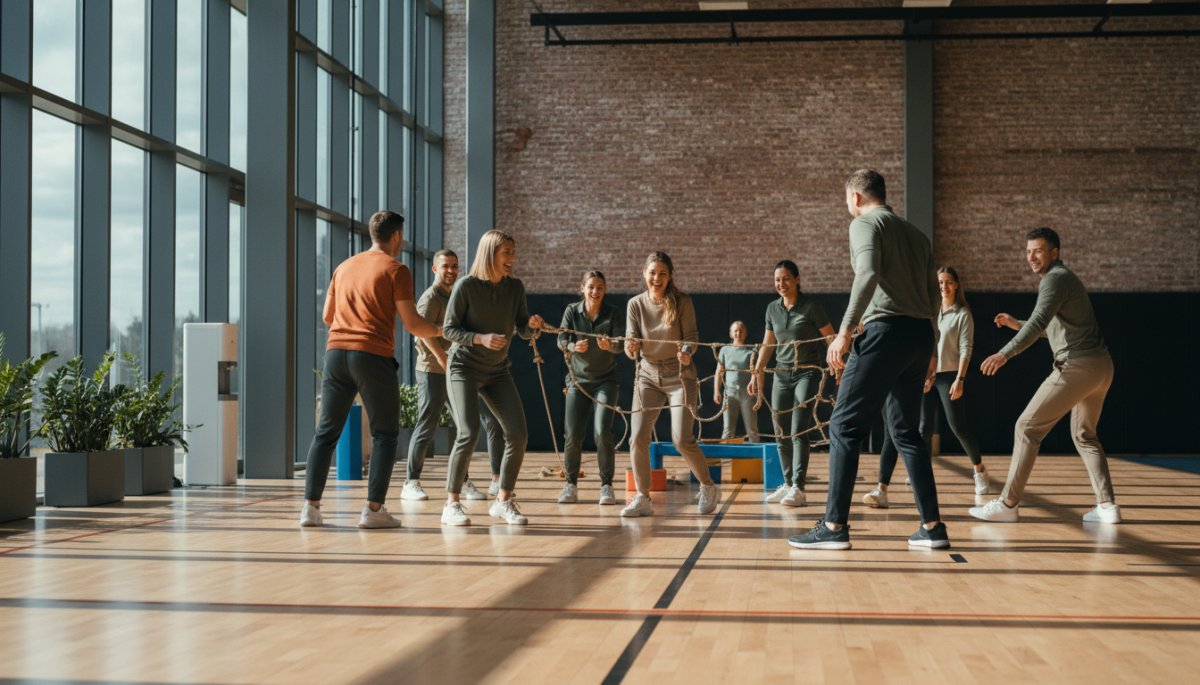
With changes in how people work, a growing number of companies feel that internal communication has thinned.
テレワークやフリーアドレスの普及で、部署を超えた交流や雑談の機会が減少。新入社員と既存社員の関係構築も難しくなっています。こうした「人と人とのつながりが減ったと感じる組織では、交流施策を検討する余地があります。ただし原因や解決策は組織ごとに異なります。

Amid this, quietly drawing attention is a sport called "pickleball."
1965年にアメリカで誕生したこのスポーツは、テニス、バドミントン、卓球の要素を組み合わせた新感覚のラケットスポーツです。アメリカでは過去5年でプレー人口が約5倍に拡大し、2025年には約2,430万人がプレーしています(SFIA調べ)。5年連続で全米一成長の速いスポーツに選ばれました。
年齢や体力レベルに関わらず、誰でも楽しめる点が最大の特徴。短い説明と練習でゲーム形式を試せる場合がありますが、習得速度には個人差があります。この手軽さが、企業研修やチームビルディングの場で選ばれる理由となっているのです。
企業の交流施策として検討できる3つの特徴
The reasons pickleball is chosen for training and team building can be broadly organized into three. First, grasp the big picture with the at-a-glance table.
| Reason | In a word | Benefits for companies |
|---|---|---|
| A level playing field | Everyone starts as a beginner, so hierarchy disappears | Horizontal connections that cut across departments and titles |
| Cost and time efficiency | Wraps up in one or two hours at low cost | Easy to run after work or during lunch breaks |
| Health and interaction in one | Light aerobic exercise paired with natural conversation | Advance employee wellness and team energy at the same time |
Reason 1: A level playing field forms naturally
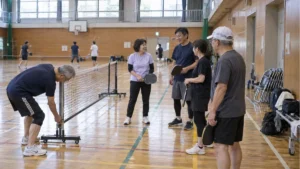
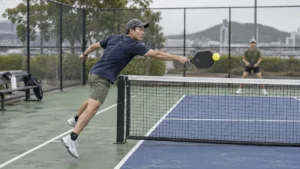
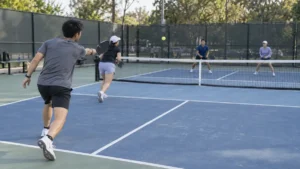
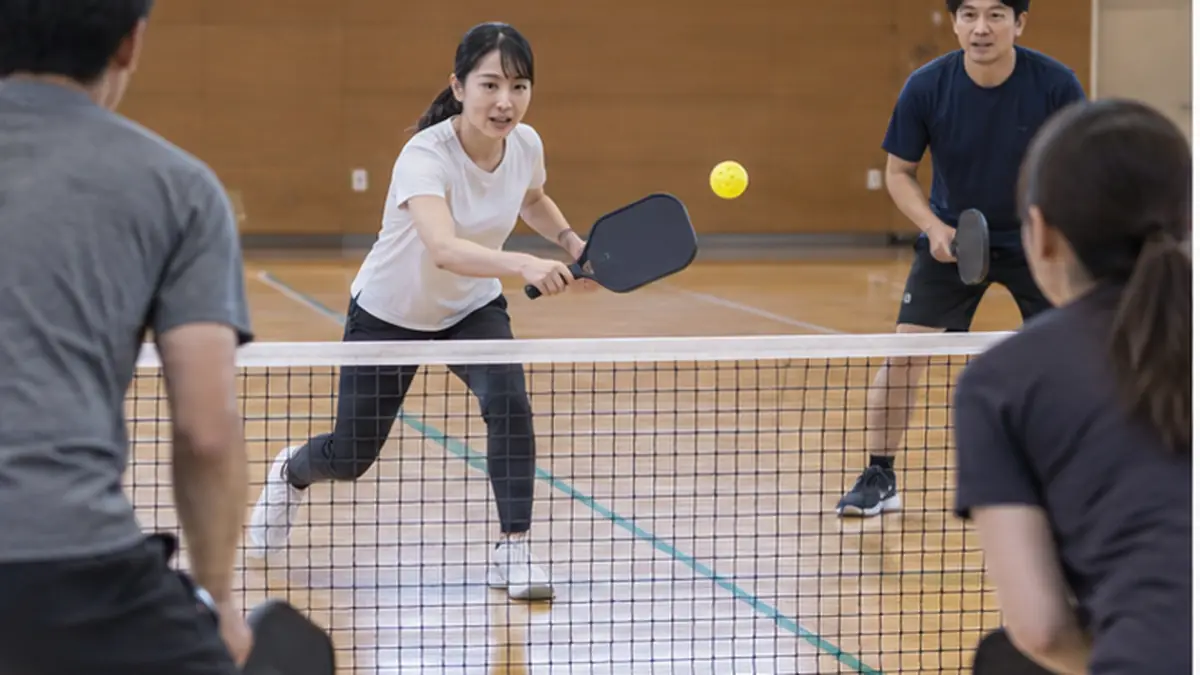
Pickleball is played mainly as doubles (two against two).
ダブルスではペア同士の声かけが起きやすい一方、会話量や参加しやすさには個人差があります。運動経験、年齢、障害の有無にかかわらず参加を強制せず、見学や別メニューも用意してください。普段と異なる役割で交流する機会にはなり得ます。
In a post from someone who introduced pickleball at a company event, taking on a challenge from scratch was described as bringing the team together naturally. Precisely because everyone is a beginner, there is no wall of good versus bad players, and people start calling out to one another. Sharing skills becomes purely enjoyable time, because it happens in play rather than in work.
理由2:時間と費用を設計しやすい
必要な費用は会場、参加人数、用具レンタル、講師、安全管理で変わります。ゴルフなど他施策との一律比較はできません。候補会場から見積もりを取り、移動時間を含む総費用で比較してください。
初回は短いルール説明、基本練習、休憩を含むゲーム形式を候補にできます。参加を強制せず、見学や運営役も選べるようにします。
Reason 3: Health promotion and team building in one
ピックルボールは軽い有酸素運動と反射トレーニングを組み合わせたスポーツ。運動量はダブルスかシングルスか、ラリーの長さ、本人の体力で変わります。運動習慣のない参加者には短時間から始め、休憩と水分補給を組み込んでください。
ダブルスは声を掛け合う場を作りやすい一方、それだけで組織課題が解決するわけではありません。身体活動と交流を同じ場に組み込める一案です。効果は参加率や運営、継続性も含めて評価してください。
Source
The Dink Pickleball「Has Pickleball Overtaken Golf as the Preferable Business Activity in Corporate America?」
Created from
公式に確認できる企業向けカテゴリー
Pickleball Japanは2026年のPJL Burger King Cupで企業カテゴリーを案内しています。これは企業単位で参加できる公式イベントが存在する根拠にはなりますが、参加による組織改善や健康効果を証明するものではありません。
社内施策として実施する場合は、参加率、満足度、負傷・ヒヤリハット、部署を越えた交流の有無など、自社で評価項目を決めてください。
How to introduce it and what you need to prepare
Gear and venue you need
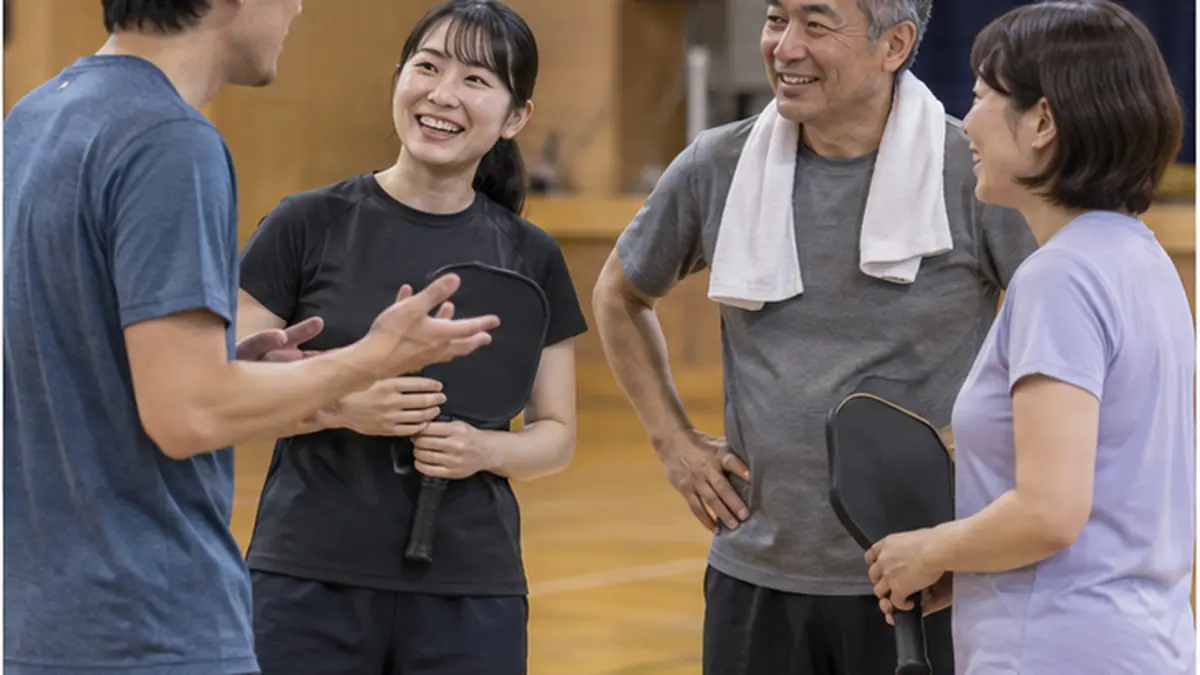
You might think that doing a sport at a company event sounds like a lot of preparation, but with pickleball there is very little to get ready.
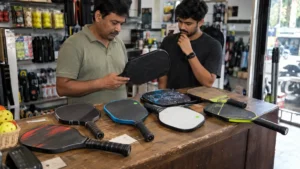
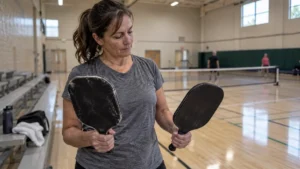
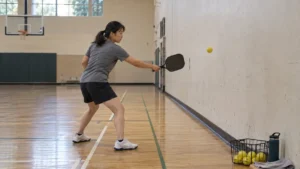
The gear you need is two to four paddles and a few pickleballs. Paddles and balls can be bought as a set at sporting goods stores or on Amazon. As for the venue, a space about the size of a badminton court is enough. It can be held in a gymnasium, a warehouse space, or a rental studio, and because it is unaffected by weather and needs minimal setup, it is an easy sport to bring into corporate training.
How to structure the program
If you are introducing it for the first time, starting with a trial session is recommended.
Doing about 30 minutes of rules explanation and basic practice, then playing about an hour of match-format games, lets everyone enjoy it. Since doubles is the basis, building teams across departments or mixing ranks makes it easier for communication to spring up among employees who rarely interact. Holding a get-together after the matches will deepen the connections born through the sport even further.
Making use of outside support
If holding it entirely on your own is difficult, you can also make use of outside support.
Organizations such as Tokyo Pickleball Management plan and run pickleball training and team-building events for companies. The Pickleball Japan Federation (PJF) and the Japan Pickleball Association (JPA) also offer programs that support corporate adoption, such as dispatching instructors, renting equipment, and setting up discount purchase schemes. If you feel uneasy about a first-time rollout, it is a good idea to consult these specialist bodies.
How it differs from other team-building measures
There are many team-building options: drinking parties, escape games, training workshops, golf, and more. What sets pickleball apart from these is that everyone starts as a beginner. Because experienced players rarely gain an advantage, people can enjoy it on equal footing regardless of rank or years of service.
At drinking parties the people you talk to tend to be fixed, and golf has the barriers of experience gaps and cost. Classroom-style training offers plenty of learning, but its power to loosen relationships themselves is limited. In pickleball, players call out to one another naturally while moving their bodies, so tension eases and sides you never see at work come to the surface. The ease of holding it repeatedly at short duration and low cost is another big difference from other measures that tend to be one-off.
Cost guidelines and budget planning
Initial costs and running costs
The cost of introducing pickleball varies with scale and content, but you can start relatively inexpensively.
As an initial cost, a paddle-and-ball set runs about 10,000 to 20,000 yen. For the venue, using a public gymnasium costs only a few thousand yen per hour. If you invite an outside instructor, labor and travel costs are added, but even so a single event often stays within 100,000 yen. Compared with golf entertaining, the cost is dramatically lower.
継続的に実施する場合は、社内にパドルとボールを常備しておくと便利です。定期的なイベント開催により、社員の健康促進とコミュニケーション活性化が期待できるため、費用対効果は、参加率、会場費、安全管理、実施後アンケートなどで検証してください。
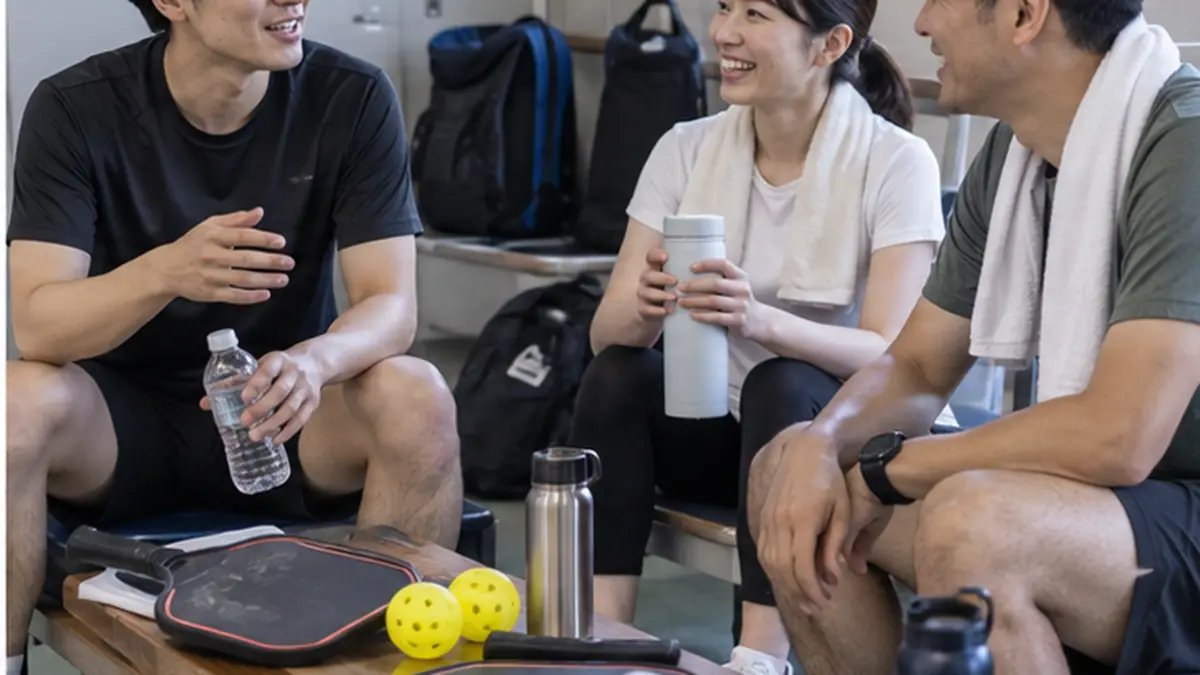
Summary: Energize your organization with pickleball
ピックルボールは、企業の交流施策や身体活動プログラムの選択肢の一つです。
年齢や体力レベルに関わらず誰でも楽しめ、フラットな関係性が自然に生まれる。コストと時間効率が高く、身体活動と交流を同じ場に設けやすい。こうした特徴が、現代の企業が抱える「人と人とのつながりの希薄化」という課題を考えるきっかけになり得ます。
Companies that have adopted it give it high marks, with comments such as the experience of everyone starting from zero toward the same goal tied into team building, and being able to see sides of others you never usually see. Preparation is relatively easy and outside support is well developed, so even a first-time company can adopt it with confidence.
社内の部門の壁を越えた交流や、チーム内の部門を越えた交流のきっかけとして、ピックルボールという選択肢を検討してみてください。
Precisely because it is a new sport, everyone can enjoy it on equal footing. That experience should tie into energizing the whole organization.
FAQ
Why is pickleball well suited to team building?
ダブルスで声を掛け合う場を設けやすいからです。ただし経験差、役職差、健康状態への配慮が必要で、効果は実施後に参加者の声や継続率で確認してください。
What should we start with for a first in-house rollout?
A trial session is recommended first. After 30 minutes of rules explanation and basic practice, about an hour of match play lets everyone enjoy it. Building teams across departments and mixing ranks makes interaction easier to spark.
How much does it cost to introduce?
A paddle-and-ball set runs 10,000 to 20,000 yen, and the venue costs only a few thousand yen per hour at a public gymnasium. Even inviting an outside instructor, a single event often stays within 100,000 yen, far less than golf entertaining.
Can employees who are not athletic take part?
一律には言えません。運動習慣や持病、障害の有無に合わせて、短時間の練習、休憩、見学などを選べる設計にしてください。
I am nervous about holding it on our own.
Organizations such as Tokyo Pickleball Management plan and run corporate training and events. The Pickleball Japan Federation (PJF) and the Association (JPA) also support adoption by dispatching instructors and renting equipment.
確認した一次情報
Related Articles Worth Reading
- How Do You Find Pickleball Companions? Joining Communities and Ways to Connect
- Where Can You Play Pickleball? Nationwide Court Info and How to Find a Court
- How much does pickleball cost for beginners? A complete guide to initial and ongoing costs
- Making the Most of Online Pickleball Lessons You Can Improve With at Home
- I Tried Pickleball as a Beginner | An Experience Report and How-to-Start Guide
Related Articles