この記事の要点
- Pickleball, which spread explosively in America, is steadily putting down roots in Europe as well.
- アメリカほどの爆発的なスピードではありませんが、スペイン、イギリス、オランダ、ドイツなどを中心に愛好者が増え、既存のテニスやバドミントンの文化を持つ地域から広がっています。
- Pickleball adoption in Europe, while not explosive, continues to grow steadily.

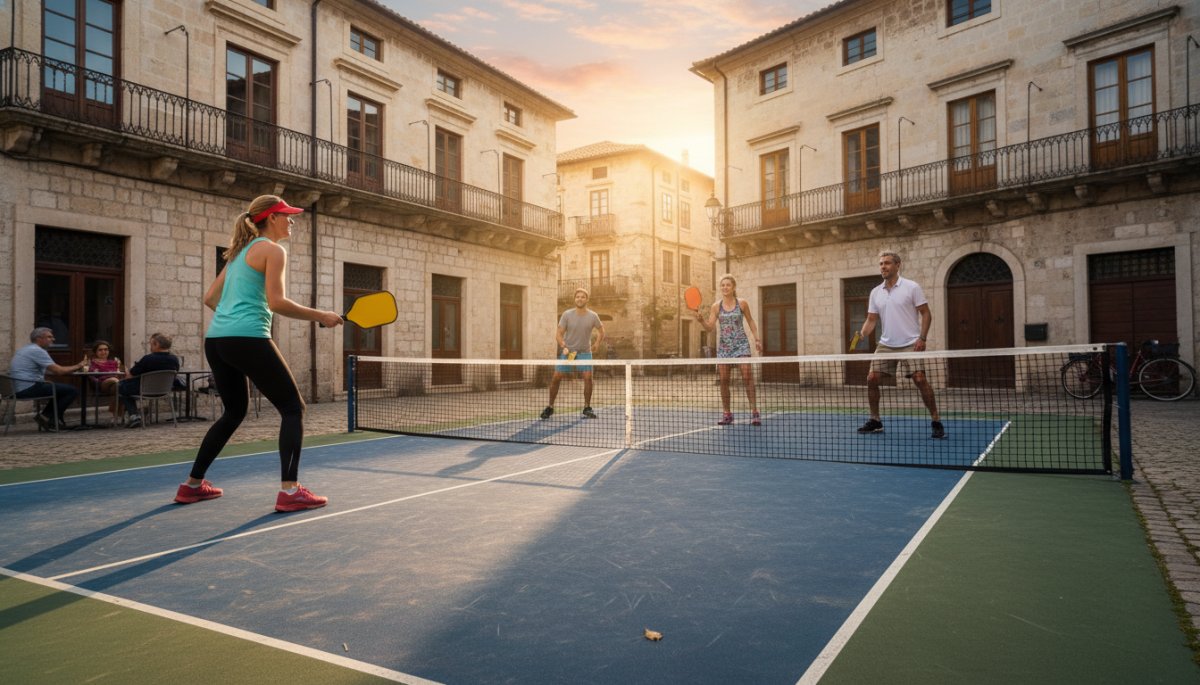
Pickleball, which spread explosively in America, is steadily putting down roots in Europe as well.
It is not at America's explosive pace, but enthusiasts are increasing mainly in Spain, the UK, the Netherlands, and Germany, spreading from regions with existing tennis and badminton cultures. This article organizes the adoption status and characteristics of each European country, the differences from the US, major tournaments, and the future outlook, based on information as of June 2026.
The Current State of Pickleball Drawing Attention in Europe
Pickleball adoption in Europe, while not explosive, continues to grow steadily.
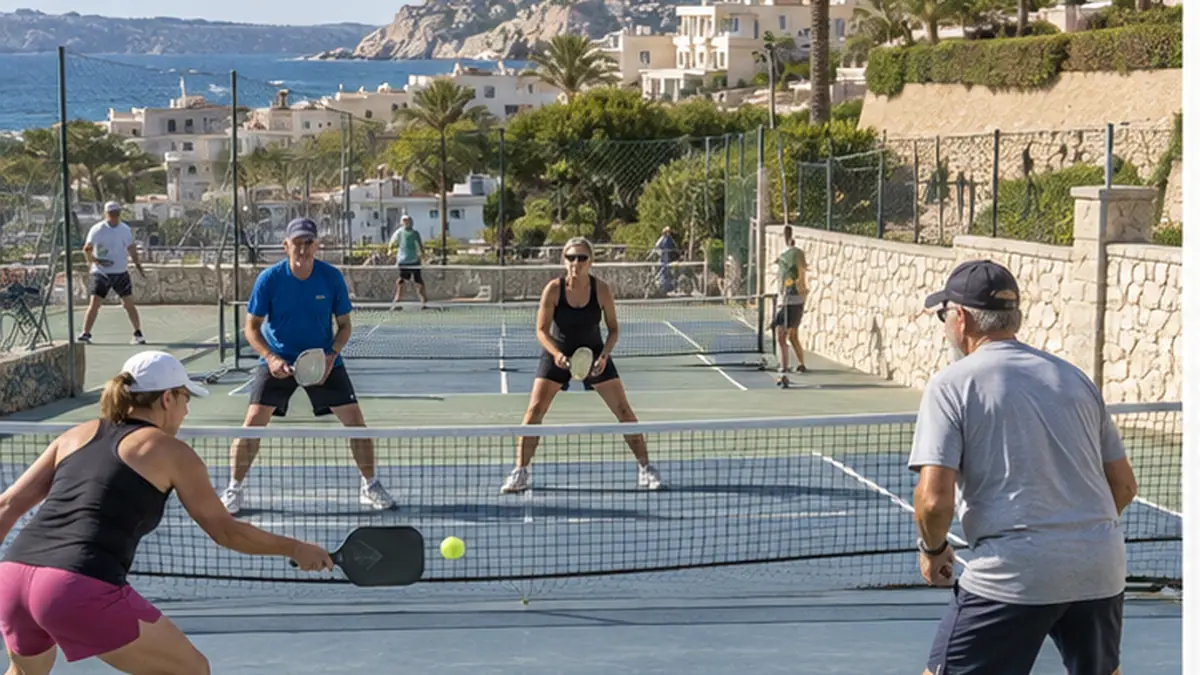
In Spain especially, the development of outdoor courts taking advantage of the mild climate has progressed, with many courts installed at resort areas such as the Costa del Sol and Alicante. In the UK, its popularity has risen mainly among older adults, and it is increasingly adopted as a sports program by local communities. In the Netherlands and Germany, associations have been established and promotion has begun in earnest. A common feature is the use of existing sports infrastructure. Because converting tennis courts and badminton courts keeps initial investment down, adoption is progressing at both public and private facilities.
| Country | Characteristics of Adoption |
|---|---|
| Spain | Centered on resort areas. Driven by foreign residents. Padel's popularity is a competitor |
| United Kingdom | Established as a health sport for older adults. Strong tennis education makes it hard to attract young people |
| Netherlands & Germany | Association-led, systematic adoption. Increasing number of tennis clubs adding courts |
Adoption Status and Characteristics in Major Countries
Spain: Development Centered on Resort Areas
Spain is one of the countries where pickleball adoption is most advanced in Europe.
温暖な気候と充実したスポーツ施設を背景に、北米からの移住者やバケーション客を通じて競技が広まりました。コスタ・デル・ソルやアリカンテなどの地中海沿岸リゾートでは、退職後の外国人居住者コミュニティを中心にプレイヤーが増えています。スペインではパデルがすでに人気スポーツとして定着しており、ラケットスポーツへの親しみがある点も受け入れの土壌になっています。ただし、パデルの高い人気が、ピックルボールの成長速度を他国より緩やかにしている面もあります。
UK: Establishing Its Position as a Sport for Older Adults
In the UK, pickleball has drawn attention as a health-promoting sport for older adults.
In regions where the LTA (Lawn Tennis Association)-led Play & Stay program is widespread, few people drop out of tennis, so explosive growth is not seen. Even so, there is steady demand centered on older adults, with regular activities held at local sports centers and community facilities. Because a graduated tennis education system is in place, young people tend to stay with tennis, while for those who have retired from tennis or seniors newly starting exercise, pickleball is an ideal option. For a detailed look at the UK situation, see theUK pickleball articledigs into it.
Netherlands and Germany: Organized Promotion Efforts
In the Netherlands and Germany, associations have been established and organized promotion efforts are underway.
Both countries have well-developed sports cultures and are well prepared to accept new sports. Dedicated courts are being built mainly in urban areas, and regular tournaments and clinics are held. In the Netherlands especially, an increasing number of existing tennis clubs are adding pickleball courts and offering them as a new activity for members.
A Broadening Base Extending to Other Countries
Beyond the four main countries, pickleball's base is quietly broadening.
In the Nordic countries, activity in gymnasiums and indoor facilities is increasing as an indoor recreation for the long winters. In countries where tennis and racket sports are popular, such as France and Italy, trial sessions and tournaments have begun to be held mainly through clubs. Because climate and existing sport circumstances differ by country, the manner of spread is not uniform, but a common pattern is visible: building on existing racket culture, it first takes hold among adults and seniors. The fact that tourists and foreign residents form the core of communities is another feature unique to Europe.
Differences from the US | Adoption Speed and Cultural Background
There are major differences between the pickleball situations in Europe and the US. We have organized them in a table.
| Aspect | United States | Europe |
|---|---|---|
| Adoption Speed | SFIAが高い成長を報告(人数は調査定義で変動) | Steady but gradual |
| Main Drivers | Private-sector-led free market | Association-led institutional approach |
| Competitors and Barriers | Much inflow from traditional tennis | Competition with padel, success of tennis education |
SFIAは米国でピックルボールの高い成長が続くと報告しています。人数と増加率は調査年・参加頻度の定義で変わるため、ここでは欧州との単純比較を避けます。一方、ヨーロッパの普及はより緩やかです。背景には、スポーツ教育システムの違いがあります。ヨーロッパの多くの国ではPlay & Stay型の段階的なテニス教育が普及し、初心者がテニスから離脱しにくい環境が整っています。対照的にアメリカでは、従来型のテニス指導が残る地域も多く、「テニスは難しい」と感じた人がピックルボールに流れる構造があります。
Another major factor is the presence of padel as a competing sport. Centered on Spain, padel is already established and competes in the same racket sport category. Suited to urban areas and matching a social culture, padel's popularity somewhat curbs the room for pickleball's growth.
Major Tournaments and the Competitive Environment in Europe
In Europe, the hosting of international pickleball tournaments is gradually increasing.
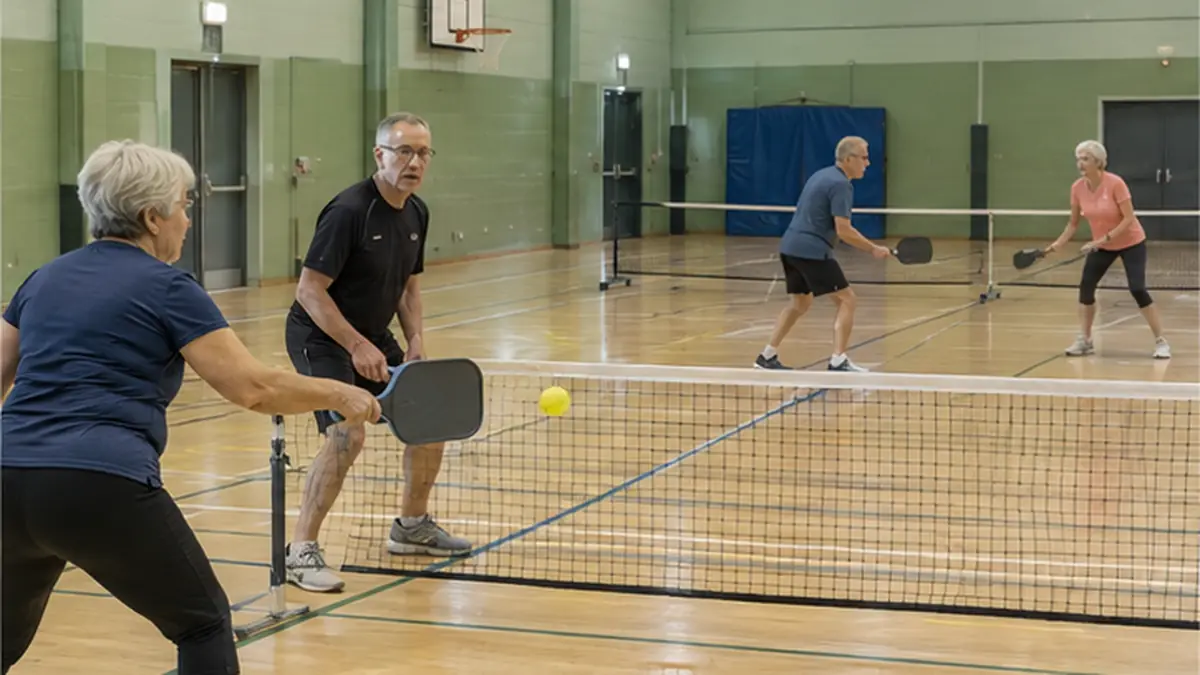
In addition to tournaments organized by each national association, regional events such as the European Championships have come to be held. These tournaments play an important role in raising the competitive level and strengthening community bonds. The development of the competitive environment is also progressing, with dedicated facilities being built and existing facilities converted in each country. Because about four pickleball courts can be created from one tennis court, this is also supported as an efficient use of land.
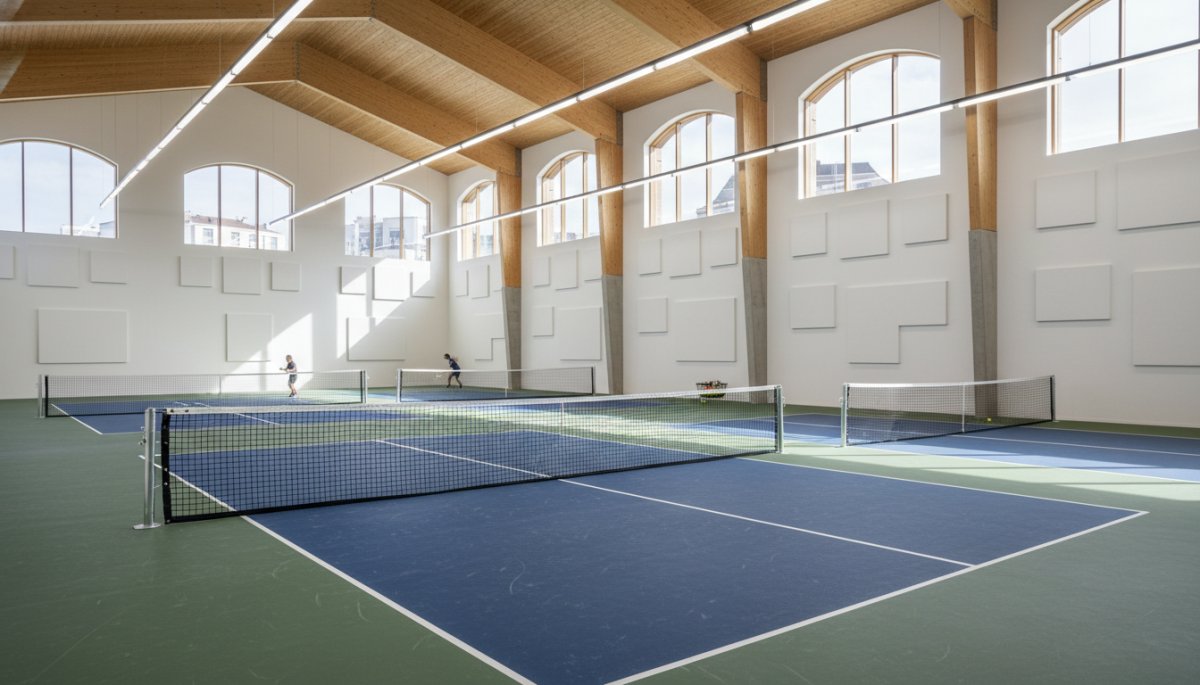
Facilities are being developed both indoors and outdoors. In cold regions such as the Nordic countries, indoor facilities are central, while on the Mediterranean coast, outdoor courts predominate. Court installations are increasing not only at public facilities but also at private sports clubs and resort facilities. Taking root at different speeds by region depending on climate and compatibility with existing sports is a characteristic of Europe.
Growth outlook and challenges ahead
The future of pickleball in Europe is viewed positively, if cautiously.
国際統括組織の整備も進んでいます。世界的には、IPF(International Pickleball Federation)とWPF(World Pickleball Federation)が統合に動く一方、GPF(Global Pickleball Federation)など複数の国際団体が活動しており、統括組織を一本化しようという動き自体は進んでいるものの、最終的な体制はなお流動的です。ヨーロッパでも、欧州ピックルボール連盟やPPAヨーロッパツアーなどの枠組みが整いつつあり、世界統一ルールや国際大会運営の標準化が期待されています。
Drawing attention is the move toward Olympic inclusion. Adoption at the 2028 Los Angeles Games was passed over, but with an eye on 2032 and beyond, efforts continue to meet conditions such as unifying the international governing bodies and achieving worldwide adoption. If it becomes an Olympic sport, recognition and adoption in Europe could accelerate all at once. For details, seethe explainer on becoming an Olympic sport.
On the other hand, there are challenges too. Competition with padel, the success of the existing tennis education system, and limited facility space are factors that hinder rapid growth. Also, because an association-led institutional approach—rather than a US-style private-sector-led free market model—is mainstream, explosive grassroots adoption is structurally unlikely to occur. Even so, its suitability for an aging society, the rising health consciousness, and its appeal as a social sport are fully appreciated in Europe as well.
The Difference Between Padel and Pickleball
Essential to understanding Europe is the relationship with the competing sport padel. The two are similar but distinct, and their differences influence adoption speed in each country.
| Item | Pickleball | Padel |
|---|---|---|
| Courts | 壁なし。一般的なテニスコートの約3分の1で省スペース | Requires a dedicated court enclosed by glass walls |
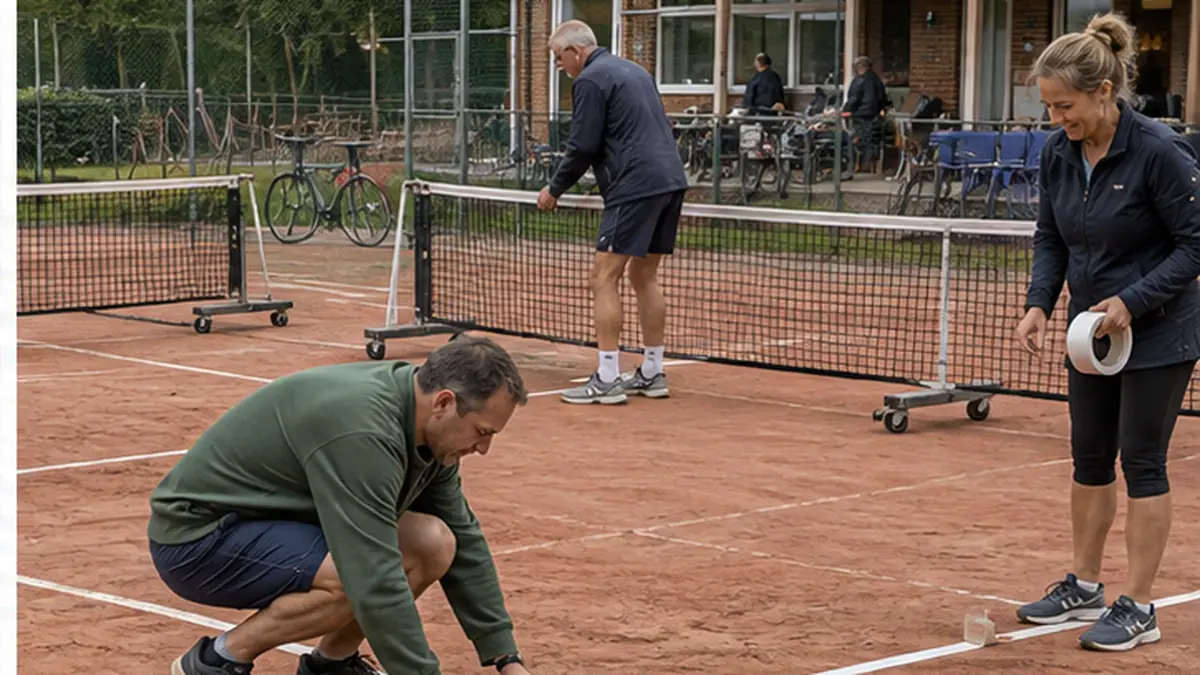
| Ease of Introduction | Can be converted just by drawing lines on an existing court | Requires building a dedicated facility, with large initial investment |
| Core of Adoption | Broadly, from older adults and beginners | Young to middle-aged people in urban areas |
Padel's appeal lies in dynamic play using the walls, and it is established as an urban sport centered on Spain. Pickleball, on the other hand, has the strength of needing no walls, saving space, and being easy to convert from existing facilities. Compared with padel, which presupposes building a dedicated court, pickleball has the ease of just drawing lines on one court to start, and this difference makes it easier to spread to rural areas and senior communities. In countries where padel is strong, pickleball's growth tends to be gradual, but because the two differ in clientele and location, there is ample room for them to spread while coexisting.
Major Tournaments and Federations in Europe
Building a foundation as a competitive sport is also progressing. In addition to each national association, a framework that ties the whole region together is coming into place.
The European Pickleball Federation plays a role in connecting the national associations, and regional events including the European Championships have come to be held. Furthermore, the PPA, a professional tour originating in America, is expanding into Europe (PPA Europe), and tournaments featuring top international players are increasing. Such tournaments contribute not only to raising the competitive level but also to media exposure and the formation of a spectating culture. As each country's national players come to shine on the international stage, it leads to greater recognition at home, creating a virtuous cycle of adoption. The spread of tournaments is proof that European pickleball is taking a step forward from recreation to competition.
How to Play in Europe
When visiting Europe for travel or residence, more and more people want to enjoy pickleball locally. Let's cover the key points for finding a place to play.
At Spain's Mediterranean coastal resorts, courts are often attached to hotels and sports clubs, and joining a community of foreign residents makes it easy to find fellow players. In the UK, the Netherlands, and Germany, you can check the official sites of each national association and local sports centers for activity bases and open play information. Searching for "pickleball + city name" in SNS community groups can also turn up notices for trial sessions and open sessions. Many facilities also offer equipment rentals, so you can often join empty-handed even while traveling. Even with a language barrier, pickleball's rules are easy to convey through gestures, and its appeal is that you can interact across generations and nationalities.

The key to reading Europe is the coexistence with padel. In countries where padel is strong, such as Spain, growth is gradual, while in many countries it spreads to older adults on the foundation of tennis culture—a gradual-adoption type different from America's explosion. If Olympic inclusion is realized, this quiet spread could come to the surface all at once.
FAQ
In which countries is pickleball popular in Europe?
Spain, the UK, the Netherlands, and Germany are the main ones. In Spain, foreign residents drive it at resort areas; in the UK, it is established as a health sport for older adults; and in the Netherlands and Germany, it spreads systematically under association leadership. The base is broadening in the Nordic countries, France, and Italy as well.
Why doesn't Europe grow as rapidly as America?
The main reasons are that graduated tennis education (the Play & Stay type) is widespread, making it hard for beginners to drop out of tennis, and that the competing sport padel is established, centered on Spain. Also, in contrast to America's private-sector-led approach, Europe centers on an association-led institutional approach, so explosive spread is structurally unlikely.
What is the difference between pickleball and padel?
Padel requires a dedicated court enclosed by glass walls and is popular among young to middle-aged people in urban areas. Pickleball, on the other hand, needs no walls, saves space, and can be converted just by drawing lines on an existing court, making it easy to spread broadly, including among older adults and beginners. Because the clientele and location differ, there is room for them to spread while coexisting.
Can I play pickleball while traveling in Europe?
In many cases, yes. At Spanish resorts, courts are attached to hotels and sports clubs, and in the UK, the Netherlands, and Germany, you can find activity bases through each national association's site and local sports centers. Many facilities offer equipment rentals, and you can sometimes find trial session information in SNS communities.
Summary: The Future of Pickleball in Europe
European pickleball is following a path of steady, sustained adoption rather than the explosive growth seen in America.
A foundation is coming into place in major countries such as Spain, the UK, the Netherlands, and Germany, and the development of international governing bodies and hopes for Olympic inclusion in 2032 and beyond are factors that will boost future growth. Although there are challenges such as competition with padel and the success of the existing sports education system, its suitability for an aging society, its health-promoting effects, and its appeal as a social sport also fit European culture and social needs well.
With stronger cooperation among national associations, expanded facility development, and more international tournaments, the European pickleball scene will steadily develop. This sport that can be enjoyed across generations is expected to establish a firm position in Europe as well. For the spread worldwide, see theglobal boom articleplease also have a look.
確認した一次情報
Related Articles Worth Reading
- The State of Pickleball in the UK | An Analysis of the Boom in a Tennis Powerhouse
- The Pickleball Scene in Canada | The State and Growth Background of North America's No. 2 Market
- The Pickleball Scene in Australia | The State of a Fast-Growing Oceania Market
- The State of Pickleball in India | Potential in a 1.3-Billion-Person Market and Key Players
- Pickleball's popularity spreading worldwide | The background of the boom and its growth drivers
Related Articles