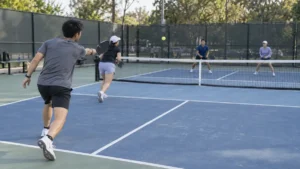
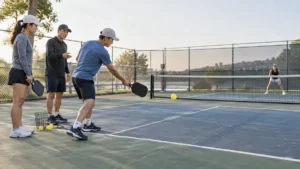
What is pickleball singles? Understand the difference from doubles
Pickleball is usually a sport enjoyed mostly in doubles, but singles has its own appeal and strategy.
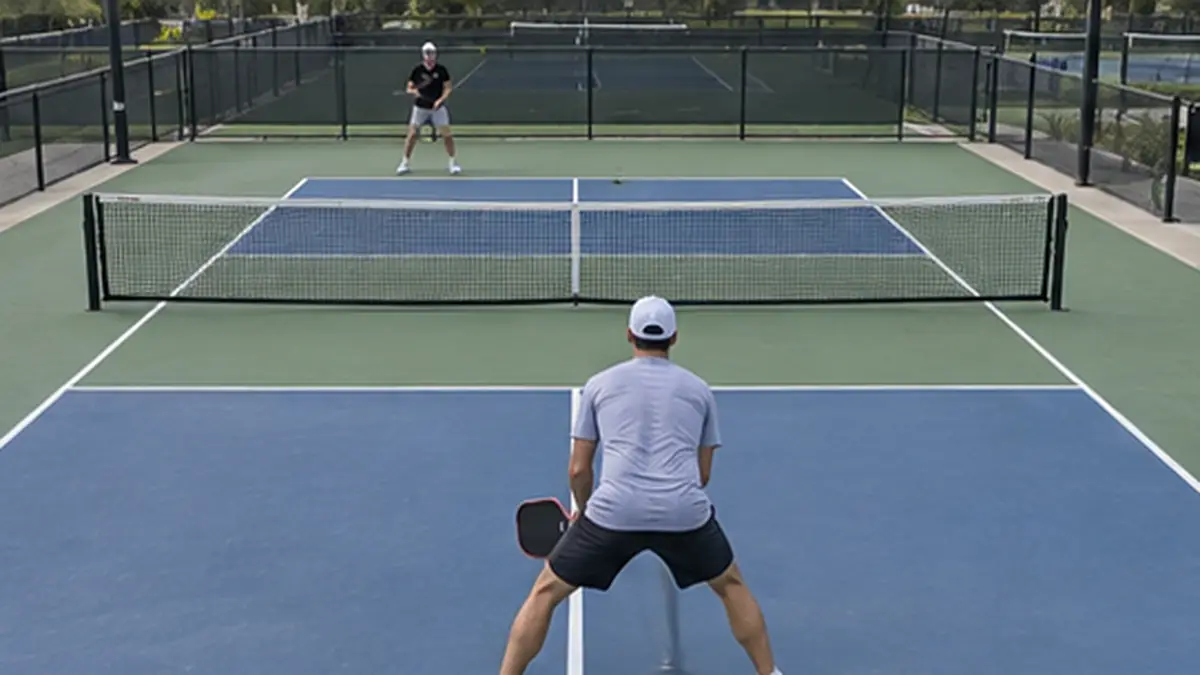
The biggest difference between singles and doubles is that you have to cover the court by yourself. The court size is 13.41m×6.10m, the same as doubles, but since your defensive range doubles, the importance of stamina management and positioning rises markedly. Because your travel distance increases, efficient footwork and strategic shot selection decide the outcome.
There's also a difference in the serve rules. In doubles both players have serving rights, but in singles you serve from the right side when your score is even and from the left side when odd. The way of calling the score is also simple, using only the two numbers "server's score, receiver's score."
On the strategy side, singles tests individual skill and judgment more. Since you can't cover through coordination with a partner as in doubles, the precision of each individual shot and the observational skill to spot the opponent's weaknesses become important. The physical burden is also large, so the judgment of whether to prolong rallies or aim for a quick decision becomes part of the strategy.
The basic rules and scoring of singles
Basic serve rules
In singles, your serve position is determined by your score.
When your score is 0 or even, you serve from the right side (the even court); when odd, from the left side (the odd court). This is a system similar to tennis, but as a pickleball-specific rule, the serve must always be underhand. The contact point between paddle and ball is below waist height, and the paddle head must be at a position lower than the wrist.
The serve must land in the opponent's diagonal court, in the area bounded by the non-volley-zone line, the baseline, and the sidelines. If it touches the non-volley-zone line, it's a fault. There's only one serve, and if it hits the net and lands in the opponent's court (a let), it's redone.
The importance of the two-bounce rule
The symbolic rule of pickleball is the "two-bounce rule"!
The side receiving the serve must let the ball bounce once before returning it. And the side that served must also let that return bounce once before hitting. Only after these two bounces does returning without a bounce (a volley) become possible.
Thanks to this rule, the overwhelming advantage of serve-and-volley as in tennis is prevented, and rallies continue more easily. In singles especially, understanding this rule and adjusting your positioning after the serve is important. Since you can't rush forward immediately after serving, you need to wait for the opponent's return near the baseline.
Scoring and how the game progresses
Pickleball is usually first to 11 points, and you need to win by a 2-point margin. In tournaments it's sometimes played to 15 or 21 points.
What's important is that you can only score when you have serving rights. Since this isn't a rally-point system, you can't score directly off the opponent's mistake. When the serving side makes a mistake, serving rights move to the opponent, and the opponent gets a chance to score.
The score is called in the order "server's score, receiver's score"; for example, "3-5" means the serving side has 3 points and the receiving side 5. Saying your own score first is the basic, which also naturally makes the current serve position (right side or left side) clear.
Court-coverage strategy for winning at singles
What is ideal positioning
In singles, since you have to cover the whole court by yourself, positioning greatly influences the outcome.
The basic ideal position is just behind the non-volley-zone (kitchen) line, near the center of the court. From this position you can react quickly to any of the opponent's shots. However, because of the two-bounce rule, right after the serve or right after a return you need to be near the baseline.
What's important is quickly returning to your ideal position after hitting a shot. When your opponent is near the baseline, you rush forward and apply pressure near the kitchen line. Conversely, when your opponent has rushed forward, consider using a lob to push them back. Always being conscious of your distance relationship with the opponent and continuing to hold an advantageous position is important.
The basics of efficient footwork
In singles, your travel distance grows long, so efficient footwork is essential.
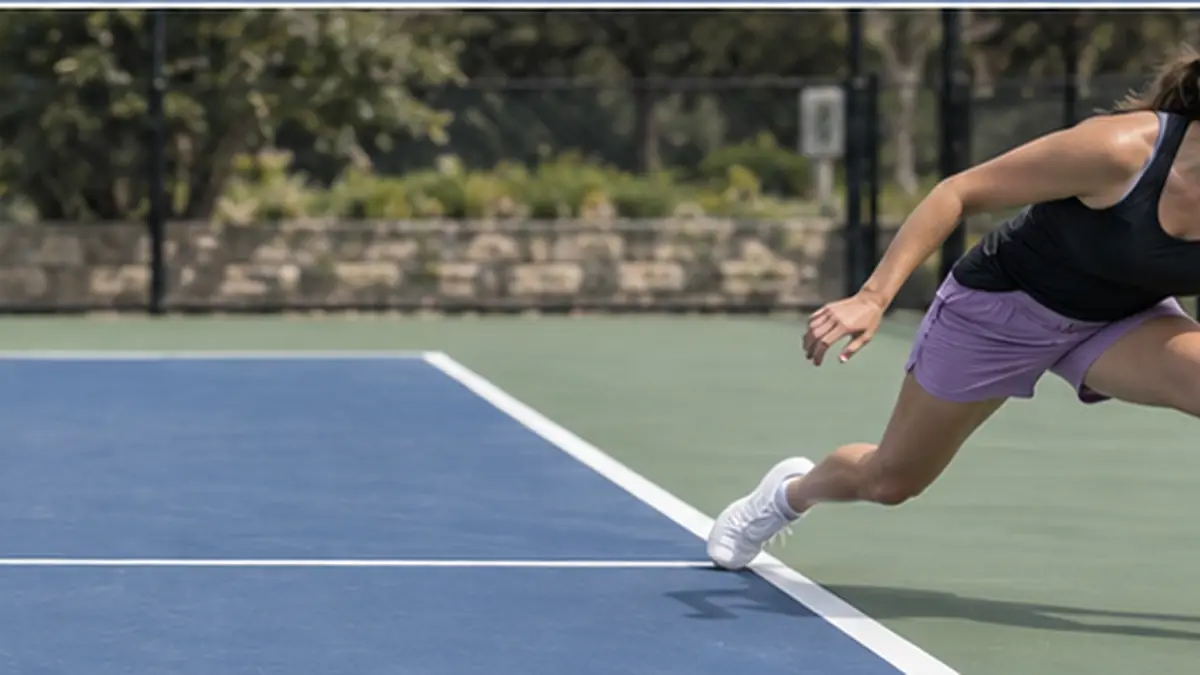
The basic is the "split step." At the moment your opponent hits the ball, lightly jumping and landing creates a ready posture from which you can start moving quickly in any direction. This small motion greatly improves your reaction speed.
For sideways movement, use the side step and cross step differently. The side step is efficient for short distances, the cross step for long distances. For forward and backward movement, moving while always keeping a posture squared to the ball lets you prepare for the next shot.
To conserve stamina, reducing wasted movement is also important. Predicting your opponent's shots and starting to move early reduces the number of times you have to sprint at full speed. Also, the strategy of moving your opponent widely left and right to relatively reduce your own travel distance is effective.
Using the sidelines and centerline differently
In singles, strategically using the sidelines and centerline differently is important.
A shot that drives your opponent to the sideline makes them use the court widely, letting you aim at the opened space on your next shot. However, you need to be careful not to lose your own balance. On the other hand, a shot aimed near the centerline limits your opponent's options and has the effect of preventing a powerful return.
Especially effective is the "open-court attack," where after driving your opponent to the side, you aim your next shot at the opposite side or center. By placing the ball at a position your opponent can't fully recover to, you can take points easily. However, this strategy also depends on your own positioning, and you need the awareness to always return near the center of the court.
Effective shot selection and tactics
The importance and timing of the dink
The dink is a shot hit low and soft over the non-volley zone, and it's an extremely important technique in singles too.
The purpose of the dink is to pin your opponent at the kitchen line and prevent aggressive volleys. By hitting it low, your opponent can't hit hard and is forced to choose between returning with a dink in the same way or taking a risk and hitting hard. In singles, you continue the dink rally while inducing your opponent's mistake, or turn to attack aiming for the moment the ball floats up.
An effective dink alternates between your opponent's forehand and backhand sides at a height that skims the net. This forces your opponent into sideways movement, making mistakes more likely. Also, occasionally mixing in a deeper dink can break your opponent's rhythm.
How to use the third shot drop
The third shot drop is an important strategy used on the third stroke after the serve.
After serving, because of the two-bounce rule you need to let the opponent's return bounce once before hitting. At this point you're still near the baseline, so hitting hard gives your opponent a chance to attack. So, by driving a low, soft ball over the net, you prevent your opponent's attack while also buying time to advance forward yourself.
The ideal third shot drop is a shot that lands inside the non-volley zone and stays lower than the net even after bouncing. This means your opponent can't hit hard and has no choice but to return with a dink. Meanwhile, you also advance to near the kitchen line and can continue the rally from an equal position.
The timing of the lob and smash
The lob is a shot that goes over the head of an opponent who has rushed to the net, with the effect of pushing them back to the baseline.
In singles, using a lob when your opponent has rushed forward can create an advantageous situation all at once. However, if it's too high it gives your opponent a chance for a fierce smash, so appropriate height and depth are required. The ideal lob is a shot that goes over your opponent's head and drops deep near the baseline.
Conversely, when your opponent's lob is shallow, it's a chance for a smash! The smash is a shot hit hard downward from a high position, and it becomes the decisive shot that puts away the point. However, since a forced smash leads to mistakes, judging the position and timing where you can reliably put it away is important.
How to make use of spin
Mastering spin greatly broadens your shot variations.
By applying topspin, the ball drops sharply after clearing the net and sinks at your opponent's feet. This forces your opponent to hit from a low position and prevents aggressive shots. Backspin, conversely, suppresses the ball's bounce and throws off your opponent's timing. Using backspin on a dink in particular makes the ball barely bounce, so your opponent has no choice but to lift it.
Sidespin adds sideways movement and is effective for drawing your opponent off the court. However, applying too much spin makes control difficult, so using it differently according to the situation is important. We recommend that beginners first master basic topspin and backspin and gradually increase their variations.
Practice methods specific to singles
Footwork drills
In singles, since travel distance is long, strengthening footwork is essential.
As a basic drill, there's the "four-corner touch drill," where you quickly move around the four corners of the court. Start from the right corner of the baseline, then move to the right corner at the net, the left corner at the net, the left corner of the baseline, and back to the right corner of the baseline. Repeating this develops the stamina and speed to cover the whole court.
Also, "shadow play" is effective. Without actually hitting a ball, you repeat movements with a match in mind. You practice all the movements needed in a match, such as the serving motion, movements reacting to your opponent's return, moving forward, and moving back. This makes your movement in real play smoother.
Target practice
To hit accurate shots, target practice is effective.
Place markers or landmarks at specific positions on the court and hit shots aiming there. For example, place markers at the four corners of the non-volley zone and practice aiming accurately with dinks. Placing markers on the left and right of the baseline and practicing deep shots is also important.
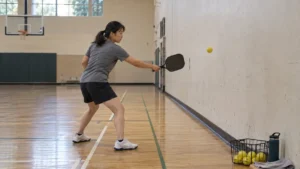
Additionally, "cross-court practice" is effective. Continuously hitting shots diagonally improves control and consistency. At first, prioritize accuracy at a slow pace and gradually raise the speed. When practicing alone, wall drills are also effective and develop a sense of rhythm and touch.
Physical training
Since singles carries a large physical burden, improving your basic fitness is important.
As aerobic exercise, doing jogging or cycling 3–4 times a week for about 20–30 minutes improves your endurance. Interval training is also effective. Sprinting short distances all out and repeating with short rests in between develops the fitness to handle the intense movement during a match.
In strength training, strengthening the legs, core, and shoulders is important. Do basic exercises like squats, lunges, planks, and shoulder presses 2–3 times a week. Core strengthening in particular directly connects to balance and shot consistency, so it should be worked on with priority.
Mental training
In singles, mental strength is also an important factor that decides the outcome.
To maintain focus during a match, practice meditation and breathing techniques. Taking deep breaths eases tension and lets you make calm judgments. Positive self-talk is also important. Rather than blaming yourself after a mistake, thinking positively, "let's focus on the next point," keeps your mental state stable.
Establishing a pre-match routine is also effective. Creating a set pattern for your warm-up procedure, pre-match meal, mental preparation, and so on makes it easier to be ready for the match. Also, reviewing match video to objectively analyze your own play leads to growth on the mental side too.
Summary: A comprehensive strategy for winning at singles
To win at pickleball singles, technique, fitness, strategy, and mental strength are all important.
First, completely understand the basic rules and scoring, and become able to naturally execute the serve position and two-bounce rule. If these basics aren't ingrained, you'll get confused during a match.
In court-coverage strategy, always be conscious of your ideal position and move with efficient footwork. Grasping your distance relationship with the opponent and continuing to hold an advantageous position is important. To conserve stamina, reduce wasted movement and also incorporate the strategy of moving your opponent.
In shot selection, use dinks, third shot drops, lobs, smashes, and so on differently according to the situation. Making use of spin broadens your shot variations and lets you toy with your opponent. However, avoiding forced hard hits and prioritizing reliability leads to victory in the long run.
In practice, do footwork, target practice, physical training, and mental training in good balance. In singles especially the physical burden is large, so put priority on improving endurance. Also, accumulating match experience refines your judgment in real play.
Most important is to continue while having fun. Pickleball is a sport you can enjoy regardless of age or fitness level, and singles is a format where you easily feel your own growth. Steadily acquiring each individual skill and establishing your own play style opens the path to victory.
Now, get out on the court and experience the depth of singles!
Related Articles
Reference Links
Related Articles