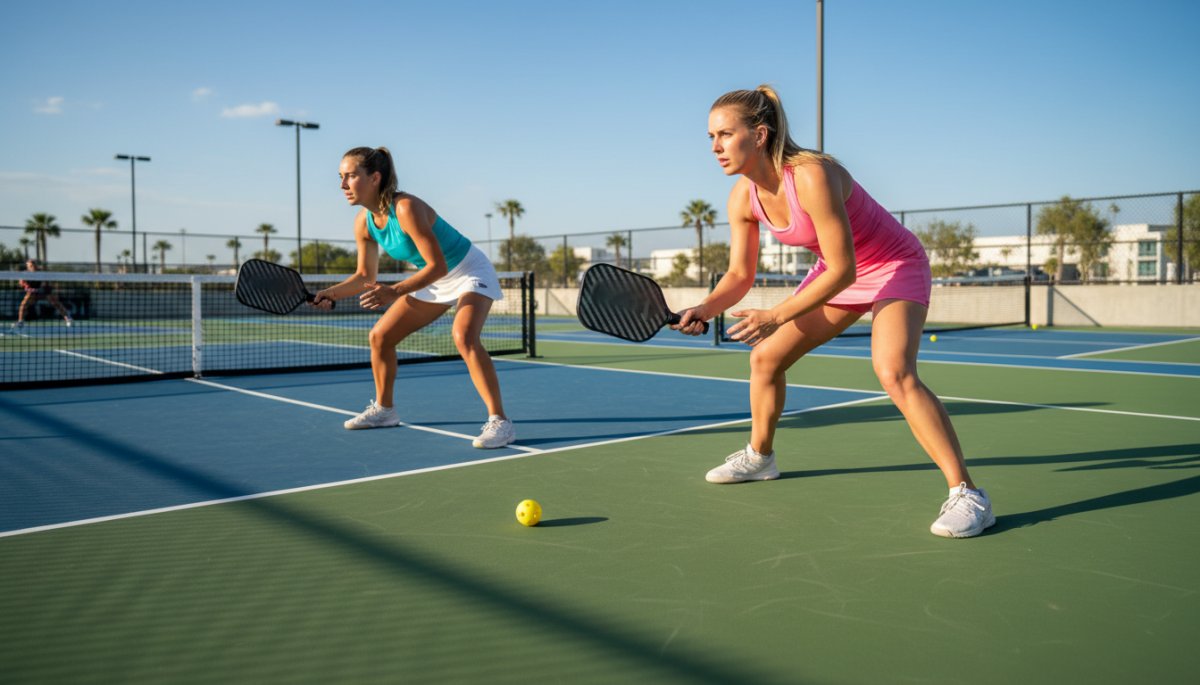
Pickleball is mainly played as doubles. It calls for a completely different strategy than singles, and what separates winning from losing is the coordination of the pair.
In-sync movement with your partner, positioning at the kitchen line, the ability to read your opponent's movements—beyond technique, judgment of "when and how to move" governs the flow of the match. This article organizes strategies for winning in doubles along six axes: positioning, poaching, dinking, stacking, judgment, and communication.
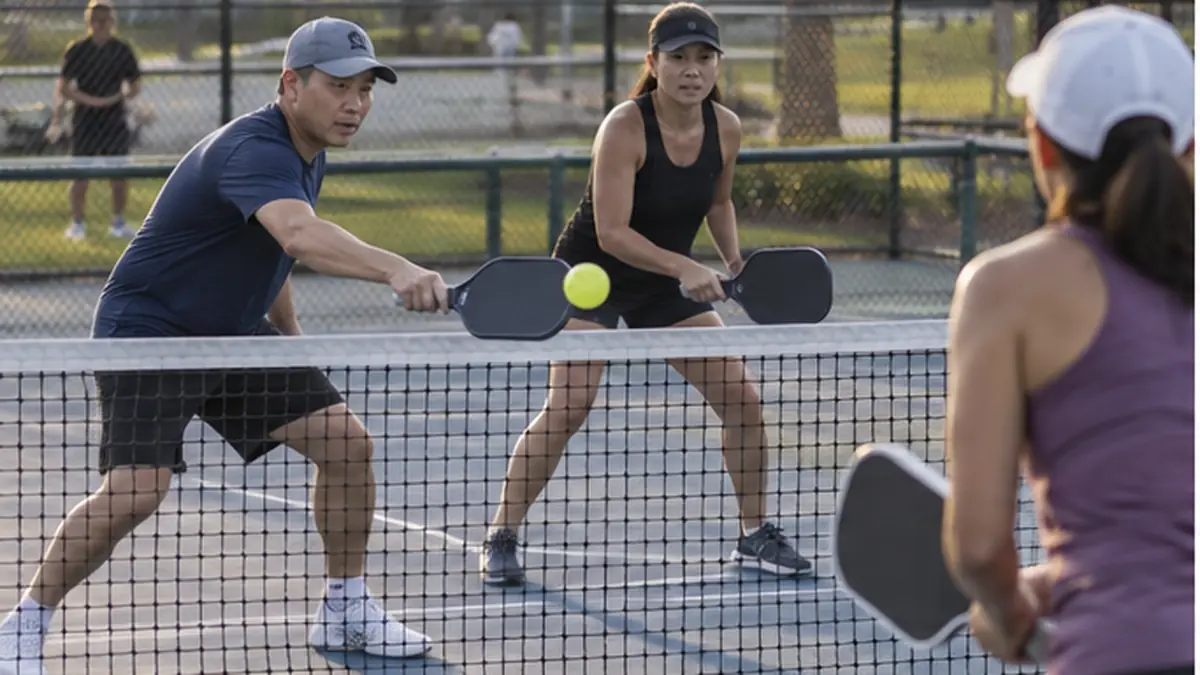
Basic strategy for winning in doubles [at-a-glance table]
First, grasp the big picture of the elements to lock in for winning in doubles with a table. Details are explained in each section.
| Element | Aim |
|---|---|
| Positioning | Take the front with two players lined up at the kitchen line |
| Poaching | Get ahead of the opponent's floating ball and finish it with a volley |
| dink | Hit low and soft to shut down the opponent's attack and wait for a chance |
| Stacking | Arrange your positions cleverly to place your best shots in the center |
| Judgment | Switch between offense and defense according to the score situation |
| Communication | Raise the pair's unity through dividing roles and calling out |
What's especially important is unity as a pair. Once you understand each other's best shots and weak situations and can naturally divide roles on the court, you can greatly change the flow of the match. In the first 3–4 points of a match, observe your opponent's backhand precision, movement speed, and reactions under pressure, and put it to use in your later tactics.
The basics of positioning and mastering the kitchen line
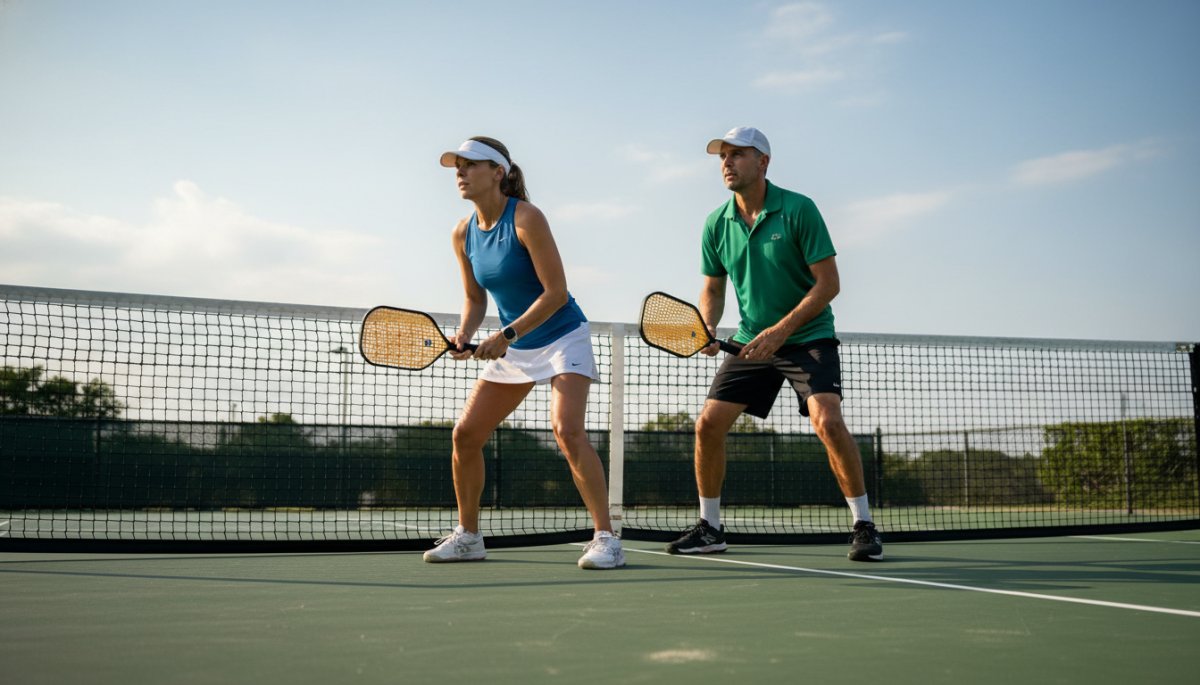
Line up as two at the kitchen line
The most important position in doubles is near the kitchen line.
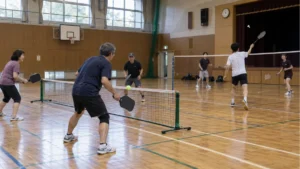
The ideal formation is the two of you lined up side by side just behind the non-volley zone (kitchen). From this position you react quickly to your opponent's shots and can effectively usedinkand volleys. The battle at the kitchen line is the core of doubles, and the subtle differences in positioning and touch here separate advanced from intermediate players. Covering the court evenly as two and making fine adjustments to match each other's movements gives your opponent no opening.
Press forward on the third shot
The third shot after the serve (the third-shot drop) is an important strategy for pressing up to the net.
After the serve return, the serving side is still near the baseline. By hitting a low, soft ball over the net rather than hitting hard, you can move forward while preventing your opponent's attack. For details, seethe explainer on the third-shot drop.
Keep the right spacing as a pair
The spacing with your partner is also key.
Too far apart and an opening forms in the center; too close and your response to sideways movement lags. Generally, keeping the two of you about 2–3 meters apart is considered ideal. It's important to be mindful of both players sliding in the same direction to match your opponent's shot, always maintaining a "wall."
Change the flow of the match with poaching
Poaching is a powerful technique you can use in doubles. It's a play where you get ahead of your opponent's shot and cut it off, and by catching them off guard, you get more situations where you can easily take a point.
The basics of poaching
When your opponent's third shot floats up, the player at the net moves quickly and finishes it with a volley. This is the basic of poaching.
In particular, if your opponent has a habit of hitting their shot in the same direction, reading and targeting it is the winning pattern. When you repeat poaching, your opponent starts to think "it might come again," and their shots get weak or their mistakes increase.
Rock them with a fake
Fake movements are effective too.
Just pretending to poach and stepping one step forward makes your opponent mistakenly think "it's coming again" and disrupts their movement. To make it work, seeing through your opponent's habits, quick reactions, and coordination with your partner are essential. Agreeing in advance on when to poach raises the success rate. For the detailed technique of poaching, seeAn explanation of poaching tacticsas well.
Source Created from Pickle One's "Doubles strategy! Going for the win with poaching"(March 2025)
How to use the dink and rally tactics
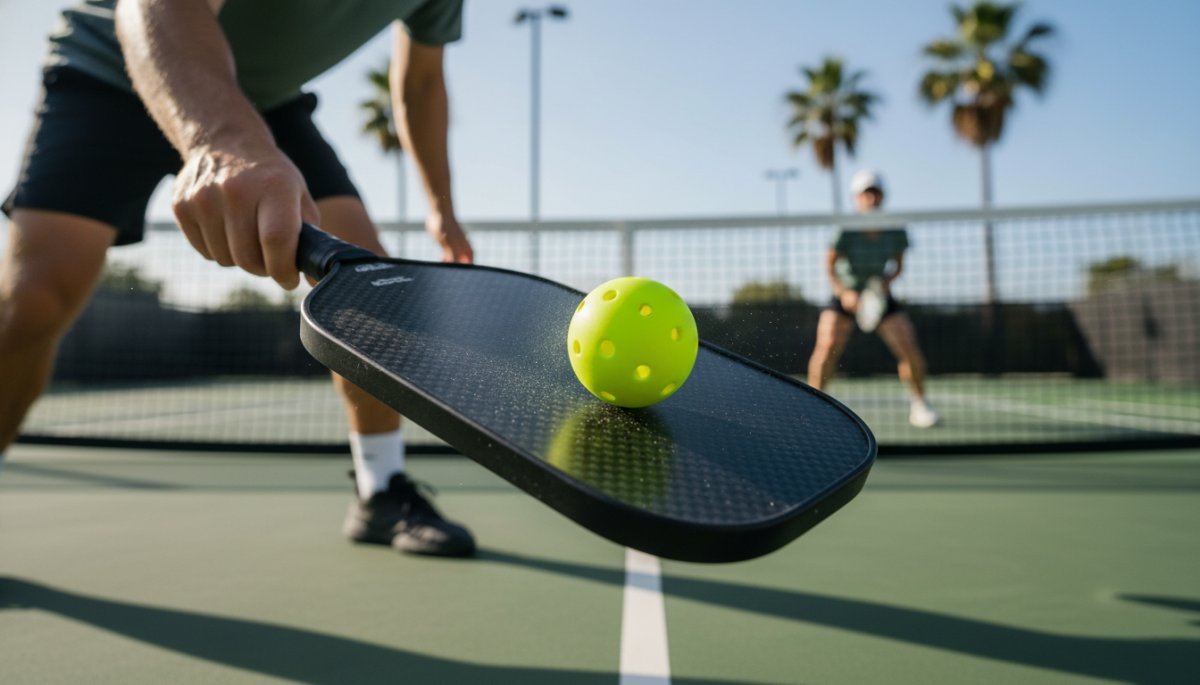
The dink is one of the most important shots in doubles. You hit it low and soft over the non-volley zone, pinning your opponent to the kitchen line and preventing aggressive volleys.
Keep it low and break them down with placement
The trick to using the dink effectively is keeping the ball low.
Passing it just over the top of the net and making it bounce low within your opponent's court makes it so they can't hit aggressive shots. Placement matters too—aiming at your opponent's feet or backhand side is effective. Between advanced players, dink rallies can last dozens of times, and a high-precision pair can dominate the match.
Switching from defense to offense
If your opponent's ball floats even a little during a dink rally, that's your chance to attack.
Go to finish it immediately with a volley, or break them down with an angled shot. This timing of "switching from defense to offense" is precisely the real thrill of doubles. Since rushing to finish early makes the ball float and get counterattacked, patiently waiting for the chance is the standard approach.
Gain the advantage with a stacking strategy
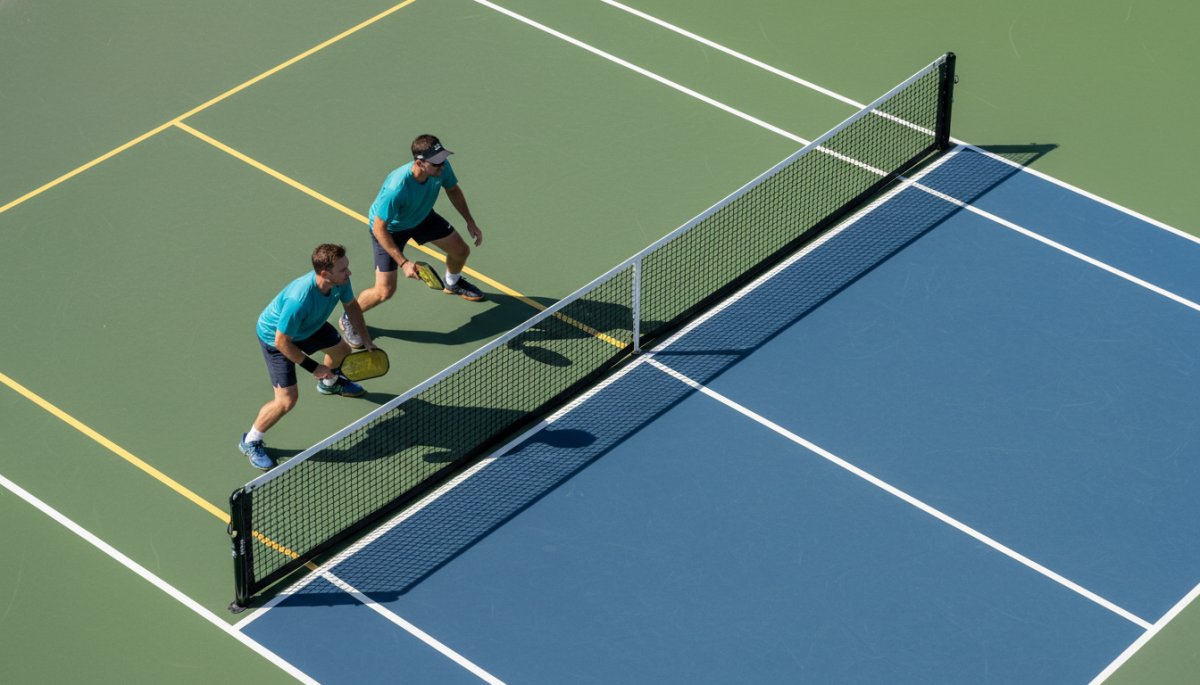
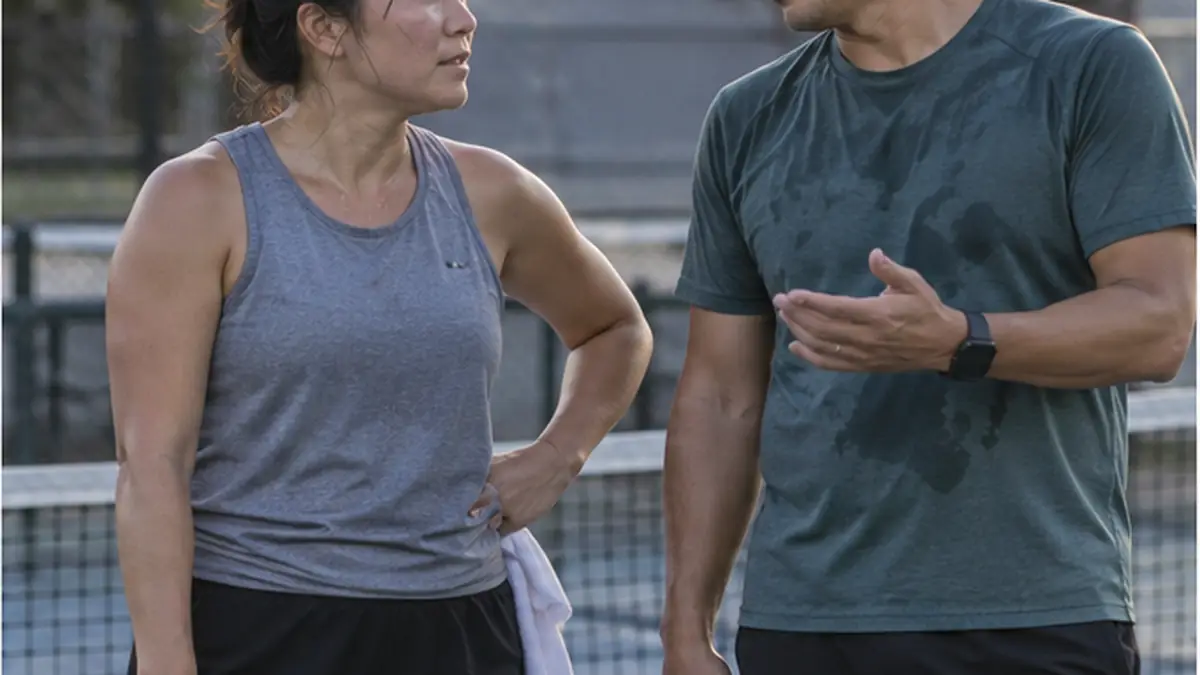
Stacking is a strategy of cleverly arranging your positions to maximize each player's strengths in the pair.
Place your best shots in the center
After the serve or return, instead of splitting left and right as you normally would, the two of you start from the same side, and once the rally begins you quickly move to your own best positions.
Doing this lets you place a powerful forehand in the center or reduce your weak shots. It's especially effective for pairs with different dominant hands—an arrangement where both can face their forehands toward the center dramatically raises your attacking power in the center of the court.
Solidify the coordination in practice
When using stacking, coordination with your partner is especially essential.
If you don't understand each other's movements—when to move—it invites confusion instead. Check the movements over and over in practice so you can move smoothly.
Source Ocean Pickleball's "Level up your strategy with stacking"Created from
Sharpen your judgment according to the score situation
For an intermediate player to advance to the next level, judgment according to the situation is essential. Even with technique, if you misjudge "when and how to use it," you can't show your ability. Here are the basic policies by score.
| Score situation | Basic policy |
|---|---|
| Leading by 2 or more | Emphasize stability. Hold back on high-risk balls and induce your opponent's mistakes |
| Close game (1–2 point margin) | Emphasize balance. Maintain offense and defense, and respond by watching your opponent's moves |
| Behind by 3 or more | Attack aggressively. Aim near the lines, press forward, and change the flow |
Devising ways to stay calm under pressure also matters. On important points, taking three deep breaths before serving, focusing on "just the next one point," and recalling a shot that worked last time are effective. For how to compose your mind, seeAn article on strengthening the mental gameis also helpful.
Source Created from TOCO SPORTS' "Tactics guide for intermediate players"(July 2025)
Techniques for communicating with your partner
To win in doubles, communication with your partner is essential.
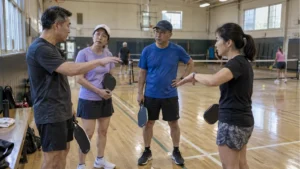
Decide roles and call out to each other
Calling out to each other during the match and balancing your movements matters.
Deciding roles before the match—like "leave the forehands to me"—makes things go smoothly. In mixed doubles, a division that matches each player's strengths is effective—the player good at volleys at the net attacks up front, while the player good at lobs defends in the back.LobBringing in also widens your attacking range.
Create a positive atmosphere
Positive communication during the match is also a key to victory.
By not blaming your partner even when they make a mistake and encouraging each other with "you'll get the next one," the whole team's atmosphere improves, ultimately leading to good performance. Even in tense moments, teammates smiling and encouraging each other not infrequently determines winning and losing. Rather than focusing only on winning and losing, playing with fun teammates—that ultimately draws out the best play.
Source Pickle One's "The complete guide from doubles strategy to the latest rules"created from (October 2024)
Common mistakes in doubles and how to fix them
Even after learning the strategy, there are typical mistakes you fall into. Get to know the representative ones and the tips for fixing them.
| Common mistake | Tip for fixing it |
|---|---|
| The two players move separately | Slide in the same direction as two to match your opponent's shot |
| You can't press forward and rally from the back | Drop the third shot low and always press forward |
| You leave the middle ball to each other | Decide in advance "which of you takes the center" |
| You rush a hard hit and make it float | Be patient with dinks until a chance comes |
The especially common one is a pattern where the two players' coordination breaks down and an opening gapes in the center. Since opponents often aim right between the two of you, deciding a rule as a pair—like "the forehand-side player takes the center"—rapidly reduces points lost to leaving it to each other. Also, if you can't press all the way forward and end up rallying near the baseline, the opponent who took the front takes control. Even if it's a bit forced, it's important to keep the mindset of dropping the third shot low and advancing.
Practice drills to improve at doubles
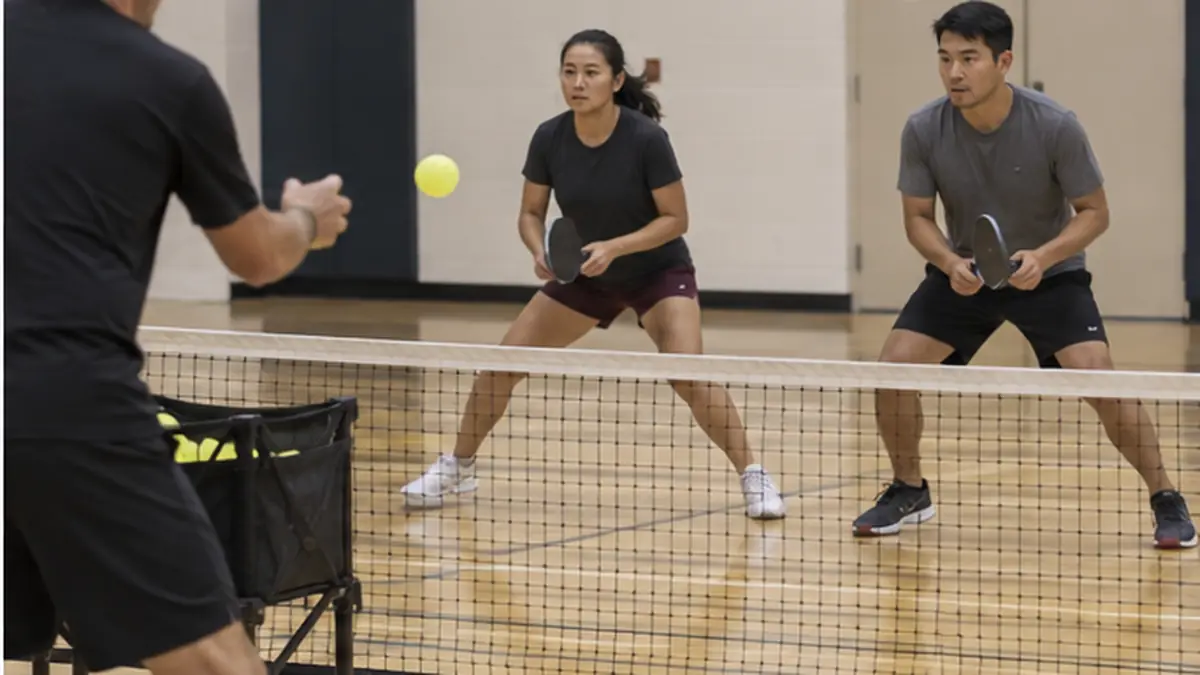
To show your coordination in real play, repeated practice as a pair is essential. Here are drills that are easy to do and highly effective.
Dink-rally continuation drill
This is practice where the two of you rally dinks over the kitchen line and count how many you can keep going.
You build the feel of hitting low and soft, and the habit of continuously setting up just behind the line. Once you get used to it, mix cross and straight to also sharpen your placement control.
Third-shot and advance drill
This is practice where you repeat the sequence of dropping the third shot from the serve and return and advancing as two.
You drill into your body the basic doubles motions of "press forward after you hit" and "move up front together as two." Doing it while calling out the timing of your advance as a pair makes your coordination in real play smoother.
Side-to-side sliding footwork drill
This is practice where one person feeds balls alternately to the left and right of the court, and the pair slides together in the same direction.
You build the feel of always maintaining a "wall," making it harder to create an opening in the center. It's plain, but this coordinated movement is the single biggest point for reducing points lost in doubles.

What actually works best in doubles isn't a flashy technique but simply "pressing forward as two and sliding together even when moving sideways." Since the side that takes the front is overwhelmingly advantaged, first build the habit of moving up front on the third shot. Encouragement that doesn't blame mistakes—plain as it is—also reliably raises a pair's win rate.
FAQ
What's the most important thing in pickleball doubles?
"Taking the front" and "moving together as two." Holding the kitchen line (just behind the non-volley zone) as two is overwhelmingly advantageous. It's important to be mindful of both players sliding in the same direction to match your opponent's shot, always maintaining an opening-free "wall."
What is poaching?
It's a play where you get ahead of your opponent's shot and cut it off. When your opponent's third shot floats up, the player at the net moves quickly and finishes it with a volley. Reading your opponent's habits, quick reactions, and agreeing in advance with your partner are the keys to success. Mixing in fake movements lets you rock your opponent even more.
What are common mistakes in doubles?
Three are typical: the two players moving separately and an opening forming in the center, not being able to press forward and rallying at the baseline, and leaving the middle ball to each other. Deciding in advance "which of you takes the center" and always pressing forward by dropping the third shot low can greatly reduce these lost points.
Is there practice that improves your doubles?
The dink-rally continuation drill, the drill of advancing as two from the third shot, and the side-to-side sliding footwork drill are effective. In particular, practicing maintaining a "wall" where the two of you move together to match your opponent's ball is the single biggest point for reducing points lost in doubles.
Summary: practical points for winning in doubles
To win in pickleball doubles, not just technique but strategy and coordination are essential.
By sharpening your positioning at the kitchen line, effective use of poaching and dinking, stacking strategy, and judgment according to the score, you can greatly change the flow of the match. If you value communication with your partner and clarify a division of roles that leverages each other's strengths, your completeness as a team rises. By discussing strategy before the match and playing while calling out to each other during it, you can become a stronger pair.
By trying these strategies one at a time and building up practice, your doubles skills will steadily improve. Start with the basics of "take the front" and "move together as two," and find the tactics that suit your own style. If you want to break through the intermediate wall, seeA guide to breaking through the intermediate wallis also worth a look.
Related Articles Worth Reading
- Pickleball Poaching Tactics | Interception Skills to Score More in Doubles
- Mastering the pickleball dink: basic technique and tactical points
- Completely Mastering the Pickleball Third-Shot Drop | Why It Matters and How to Practice It
- Mental Toughness in Pickleball | Handling Pressure in Matches and Recovering From Mistakes
- Breaking Through the Intermediate Plateau in Pickleball | 5 Habits Holding You Back and How to Fix Them
Related Articles