屋内の体育館でのプレーと屋外コートでのプレーを両立させるプレーヤーにとって、ボールの打感差が課題になっている。大阪府東大阪市のビーズ株式会社は2026年9月9日、ピックルボール専門ブランド「TOCO」からインドア用練習球を発売した。屋外用を先に手がけてきた同ブランドにとって、屋内向けは初めての一手になる。体育館を借りてプレーする国内のユーザーに向けて、屋内と屋外の打感差の軽減を狙った国産の練習球として投入された。
Why TOCO made an indoor practice ball
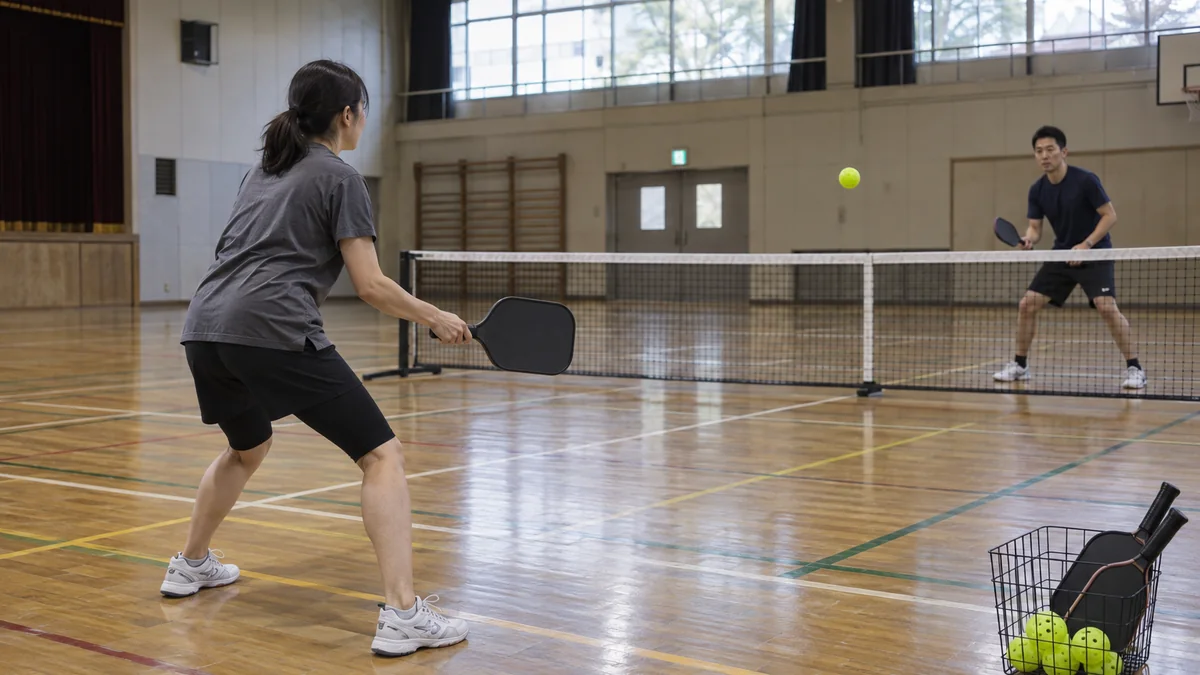
TOCO bills itself as a pickleball brand born in Japan, and until now it has sold outdoor practice balls. The new release came after repeated requests from users who wanted an indoor ball as well. Behind that is the reality of how the sport is played in Japan. Dedicated outdoor courts are not plentiful the way they are overseas, so playing in a local gymnasium rented by the hour has become the common format. Indoors, with floor, ceiling and walls enclosing the space, an outdoor ball is not necessarily the right fit.
The problem is how odd an indoor ball feels to someone used to an outdoor one. Indoor balls are generally made a little softer, so a hand accustomed to outdoor balls reads the contact differently. The more a player moves between outdoor and indoor play, the more adjustment that gap demands on every switch. TOCO says closing the gap was the main aim of the development.
What actually differs between outdoor and indoor balls
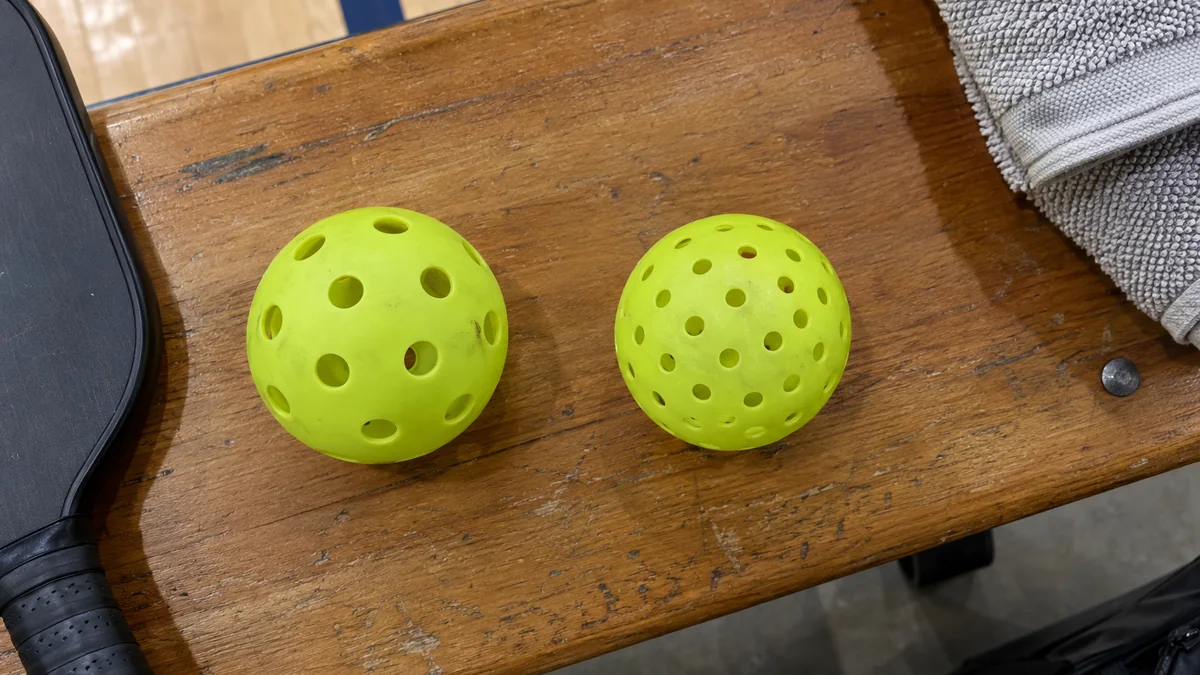
A pickleball is a hollow sphere molded from hard plastic and perforated with a number of holes. The official pickleball specification sets the hole count in a range of 26 to 40. Even inside that range, the combination of hole size and hole count changes flight and speed. The usual split is that outdoor balls use many small holes to limit the effect of wind, while indoor balls use fewer, larger holes to take speed off the ball and keep rallies going.
TOCO's new indoor practice ball has 26 holes, which puts it on the indoor side of that split. TOCO explains that the larger holes create air resistance, holding ball speed down so rallies last longer. It also uses a seamless one-piece molded construction. Unlike balls made by bonding two hemispheres, there is no joint, which the company says gives steadier flight and feel along with better durability. TOCO points to the hardness tuning, firm enough to give the hand something to read, as the ball's headline feature, because it narrows the gap between the harder outdoor ball and the softer indoor one.
| Comparison item | Typical for outdoor balls | TOCO indoor practice ball |
|---|---|---|
| Number of holes | More (spec maximum is 40) | 26 holes |
| Hole size | Smaller | Larger |
| Aim | Limits the effect of wind | Takes speed off and keeps rallies going |
| Feel | Firm, with a pronounced feel at contact | Designed to narrow the gap with outdoor balls |
The 26-to-40 range in the official specification simply marks what can be approved as an official ball. Where a maker lands inside that range is where its design thinking shows. A 26-hole ball means fewer, larger holes, an indoor-leaning setup, and a sign that the gymnasium is the intended home for it.
Price, pack sizes, and where to buy
There are two options: a 4-ball pack and a 12-ball pack, chosen according to how much you practice and how many people are playing. Prices start at 1,430 yen for four, which makes restocking practice balls easy.
| Product code | Details | Colors | Price (incl. tax) |
|---|---|---|---|
| TPB-104GR | Indoor practice balls, 4-pack | Green | 1,430 yen |
| TPB-112GR | Indoor practice balls, 12-pack | Green | 3,300 yen |
Per ball, that works out to about 358 yen in the 4-pack and 275 yen in the 12-pack. Buying in bulk is cheaper, so clubs and classes that go through a lot of balls will want the 12-pack. The balls are sold through TOCO's official online store as well as retailers and partner sports facilities. Being able to buy them at the venue where you play makes it easier to replace practice balls, which wear out quickly.
What a domestic indoor ball changes about buying and switching
Overseas brands have led the way in pickleball equipment, in paddles and balls alike. The fact that new paddles unavailable in Japan are dominating this autumn's conversation also shows inthis article tracking five new paddles not yet released in Japan. Relying on imports leaves you at the mercy of stock levels and arrival dates, and it pushes back any tuning for Japanese playing conditions, where public gymnasiums are the norm. For equipment like balls, which wear out fast and get replaced often, being able to get them reliably at home matters a great deal.
In Osaka, moves such asMizuno and Rond opening a corporate team tournamentshow domestic makers starting to take part in the competitive scene. As equipment makers get closer to the court, TOCO, based in Higashiosaka, has turned its attention to the indoor gymnasium where most practice actually happens. Rather than going head to head on performance with the big overseas brands, filling in the inconveniences that come with playing in Japan, one at a time, gives a domestic maker firmer ground to stand on. The difference in feel between outdoor and indoor balls is the area TOCO picked as its point of difference.
What facility operators and players should check
For anyone running a gymnasium or indoor court, balls are a consumable that has to be restocked again and again.The permanent indoor court inside a shopping complex in Inagiis one example, and as permanent indoor venues increase, choosing a ball suited to the flooring and lighting matters more. Before committing, test the bounce and roll on the floor you actually use, the sound of contact inside the gym's acoustics, and whether members who use outdoor balls can switch without feeling off. Starting with a 4-pack to check how the ball suits your floor and the room's echo, then moving to 12-packs to stock several courts once you know what you have, keeps waste down.
Individual players who do both outdoor and indoor sessions should keep the type of practice ball as consistent as possible. Mixing different balls from day to day makes it hard to fix a baseline for feel. Get used to the 26-hole ball indoors and the difference will be easier to read when you pick up an outdoor ball.
What to test with a 4-pack before you commit
TOCO's indoor practice ball is a domestically made ball aimed squarely at something imported balls rarely address: the difference in feel between outdoor and indoor play. It is a 26-hole, one-piece molded ball starting at 1,430 yen for four. If you play indoors often, buy a single 4-pack first and check the bounce and roll on the gym floor you always use, the sound of contact, and how far the feel sits from an outdoor ball. Judge the performance after you have hit with it, and if the feel convinces you, step up to 12-packs for your class or club. That order moves without strain.