Major League Pickleball (MLP), the team-based pro league in the United States, has a role called the DreamBreaker specialist: a player who arrives at the venue in the morning and spends the whole day preparing for a handful of points. The DreamBreaker is the singles shootout that settles a team match, and it only happens when the teams are level at 2-2 after four games. In Japan, a corporate-owned team league called PX LEAGUE launches in October 2026. Who do you send out for the final stretch, and how do you build a bench? Those questions land just as squarely on amateur team events and company clubs in Japan.
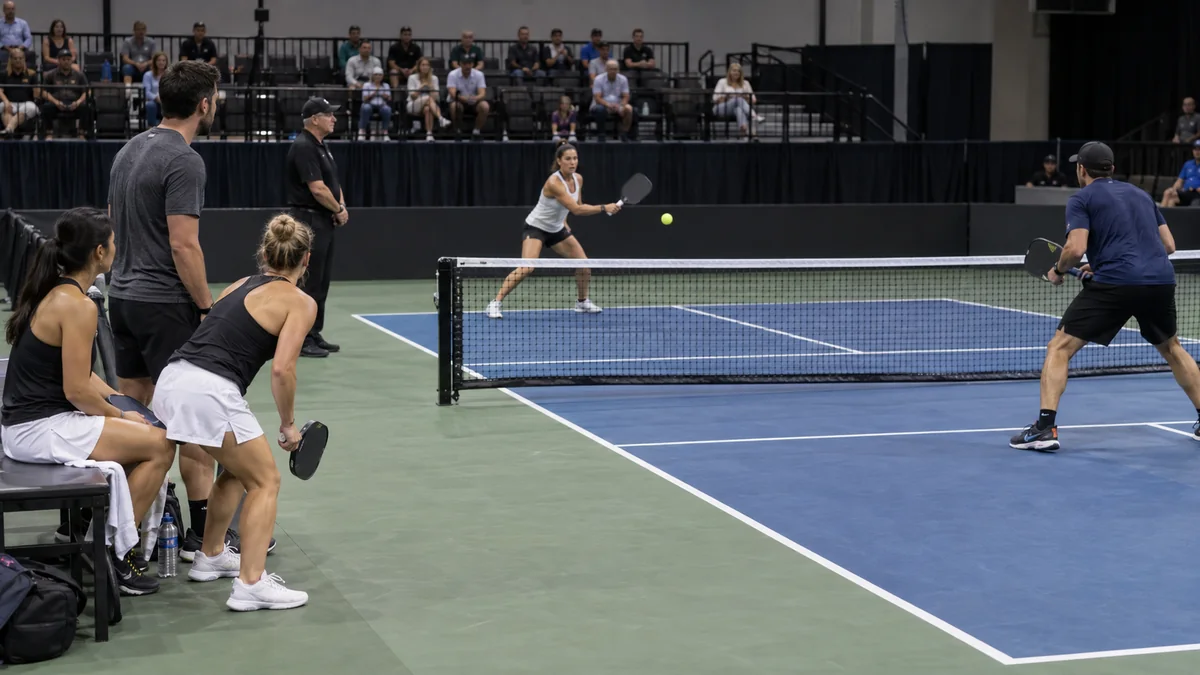
At 2-2, an MLP team match goes to the DreamBreaker, a singles shootout to 21
An MLP team match is made up of four games: women's doubles, men's doubles and two mixed doubles, each played to 11, win by 2, with side-out scoring. If the teams finish level at 2-2, the format switches from doubles to a singles decider. That is the DreamBreaker.
The rules differ sharply from a normal game. Scoring is rally scoring, a point on every rally regardless of who served, to 21 and win by 2, except that the final winning point can only be scored on your own serve, a freeze rule. All four players on the roster, two men and two women, take the court, rotating every four points. One team submits its singles order first, and the other sees it before rearranging its own. A few points of guesswork decide the match.
| Item | MLP DreamBreaker | Regular MLP games |
|---|---|---|
| Format | Singles (1v1) | Doubles |
| Target score | First to 21, win by 2 | First to 11, 2-point margin |
| Scoring | Rally scoring (the last point must come on serve) | Side-out system |
| Rotation | Four players rotate in every four points | Fixed pairs |
| Triggered when | The teams are level at 2-2 | Every match |
Columbus Sliders' Klemm is 16-8 all-time and preps from morning even on days he never plays
The Dink, a US outlet, followed Alex Klemm, who handles the men's DreamBreaker turns for the Columbus Sliders. He is 16-8 all-time in DreamBreakers and 13-3 over his last 16. With Judit Castillo, who takes the women's turns, he prepares for the chance that a team match goes the distance.
What makes the job unusual is the work itself. Klemm spends 45 minutes to an hour warming up alone before a team match, then takes another 10 to 15 minutes once the score nears 2-2. Even then, if his team closes it out 3-1, the DreamBreaker never happens and he never steps on court. Klemm sums up the role himself: it is spending a whole day preparing for a moment that may never come. Standing by all day for a handful of points has produced a specialist not unlike a closing pitcher in baseball or the anchor leg of a relay.
この構図は、MLPの順位計算にも地続きだ。同じく個々の勝敗以上に「どの場面で誰を使うか」が結果を左右する競技構造は、the standings math Dallas exposedでも指摘されており、団体リーグでは起用戦略が勝率以上に重要な要素となる。
Rotating every four points and revealing the order second turn a reserve into a specialist
The DreamBreaker needs specialists because the rules force a guessing game. One team shows its order of four first, and the other lines its players up against it. Do you match your strongest player against their weakest slot, or duck their ace and survive four points? That shuffle changes how the next three exchanges unfold. Court time is short, but the mental load is the heaviest on the team.
So teams carry a player, separate from the doubles lineup, who can be counted on to deliver four points in a short shift. The devotion to give up a full day even when the call never comes, as Klemm does, plus the nerve to hold serve under shootout pressure. A reserve with both quietly lifts a team's win rate. MLP's launch of a mixed-gender national team competition,the Nations Cup,is another sign that organizers see the tension of a singles decider as something that pulls in an audience.
Japan's PX LEAGUE plays everyone with no bench, leaving little room for a closer's job
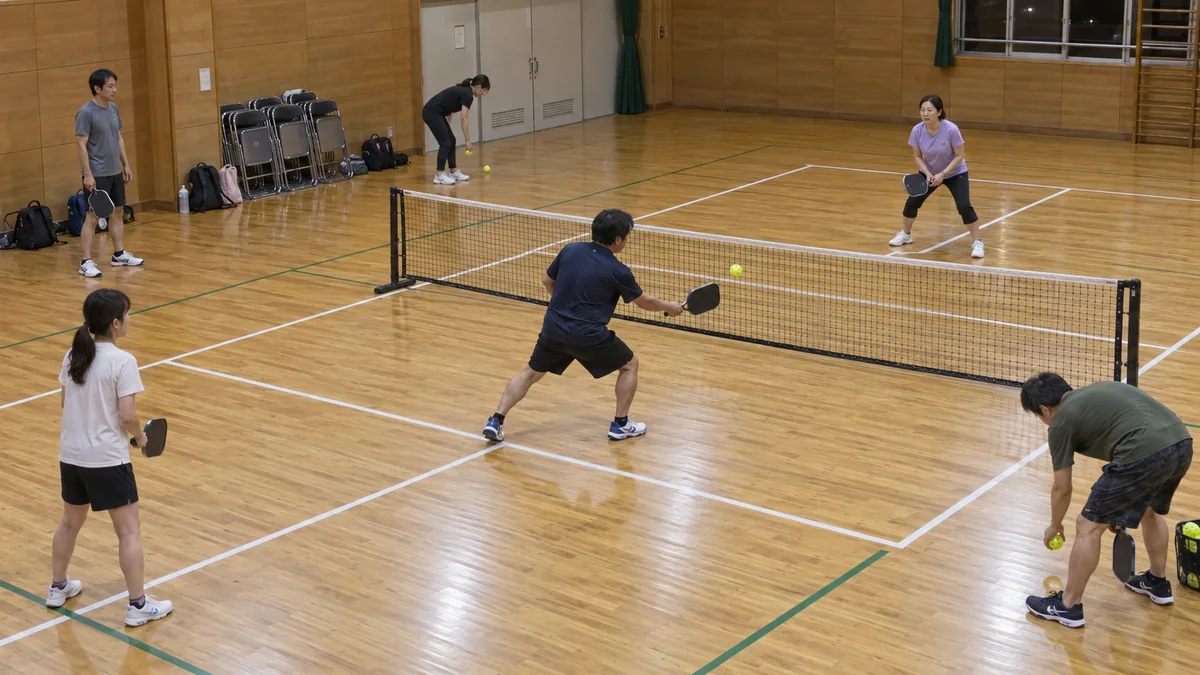
ここで日本に目を移すと、対照が際立つ。Sansanが主導し2026年10月14日に開幕するPX LEAGUEは、アシックス、グローブライド、Sansan、TBSテレビ、トランスコスモス、メルカリの6社がチームオーナーとして参加する国内初のプロリーグだ。主会場は「Sansanピックルボールコート池袋」、2027年4月までの約7カ月間、上位3チームによるプレーオフで王者を決める予定とされている。
The match design is what stands out. A PX LEAGUE roster is six players, three men and three women, and a tie runs five events: women's doubles, men's doubles, men's singles, women's singles and mixed doubles. Every player must appear in each tie, and there is no bench. That leaves little room for the MLP-style specialist who handles only the last few points, because if everyone has to take the court you cannot hold someone back as a trump card.
| Item | MLP (United States) | PX LEAGUE (Japan) |
|---|---|---|
| Squad | Roster of four (two men, two women) | Six players, three men and three women |
| Event | Four doubles games plus a decider | Five games: three doubles events and two singles |
| Bench | A DreamBreaker player is held back | Everyone plays, no bench |
| How ties are settled | DreamBreaker at 2-2 | Decided by the results of the five events |
| Owner | Mostly individuals and investors | Six companies |
In company club team events the order you send players out decides matches, so set the lineup rules first
The gap between the two leagues is useful to anyone running a team event for a company club or a local circle. The PX model, which requires everyone to play, maximizes satisfaction and involvement, because equal court time is what corporate owners are after when they talk about energizing an organization through employee participation. If winning is the point, the MLP approach, deciding which player goes into which slot and how long to hold a reserve back, becomes the weapon.
社内トーナメントや取引先との交流戦を企画するなら、次の順で決めておくと運営が締まる。第一に、全員出場を義務化するか、勝負どころで起用を絞るかをルールとして先に宣言する。第二に、決着法(最終シングルスにするか、勝ち試合数で決めるか)を試合前に共有する。第三に、後出しの登板順を認めるかどうかを明文化する。この3点を曖昧にしたまま始まると、実力伯仲の接戦ほど遺恨が残りやすい。日本国内でも九州のAmakusa Takarajima Cup in Kyushu, where 32 teams and 130 players gathered,show team play heating up, and rule design around lineups and deciders now separates a well-run event from a poor one.
The MLP DreamBreaker specialist has made the value of a reserve visible in a team sport. Whether a job built on standing by all day for a few points can exist at all depends on the rules a league writes. Since PX LEAGUE has chosen to play everyone, no Klemm-type specialist will appear in Japan for now. But in company clubs and grassroots team events, the question of who goes out last will decide matches from here on.